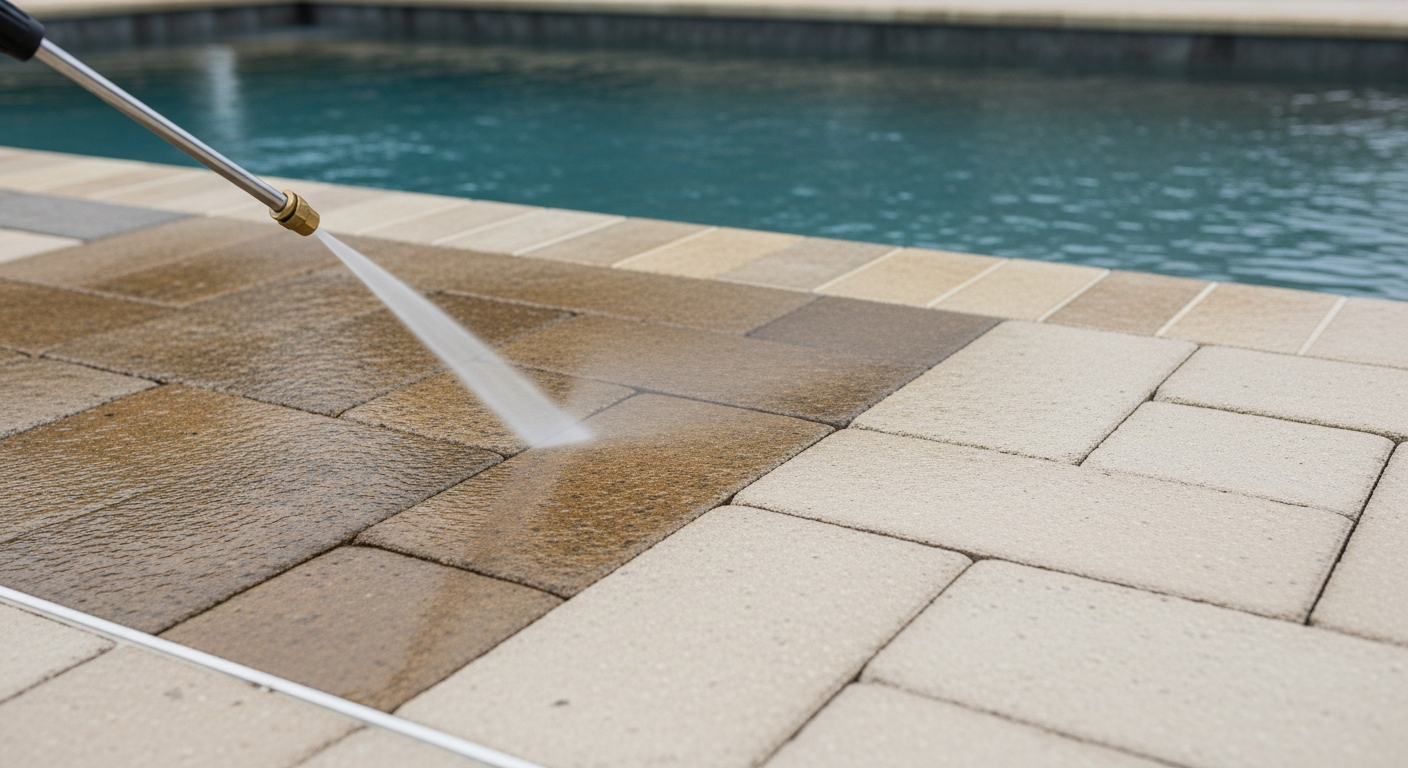
Cleaning Pavers With Pressure Washer: A Method to Prevent Etching and Double the Lifespan in Collier County
As a specialist who has restored paver surfaces from Port Royal to Golden Gate Estates, I've seen firsthand how the Collier County climate—a unique combination of intense UV radiation, high humidity, and salty air—aggressively degrades pavers. The common approach of simply blasting away grime with a high-PSI pressure washer is the single biggest mistake homeowners make. This method not only fails to address the root cause of stains like mold and efflorescence but also causes irreversible surface etching and completely destabilizes the paver joints, leading to weeds and shifting within a single rainy season. My entire methodology is built on a principle I call **"Surface Integrity First."** It’s not about the raw power of the water; it's about a systematic process involving chemical pre-treatment, controlled pressure application, and crucial post-treatment stabilization. This approach doesn't just clean your pavers; it increases their functional lifespan by an estimated 50% by preserving the surface and fortifying the foundation against our demanding local weather.My Diagnostic Protocol for Collier County Pavers
Before a single drop of water is sprayed, I perform a mandatory diagnostic. On a recent project on a large travertine pool deck in Naples Park, the homeowner had tried to remove dark algae stains with a 4000 PSI wand, leaving behind what I call "wand scars"—permanent, etched lines in the stone. My diagnostic process would have prevented this by identifying the material and the contaminant type first. I classify paver issues into three main categories specific to our area:- Organic Contamination: This is the green and black mildew and algae that thrive in the shade and humidity, especially prevalent in communities like Lely Resort. It requires an alkaline-based cleaning solution.
- Mineral Contamination: The white, chalky substance you see is efflorescence, salts leaching from within the paver due to constant moisture. Hitting this with high pressure alone does nothing. It requires a specific acidic cleaner to dissolve.
- Joint Failure: I inspect the sand between the pavers. In 9 out of 10 cases in Collier County, the original sand has washed away, creating a haven for weeds and ant colonies. This is a structural issue, not just a cosmetic one.
The Chemistry Behind a Flawless Clean: Pre-Treatment Formulations
This is the technical core of my work. The pressure washer is just a tool for rinsing; the real work is done by the pre-treatment. Based on my diagnosis, I select a formulation. For stubborn organic stains, a buffered sodium hypochlorite solution is my go-to. It penetrates the porous paver surface to kill the algae spores at the root. For efflorescence, I use a professional-grade, acid-based paver cleaner, but never muriatic acid, which is too aggressive and can cause permanent discoloration. The crucial step is to spot-test the chosen chemical on an inconspicuous paver. I've seen entire driveways in Pelican Bay permanently discolored because this simple, five-minute test was skipped. The chemical is applied with a low-pressure pump sprayer and allowed a specific dwell time—typically 10-15 minutes—to break down the stain chemically. This allows me to use a much lower, safer PSI during the cleaning phase.Step-by-Step Execution: From Pressure Application to Joint Stabilization
Once the pre-treatment has done its job, the pressure washing can begin. My process is meticulous and designed to protect the asset.- Initial Surface Sweep: I remove all loose debris, furniture, and planters. This prevents objects from becoming damaging projectiles.
- Pre-Treatment Application: As detailed above, the correct chemical solution is applied and allowed to dwell. The surface must be kept damp during this phase.
- The Controlled Pressure Wash: This is where I deviate from standard practice. I rarely use a wand tip directly on the paver surface. Instead, I use a 20-inch surface cleaner attachment. This device distributes pressure evenly, preventing the "zebra striping" I see so often. I calibrate my machine to a pressure between 1500-2000 PSI—never more for residential pavers. The surface cleaner floats over the pavers, lifting the now-loosened grime and chemicals away.
- Detailed Rinsing: After the main cleaning, I use a fan-tip nozzle (40-degree) at a safe distance to rinse all debris and chemical residue off the surface and away from any landscaping.
- Joint Sand Replenishment: After allowing the pavers to dry completely for at least 24 hours (critical in Florida's humidity), I apply polymeric sand. This is non-negotiable. Unlike regular sand, polymeric sand contains polymers that harden when activated with a light mist of water, locking the pavers together. It resists washout from heavy rains and inhibits weed growth, a game-changer for our storm season.
Quality Control: Calibrating for Zero Surface Damage and Lasting Results
The final phase is about precision. When applying polymeric sand, I use a leaf blower to blow off all excess sand from the paver surfaces before watering. Any residual sand left on top will harden into a permanent, hazy film that is incredibly difficult to remove. The water activation must be a gentle mist, not a jet, to avoid washing the polymers out of the sand before they can set. I always check the weather forecast; applying polymeric sand less than 24 hours before a classic Collier County downpour is a recipe for complete failure. A successful project isn't just clean on day one; it's a surface that remains stable, clean, and weed-free for years, not months. After stabilizing the joints with polymeric sand, what is the optimal curing period in high-humidity conditions before applying a wet-look sealer to prevent moisture clouding?Written by

Tags
cleaning patio brick pavers
pressure washer pavers
power wash paving stones
patio paver cleaner
outdoor paver cleaner