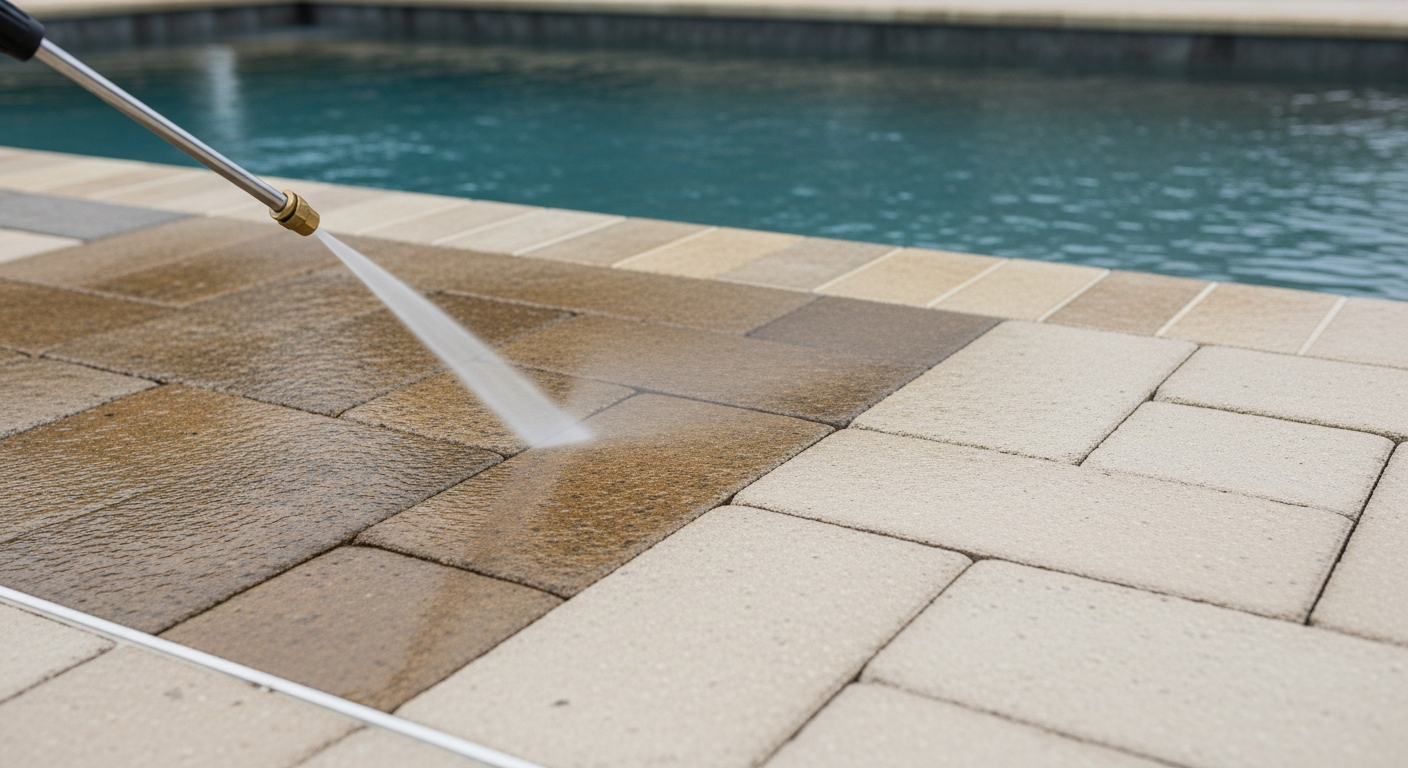
Cleaning Pool Deck Pavers: My Lee County Method for Restoring Color and Inhibiting Algae Growth
Most homeowners in Lee County believe a pressure washer is the only tool needed for cleaning pool deck pavers. I’ve seen the results of this thinking on countless properties from Fort Myers to Bonita Springs: eroded joint sand, etched paver surfaces, and worst of all, the aggressive return of black mold within weeks. The intense humidity and subtropical sun here create a perfect breeding ground for organic growth, and a simple water blast only trims the top layer, leaving the roots embedded in the porous paver surface.
My approach bypasses this common error by focusing on a chemical soft wash process that eradicates growth at its source. This not only restores the original color and texture of your pavers but also extends the clean appearance by an estimated 70% compared to high-pressure methods. It’s a system I perfected after a particularly challenging project on a canal-front home in Cape Coral, where years of moisture and mangrove tannins had seemingly permanently stained the travertine deck. The solution wasn't more pressure; it was smarter chemistry.
The Paver Porosity Problem: My Assessment Protocol
The first mistake I see is treating all paver types the same. The older, more common concrete pavers found in many established Fort Myers neighborhoods are far more porous than the dense travertine popular in newer Sanibel estates. Blasting them with 3000 PSI is a surefire way to cause irreparable pitting. Before I even mix a cleaning solution, I perform what I call a Paver Porosity Test (PPT). This is a simple but critical diagnostic step: I apply a small amount of water to a dry, inconspicuous paver and time its absorption rate.
A fast absorption rate (under 30 seconds) indicates high porosity, meaning the paver will soak up cleaning chemicals quickly and deeply. This requires a more diluted solution with a longer dwell time to work effectively without damaging the material. A slow absorption rate indicates a denser or previously sealed paver, which requires a slightly more concentrated surface-acting agent to break down the resilient biofilm of algae and mold that thrives in our humid climate.
Calibrating Treatment Based on Porosity and Contaminant Type
After determining porosity, I identify the primary contaminants. In Lee County, it's typically a combination of green algae (slippery, surface-level), black mold (deep-rooted, requires full neutralization), and sometimes efflorescence (a white, chalky mineral deposit pushed up through the paver by moisture). Each requires a different approach. For organic growth, a sodium hypochlorite-based solution is my go-to for its sanitizing properties. For efflorescence, a specialized acid-based cleaner is needed, but it must be used with extreme caution and neutralized completely to avoid etching the pavers—a lesson I learned the hard way early in my career.
The 4-Stage Execution: From Decontamination to Sealing
My methodology is a systematic process, not a brute-force attack. Every stage is designed to protect the paver while achieving a deep, lasting clean. This is the exact process I use on all my Lee County projects.
- Surface Debris Removal: I begin with a thorough sweeping, followed by using a leaf blower to clear all loose dirt, leaves, and sand from the surface and, crucially, from the paver joints. Applying water to a dirty deck creates a muddy abrasive that can get ground into the pavers during the cleaning process.
- Targeted Chemical Application: Using a battery-powered sprayer for precise control, I apply the custom-mixed cleaning solution based on my PPT findings. The key here is low pressure, high volume. I let the solution sit for a calculated dwell time, typically 10-15 minutes, allowing it to neutralize the organic matter from the inside out. You can physically see the algae and mold begin to break down and disappear without a single PSI of pressure.
- Low-Pressure, High-Flow Rinse: Only after the chemicals have done their job do I introduce a pressure washer. I use a wide, 40-degree fan tip and keep the wand at least 12 inches from the surface. The goal isn't to blast the dirt off; it's to gently rinse the neutralized contaminants and cleaning solution away. This protects the delicate paver joints and the paver face itself, a critical quality standard.
- Post-Clean Sealing: This is the most important step for longevity in Florida. After the pavers are completely dry—which can take up to 48 hours in our humid climate—I apply a high-quality, water-based penetrating silicate sealer. Unlike acrylic sealers that form a film on top and can trap moisture, a silicate sealer penetrates the paver, densifies its structure, and creates a hydrophobic barrier from within. This is my single biggest "trick" to preventing the rapid return of mold and algae.
Ajustes de Precisão e Padrões de Qualidade
The job isn't done after the sealer is applied. My final quality check involves inspecting the polymeric sand in the joints. The cleaning process often washes some of it away. Failing to top this off can lead to paver shifting and weed growth. For homes near the coast, especially on Sanibel or Captiva Island, I perform a final freshwater rinse right before sealing to remove any residual salt deposits from the air, which can interfere with sealer adhesion and lead to premature failure. This is a small, extra step that prevents a major headache down the line and ensures the project's success.
Now that your paver surface is properly decontaminated and protected, have you considered how the pH level of your pool's splash-out water will impact the long-term integrity of the paver joints and sealant?