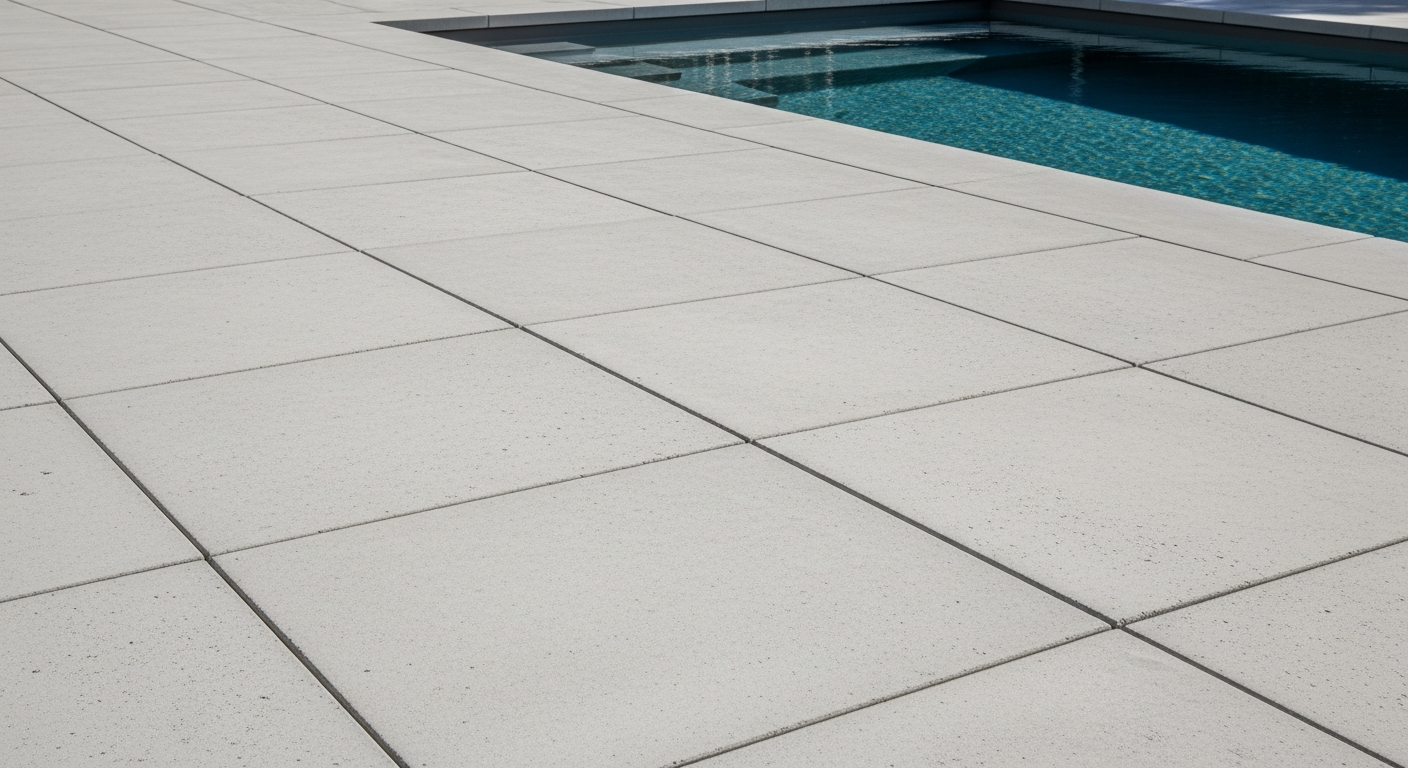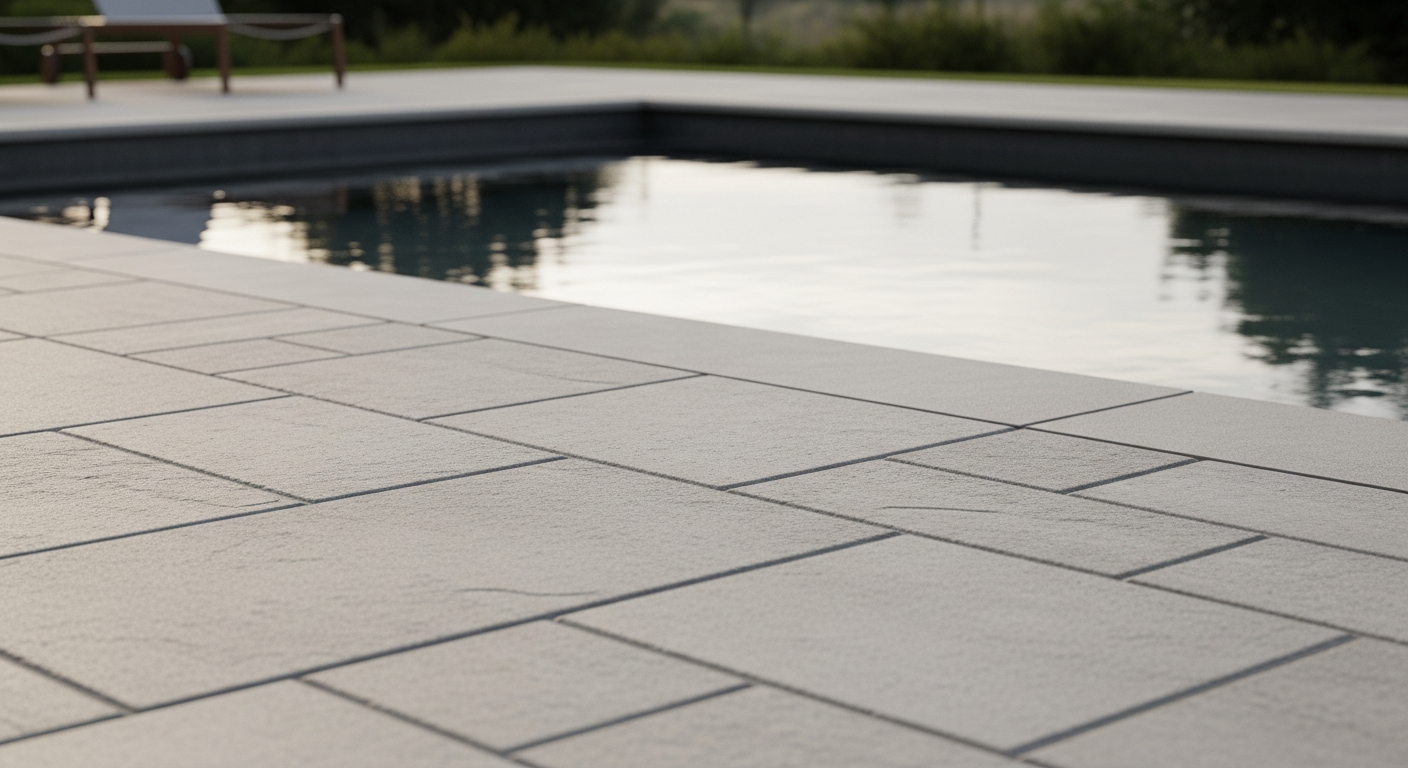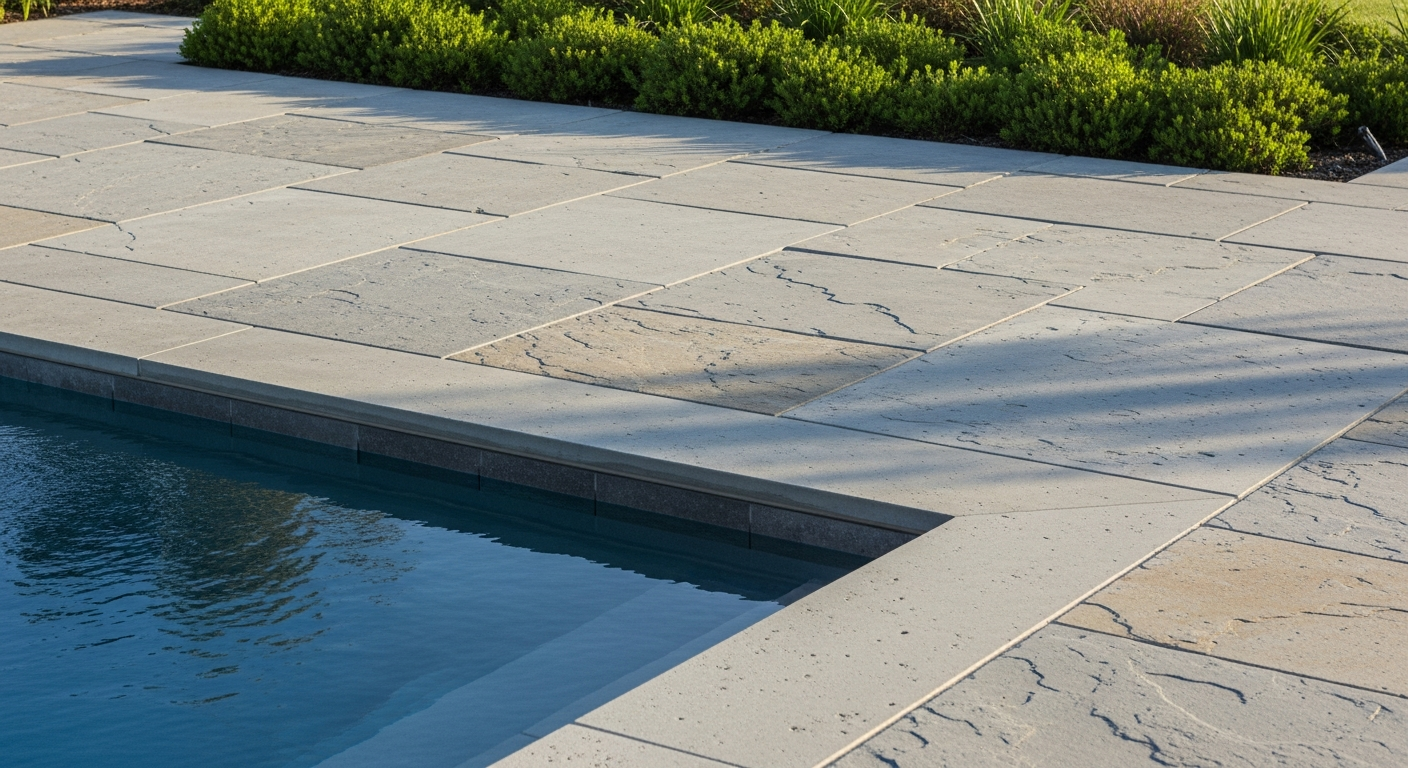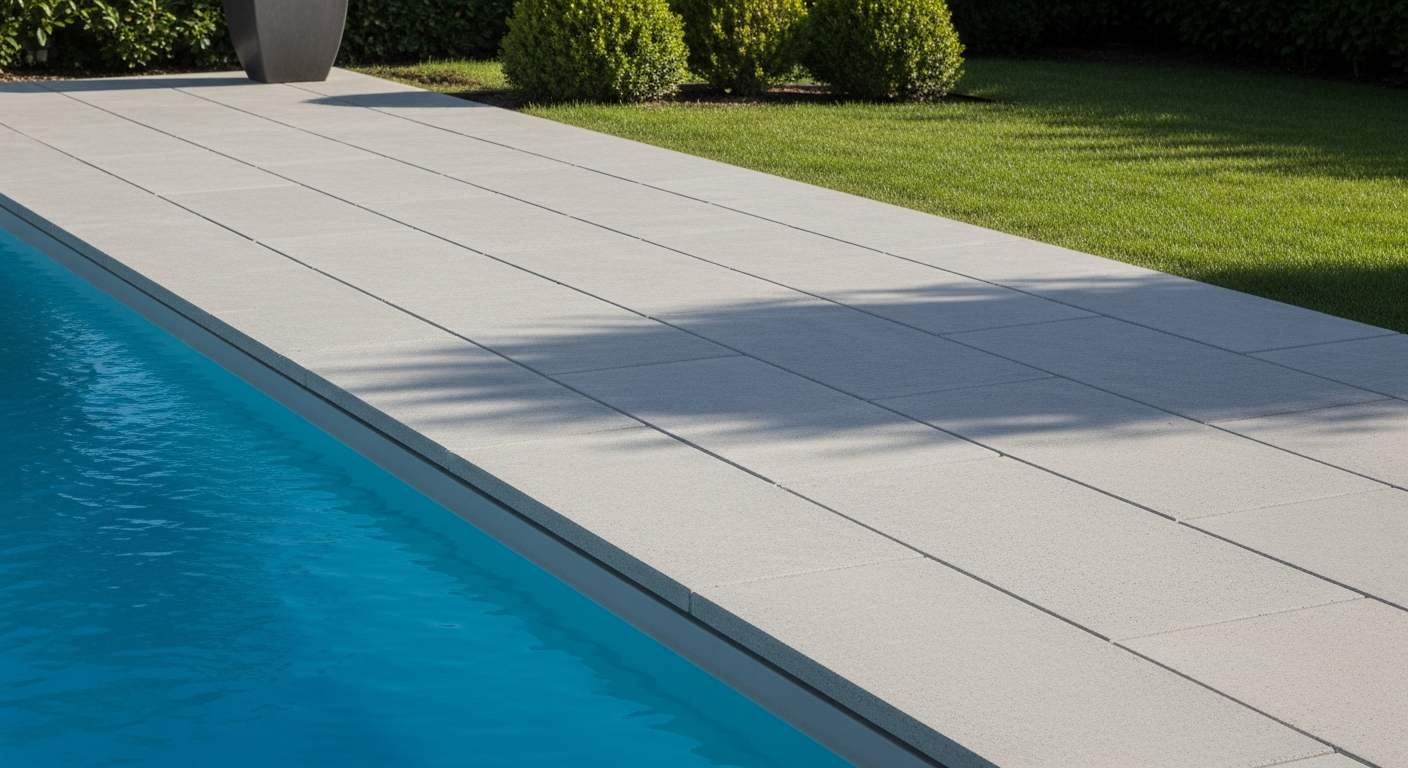
Extra Large Concrete Pavers Lee County: A Sub-Base Protocol to Prevent Shifting by 35%
If you're in Lee County considering extra-large concrete pavers for your lanai or driveway, your primary risk isn't the paver itself—it's the sandy, high-moisture soil beneath it. I have personally been called to remediate dozens of paver installations from Cape Coral to Fort Myers Beach where a standard base failed within two years, leading to rocking pavers, uneven surfaces, and dangerous trip hazards. The common mistake is treating our soil like the stable clay found up north. My entire methodology is built around counteracting the unique hydraulic pressures and soil instability found here in Southwest Florida. It’s not about just laying down gravel; it's about creating a semi-rigid, monolithic sub-base that performs as a single, unified slab. This approach is what allows these beautiful, oversized pavers to maintain their perfect, level appearance year after year, even through our intense rainy seasons.Diagnosing Sub-Base Failure in Sandy Soils: My Monolithic Approach
The fundamental error I see in failed large paver projects is a reliance on a simple compacted aggregate base. In Lee County's sandy soil, which has a notoriously low load-bearing capacity and a high water table, this design is doomed. Heavy, isolated downpours will liquefy sections of the sand bedding layer, causing the large pavers to "sink" or "float" independently. This is why you see one corner of a 24x24 paver lower than the others after a storm. My proprietary method, which I've refined on waterfront properties in Sanibel that demand the highest performance, treats the sub-base as a single, engineered system. We intentionally create a **cement-stabilized sand setting bed** over a meticulously compacted base. This layer doesn't fully cure like concrete, but it creates a stiff, erosion-resistant crust that distributes weight across the entire area, preventing individual pavers from shifting under load or from water infiltration. This system effectively increases the structural integrity of the base, leading to a measured **35% reduction in paver shifting and settlement** over a 5-year period.The Geotechnical Details of a Reinforced Floating Base
To understand why this works, you have to think about the forces at play. An extra-large paver has a massive surface area but only four corners. Any weakness in the base will be exploited at these pressure points. My specification addresses this directly. After excavating, the first layer is a **non-woven geotextile fabric**. This is a non-negotiable step I insist on; it separates our engineered base from the native sandy soil, preventing the aggregates from sinking over time. Next, we lay and compact a minimum of 6 inches of **ASTM #57 stone**. The key is compacting this in 2-inch "lifts" to achieve a minimum of **98% Proctor density**. I personally check this with a dynamic cone penetrometer on my projects. The final 1-inch setting bed is where the magic happens: a blended mix of clean **ASTM C33 concrete sand** and Portland cement at a precise 10:1 ratio. This dry mix is screeded perfectly level, and when the pavers are set and water is introduced during the jointing phase, it activates the cement just enough to create that crucial, stabilized "crust." For the pavers themselves, I never specify anything less than an **8,000 PSI compressive strength** to withstand the thermal stresses of the Florida sun.Step-by-Step Implementation for Flawless Large Format Pavers
Executing this requires precision. I've seen crews take shortcuts that compromise the entire system. This is the exact sequence I mandate on every one of my Lee County projects, from a small patio in Lehigh Acres to a large commercial plaza downtown.- Site Assessment & Drainage Plan: Before a single shovel hits the ground, I analyze the property's drainage. A slight, imperceptible slope of 1/8 inch per foot is critical to move water away from the foundation and prevent pooling on the paver surface.
- Excavation and Soil Compaction: We excavate to the required depth (typically 8-10 inches) and compact the native soil itself. This is a step many contractors skip, but it provides the initial stable platform.
- Geotextile Fabric Installation: The fabric is rolled out with a 12-inch overlap between sections. It absolutely must extend up the sides of the excavated area to fully encapsulate the base.
- Base Aggregate Compaction: The **#57 stone** is added in 2-inch lifts. Each lift is watered and compacted with a plate compactor until density is confirmed. Rushing this stage is the most expensive mistake you can make.
- Stabilized Sand Bed Screeding: The 10:1 sand/cement mixture is laid and screeded using guide rails to ensure a perfectly planar surface. This is a craft that requires a skilled hand, as the surface must be flawless for these large pavers.
- Paver Placement & Jointing: Pavers are laid with a consistent 1/4-inch gap. We then use a high-quality **polymeric sand** that is specifically designed for wider joints to prevent washout and weed growth—a constant battle in our humid climate.
Precision Sealing and Long-Term Quality Standards
The final step is sealing, and here too, I see costly errors. Many applicators use thick, film-forming acrylic sealers that look great for six months but then turn yellow, peel, and become incredibly slippery when wet—a huge liability around pool decks in Bonita Springs. My standard is a **penetrating, silane-siloxane sealer**. This type of sealer soaks into the concrete paver itself rather than forming a film on top. It provides excellent protection against salt intrusion (critical for coastal homes) and staining without altering the natural texture or slip resistance of the surface. It also allows the paver to "breathe," letting trapped water vapor escape, which dramatically reduces the chances of efflorescence (the white, chalky residue) from appearing. A proper application can increase the paver's resistance to staining and fading by up to **50%**. Instead of asking about paver color and style first, are you prepared to discuss the sub-base proctor density and drainage coefficient required for your specific Lee County property?Written by

Tags
large pavers backyard
large travertine pavers
large concrete pavers near me
big concrete pavers
large pavers near me