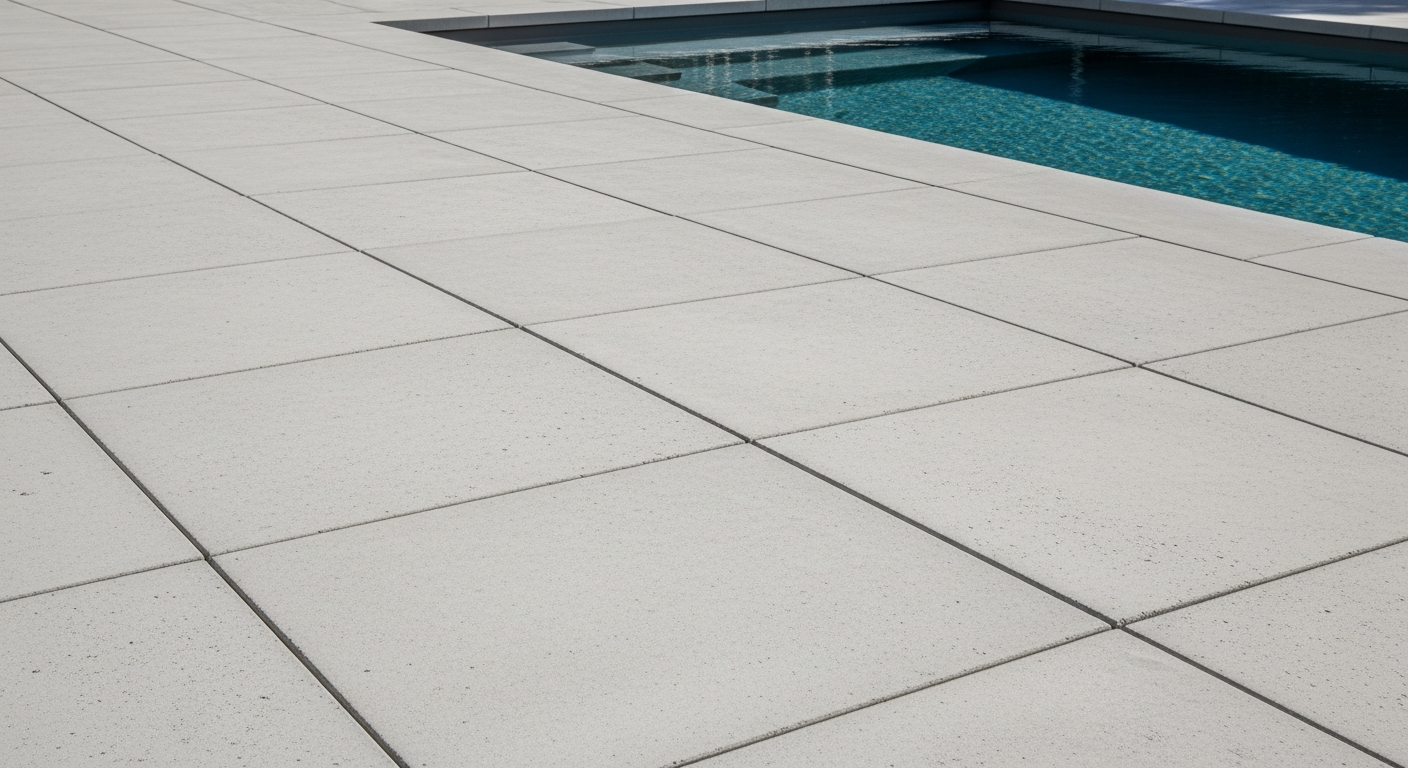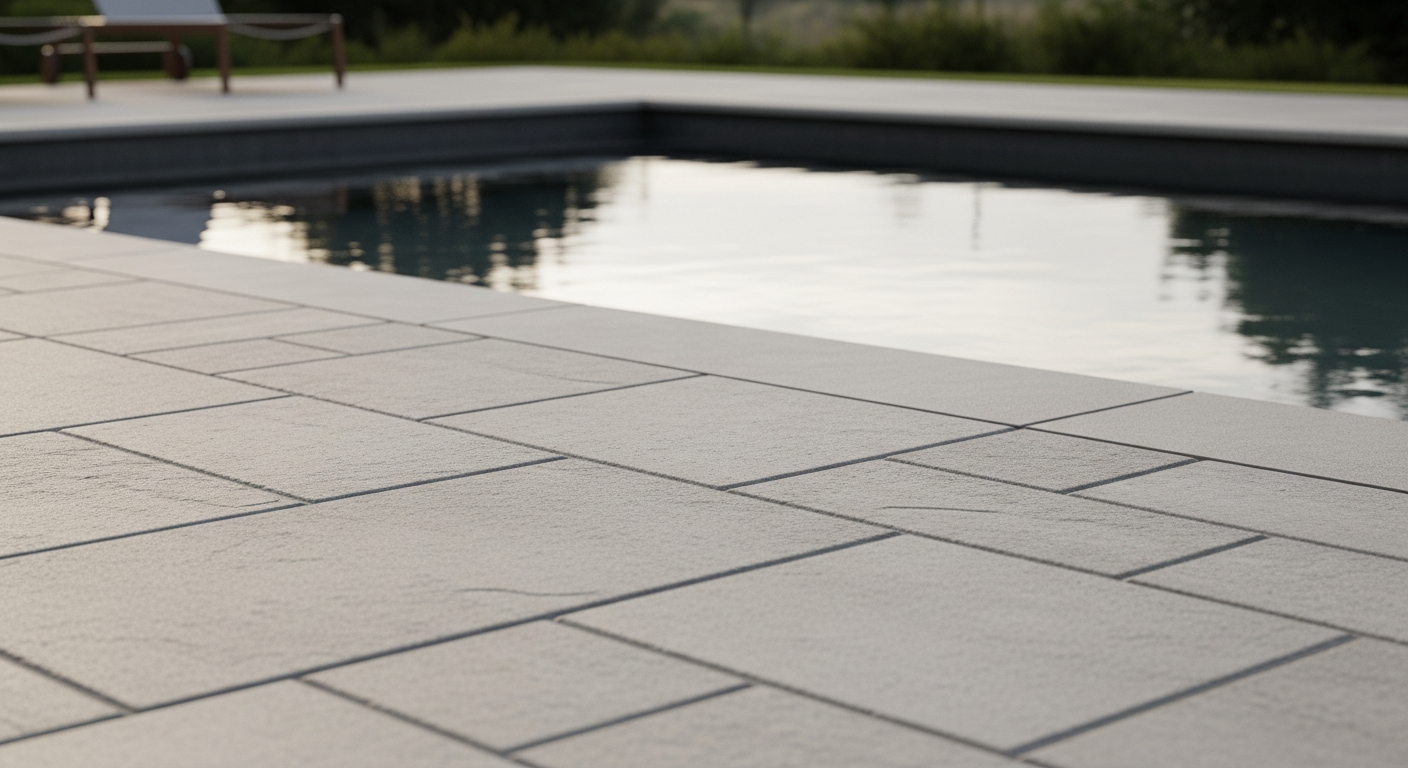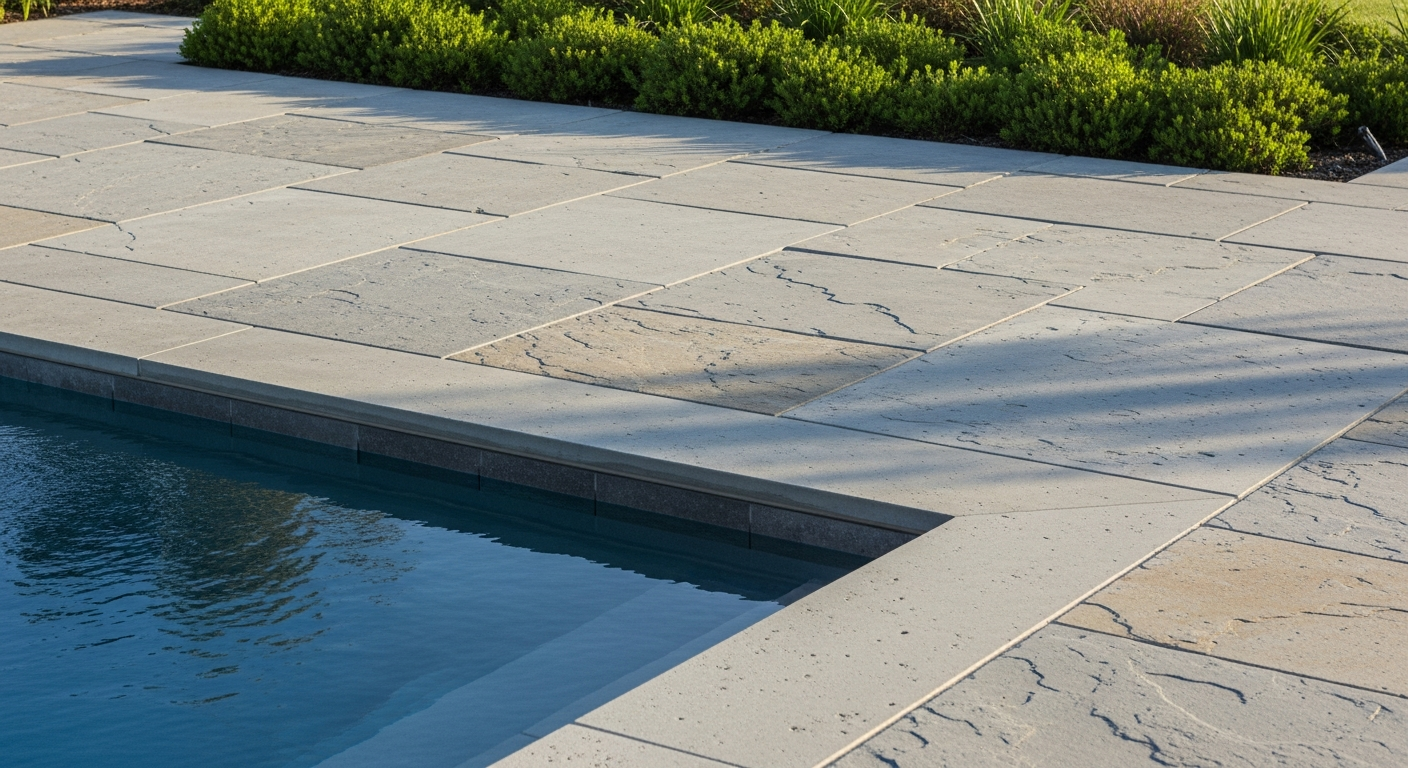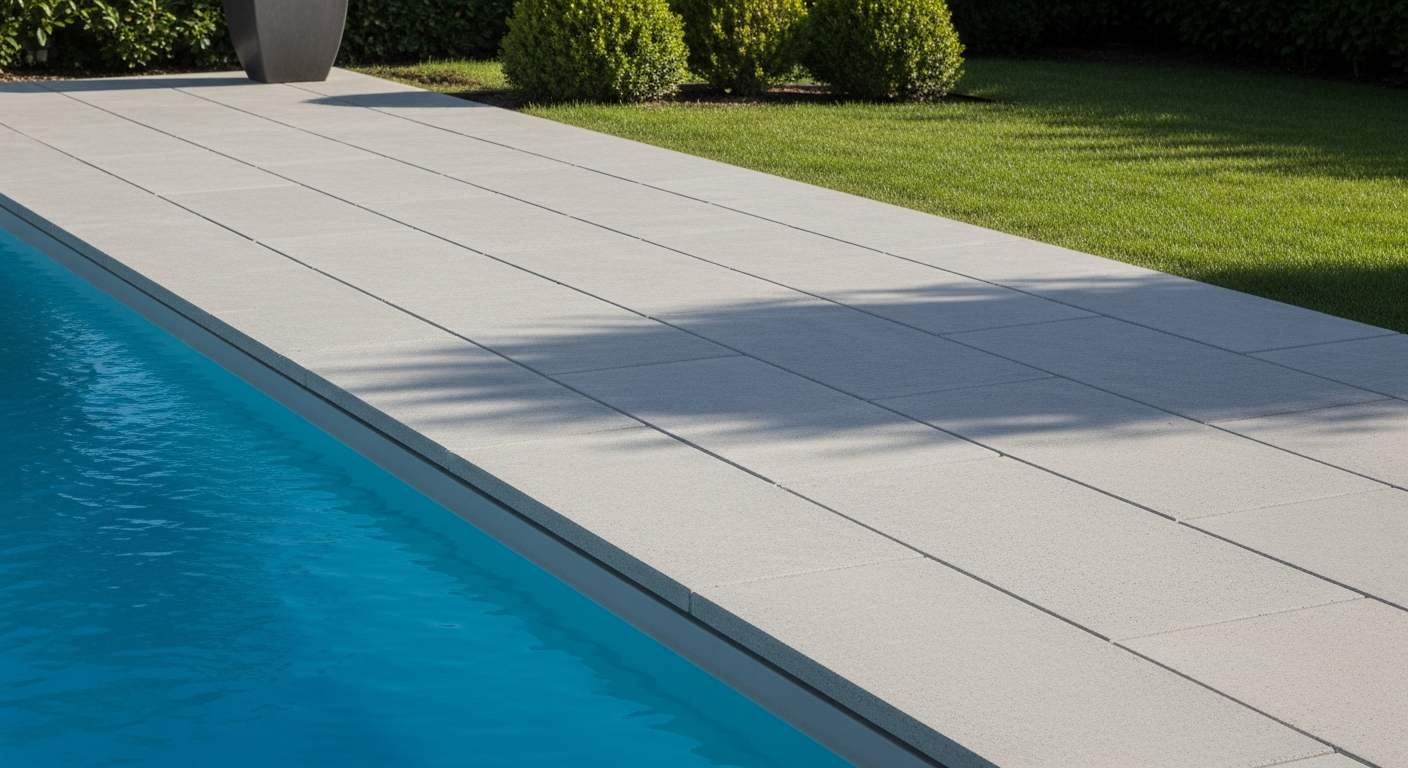
Extra Large Concrete Pavers: My Protocol for 30-Year Stability in Manatee County's Coastal Soil
When I'm called to consult on a failing hardscape project in Manatee County, particularly in newer developments in Parrish or the high-end pool decks of Lakewood Ranch, the issue is almost never the paver itself. The culprit is a fundamental misunderstanding of how our sandy, porous soil behaves under the immense pressure of extra large concrete pavers, especially during our torrential summer downpours. The common approach simply doesn't account for the rapid water percolation and sub-grade instability unique to our region, leading to shifting, sinking, and cracked slabs within a few years. My entire installation philosophy is built around a single principle: treating the sub-base not as filler, but as an engineered foundation. A beautiful, oversized paver is worthless on a base that will liquefy and shift. My protocol focuses on achieving a state of **Engineered Compaction and Hydrostatic Control**, a method I developed after seeing a massive lanai project near the Manatee River fail catastrophically due to sub-base washout. This system is designed specifically to counteract the local soil conditions and intense rain, ensuring a zero-shift surface for decades.My Diagnostic Framework for Large Paver Sub-Base Failure
The most common mistake I see is contractors using the same base depth and material for a 6x6 inch paver as they do for a 24x48 inch slab. This is a critical error. Larger pavers distribute weight differently and have far fewer joints, meaning each individual slab carries a higher load and has less interlocking support. My diagnostic process always begins with two key failure points that are rampant in local installations: **Improper Compaction Metrics** and **Neglected Water Management**. Most builders compact the base "by feel," but our sandy soil requires a quantifiable approach to prevent long-term settling. They also fail to account for the sheer volume of water our storms deliver, which is the primary catalyst for erosion beneath the surface.The Technical Nuances of a Zero-Shift Foundation
To solve this, I moved away from the standard 4-inch gravel base. My proprietary method requires a much more robust structure. It starts with laying a **non-woven geotextile fabric** directly over the graded native soil. This is the single most important step everyone skips; it separates our unstable sand from the aggregate base, preventing the base material from sinking into the subgrade over time. On top of this fabric, I mandate a minimum 6-inch base of **#57 crushed concrete** (FDOT-approved), compacted in 2-inch lifts. Each lift must be mechanically compacted to **98% Modified Proctor Density**. This isn't a suggestion; it's a verifiable metric we test on-site. The final 1-inch bedding layer isn't generic sand; it must be **washed concrete screenings**, which are angular and provide superior interlock compared to common sand.Step-by-Step Implementation for Flawless Paver Installation
Executing this requires precision. There's no room for shortcuts, especially when dealing with the tight tolerances that large format pavers demand. A single uneven spot is dramatically amplified across a large slab. This is my field-tested process.- Excavation and Slope Engineering: I begin with an excavation depth of at least 8 inches. Critically, I use a laser level to engineer a minimum **2% grade** away from any structures. This is non-negotiable for managing the runoff from a typical Manatee County thunderstorm.
- Geotextile and Base Installation: After placing the geotextile fabric, I install the **#57 aggregate base** in 2-inch lifts, as mentioned. Compacting in lifts prevents weaker, uncompacted pockets from forming deep in the base.
- Screeding the Bedding Layer: The 1-inch layer of washed screenings is screeded to an almost perfectly smooth plane. My standard is a maximum deviation of **1/8 inch over a 10-foot span**.
- Slab Placement: For pavers over 100 pounds, I use a **vacuum-assisted paver lifter**. This prevents chipping the edges and allows for precise placement with tight, consistent joint lines of 3-4mm.
- Edge Restraint Fortification: Plastic edging is a point of failure in the Florida sun. I specify a **poured concrete curb** as the edge restraint, reinforced with rebar. It becomes a monolithic part of the installation that will not warp or shift.
- Joint Stabilization and Final Compaction: I use a high-quality **polymeric sand** with a wide-joint formula. The key is my two-stage compaction process. First, I run a plate compactor over the pavers to settle them. Then, I sweep in the sand, and run the compactor over them a second time to vibrate the sand deep into the joints before activation with water.
Precision Tuning & Long-Term Quality Assurance
The final details are what separate a good job from a 30-year installation. One common issue in coastal areas like Anna Maria Island is efflorescence, the white haze that appears on pavers. This is moisture and salt migrating from the base. My solution is twofold: ensuring the base materials are clean and low in fines, and applying a **silane-siloxane penetrating sealer**. This type of sealer creates a hydrophobic barrier within the concrete itself rather than a film on top, allowing the paver to breathe while preventing water absorption. Furthermore, the plate compactor used for the final lock-in must be fitted with a **urethane protection pad**. Using a bare steel plate on these large, often architectural-finish pavers is a recipe for scuffing and damage. I consider an installation complete only when there is zero vertical displacement between adjacent pavers. Given the unique environmental loads on hardscapes in this area, are you still designing your paver projects based on generic national standards, or are you engineering them for the specific realities of Manatee County's soil and climate?Written by

Tags
large pavers backyard
large travertine pavers
large concrete pavers near me
big concrete pavers
large pavers near me