Granite Pavers in Lake County: A Sub-Base Protocol for 30-Year Sink-Proof Stability
For years, I've seen otherwise beautiful granite paver installations in Lake County fail within a few seasons. Homeowners from the rolling hills of Clermont to the historic districts of Mount Dora invest in premium granite, only to watch it sink, shift, and become uneven after our first heavy summer rain cycle. The common diagnosis is often wrong; the problem isn't the paver, it's the complete misunderstanding of our local "sugar sand" soil and high water table. Standard installation guides are built for compacted clay, not the loose, water-logged substrate we have here. My approach is radically different. I don't just prepare a base; I engineer a sub-grade foundation specifically designed to counteract the unique geological challenges of Lake County. This methodology focuses on soil stabilization and hydrostatic pressure management, ensuring the granite you install today remains perfectly level for decades, not just until the next tropical storm. It’s the difference between a patio and a permanent landscape feature.Diagnosing Paver Failure in Florida's Sandy Soil
The single biggest mistake I encounter is contractors applying a one-size-fits-all approach to the paver base. They'll excavate 6-8 inches, dump in some standard aggregate, compact it, and call it a day. In Lake County, this is a recipe for guaranteed failure. Our soil has an extremely low compaction ratio and becomes fluid when saturated. The aggregate base, without proper separation, simply gets pushed down into the saturated sand over time, causing the infamous sinking and shifting. My proprietary system, which I call the Lake County Lock-In Method, addresses the soil itself before a single piece of aggregate is laid. It’s based on a simple principle: you cannot build a stable structure on an unstable foundation. We first have to isolate the paver system from the volatile substrate below. This involves creating a load-distributing, water-permeable barrier that prevents the intermixing of soil and base materials, a critical step everyone seems to skip.The Technicals of My Geotextile-Reinforced Sub-Base
The core of my method is the strategic use of geotextile fabrics. But not just any fabric. For most residential projects in areas like Leesburg or Tavares, where drainage is paramount, I use a specific non-woven geotextile fabric, typically a 6oz or 8oz weight. Unlike woven fabrics which are primarily for stabilization, the non-woven variant allows for excellent water percolation while preventing fine sand particles from migrating upwards into the base aggregate. This is the "secret sauce." The fabric is laid directly onto the excavated and tamped native soil. On top of this, I specify a multi-layer base. The first layer is a 4-inch lift of #57 clean stone, which provides a high-flow drainage channel. After compaction, a second 2-inch lift of #89 stone is applied. This smaller aggregate provides a finer, more stable surface to support the thin bedding sand layer. This two-stage aggregate system creates a base that is both incredibly stable and capable of handling the torrential downpours common in our region without becoming saturated.Implementation: My Step-by-Step Installation Protocol
A flawless installation is about process control. Deviating from the sequence or rushing a step is what leads to long-term problems. Here is the exact methodology I follow for every granite paver project.- Excavation and Sub-Grade Compaction: I mandate an excavation depth of at least 9 inches for patios and 13 inches for driveways. The exposed native soil is then compacted with a plate compactor to its maximum achievable density. Any soft spots are identified and over-excavated.
- Geotextile Fabric Deployment: The non-woven geotextile fabric is rolled out, ensuring a minimum 12-inch overlap at all seams. It must extend up the sides of the excavated area to fully encapsulate the base system.
- The Aggregate Base Layers: The 4-inch layer of #57 stone is laid, graded for a slope of at least 1/4 inch per foot, and compacted. Then, the 2-inch layer of #89 stone is added and compacted to create the final, stable sub-base.
- Washed Sand Bedding Course: I use only 1 inch of clean, washed concrete sand (ASTM C33). Using too much sand or the wrong type, like play sand, is a critical error I've had to fix on countless repair jobs. This layer is for setting, not for structural support.
- Granite Paver Placement: Each paver is placed carefully. I use string lines to ensure perfect alignment and check for lippage (height variation between pavers) constantly.
- Edge Restraint Installation: This is non-negotiable. Heavy-duty aluminum or concrete edge restraints are secured with 10-inch steel spikes before any final compaction occurs.
- Jointing and Sealing: I use a high-quality polymeric sand for the joints. The key is proper activation—a light mist of water, three times, about 30 minutes apart. This prevents washing the polymers out before they can set.
Precision Adjustments and Long-Term Quality Standards
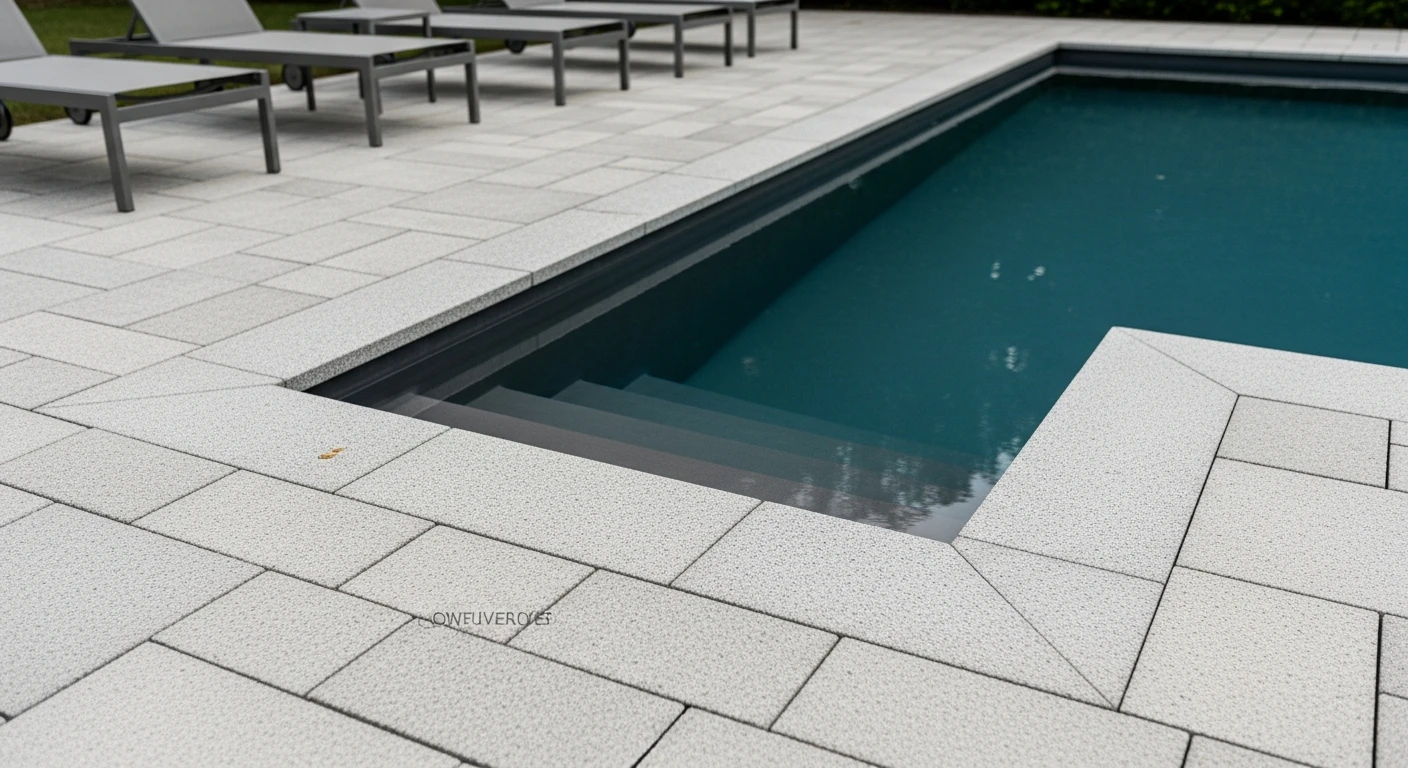
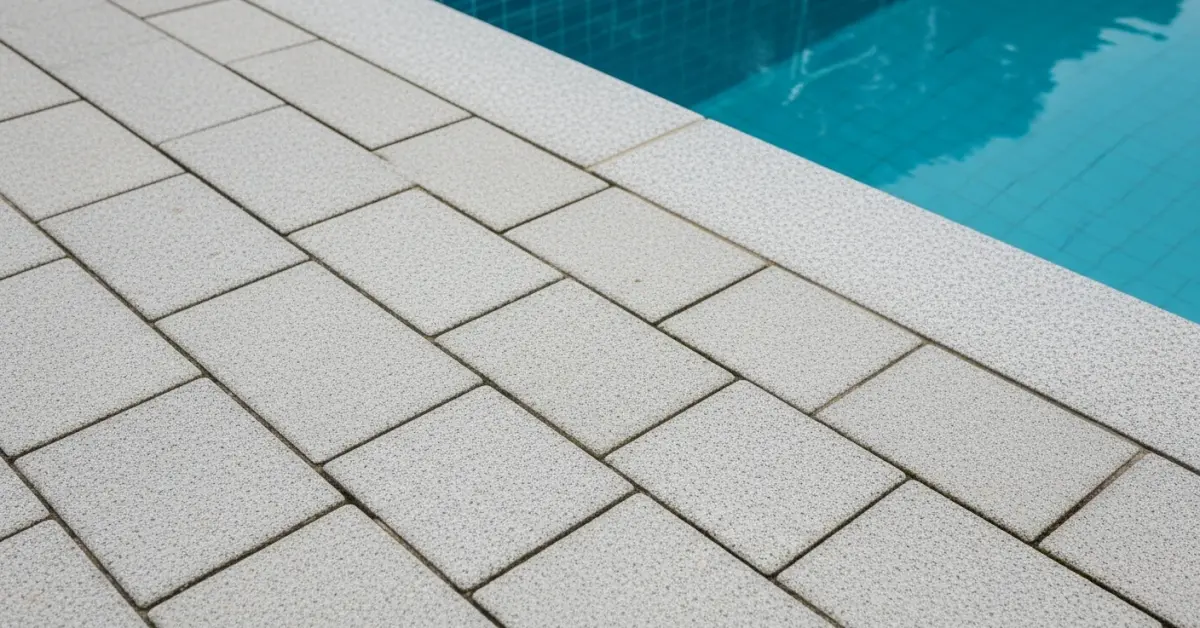
The final 5% of the job is what separates a good installation from a great one. For granite, especially around pool decks so common in Lake County, the choice of finish and sealer is critical. I almost always recommend a flamed or thermal finish for its inherent slip resistance. When it comes to sealing, most contractors make the mistake of using film-forming acrylic sealers. In our humidity, these trap moisture, leading to a cloudy or hazy appearance. My standard is a penetrating silane-siloxane sealer. This type of sealer works from within the stone, repelling water and oil without creating a surface film. It allows the granite to breathe, which is essential for preventing efflorescence and maintaining its natural beauty for years. This single choice can increase the aesthetic lifespan of the project by over 50%. Before handing over a project, I perform a final quality check, looking for any paver that moves underfoot and ensuring the surface drains completely within 20 minutes of being soaked. This is my personal standard of quality. Now that you understand the sub-base requirements for true longevity, how would you adjust your granite paver selection and finish based on its proximity to large oak trees, a common feature in Lake County landscapes?Written by

Tags
granite pavers near me
granite cobblestone pavers
granite pool pavers
granite pavers for sale
granite driveway pavers
Granite Pavers in Lake FL FAQ
Are granite pavers too slippery for a pool deck when they get wet?
No, granite pavers are not inherently slippery if you choose the correct finish. A flamed or thermal finish creates a textured, non-slip surface ideal for wet areas, providing excellent grip even when soaked with pool water or rain. Polished or honed granite, however, becomes extremely hazardous when wet and is completely unsuitable for pool surrounds. Always confirm the paver has a flamed finish before installation; this single choice is the most critical factor for safety around your pool deck and can prevent serious slip-and-fall accidents.
Will pool salt and chlorine stain or damage my granite pavers?
High-quality, dense granite is highly resistant to salt and chlorine, but it is not immune without proper care. To prevent damage, you must seal the pavers upon installation and re-seal them every 2-3 years with a high-quality impregnating sealer specifically designed for natural stone. This sealer penetrates the stone's pores, preventing salt from crystallizing within and causing spalling or pitting. An unsealed paver can show efflorescence (a white, powdery salt deposit) and will be more susceptible to long-term chemical erosion from pool water splash-out.
What's the best way to clean algae or leaf stains off my granite pavers without harming them?
For organic stains like algae or leaves, use a pH-neutral stone cleaner and a stiff, non-metallic brush. Avoid using acidic cleaners, vinegar, or high-pressure power washers, as these can etch the stone's surface and strip its protective sealer, leading to permanent damage. For stubborn stains, a poultice made from baking soda and water can be applied and left to dry. The key is gentle, consistent cleaning; harsh chemicals provide a quick fix but compromise the impregnating sealer, making the pavers vulnerable to future staining and accelerated wear.
Do granite pavers get too hot to walk on in direct summer sun?
Yes, dark-colored granite pavers can become uncomfortably hot for bare feet in direct sunlight. Lighter shades like silver, white, or light gray granite will absorb significantly less heat and remain much cooler to the touch, making them a better choice for pool decks in sunny climates. The temperature difference can be substantial, often exceeding 15 degrees Celsius (around 30 degrees Fahrenheit). When selecting pavers, feel a sample that has been sitting in the sun; this simple test is more reliable than relying on color names alone and ensures your pool coping and deck are usable during the hottest parts of the day.
What kind of base do I need under granite pavers for a pool deck to prevent shifting?
Granite pavers around a pool require a robust, well-draining base to prevent shifting and cracking from ground movement or water. The standard is a 15-20 cm (6-8 inch) layer of compacted aggregate base, followed by a 2.5 cm (1 inch) sand setting bed. Critically, this base must be laid over undisturbed, compacted soil and graded with a slight slope away from the pool. Failure to ensure proper sub-base compaction is the number one cause of paver failure, leading to uneven surfaces that create tripping hazards and allow water to pool against the pool's shell.
How do you repair a single cracked or sunken granite paver next to the pool?
Repairing a single paver involves carefully extracting it without damaging adjacent ones, then correcting the base underneath. First, use a paver extractor tool to lift the damaged stone. If the paver is sunken, the issue is a settled sand bed; you must add and level more sand before re-seating the paver. If it's cracked, it must be replaced. The most overlooked step is reapplying polymeric sand in the joints around the repaired area. This special sand hardens to lock the pavers together, preventing them from shifting and blocking weed growth.