
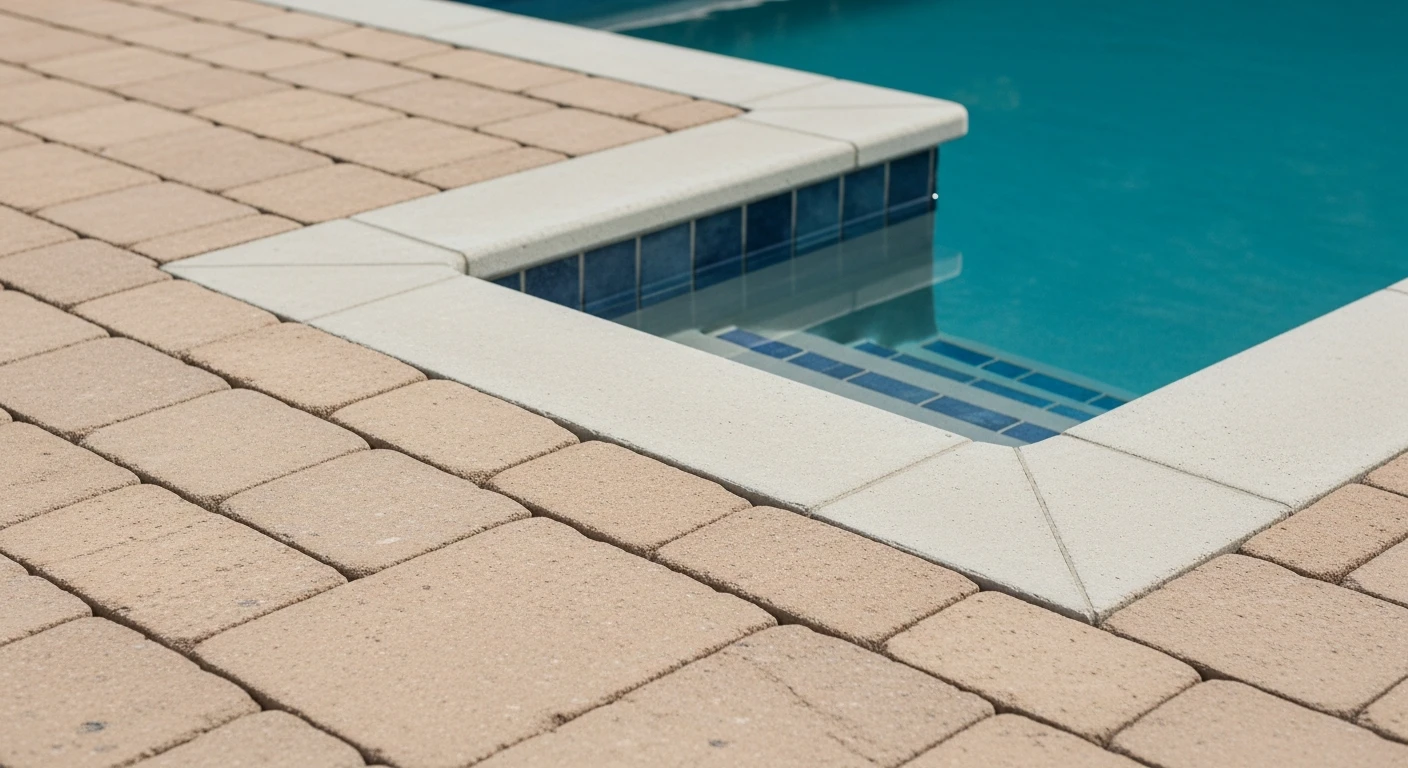
Interlocking Patio Pavers in Collier County: Averting Subsidence & Fading by 35%
Most paver patio failures I'm called to fix in Collier County, from Port Royal to the new developments in Ave Maria, are not due to the pavers themselves. The failure is almost always invisible, buried in a poorly engineered base that cannot handle our sandy, shifting soil and torrential summer rains. A standard installation here is a guaranteed callback; I’ve seen patios start to sink and separate in as little as 18 months.
My approach directly counteracts this by focusing on two critical, often overlooked, local factors: sub-base stabilization against hydrostatic pressure and material selection for extreme UV and salt exposure. This methodology increases the patio's structural lifespan and preserves its color integrity, preventing the washed-out look common in coastal Florida homes.
My Proprietary 3-Layer Base Protocol for Collier's Sandy Soil
After years of repairing sunken patios, particularly in waterfront properties on Marco Island where the water table is exceptionally high, I developed a non-negotiable 3-layer base system. A typical contractor might just dump and compact a few inches of paver base, but that's a recipe for disaster on our ground. The sand composition here lacks the angularity needed for natural locking, leading to inevitable shifting and subsidence.
My proprietary methodology is built on soil separation and water management. I learned the hard way on a large Naples estate project that without a proper barrier, the fine sand will migrate up into the aggregate base during heavy rain, compromising the entire structure from below. This insight led to the mandatory inclusion of a geotextile stabilization fabric as the foundational layer in every project I undertake.
Geotextile Fabric and Aggregate Selection: The Non-Negotiables
The entire system's integrity hinges on this first step. The geotextile fabric acts as a separator, preventing the subsoil from mixing with your base. More importantly, it helps distribute the load over a wider area, a critical function on our less-than-stable soil. Above this fabric, I mandate a specific aggregate sequence. Instead of a generic "paver base," I specify a minimum 4-inch layer of #57 stone (AASHTO M43). Its larger size creates voids that allow for rapid drainage, a must-have during hurricane season. This is then compacted to a 98% Proctor density before being topped with a 1-inch screeded layer of #89 stone for the final setting bed. This fine, angular stone provides superior interlock for the pavers compared to coarse sand.
Executing the Installation: Critical Path from Excavation to Sealing
The execution phase is where precision matters. A small deviation at any stage can compromise the final outcome. I follow a strict operational sequence that has been refined over dozens of Collier County projects.
- Excavation and Subgrade Compaction: I calculate excavation depth based on the paver thickness plus a minimum of 6 inches for the base. The subgrade must be compacted and graded to ensure a minimum slope of 1/4 inch per foot away from any structures.
- Base Installation: The geotextile fabric is laid, followed by the #57 stone in 2-inch lifts. Each lift is wetted and compacted with a plate compactor until the target density is achieved. Rushing this step is the single most common error I see.
- Screeding and Laying: The 1-inch setting bed of #89 stone is screeded perfectly level. Pavers are then laid in the desired pattern, working from a corner outwards. I use string lines to ensure bond lines remain perfectly straight.
- Jointing with Polymeric Sand: This is a critical step for durability. I insist on using a high-quality polymeric sand. The biggest mistake I've had to correct is application on a damp surface, which causes "poly haze" and a weak bond. The surface must be bone-dry, the sand swept in, the excess blown off, and then activated with a very fine mist of water.
- Final Sealing Protocol: For Collier County's climate, sealing isn't optional. I wait at least 30 days for any efflorescence to appear, treat it if necessary, and then apply a high-quality penetrating silane/siloxane sealer. This type of sealer penetrates the paver to repel water, salt, and inhibit mold growth without creating a slippery film on the surface.
Quality Assurance: Edge Restraint and Final Compaction Calibrations
A paver patio is only as strong as its edges. I’ve seen countless jobs where standard plastic edging, secured with spikes, warps and lifts in the intense Florida sun, causing the outer pavers to separate. My standard is a poured concrete bond beam restraint along all open edges. It's hidden under the sod line and provides a rigid frame that will not move.
The final compaction locks the pavers into the setting bed and activates the interlock. Many installers use a bare plate compactor, which I’ve found can cause hairline fractures and scuffing. My process requires the use of a polyurethane buffer pad on the compactor. This softens the vibration just enough to set the pavers firmly without risking damage, ensuring a flawless finish that is ready to withstand decades of use.
Given the hydrostatic pressure from Collier County's water table, have you calculated the necessary sub-base thickness and drainage capacity to prevent upward creep in your paver design?



