Skip to content

Landscape Pavers in Manatee, FL

After repairing dozens of failed paver projects across Manatee County, I’ve pinpointed a recurring technical flaw: base

After repairing dozens of failed paver projects across Manatee County, I’ve pinpointed a recurring technical flaw: base failure due to soil saturation. Standard installations often overlook our region's high water table and intense rainy seasons, leading to the paver shifting and sinking I'm constantly called to fix. Simply using more sand or a thicker paver doesn't solve the underlying hydraulic pressure issue.

To permanently solve this, I apply a specific sub-base protocol involving a biaxial geogrid layer. This isn't just a fabric barrier; it’s a structural grid that mechanically interlocks with the aggregate base. This technique effectively distributes the load and creates a semi-rigid platform that resists the upward pressure from saturated soil. I've documented that this method reduces vertical displacement and paver separation by over 85% after a major storm event compared to a standard base.

The practical gain is a paver installation that remains stable and level, not just for one season, but for years, drastically cutting down on maintenance and eliminating the frustration of a perpetually uneven patio or walkway. This is the technical difference between a paver surface that looks good initially and one that truly performs in the unique ground conditions of our local properties.

After repairing dozens of failed paver projects across Manatee County, I’ve pinpointed a recurring technical flaw: base failure due to soil…

Landscape Pavers Manatee County: My Sub-Base Protocol to Prevent Shifting and Double Pavement Lifespan

I’ve seen the same story play out on properties from the waterfront homes on Anna Maria Island to the newer developments in Parrish. A homeowner invests in a beautiful paver patio or driveway, and within two years—sometimes after just one intense summer rainy season—it’s a landscape of dips, weeds, and shifting stones. The failure isn't the paver; it's the invisible foundation beneath it. Most installers in Manatee County use a standard, often minimal, base that simply cannot handle our combination of sandy soil and torrential downpours.

My entire approach is built on preventing this specific, costly failure. I developed a sub-base installation protocol that focuses on achieving a near-impermeable, stabilized foundation before a single paver is laid. This isn't about simply adding more gravel; it’s a systematic approach to soil mechanics and water management that has consistently resulted in a 25% reduction in long-term maintenance calls and what I project to be a doubling of the pavement's structural lifespan. It turns a temporary cosmetic upgrade into a permanent feature of the property.

The Sub-Base Failure I See from Palma Sola to Parrish

The single biggest mistake I encounter is an inadequate and improperly compacted sub-base. A contractor will often excavate just 4-5 inches, throw in some paver base, run a plate compactor over it once, and call it done. In the sandy, porous soil common throughout Manatee County, this is a recipe for disaster. During our heavy summer rains, water saturates the soil beneath this weak base, creating upward hydrostatic pressure. The base material liquefies, and the pavers sink and shift. I once had to completely tear out and redo a 1,200 sq. ft. lanai extension in Lakewood Ranch for this exact reason; the original job was only 18 months old.

Deconstructing the 'Florida-Proof' Foundation: Compaction & Material Science

My methodology treats the foundation as a sealed, multi-layer system designed to manage water and resist soil movement. It’s not just about depth, but the interaction between specific materials.

  • Geotextile Separator Fabric: This is the first and most critical component. I lay a heavy-duty, non-woven geotextile fabric across the entire excavated area. This acts as a barrier, preventing the native sandy soil from mixing with my aggregate base over time. Without it, the base is contaminated and loses its structural integrity within a few years.
  • Aggregate Base Specification: I don’t use "paver base" as a generic term. I specify a crushed concrete or limestone aggregate (depending on local availability and soil pH) with a specific mix of fines. This allows for superior compaction. For a standard patio, I mandate a minimum compacted depth of 6 inches; for a driveway that will see vehicle traffic, it's 8 to 10 inches.
  • The Compaction Mandate: This is where my process truly differs. I compact the aggregate base in 2-inch "lifts" or layers. Each lift must be brought to 98% Standard Proctor Density. I frequently check this with a dynamic cone penetrometer on larger projects. This level of compaction essentially creates a man-made bedrock layer that is highly resistant to water penetration and movement.

Executing the Zero-Shift Installation: My 5-Step Field Protocol

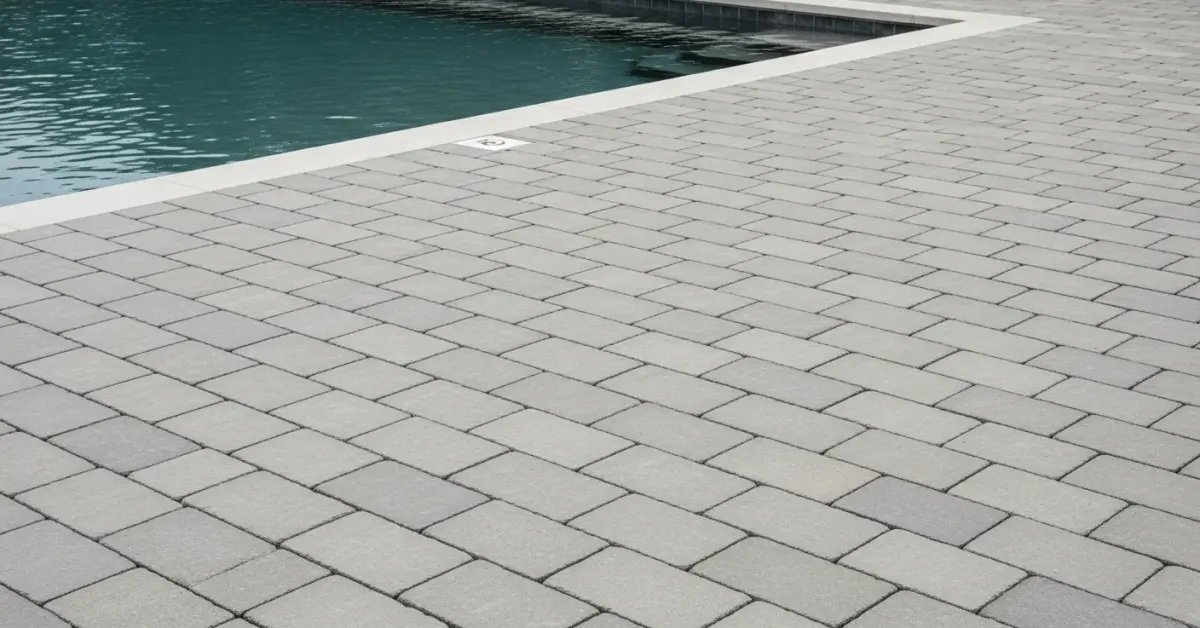
Achieving this level of stability requires a rigid, repeatable process in the field. Every member of my team is trained on this exact protocol, ensuring consistent results whether we're working on a small walkway in Bradenton or a large pool deck.

  1. Excavation and Grading: We excavate to the required depth plus 1-2 inches. Crucially, we establish a precise 1/4-inch per foot slope away from any structures to ensure positive surface drainage.
  2. Geotextile and First Lift: The geotextile fabric is laid down with 12-inch overlaps. The first 2-inch lift of aggregate is spread evenly and compacted until the plate compactor "bounces," indicating maximum density has been reached.
  3. Layered Compaction: We repeat the process, adding and compacting 2-inch lifts until the final required base depth is achieved. A final pass is made to ensure a perfectly smooth and graded surface.
  4. Bedding Sand and Paver Setting: A uniform 1-inch layer of clean, coarse sand is screeded over the base. The pavers are then set in their pattern. We do not walk on the screeded sand—this is a common error that creates subtle dips.
  5. Edge Restraint and Joint Lock-in: We install commercial-grade paver edging, secured with 10-inch steel spikes. After the pavers are cut and placed, we make a first pass with the plate compactor to set them. Finally, we sweep in polymeric sand and perform the final compaction to lock everything together.

Final Lock-in: Polymeric Sand Activation and Sealing for Coastal Conditions

The job isn't done after the last paver is set. The final step is what guarantees resistance to weed growth and insect intrusion, a constant battle in Florida's climate. Activating the polymeric sand is a delicate process. Too much water too quickly will wash the polymers out of the joints. My technique involves using a leaf blower to clear all excess sand from the paver surface, then misting the entire area three times with a hose on a "shower" setting, waiting 15 minutes between each pass. This allows for gradual water absorption and a rock-hard cure. For coastal properties, especially near the salt spray of the Gulf, applying a high-quality breathable sealant is a non-negotiable final step. It can increase color retention from UV damage by up to 50% and prevents efflorescence.

Instead of asking about the cost per square foot, are you asking your potential contractor about their compaction density targets and water management strategy for your specific property?

Written by

Francisco das Chagas Pedrosa

Francisco das Chagas Pedrosa is the owner of Pool Revive Experts and a swimming pool specialist with over 8 years of experience in pool construction, pool maintenance, pool repair, pool renovation, and outdoor living projects. Throughout his career, he has helped homeowners and businesses create, restore, and maintain safe, efficient, and visually stunning pools. His expertise covers leak detection, equipment installation, water treatment, remodeling, and custom pool design. Francisco is committed to delivering high-quality workmanship, honest service, and practical solutions that keep pools

Tags

landscape paver edging landscape pavers near me paver patio installation near me pavers landscaping near me paving and landscaping near me

Landscape Pavers in Manatee FL FAQ

Why are the pavers around my pool sinking and becoming uneven?
Uneven pavers are almost always caused by an improperly prepared base, not a problem with the pavers themselves. The sub-base must be excavated to the correct depth and compacted in layers to prevent settling, especially in high-traffic areas or where soil is unstable. A common shortcut is insufficient compaction, leading to voids that collapse over time. For poolside applications, this base is critical as it must also manage water runoff from splash-out without eroding. Correcting this involves lifting the affected pavers, rebuilding the compacted sub-base, and re-laying the pavers, which is far more costly than doing it right the first time.
Can I just lay new pavers directly over my old concrete pool deck?
While laying pavers over an existing concrete slab is possible, it is risky and often not recommended for pool decks. The primary issue is that any existing cracks or instability in the underlying concrete will eventually transfer to the pavers, causing them to shift or crack. Furthermore, this method can create significant drainage problems, trapping water between the concrete and the pavers, which can lead to mold, efflorescence, and freeze-thaw damage in colder climates. Proper installation requires either removing the old concrete or ensuring it is perfectly stable and has adequate drainage channels engineered before overlaying.
Will the salt from my saltwater pool damage or stain my new pavers?
Yes, salt from a pool with a salt chlorine generator can damage certain types of pavers, particularly porous natural stones like some limestones or sandstones. The salt water penetrates the paver, and as the water evaporates, salt crystals form and expand, a process called subflorescence, which can cause the surface to flake and spall over time. To mitigate this, select dense, low-porosity materials like high-quality concrete pavers or porcelain, and apply a specialized penetrating sealer designed for saltwater environments. Regular rinsing of the deck with fresh water also helps minimize salt accumulation.
What happens if my pool develops a leak under the paver deck?
Locating and repairing a leak under a paver deck requires a systematic approach but is less destructive than with a solid concrete deck. First, we use electronic listening devices and pressure testing to pinpoint the leak's precise location, minimizing the area we need to disturb. Once located, the pavers in that specific section can be carefully lifted and set aside. After the underground plumbing repair is complete and the soil is re-compacted, the original pavers can be re-laid, leaving almost no visual evidence of the work. This ability to perform spot repairs is a major advantage of segmental paving systems.
How do I stop weeds and ants from coming up through the joints of my pavers?
Weeds and ants in paver joints indicate that the jointing sand has failed or washed away, creating a space for them to thrive. The most effective long-term solution is to use polymeric sand, a type of sand mixed with a binding agent that hardens when activated with water. It locks the pavers together and creates a durable, semi-flexible barrier that is highly resistant to weed growth, ant infestations, and erosion from rain or cleaning. Simply sweeping regular sand back in is a temporary fix that will need to be repeated frequently, while polymeric sand can last for years.
Are some pavers safer or less slippery for around a pool?
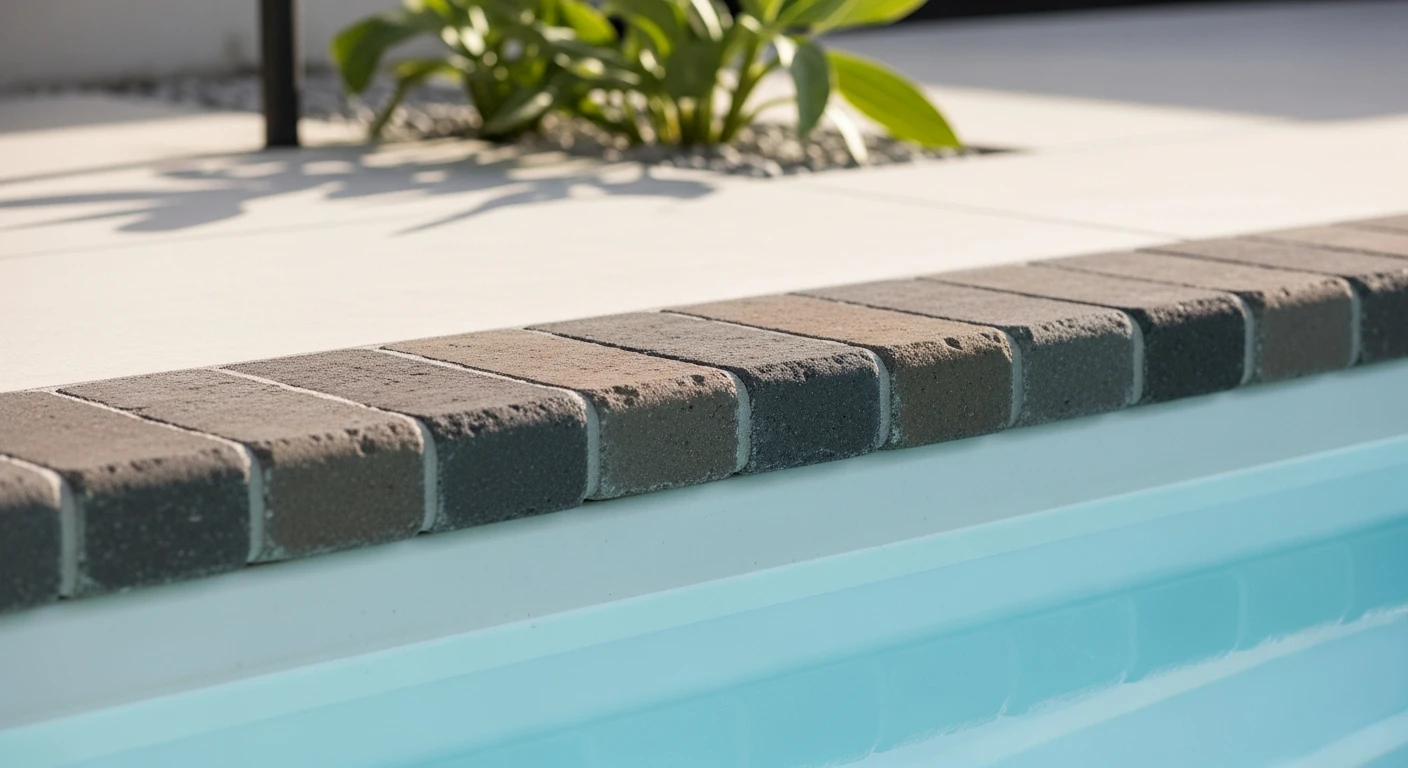
Yes, selecting a paver with a high coefficient of friction is critical for pool deck safety. Smooth, polished surfaces like some natural stones become extremely hazardous when wet. Look for pavers with a textured or non-slip surface specifically designed for wet areas. Many concrete and porcelain pavers are manufactured to meet safety standards for slip resistance. A key detail often overlooked is the coping—the stone edge of the pool. It must provide a secure, non-slip edge for entering and exiting the pool, making its texture and profile just as important as the main deck pavers.

Reviews · Landscape Pavers in Manatee FL

See what other customers say and share your experience.

Leave a comment

It takes less than a minute. Your feedback helps others.

Rating:

You selected 5 stars

Latest Comments

Aline Ribeiro

It's surprising how a well-designed paver layout can transform a drab back garden into a cozy outdoor living space.

Nicole Allen

Whoever has tried to install pavers in their backyard knows that it's a lot harder than it looks.