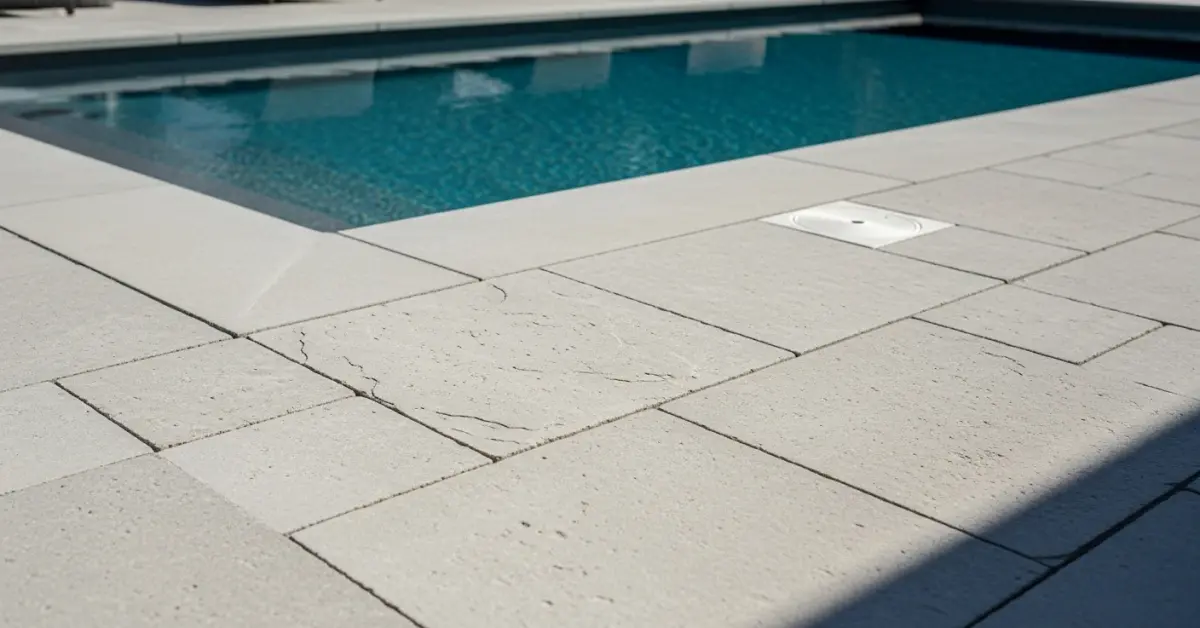
Large Pavers in Lake County: My Protocol for a 20-Year Zero-Shift Patio
After correcting dozens of failed large paver patios from Clermont to Tavares, I've pinpointed a single, catastrophic failure point: an improperly engineered base that simply cannot handle Lake County's sandy soil and torrential downpours. Most contractors use a generic "6-inch gravel" method that works elsewhere but is doomed to fail here. The result is uneven settling, rocking pavers, and water pooling—problems I've seen homeowners face within two years of a five-figure installation. My entire approach is built around preventing this subgrade failure. It’s not about using more gravel; it’s about creating a monolithic, stabilized foundation that intelligently manages load and water. This involves a geotextile-reinforced aggregate base and a compaction process calibrated specifically for the loose, granular soil common around the Harris Chain of Lakes. This is the only way to guarantee a patio that remains perfectly flat and stable for decades, not just a few seasons.Diagnosing Inevitable Failure: My Soil-Specific Compaction Method
The fundamental error I see is treating all subgrades the same. A standard plate compactor on our local soil often achieves only superficial density, leaving a deceptively firm top layer over a loose, unstable core. When the first heavy summer rain hits, water infiltrates this weak core, liquefies the sand, and the entire system sinks. My diagnostic process starts before a single shovel hits the ground, analyzing soil composition to determine the precise "lift" thickness for my aggregate layers. For a sprawling lakefront property in Mount Dora, this might mean 4-inch lifts, while for a more clay-heavy lot in Leesburg, I might adjust to 6-inch lifts. This granular approach is the first defense against long-term settling.The Physics of Load Distribution on Oversized Pavers
A 24x24 inch paver exerts a completely different kind of stress on its base compared to a small 4x8 brick. It creates immense point loading pressure at its corners and edges, especially if a heavy patio table leg is placed there. A standard base flexes under this load, causing the paver to "rock." My solution is a multi-layered system designed for superior load distribution.- Subgrade Separation: I always install a non-woven geotextile fabric directly on the compacted native soil. This is non-negotiable. It prevents the expensive, clean aggregate of the base from migrating down into the sand, which would compromise the entire structure's integrity over time.
- Aggregate Selection: I exclusively use #57 clean crushed stone for the primary base. Unlike "crusher run," it has no fine particles ("fines") that can hold water. This ensures rapid drainage, which is critical for preventing hydrostatic pressure from building up beneath the slabs during a storm.
Step-by-Step Base Prep for Flawless Large Paver Installation
Executing the base correctly is 80% of the job. I’ve refined my installation sequence to achieve a measurable standard of quality at each step. Cutting corners on any of these actions is a direct path to a callback in 18 months.- Strategic Excavation: I mandate a minimum excavation depth of 10 inches for pedestrian patios and 14 inches for driveways. This is deeper than industry standard, but it's the required depth to build a truly "floating" slab foundation that resists soil movement.
- Calibrated Compaction: After laying the geotextile fabric, I add the #57 stone in controlled 4-inch "lifts." Each lift is individually compacted until it reaches a minimum of 98% Proctor density, a metric I verify with a dynamic cone penetrometer. This ensures a uniformly solid base from bottom to top.
- Bedding Sand Precision: The 1-inch bedding layer is not builder's sand. I use a coarse, washed ASTM C33 concrete sand. Its angular particles create an interlocking bed that provides superior rotational stability for the large pavers, preventing them from shifting underfoot.
- Joint Stabilization: Once pavers are laid, I use a high-performance rapid-set polymeric sand designed specifically for wider joints (1/4 inch or more) common with large format pavers. Using the wrong sand here will result in it washing out in the first year.
Fine-Tuning for Longevity: Sealer Selection and Efflorescence Management
A common mistake I’ve had to fix is sealing a new paver patio too soon. This traps moisture and natural salts, causing a white, chalky residue called efflorescence to appear. My rule is to wait a minimum of 30 days post-installation before even considering a sealer. This allows the pavers to fully cure and effloresce naturally, which can then be cleaned off. For the intense Florida sun, especially on uncovered patios in communities like The Villages, I only recommend a high-solids, UV-resistant acrylic sealer. It provides crucial protection against color fading and makes cleaning up after summer barbecues significantly easier. Are you accounting for the specific point-load shear stress of your chosen paver size, or are you just hoping the base is "good enough"?Written by

Tags
large concrete pavers
large pavers for walkway
large pavers for patio
large cement pavers
large outdoor pavers
Large Pavers in Lake FL FAQ
Do large pavers around a pool crack more easily than smaller ones?
Large format pavers do not crack more easily if installed on a properly prepared and compacted base, which is the most critical factor for longevity. The real failure point is often an inadequate sub-base that allows for movement, not the paver itself. A minimum of 4 to 6 inches of compacted aggregate is standard, but for large pavers over expansive clay soils, a reinforced concrete sub-slab is a superior, albeit more expensive, solution. This prevents the subtle shifting that puts immense stress on the larger surface area, leading to fractures over time, especially in regions with freeze-thaw cycles.
My large pavers have shifted and are now uneven. Can they be repaired, or do I need to replace the whole deck?
Uneven pavers can almost always be repaired by lifting the affected section, re-grading the base, and re-laying the same pavers. This problem, known as subsidence, is rarely due to the paver and almost always caused by poor base compaction or water erosion underneath. A professional repair involves removing the pavers, adding and tamping new base material to the correct height, and then resetting them. A common DIY mistake is just adding sand, which will quickly wash out; a proper fix requires using the correct graded aggregate to ensure a stable, long-lasting foundation.
Will large, dark-colored pavers get too hot to walk on in direct sun?
Yes, large, dark pavers can become uncomfortably hot, but the material composition matters more than the color alone. Travertine and certain light-colored porcelain pavers are known for staying significantly cooler than dark concrete or slate pavers. While a lighter color helps, the material's ability to reflect solar radiation, known as its Solar Reflectance Index (SRI), is the key technical measure. Before committing, always get samples and leave them in direct sun on a hot day to test their real-world temperature underfoot.
What is that white haze on my large pavers, and how do I get rid of it?
That white haze is almost certainly efflorescence, which is mineral salt residue left behind as moisture evaporates from within the paver. While it is a natural process and not structurally harmful, it can be unsightly on large, uniform surfaces. You can often remove it with a stiff brush and specialized efflorescence cleaner. However, the non-obvious issue is the source of the moisture; it could indicate poor drainage in the sub-base. Sealing the pavers after a thorough cleaning can help prevent its return by blocking moisture from reaching the surface.
How do you handle skimmer lids and drain covers with oversized pavers?
Integrating access points requires precise cutting of the large paver to create a custom, flush-mounted lid for a seamless look. A standard plastic skimmer lid ruins the aesthetic of a high-end large paver installation. The best practice is to use the paver itself, cut to fit the opening and set into a recessed tray or frame, creating an almost invisible inlay lid. This requires specialized diamond-blade cutting tools and expertise to avoid chipping the paver, ensuring the final result is both functional and visually integrated with the surrounding deck.
Are large pavers more slippery when wet compared to smaller ones?
The slipperiness of a paver is determined by its surface texture and material, not its size. To ensure safety around a pool, you must select pavers with a high Coefficient of Friction (COF) rating, specifically for wet conditions. Smooth, polished surfaces are hazardous, regardless of paver size. Look for materials with a textured, brushed, or honed finish. Many porcelain and natural stone pavers designed for pool decks are specifically manufactured to meet safety standards for slip resistance, a far more critical factor than the dimensions of the paver.