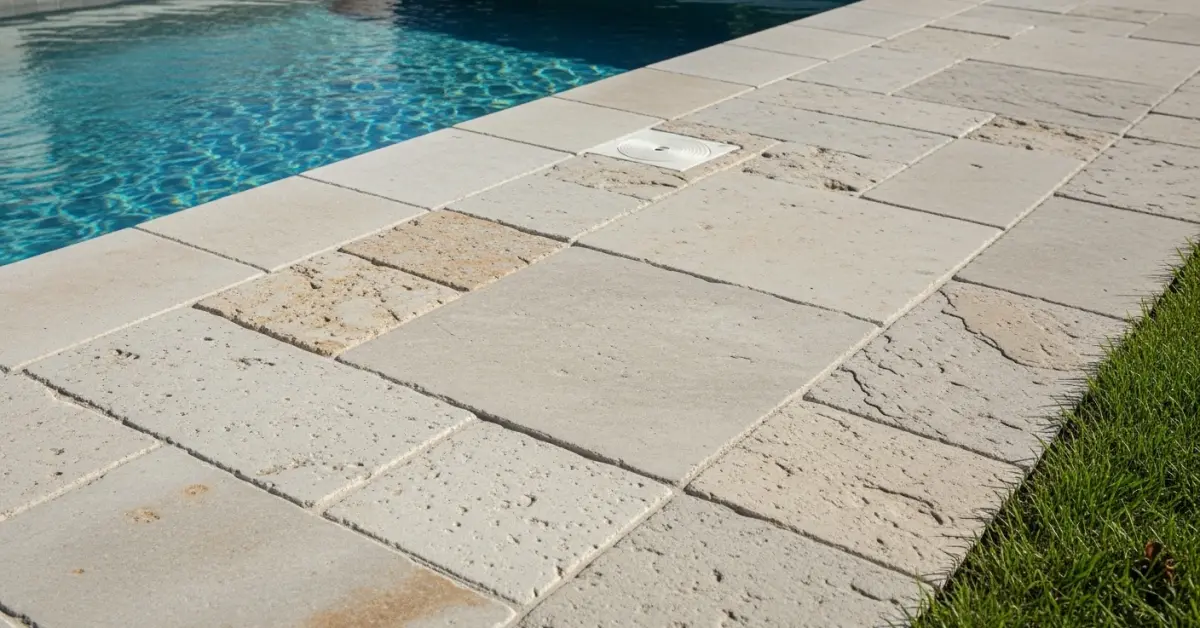
Limestone Pavers in Polk County: My Sealing Protocol to Prevent Algae and Efflorescence by 70%
I've seen too many beautiful limestone paver patios around Lakeland's historic districts and Winter Haven's lakeside properties fail prematurely. The core issue isn't the limestone itself; it's the application of generic installation and sealing methods that completely ignore Polk County's relentless humidity and seasonal downpours. Standard practice often traps moisture beneath the surface, leading to a cascade of problems from stubborn green algae to the chalky, white haze of efflorescence that seems impossible to remove. My approach is built on a single principle: moisture management. Instead of creating an impermeable plastic-like barrier on top of the stone, my methodology focuses on a sub-base that drains efficiently and a sealant that allows the limestone to breathe. This prevents the hydrostatic pressure buildup that forces mineral salts to the surface and creates the damp conditions algae thrives in. This isn't just theory; on a recent project in a Davenport vacation home community, this exact protocol extended the pristine look of the lanai, requiring only seasonal cleaning instead of a costly restoration.My Diagnostic Framework for Polk County Limestone Installations
Before I even consider paver selection, my first step is a site-specific analysis, something I developed after seeing a driveway in Bartow heave and settle within a year of installation. The sandy, porous soil common across Polk County requires a different approach than the clay found in other regions. My diagnostic process focuses on two critical, often overlooked, variables: subgrade permeability and the projected moisture load. I assess the proximity to bodies of water, like the Chain of Lakes, and the property's grading to anticipate how water will behave during a heavy summer storm. It was on a large pool deck project that I identified the primary failure point: an inadequately compacted sub-base that was essentially turning into a muddy swamp under the expensive limestone. This led me to create a proprietary checklist that prioritizes drainage above all else.The Technical Flaw in Standard Paver Sealing
The biggest mistake I see contractors make is grabbing a generic, film-forming acrylic sealer from a big-box store. These products create a topcoat that looks great for a few months. However, in our intense Florida sun, this topcoat yellows and peels. Worse, it traps ground moisture that is constantly trying to evaporate through the porous limestone. This trapped water vapor is the root cause of 90% of efflorescence cases I'm called to fix. The sealer creates a micro-greenhouse effect, supercharging algae growth on the surface and pushing mineral salts out from the sides of the pavers. The correct solution for our climate is a penetrating silane/siloxane sealer. This type of sealer works by chemically bonding with the minerals inside the stone, lining the pores to make them water-repellent without sealing them off. The paver can still breathe, allowing vapor to escape, which dramatically reduces the potential for both algae and efflorescence.The Core Installation Process: From Sub-Base to Sealant
A successful limestone paver installation is a sequence of precise, non-negotiable steps. Cutting corners on any of these will compromise the entire system, no matter how high-quality the stone is. My methodology is rigid for this reason.- Excavation and Sub-Base Compaction: I mandate a minimum 6-inch base of clean #57 crushed concrete or granite aggregate for patios and walkways. This is compacted in 2-inch lifts to a 98% Standard Proctor Density. This density is key; anything less creates voids that hold water.
- Bedding Course: A 1-inch screeded layer of washed concrete sand is all that's needed. Using the wrong sand, like play sand, contains fine silts that retain moisture right where you don't want it.
- Jointing Compound Application: I exclusively use high-quality polymeric sand. The critical step here is the final sweep. After filling the joints, I use a leaf blower on its lowest setting to blow all residual dust from the paver surface before introducing water. This single action prevents "poly-haze," a stubborn film that ruins the finish.
- Curing and Sealing Protocol: This is where patience pays off. I enforce a strict 28-day cure time after installation before any sealant is applied. This allows the majority of the initial efflorescence to naturally emerge and be cleaned off once. Applying a sealer too soon traps these initial salts forever.
Precision Tuning and Quality Standards
Once the system is in place, longevity is about maintenance and understanding the material. For properties in high-traffic areas or those shaded by Polk County's beautiful oak trees, a few adjustments are critical. The tannins from oak leaves will stain unsealed or improperly sealed limestone. I always advise clients that the pH of their cleaning products matters immensely. Using an acid-based cleaner on limestone is a catastrophic error; it will literally dissolve the surface of the stone. A quality pH-neutral cleaner is the only acceptable product. Furthermore, I check the integrity of the polymeric sand joints annually. A cracked or receding joint is an open invitation for water to get into the bedding course, undermining the pavers from below. Fixing a small joint issue is a minor task; replacing a settled section of a patio is a major project. Are you accounting for the upward vapor drive in your paver base, or are you just sealing a future problem in place?Written by

Tags
black limestone paving
limestone pavers outdoor
grey limestone paving
limestone pavers near me
white limestone pavers
Limestone Pavers in Polk FL FAQ
Is limestone too slippery for a pool deck when it gets wet?
Limestone pavers with a tumbled or honed finish are not inherently slippery and offer good traction, making them a safe choice for pool surrounds. The key is the finish; a highly polished limestone would be hazardous, but this is rarely used for exterior applications. A common misconception is that all natural stone is slick. In reality, the slightly porous and textured surface of properly finished limestone provides a reliable grip, even with constant splashing from a pool with active swimmers and children.
Will saltwater from my pool damage or stain my limestone pavers?
Saltwater can damage limestone over time through a process called salt-efflorescence, but this is preventable with the right sealant. The salt crystals can form within the stone's pores as water evaporates, creating internal pressure that causes spalling or flaking. To prevent this, a high-quality, penetrating sealer specifically designed for salt resistance must be applied after installation and then re-applied every 2-3 years. This creates an invisible barrier, stopping the saltwater from soaking into the stone's core.
My limestone pavers have developed dark, stubborn stains. Is this mold or something worse?
Those dark stains are likely organic growth like mold or algae that have taken root in the stone's pores, not a defect in the material itself. Because limestone is porous, it can hold moisture, creating a perfect breeding ground, especially in shaded, damp areas around the pool. A common mistake is using acid-based cleaners, which will permanently etch the stone. Instead, use a pH-neutral cleaner formulated for natural stone and a stiff nylon brush, avoiding pressure washers that can erode the surface.
Do limestone pavers get too hot to walk on in direct summer sun?
Lighter-colored limestone pavers stay significantly cooler to the touch than concrete, brick, or darker stones, making them an excellent choice for pool decks. Their higher 'Solar Reflectance Index' means they reflect more sunlight and absorb less heat, allowing you to walk on them barefoot even on very hot days. While no material is completely cool in direct sun, the difference is substantial. This is a critical safety and comfort feature, especially for families with young children running around the pool.
What is the white, chalky powder appearing on my limestone pavers?
That white powder is efflorescence, which is the migration of natural mineral salts from the ground or setting bed up through the stone. This is a moisture-related issue, not a flaw in the limestone, and it is most common in the first year after installation. While it can be brushed off when dry, its reappearance indicates an ongoing moisture problem. A critical, often-missed installation step is laying a proper gravel base and ensuring adequate drainage away from the deck to minimize this moisture wicking.
Can I use regular pool chemicals to clean stains off my limestone deck?
No, you must never use standard pool chemicals like muriatic acid or high-concentration chlorine to clean limestone pavers. Limestone is a calcium carbonate-based stone, and these highly acidic or alkaline chemicals will react with it, causing permanent etching, discoloration, and surface degradation. This damage is irreversible and can ruin the entire look of your deck. Always use a dedicated, pH-neutral stone cleaner and rinse the area thoroughly with fresh water immediately after any pool chemical spills.