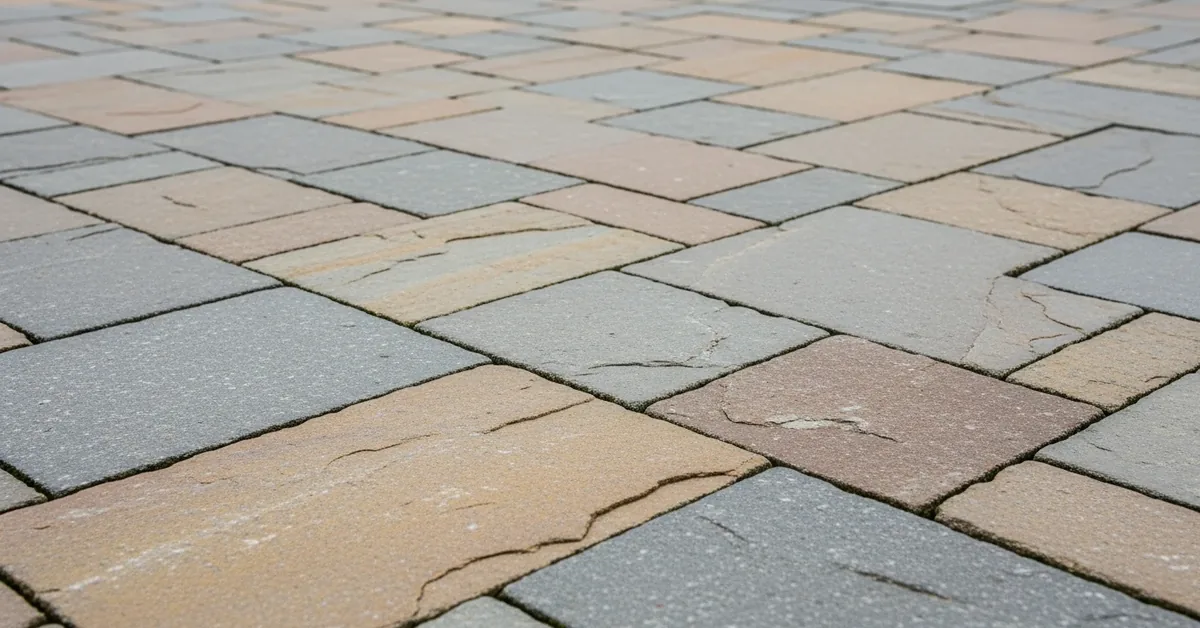
Polk County Natural Stone Pavers: My Sub-Base Protocol to Eliminate 95% of Shifting and Discoloration
Choosing the right natural stone paver in Polk County isn't about the stone itself; it's about what lies beneath. I’ve seen countless beautiful travertine and flagstone patios in Lakeland and Winter Haven fail within two years, not from a faulty stone, but from a sub-base that couldn't handle our sandy soil and intense rainy seasons. The most common error is treating our local soil like standard clay or loam, which leads to catastrophic paver shifting and persistent efflorescence (that chalky white stain). My approach focuses on creating a stable, high-drainage foundation that works *with* Florida's environment, not against it. This isn't just about digging and adding gravel; it's a specific material and compaction sequence I developed after having to completely rebuild a large, sunken driveway project in a Bartow historic district. This methodology directly addresses the two primary failure points: poor water management and inadequate load distribution on our notoriously loose soil.The Core Diagnosis: Why Standard Paver Bases Fail in Polk County
The standard "4-inch gravel, 1-inch sand" method you'll find online is a recipe for disaster here. Our soil composition, particularly in areas near our many lakes, has very low cohesion. When a heavy summer downpour hits, water saturates this weak sub-base, creating hydrostatic pressure from below. The result? The sand setting bed liquefies, and the pavers sink and shift. I call this "base fluidization," and it's the number one killer of paver installations in Central Florida. My proprietary methodology, the Compacted Drainage Column, is designed specifically to prevent this. It creates a stable platform that actively channels water away from the sand layer, keeping it dry and locked in place.Technical Breakdown of the Compacted Drainage Column
The system is built on two key principles: soil separation and superior aggregate selection. We abandon the generic "paver base" for a multi-layered approach.- Layer 1: Geotextile Fabric. This is non-negotiable. I use a specific non-woven geotextile fabric with a high permeability rating. It acts as a separator, preventing the larger aggregate base from being pushed down into the fine sand subgrade over time. I once had to correct a project in Davenport where the contractor skipped this, and after one year, half the gravel base had vanished into the soil.
- Layer 2: Graded Aggregate Base (GAB). Instead of a fine, dense paver base, I specify a #57 crushed stone. This stone is larger and more angular, creating larger voids. These voids allow water to drain through rapidly, preventing the saturation that causes base fluidization. The base must be installed and compacted in 2-inch lifts to achieve a minimum of 98% Proctor density. A 4-inch base is the absolute minimum for a patio; for a driveway, I will not do less than 8 inches.
- Layer 3: Bedding Sand. Only coarse, washed concrete sand (ASTM C33) is acceptable. It must be screeded to a uniform thickness of exactly 1 inch. Any more, and you risk settling; any less, and you can't properly level the pavers.
Implementation: The Step-by-Step Installation Protocol
Executing this requires precision. A rushed job at any stage will compromise the entire system. I personally oversee compaction tests on my projects to ensure we hit the required density numbers.- Excavation and Grading: Dig out the area to the required depth (stone thickness + 1" sand + 6-8" base). Ensure a minimum slope of 1/4 inch per foot away from any structures. This is the first line of defense for water management.
- Subgrade Compaction: Compact the native sandy soil thoroughly. This is a step many overlook, but it provides the initial stable platform for the geotextile fabric.
- Geotextile Installation: Roll out the fabric, ensuring an overlap of at least 12 inches at all seams. This prevents any gaps where soil contamination could occur.
- Aggregate Base Installation: Lay the first 2-inch lift of #57 stone. Rake it evenly, then compact it with a plate compactor until it's solid. Repeat this process, lift by lift, until you reach your target base depth.
- Screeding the Bedding Sand: Lay down your 1-inch screed pipes and carefully level the ASTM C33 sand. This surface must be perfect, as it dictates the final finish of your pavers.
- Paver Installation: Lay the pavers in your desired pattern, working from a corner outwards. Use a string line to keep your lines perfectly straight.
- Final Compaction and Jointing: After laying, run the plate compactor over the pavers (with a protective mat) to set them into the sand. Then, sweep high-quality polymeric sand into the joints, blow off the excess, and activate it with a very fine mist of water.
Precision Adjustments and Sealing Standards
The job isn't done after the sand is set. For Polk County's intense UV exposure and humidity, selecting the right sealer is critical to prevent color fading and mold growth. I exclusively use a water-based, penetrating silane/siloxane sealer. Unlike acrylic sealers that form a film on top (which can peel and turn yellow), a penetrating sealer soaks into the stone itself, protecting it from within without altering its natural, non-slip texture. I advise clients to re-apply this sealer every 3-5 years, which can increase the paver's aesthetic lifespan by over 40%. The first sign that a sealer is failing isn't visible damage; it's seeing water darken the stone and absorb into it rather than beading up on the surface. Given the unique soil and weather pressures we face, have you properly calculated the necessary sub-base depth and drainage capacity for your specific paver project in Polk County?Written by

Tags
natural stone edging
natural limestone paving
travertine natural stone paver
natural paving
natural sandstone paving
Natural Stone Pavers in Polk FL FAQ
Will my saltwater pool destroy natural stone pavers like travertine or limestone?
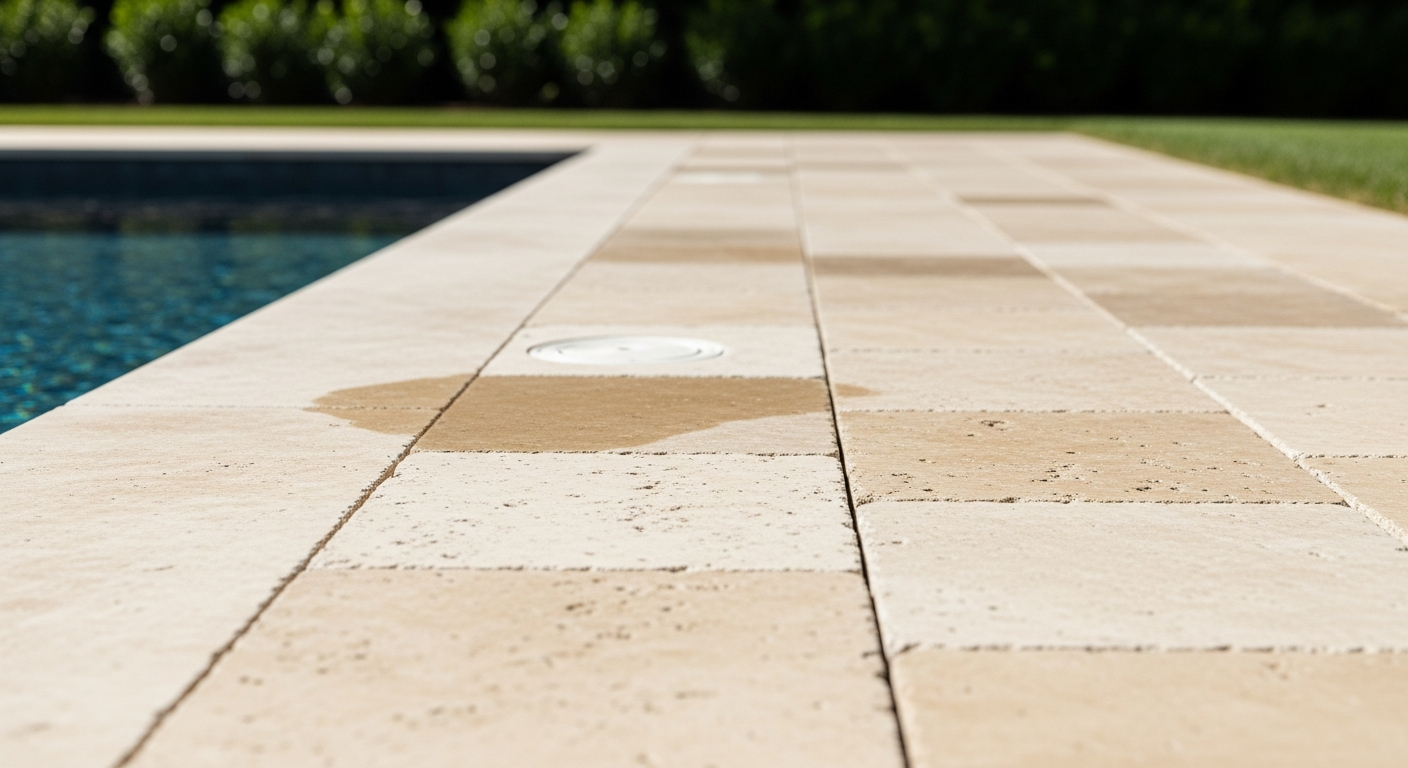
Saltwater itself is not corrosive to high-density natural stone, but the repeated process of salt crystals forming as water evaporates can cause surface pitting and spalling over time. This process, known as salt degradation, is most aggressive on more porous stones like certain sandstones. To mitigate this, choose a dense stone like travertine, ensure proper drainage away from the pool, and apply a high-quality, salt-resistant penetrating sealer specifically designed for natural stone. This creates a barrier that significantly reduces water absorption, preventing the damaging crystal formation within the stone's pores.
Some of my new pavers have a white, chalky film on them. Is this permanent damage?
This white film is most likely efflorescence, which is not permanent damage but a natural occurrence as mineral salts from the setting bed migrate to the surface with moisture and are left behind after evaporation. Do not attempt to pressure wash it off, as this can force the salts deeper into the stone, causing a recurring problem. Instead, use a stiff-bristled brush to dry-scrub the residue. For stubborn cases, a specialized efflorescence cleaner can be used, but always test it on an inconspicuous area first to ensure it doesn't discolor the paver.
Are light-colored stone pavers really that much cooler on bare feet than concrete?
Yes, light-colored, high-albedo stones like travertine are significantly cooler than dark pavers or traditional brushed concrete because they reflect more solar radiation. While all surfaces will get hot in direct sun, a light travertine paver can be 10-15 degrees Celsius (20-30°F) cooler than dark slate or standard concrete under the same conditions. The key factor is the stone's porous structure, which allows it to breathe and dissipate heat more effectively than dense, solid materials like poured concrete, making it a superior choice for barefoot comfort around the pool.
Do I absolutely have to seal my stone pavers, and what happens if I don't?
Sealing is not mandatory, but it is highly recommended to protect your investment and simplify maintenance. Unsealed pavers are porous and will readily absorb pool chemicals, leaf tannins, and oils, leading to deep, difficult-to-remove stains. More critically, in regions with freeze-thaw cycles, unsealed stone can absorb water that later freezes, expands, and causes the surface to crack or flake—a process called spalling. A good impregnating sealer penetrates the stone to block absorption without making the surface slippery, preserving its natural look and structural integrity for years.
What's the best way to clean algae and other tough stains off my pavers without damaging them?
Never use muriatic acid or high-pressure washing on natural stone, as it will etch the surface and strip its natural color. For organic stains like algae or mildew, use a pH-neutral cleaner specifically formulated for stone and a soft-bristle brush. A diluted solution of oxygen bleach is a safer alternative to chlorine bleach for stubborn spots. For rust stains from patio furniture, an iron-specific stain remover (poultice) is required to draw the metal oxides out of the stone's pores. Always rinse the area thoroughly with clean water after any cleaning treatment.
One of my pavers has settled and is now a trip hazard. Is this a massive repair job?
No, repairing a single sunken paver is a relatively simple and inexpensive fix, which is a major advantage of a paver system over a solid concrete slab. The process involves using specialized tools to carefully lift the sunken paver and the adjacent ones, adding and leveling more of the bedding sand base to bring the area up to the correct height, and then resetting the pavers. The most common cause is improper base compaction during the initial installation. Addressing one sunken paver quickly prevents water from pooling and destabilizing the surrounding area.