
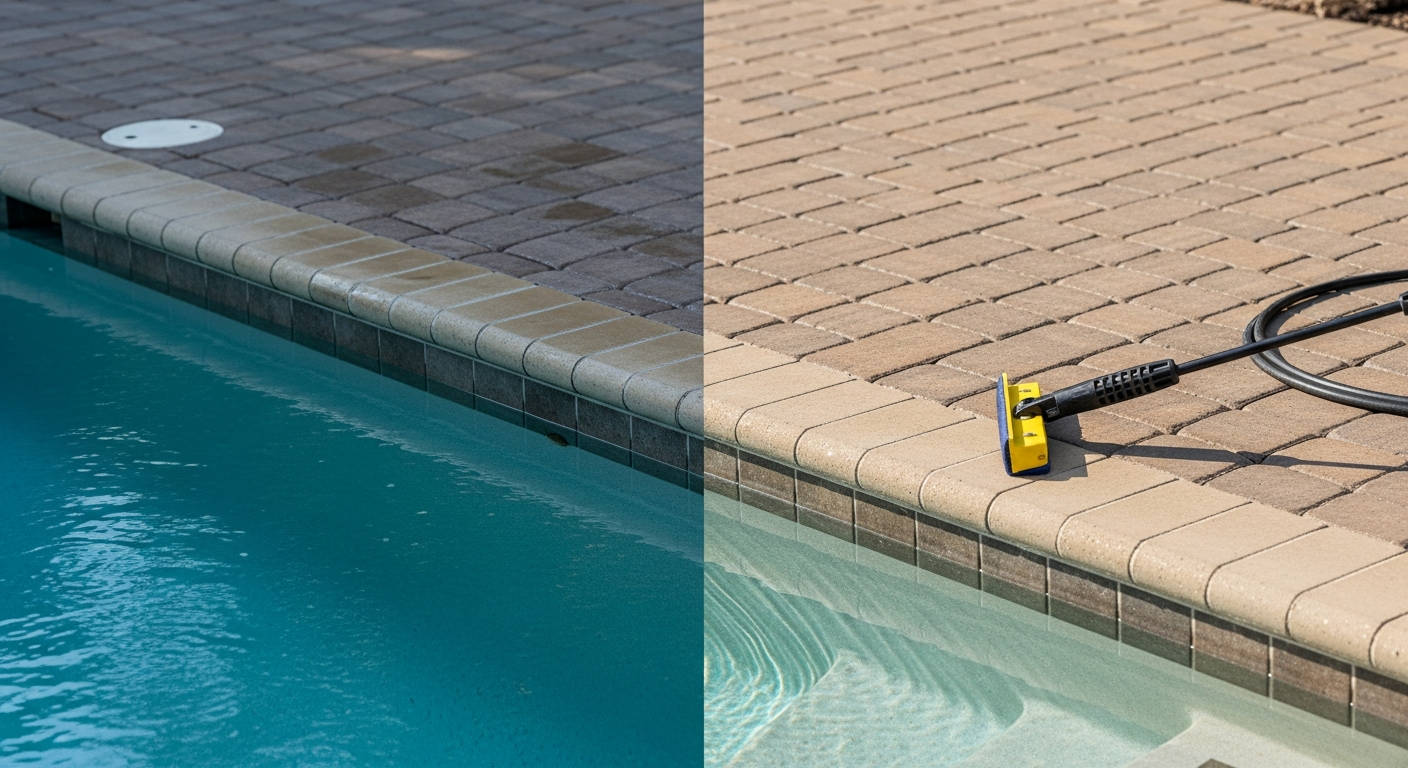
Patio Paver Cleaning and Sealing in Pinellas County: My Protocol for Preventing Subsurface Efflorescence and Algae Infiltration
As a specialist working directly on paver projects across Pinellas County, from the salt-sprayed driveways in Clearwater Beach to the sprawling pool decks in Palm Harbor, I've seen one issue derail more investments than any other: improper sealing that fails within a single rainy season. The unique combination of our intense UV exposure, high humidity, and salt-laden air creates a brutal environment for paver surfaces. The common "pressure wash and seal" approach is a guaranteed recipe for failure, leading to milky blushing, peeling, and rampant algae growth. My entire methodology is built around a single, critical principle often overlooked here: you must treat the paver system, not just the surface. This means diagnosing the moisture condition of the substrate and sand joints before a single drop of sealer is chosen. This diagnostic-first approach is the only way to guarantee a finish that not only looks pristine but also increases the structural integrity of the pavers and prevents the recurring maintenance headaches so common for Pinellas homeowners.My Diagnostic Framework for Pinellas County Pavers
The most catastrophic error I see is applying a film-forming sealer, like a high-gloss acrylic, onto a surface that has a high Moisture Vapor Transmission (MVT) rate. In Pinellas, with our high water table and frequent downpours, moisture is constantly trying to escape upwards through the paver joints and the pavers themselves. When you trap this vapor under a non-breathable sealant, it condenses, causing the sealer to delaminate and turn a milky white. My first step on any project, whether it's historic brick in Old Northeast St. Pete or modern travertine in Tierra Verde, is always an MVT assessment. This tells me exactly what kind of sealer the surface can tolerate. A project I was called in to fix in a large Snell Isle property had failed precisely because of this; the previous contractor had sealed in moisture, costing the homeowner thousands in stripping and restoration.Decoding Moisture and Sealer Selection: A Technical Breakdown
Based on the MVT reading and a visual inspection for efflorescence (those chalky white salt deposits), I classify the project and select the sealer chemistry. This is not a one-size-fits-all process.- Low MVT & No Efflorescence: Here, a high-quality, solvent-based acrylic sealer can be an option if a "wet look" is desired. However, I still prefer breathable formulas to provide a margin of safety against our pop-up summer storms.
- Moderate to High MVT: This is the reality for about 80% of properties in Pinellas County, especially those near the water or with irrigation systems. For these, I exclusively use a penetrating silane/siloxane sealer. This type of sealer works by chemically bonding within the paver's pores, not by forming a film on top. It repels liquid water but allows water vapor to pass through, completely eliminating the risk of blushing or peeling.
- Efflorescence Presence: If efflorescence is present, it's a red flag indicating a significant subsurface moisture issue. After cleaning with an efflorescence remover (an acidic cleaner), a penetrating sealer is the only viable option to prevent its immediate return.
My 5-Step Application Protocol for a Flawless, Long-Lasting Finish
Executing the sealing process with precision is just as critical as the diagnosis. My proprietary method ensures maximum sealer penetration and longevity, often extending the effective life of the treatment by over 50% compared to standard practices.- Deep Biocidal Cleaning: I start with a low-pressure wash combined with a professional-grade biocide. This doesn't just clean the surface; it kills mold and algae spores deep within the paver's capillaries. Simply pressure washing leaves these spores intact, ready to bloom again under the new sealer.
- Joint Stabilization with Polymeric Sand: I meticulously remove old, contaminated sand and replace it with high-grade polymeric sand. The key here is proper activation. I use a specific fine-mist water application to set the sand without washing the polymers onto the paver surface, which can cause permanent hazing.
- Surface Dryness Verification: I never rely on a visual check. I use a calibrated surface moisture meter to confirm the pavers are below the 5% moisture content threshold required for proper sealer adhesion. Rushing this step is the second most common cause of failure I see.
- Flood Coat Application of Penetrating Sealer: For silane/siloxane sealers, I apply a heavy "flood coat" using a low-pressure, high-volume sprayer. The goal is to allow the pavers to absorb the sealer to the point of refusal. This ensures a deep, protective barrier rather than a thin, superficial layer. I then back-roll any excess to ensure a uniform, non-shiny finish.
- Mandatory 48-Hour Cure Period: The job is not finished when I leave. I block off the area and insist on a strict 48-hour cure time with no foot traffic, and absolutely no water from sprinklers or rain. This period is non-negotiable for the sealer to achieve its full chemical cross-linking and protective properties.
Fine-Tuning: Adjustments for Travertine, Coastal Homes, and High-Traffic Areas
The base protocol is robust, but I make critical adjustments for specific Pinellas scenarios. For travertine pool decks in Dunedin, I use a specialized penetrating sealer with an added slip-resistant additive, ensuring safety without altering the stone's natural beauty. For homes directly on the Gulf in Indian Rocks Beach, I select a formula with a higher concentration of siloxane to provide enhanced chloride ion resistance against salt spray, preventing spalling and degradation. For commercial high-traffic areas, the joint stabilization step becomes even more critical to prevent paver shifting and weed growth. Have you measured the moisture output of your pavers, or are you simply guessing which sealant will survive the next Pinellas County summer?Written by

Tags
patio paver cleaning and sealing
cleaning and sealing patio pavers
paver patio cleaning and sealing
paver driveway sealing
paver sealers


