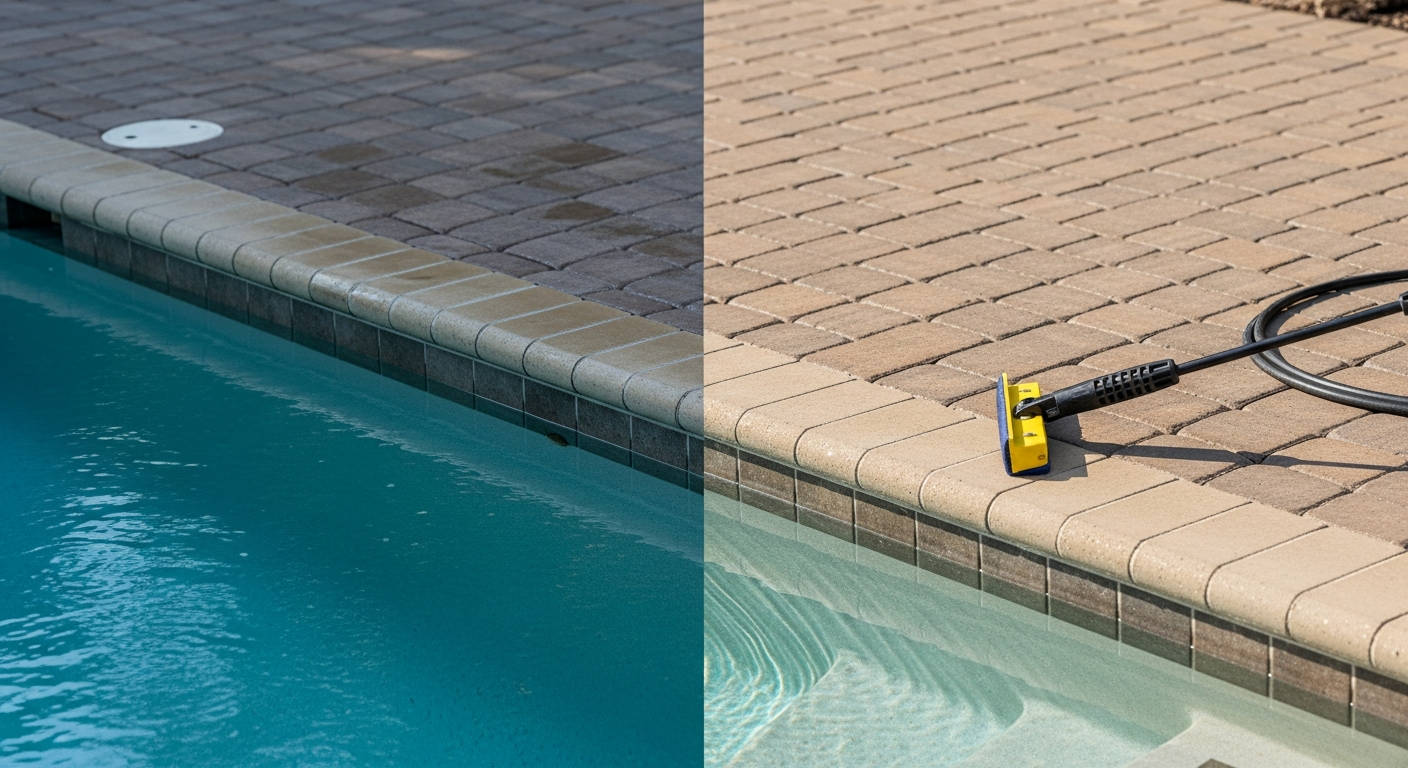
Professional Paver Sealer in Pinellas County: My Protocol for 5-Year Salt-Air and UV Resistance
After years of restoring pavers across Pinellas County, I can tell you the single biggest point of failure isn't the sealer itself—it's the failure to diagnose the paver's substrate porosity and moisture content before a single drop is applied. I’ve seen countless jobs in St. Pete and Clearwater where a premium sealer peels or clouds within a year, not because it was low-quality, but because it was applied to a damp substrate, trapping efflorescence-causing moisture. This is especially brutal with our local humidity and intense sun. My approach fundamentally rejects the common "pressure wash and seal" model. Instead, I focus on creating a bond that accounts for the specific challenges of our coastal environment, from the salt spray on Treasure Island to the intense heat radiating off driveways in Largo. The goal isn't just a cosmetic sheen; it's creating a hydrophobic barrier that maintains breathability, preventing the spalling and color degradation that plagues so many properties here.Beyond the Surface Clean: My Pinellas Climate-Shield Diagnostic Protocol
Before my team even unloads a pressure washer, my first tool on site is a digital moisture meter. I’ve seen projects fail because a contractor sealed pavers that looked dry on the surface but held significant moisture deep within the substrate, especially common in the shaded, damp areas of Dunedin homes. My non-negotiable baseline is a moisture reading of less than 15% across at least 80% of the target surface. Anything higher, and the job is paused. Sealing wet pavers is the number one cause of the milky, hazy finish you see on failed jobs. The second part of my diagnostic is a paver porosity test. I apply a small, measured amount of water to a few test pavers to see how quickly it absorbs. This tells me what kind of sealer the specific stone needs. Highly porous pavers, common in newer developments, require a different approach than the dense, older brick pavers found in historic Kenwood. This simple test dictates the sealer chemistry we must use for a successful, long-term bond.Sealer Chemistry vs. Salt Spray: Selecting the Right Formulation
Here's a technical insight most contractors won't discuss: there are two primary types of sealers, and choosing the wrong one for Pinellas County is a recipe for disaster. The most common are film-forming acrylic sealers. They provide that high-gloss, "wet look" but create a non-breathable plastic-like layer on top. In our high-humidity environment, this traps moisture rising from the ground, leading to that dreaded white haze (efflorescence) and eventual peeling. For 90% of my projects, especially those near the water, I exclusively use a penetrating silane-siloxane sealer. This type of sealer works differently. It chemically bonds inside the paver's capillaries, creating a water-repellent barrier without sealing the surface. This allows the paver to "breathe," letting moisture vapor escape while preventing water, salt, and oil from penetrating. It doesn’t provide a high-gloss finish, but it provides a 30-40% increase in lifespan and resistance to salt-induced pitting, which is a constant battle for driveways and walkways on our barrier islands.Executing the Flawless Paver Seal: A Step-by-Step Breakdown
My application method is a meticulous, multi-stage process designed for maximum penetration and longevity. Skipping any of these steps compromises the final result.- Step 1: Deep Cleaning and Surface Prep. We use a hot water pressure washer calibrated to 3000-3500 PSI to remove all organic stains, old sealer, and efflorescence. For stubborn oil stains, I use a specialized microbial degreaser that breaks down the hydrocarbon without damaging the paver.
- Step 2: Joint Re-Sanding. This is a critical step I often see done incorrectly. I never use regular play sand. My standard is an ASTM C144 polymeric sand. It's swept into the joints, lightly misted with water to activate the polymer, and hardens to form a durable, weed-proof, and insect-resistant barrier. This drastically reduces the maintenance headache of weeds and ant hills common in Pinellas yards.
- Step 3: Sealer Application. I use a low-pressure, high-volume sprayer to apply a "flood coat." This means applying enough sealer so that it puddles on the surface for a few seconds before absorbing. The key is to maintain a wet edge and apply in a cross-hatch pattern to ensure 100% even coverage without any lines or streaks. Two coats are my minimum standard.
The Final 5%: Calibration and Curing Standards for Pinellas Humidity
The job isn't done when the last coat is applied. The curing process is where many projects fail, especially during our humid summers. I will not seal if the ambient temperature is above 90°F or below 50°F, or if there's a chance of rain within 24 hours. The sealer needs a specific window to cure properly. I also educate my clients on the curing timeline. The surface is typically dry to the touch in 2-4 hours, but it's not ready for foot traffic for at least 8 hours and absolutely no vehicle traffic for a full 48 hours. Allowing the sealer to fully cross-link with the paver substrate during this period is what guarantees the 5-year resistance I build my reputation on. It’s this final discipline that separates a professional, lasting job from one that looks good for a single season. What is the acceptable parts-per-million (PPM) salinity reading on a paver surface before applying a silane-siloxane sealer to prevent premature delamination?Written by

Tags
concrete pavers sealer
porcelain paver sealer
driveway paver sealing near me
patio and paving sealer
paver patio cleaning and sealing near me