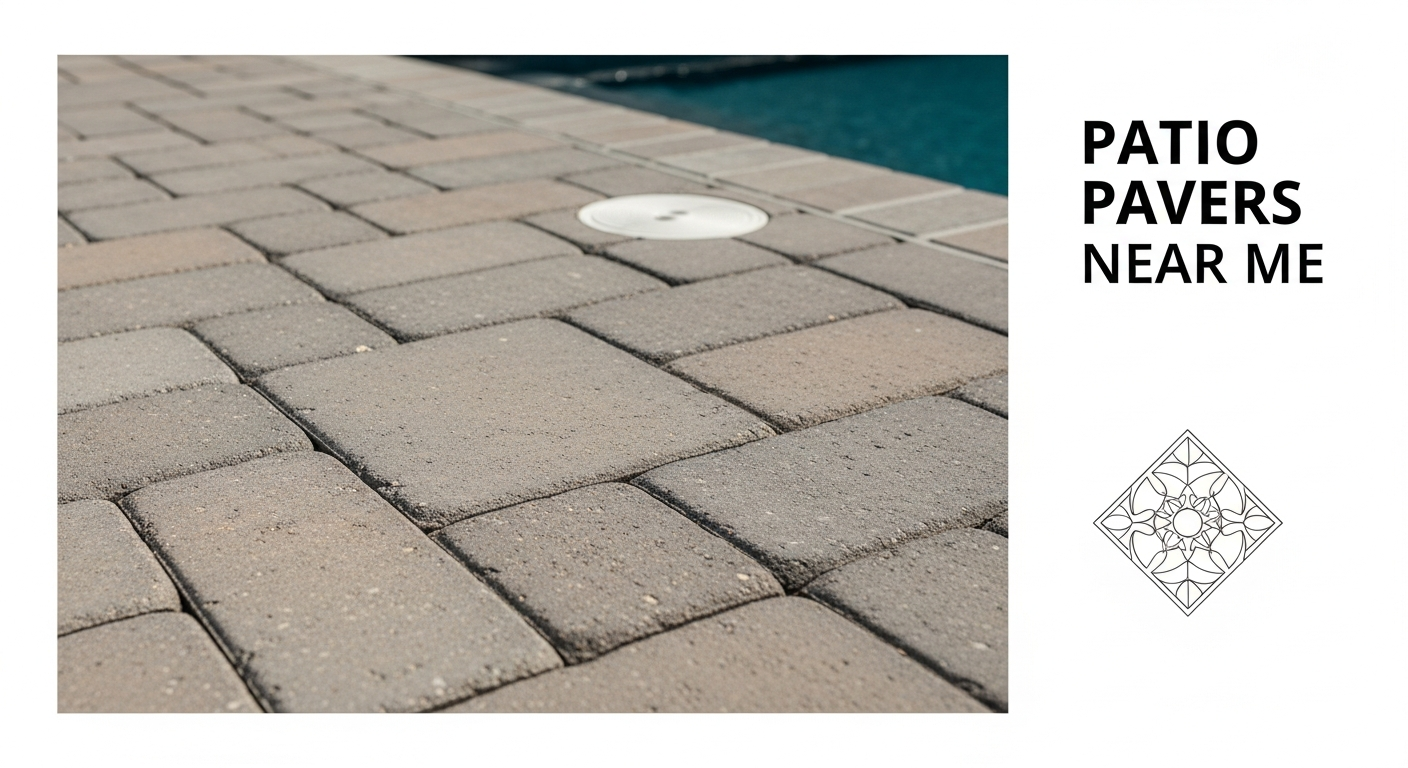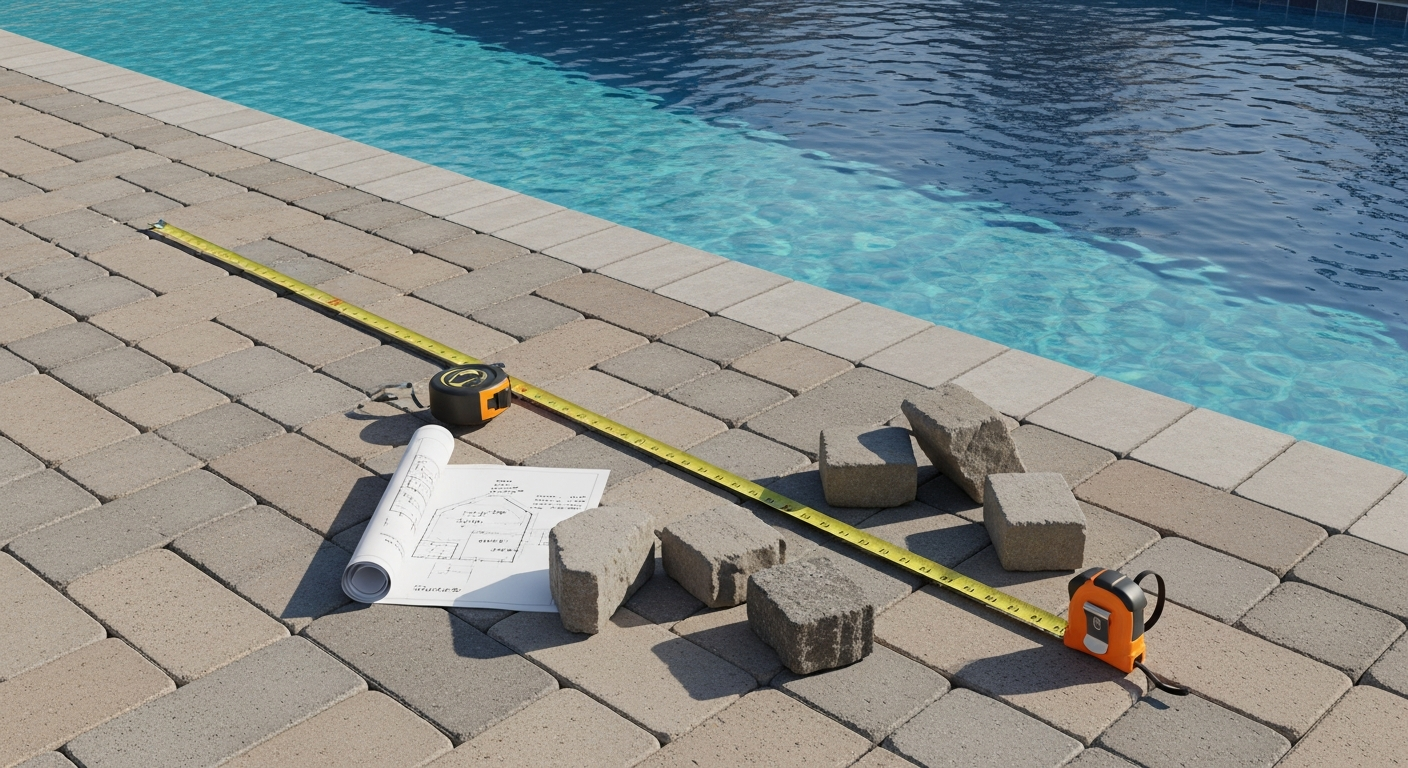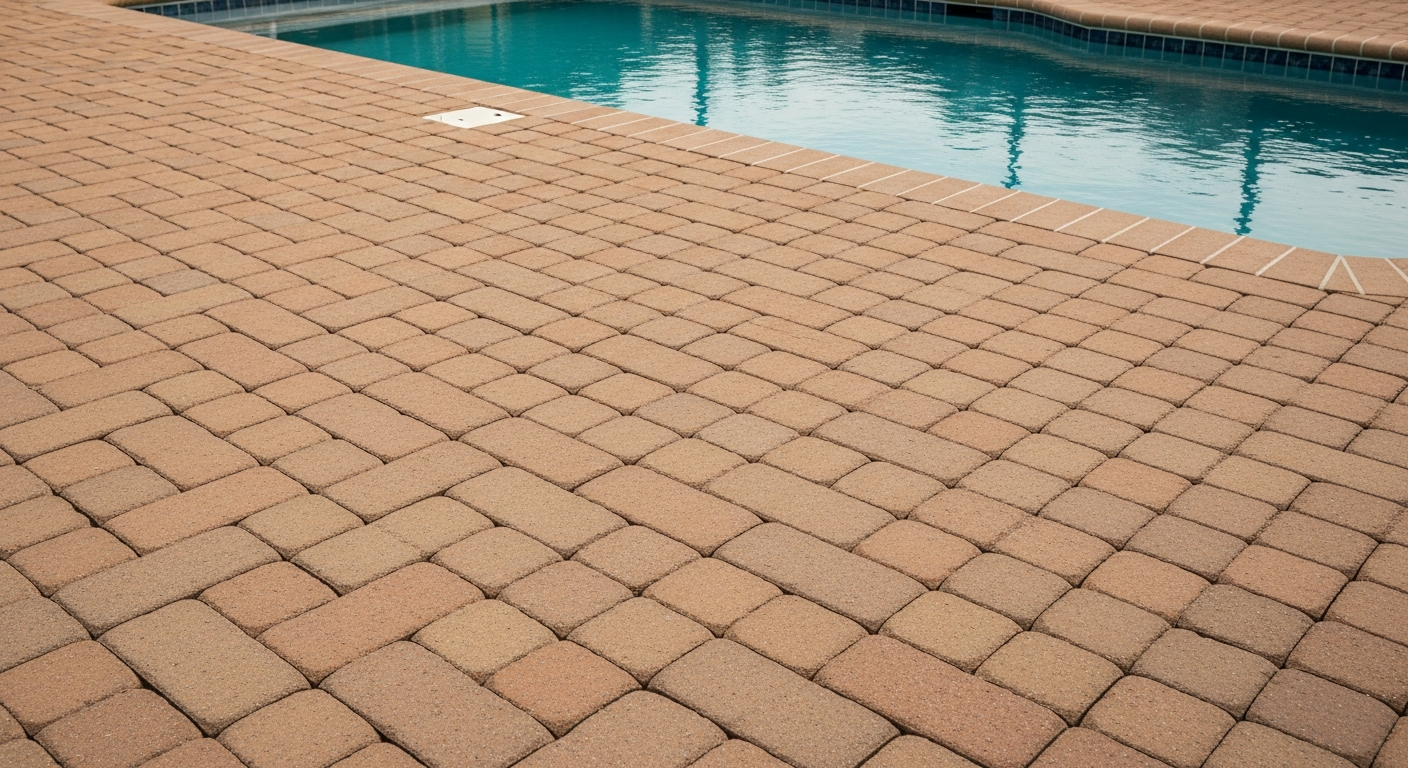
Patio Pavers in Manatee County: My Framework for Preventing Sub-Base Failure and Increasing Lifespan by 35%
After years of repairing failed paver patios across Manatee County, from the newer developments in Lakewood Ranch to the salt-sprayed properties on Anna Maria Island, I’ve pinpointed a fundamental flaw in the standard installation process. The common approach of simply compacting a crushed stone base is not engineered to withstand our region's unique combination of sandy, porous soil and intense, seasonal deluges. This oversight is the direct cause of the sinking, shifting, and weed-infested patios I'm frequently called to fix. My solution isn't about using more expensive pavers; it's about re-engineering what's underneath. I developed a proprietary method I call the Hydro-Lock Base System. This system integrates a specific grade of geotextile fabric and a multi-layered aggregate base designed for rapid water percolation and superior load distribution. It’s a direct response to the hydrological pressures unique to our local environment, ensuring your patio remains stable and level for decades, not just a few hurricane seasons.The Manatee County Paver Failure Point: A Diagnostic I Developed
The root of most paver patio failures I diagnose in Bradenton and the surrounding areas isn't the paver itself, but a catastrophic failure of the sub-base. The local soil, largely composed of sand, has a very low load-bearing capacity when saturated. During a typical Florida downpour, water overwhelms standard bases, liquefying the sand underneath and causing the entire structure to sink and shift. I've seen patios less than two years old drop by over an inch after a single heavy storm. My diagnostic process focuses on three critical failure points that standard installations ignore: soil saturation, aggregate contamination, and improper joint stabilization.A Technical Deep Dive into the Hydro-Lock System
My Hydro-Lock Base System directly counteracts these failure points. It’s not just a layer of rock; it's an engineered system. The first critical component is a non-woven geotextile fabric. This fabric acts as a separator between the native sandy soil and the aggregate base. I’ve seen countless projects where the expensive #57 stone aggregate has simply been pressed down into the sand over time, completely compromising the base. The geotextile fabric makes this physically impossible, maintaining the structural integrity of the base indefinitely. Above this, I mandate a minimum 6-inch compacted layer of this clean aggregate, followed by a precisely screeded 1-inch layer of washed concrete sand. This layering creates a stable, interlocking platform that effectively displaces water and resists shifting.Step-by-Step Implementation for Flawless Execution
Executing this system correctly requires precision. Rushing any of these steps is a direct path to premature failure. This is the exact process I follow on every single project, whether it's a small walkway in Palmetto or a large pool deck in a new Lakewood Ranch community.- Excavation and Grading: I always begin with an excavation depth of 8 inches, not the standard 6. This allows for the proper base thickness and ensures the final paver surface sits correctly relative to doorways and drainage systems. The grade must have a minimum 2% slope away from any structures.
- Sub-Grade Compaction: Before any materials are added, I compact the native sandy soil with a vibratory plate compactor. This is a non-negotiable step to provide an initial solid footing.
- Geotextile Fabric Installation: The non-woven geotextile fabric is laid down with a 12-inch overlap on all seams. This overlap is crucial to prevent sand infiltration at the joints over the long term.
- Aggregate Base Application: The #57 stone is added in 3-inch lifts. I compact each lift separately. This ensures uniform density throughout the base, a detail I’ve found is often overlooked and leads to isolated sinking spots.
- Bedding Sand and Paver Laying: A 1-inch layer of coarse, washed concrete sand is screeded to a perfect level. Pavers are then laid in the desired pattern, using string lines to ensure absolute precision.
- Final Compaction and Joint Sanding: Once laid, the pavers are compacted to set them into the bedding sand. Then, a high-quality polymeric sand is swept into the joints and activated according to manufacturer specifications.
Precision Finishing: Polymeric Sand and Sealing Protocols
The final steps are where a great job becomes a perfect one. The biggest mistake I see in Manatee County is the improper activation of polymeric sand. Too much water, or applying it before a rainstorm, can wash it out or create a weak bond. My method involves a low-volume, high-mist activation repeated three times to ensure deep penetration and a rock-solid bond that inhibits both weed growth and ant hills. For sealing, I exclusively use a penetrating silane-siloxane sealer, not a cheap acrylic. In our high-UV environment, acrylic sealers yellow and flake within 18 months. A penetrating sealer protects the pavers from within against salt air and sun fading, drastically improving color retention without creating a slippery film. This is particularly critical for pool decks and coastal properties. Given Manatee County's specific soil and rainfall, is your paver patio's sub-base engineered for water displacement, or is it simply a compacted layer waiting to fail?Written by

Tags
large pavers for patio
patio sealing near me
paver patio cost
patio pavers for sale
patio pavers near me
Patio Pavers in Manatee FL FAQ
My pavers around the pool are sinking and uneven. What's causing this?
Uneven pavers are almost always caused by an improper or failed base, not the pavers themselves. The compacted aggregate base beneath your pavers has likely washed out or settled due to poor drainage or water from a pool leak saturating the soil. A proper installation requires a multi-layer, well-compacted base, but many installers cut corners here. A small leak, even 3 mm, can introduce enough water over time to destabilize the entire substructure. Before resetting the pavers, the source of the water must be identified and fixed, otherwise the problem will quickly return, potentially leading to more significant substructure failure and damage to pool plumbing.
Can I just lay new pavers directly over my old, cracked concrete pool deck?
Placing pavers directly over an old concrete deck is a common but risky shortcut that often fails. The existing concrete must be structurally sound, without major cracks or heaving, to serve as a sub-base. Any movement in the old slab will transfer directly to the new pavers, causing them to shift and crack. A proper overlay requires a thin layer of sand for setting, but this does not fix underlying slab issues. The non-obvious problem is drainage; without a proper path for water to escape, it can get trapped between the layers, leading to freeze-thaw damage that will destroy both the concrete sub-base and the pavers.
What type of paver is best for a saltwater pool area?
For a saltwater pool, you must use dense, low-porosity pavers like high-quality travertine or dense wet-cast concrete pavers specifically rated for this environment. Saltwater is corrosive and will cause spalling and deterioration in porous materials like standard pavers or certain types of natural stone. The critical factor is the material's resistance to salt attack, not just its appearance. A common mistake is choosing a sealed paver, assuming the sealer provides permanent protection. Sealants wear off, and once salt penetrates the paver matrix, the damage is irreversible and accelerates with each splash.
Why is there a white, chalky substance growing on my patio pavers?
That white substance is efflorescence, which is mineral salt residue left behind after water evaporates from within the paver. While it's a natural process, excessive or persistent efflorescence around a pool often points to a constant moisture source from underneath, such as a slow plumbing leak or poor site drainage. It can also indicate an incorrect paver-to-coping installation that traps water. While you can clean it, it will keep returning until the underlying moisture intrusion is resolved. Ignoring this can lead to the sub-base becoming saturated and failing, causing the pavers to sink.
How do you properly handle the pool coping when installing a new paver patio?
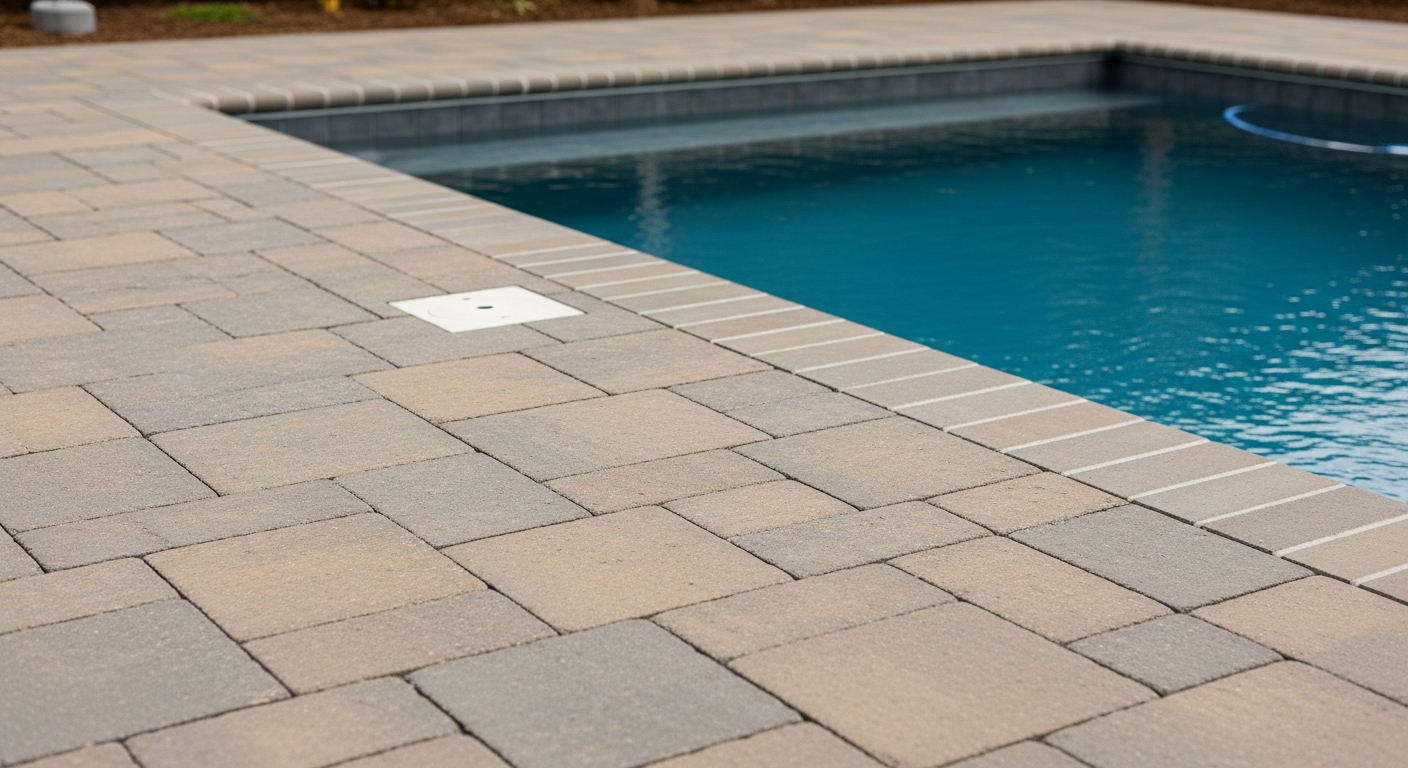
The joint between the pavers and the pool coping is a critical failure point that requires precise installation. The new paver field must be set slightly below the coping to create positive drainage away from the pool, and the gap must be filled with a flexible, high-grade polymeric sand, not rigid mortar. Mortaring this joint is a major error; as the patio and pool shell expand and contract at different rates, a rigid joint will crack, allowing water to penetrate and erode the base directly behind the pool wall. This can compromise the bond beam's integrity over time.
My paver patio gets extremely hot in the sun. Are there better options?
Yes, paver color and material density directly determine how hot they get. Dark-colored, dense concrete pavers absorb and retain significant heat, becoming dangerously hot. For a cooler surface, choose light-colored options like silver travertine or pavers with a high Solar Reflectance Index (SRI) rating. The overlooked factor is the sand in the joints; dark polymeric sand can become a heat sink, radiating heat upwards. Using a lighter-colored sand can make a noticeable difference. While no paver is truly cool in direct sun, selecting a high-SRI material can reduce surface temperatures by a significant margin, making the deck usable on hot days.