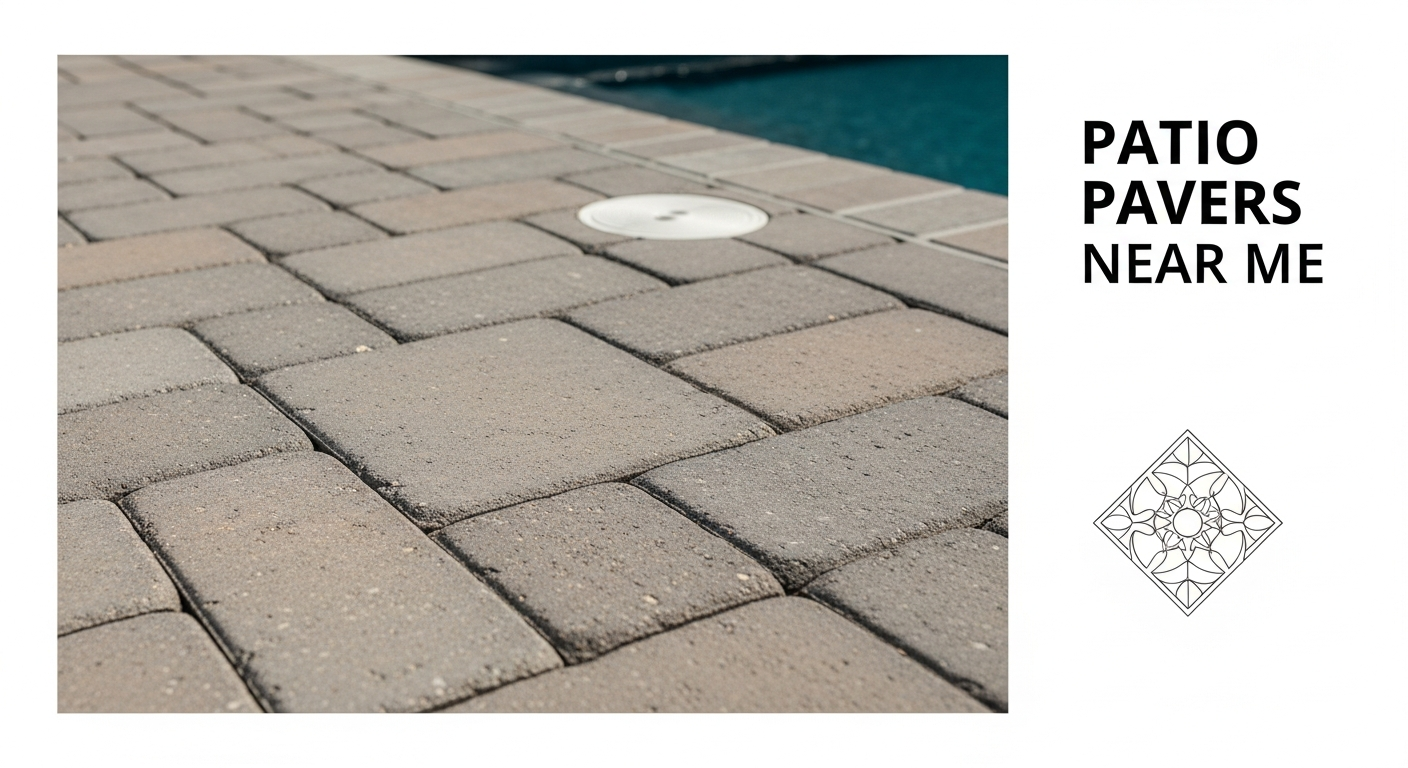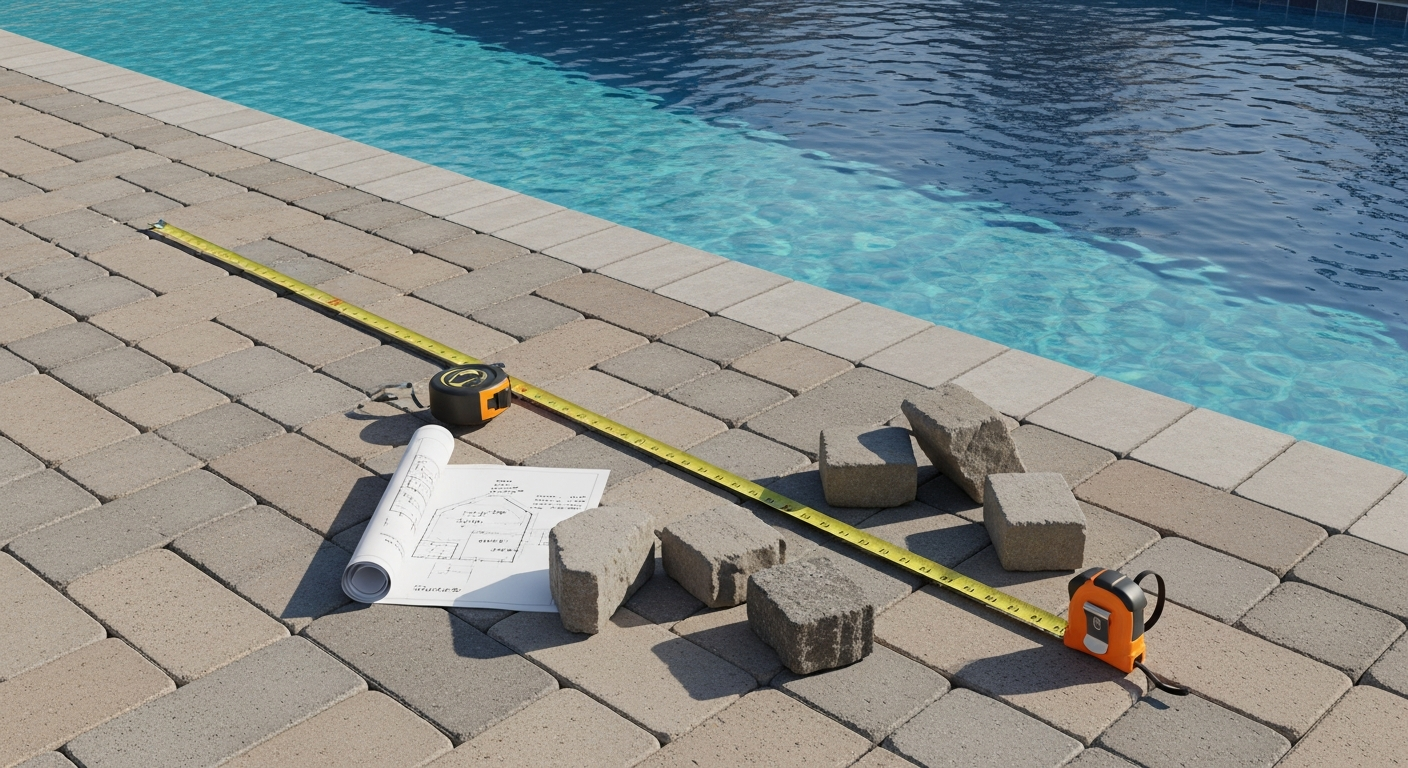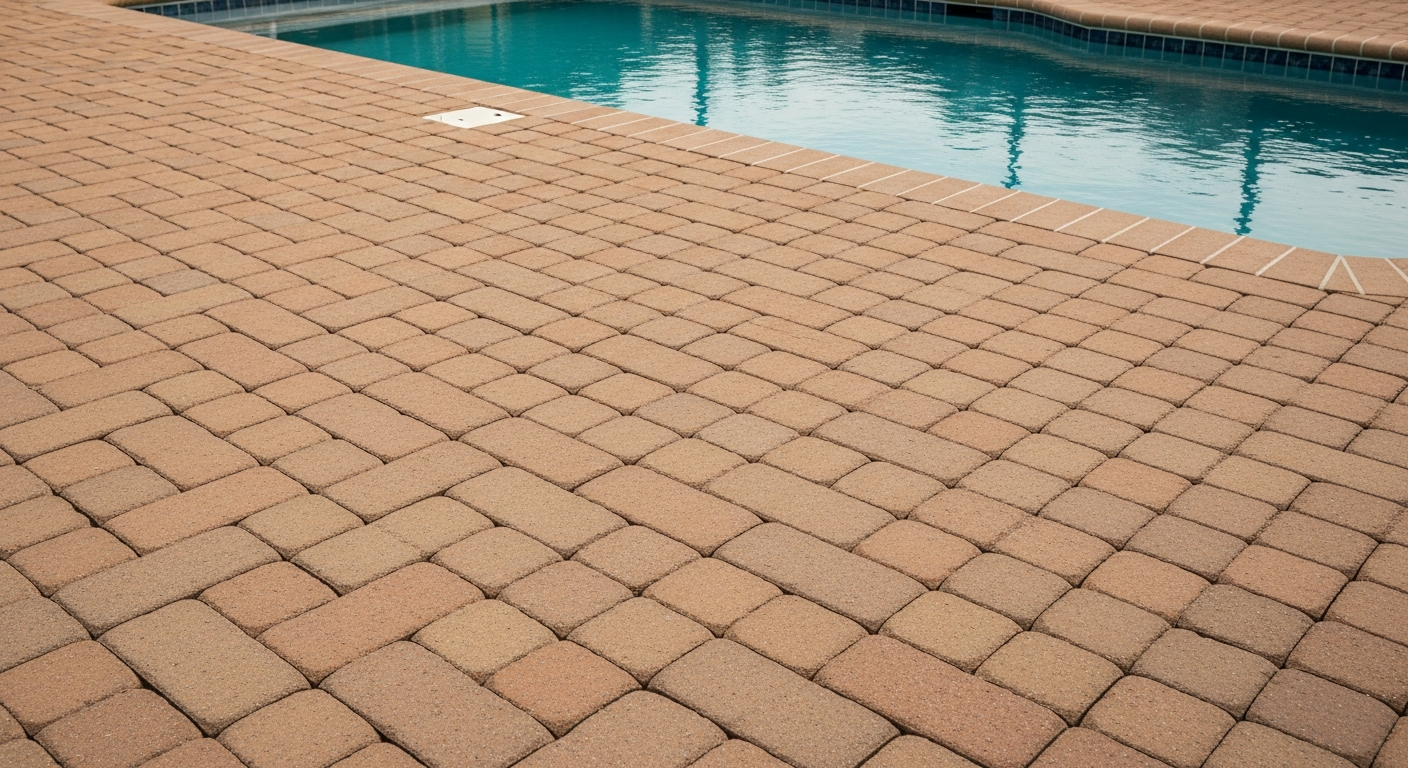
Patio Pavers in Polk County: My Proprietary Base-Lock System for a 30-Year Lifespan
I’ve seen too many paver patios in Lakeland and Winter Haven fail within 5 years due to Florida's intense rain cycles and sandy, unpredictable soil. My entire approach sidesteps this common failure by focusing on a geotextile-reinforced sub-base and a specific polymeric sand protocol tailored for high humidity. This isn't about the paver you choose; it's about engineering a foundation that can withstand a decade of Polk County summers without shifting, sinking, or sprouting weeds. Most paver projects fail before the first paver is even laid. The real problem is a fundamental misunderstanding of our local ground conditions. Contractors often treat the sandy soil here the same way they would clay soil up north, leading to catastrophic paver sinkage and separation after just a few rainy seasons. This is the single biggest point of failure I correct on repair jobs.The Critical Error in Polk County Paver Installation: Sub-Base Failure
My methodology, which I call the Base-Lock System, was born from a frustrating project I took over in a new Davenport development. The original installer used a standard 4-inch gravel base that had completely liquefied and shifted under the constant irrigation and downpours. The entire patio had to be torn out. The core issue wasn't the paver quality; it was a complete disregard for soil separation and water management. My system addresses this at the molecular level, creating a stable, interlocking foundation that remains inert regardless of water saturation.Deconstructing the Base-Lock: Geotextiles and Compaction Ratios
The secret isn't just digging deeper; it's about creating distinct, non-contaminating layers. The sandy soil of Polk County will, over time, work its way up through a standard gravel base, compromising its structural integrity. To prevent this, I use a specific sequence. It starts with a non-woven geotextile fabric laid directly over the compacted native soil. This fabric acts as a separator, preventing sand infiltration while allowing water to percolate through. Above this, I use two different types of aggregate. The foundational layer is 4-6 inches of #57 crushed limestone for its angular properties that lock together under pressure. The crucial final leveling layer, just 1 inch thick, is granite screenings, not sand. This provides a firmer bed for the pavers. The most critical KPI here is compaction. I never proceed unless my dynamic cone penetrometer shows a minimum 95% compaction rate for the sub-base. Anything less is a guaranteed failure.Execution Blueprint: From Excavation to Final Seal
Building a patio that lasts in areas from Bartow to Haines City requires a non-negotiable sequence of events. Rushing any of these steps or using the wrong materials is what leads to those uneven, weed-infested patios you see everywhere. I follow this exact protocol on every single project.- Excavation and Grading: I excavate to a minimum depth of 8 inches for pedestrian patios. The first and most important measurement is establishing the grade. I engineer a minimum 1/4 inch of fall per linear foot, ensuring water is actively channeled away from the home's foundation.
- Sub-Soil Compaction & Geotextile: After grading, the native soil is compacted. Then, the non-woven geotextile fabric is laid down, overlapping seams by at least 12 inches. This is a step I see 90% of local installers skip.
- Aggregate Base Installation: The #57 limestone is laid in 3-inch lifts. Each lift is watered and compacted to that 95% compaction standard before the next is added. This prevents hidden soft spots.
- Screeding the Bedding Layer: Using 1-inch metal conduits as guides, I screed the 1-inch layer of granite screenings to create a perfectly flat and firm setting bed.
- Paver Installation and Cuts: Pavers are laid in a click-and-drop motion to prevent disturbing the screeded bed. All edge cuts are made with a wet diamond blade saw for clean, chip-free lines.
- Polymeric Sand and Sealing: This is a major area for information gain. Given our afternoon rain, I only apply high-performance polymeric sand when I have a guaranteed 24-hour dry window. After it cures, I apply two coats of a UV-resistant, non-slip silicate sealer, which penetrates the paver instead of just forming a film on top, preventing the peeling and yellowing common in the Florida sun.
The 5% Difference: Edge Restraints and Drainage Gradients
What separates a 10-year patio from a 30-year one are the finishing details. I've found that the standard plastic edging sold at big box stores will warp and fail under our intense sun. I insist on using either hidden aluminum restraints or, preferably, a poured concrete toe that is completely concealed by sod. This provides a rigid frame that ensures zero lateral movement of the pavers over time. This, combined with the precise drainage gradient, forms a complete system that actively manages water and load stress. Have you considered how the specific percolation rate of your property's soil should dictate the depth of your paver base, or is your contractor just using a one-size-fits-all approach?Written by

Tags
large pavers for patio
patio sealing near me
paver patio cost
patio pavers for sale
patio pavers near me
Patio Pavers in Polk FL FAQ
My pavers around the pool are sinking and uneven. What's causing this?
Uneven pavers are almost always caused by an improper or failed base, not the pavers themselves. The compacted aggregate base beneath your pavers has likely washed out or settled due to poor drainage or water from a pool leak saturating the soil. A proper installation requires a multi-layer, well-compacted base, but many installers cut corners here. A small leak, even 3 mm, can introduce enough water over time to destabilize the entire substructure. Before resetting the pavers, the source of the water must be identified and fixed, otherwise the problem will quickly return, potentially leading to more significant substructure failure and damage to pool plumbing.
Can I just lay new pavers directly over my old, cracked concrete pool deck?
Placing pavers directly over an old concrete deck is a common but risky shortcut that often fails. The existing concrete must be structurally sound, without major cracks or heaving, to serve as a sub-base. Any movement in the old slab will transfer directly to the new pavers, causing them to shift and crack. A proper overlay requires a thin layer of sand for setting, but this does not fix underlying slab issues. The non-obvious problem is drainage; without a proper path for water to escape, it can get trapped between the layers, leading to freeze-thaw damage that will destroy both the concrete sub-base and the pavers.
What type of paver is best for a saltwater pool area?
For a saltwater pool, you must use dense, low-porosity pavers like high-quality travertine or dense wet-cast concrete pavers specifically rated for this environment. Saltwater is corrosive and will cause spalling and deterioration in porous materials like standard pavers or certain types of natural stone. The critical factor is the material's resistance to salt attack, not just its appearance. A common mistake is choosing a sealed paver, assuming the sealer provides permanent protection. Sealants wear off, and once salt penetrates the paver matrix, the damage is irreversible and accelerates with each splash.
Why is there a white, chalky substance growing on my patio pavers?
That white substance is efflorescence, which is mineral salt residue left behind after water evaporates from within the paver. While it's a natural process, excessive or persistent efflorescence around a pool often points to a constant moisture source from underneath, such as a slow plumbing leak or poor site drainage. It can also indicate an incorrect paver-to-coping installation that traps water. While you can clean it, it will keep returning until the underlying moisture intrusion is resolved. Ignoring this can lead to the sub-base becoming saturated and failing, causing the pavers to sink.
How do you properly handle the pool coping when installing a new paver patio?
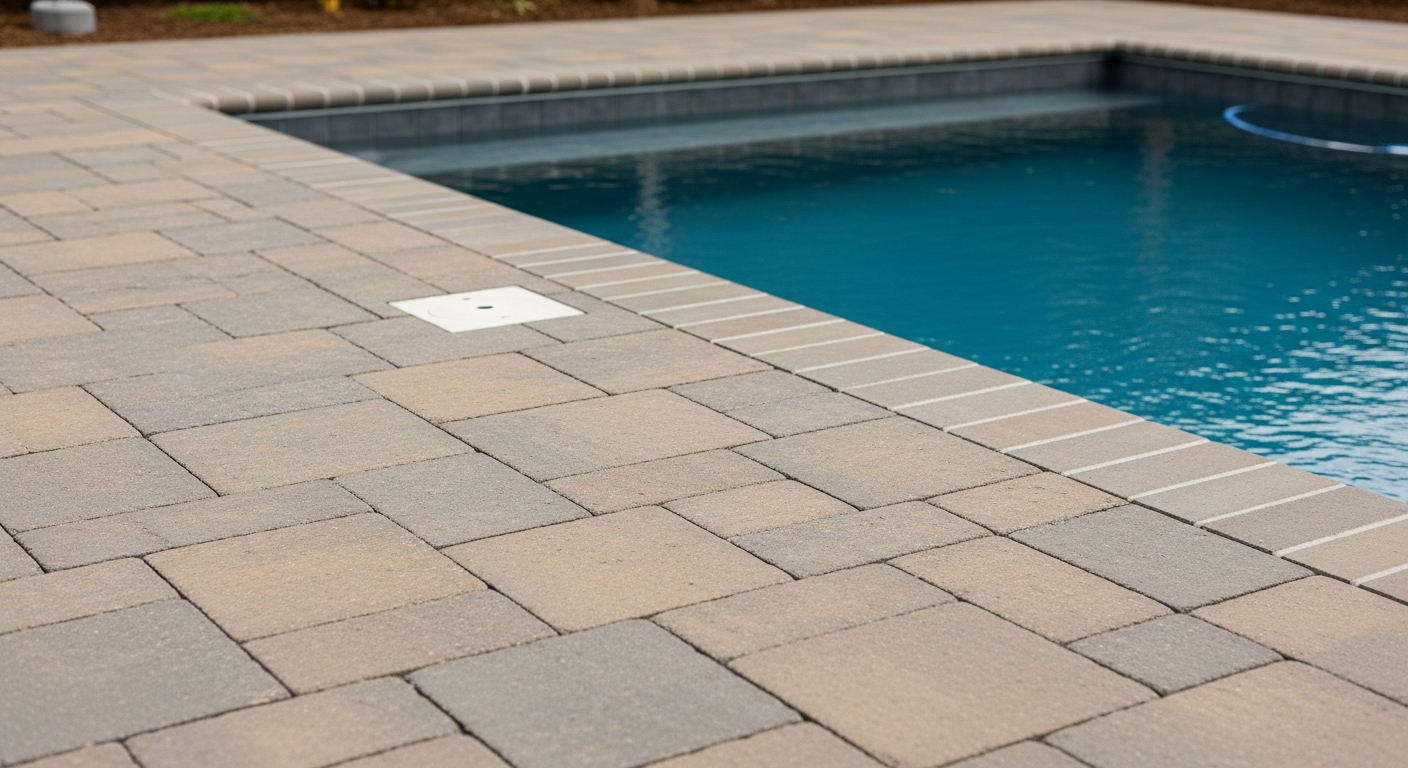
The joint between the pavers and the pool coping is a critical failure point that requires precise installation. The new paver field must be set slightly below the coping to create positive drainage away from the pool, and the gap must be filled with a flexible, high-grade polymeric sand, not rigid mortar. Mortaring this joint is a major error; as the patio and pool shell expand and contract at different rates, a rigid joint will crack, allowing water to penetrate and erode the base directly behind the pool wall. This can compromise the bond beam's integrity over time.
My paver patio gets extremely hot in the sun. Are there better options?
Yes, paver color and material density directly determine how hot they get. Dark-colored, dense concrete pavers absorb and retain significant heat, becoming dangerously hot. For a cooler surface, choose light-colored options like silver travertine or pavers with a high Solar Reflectance Index (SRI) rating. The overlooked factor is the sand in the joints; dark polymeric sand can become a heat sink, radiating heat upwards. Using a lighter-colored sand can make a noticeable difference. While no paver is truly cool in direct sun, selecting a high-SRI material can reduce surface temperatures by a significant margin, making the deck usable on hot days.