Paver Designs in Manatee County: My Protocol for a 30-Year Lifespan Without Sinkage
I've seen more paver patios and driveways fail in Manatee County than I can count, and the culprit is almost always the same: a sub-base that wasn't engineered for our specific combination of sandy soil and torrential downpours. A standard installation that works in other parts of the country will sink, shift, and become a weed-infested mess here in as little as two years. It's a costly mistake I learned to correct the hard way on a waterfront project in Bradenton early in my career. My entire approach is built on a single principle: defeating hydrostatic pressure and soil instability before the first paver is even laid. This involves a proprietary sub-base preparation method that goes beyond industry standards, ensuring the paver surface remains perfectly level and stable, even after a severe tropical storm. This isn't just about aesthetics; it’s about creating an asset that increases property value and requires minimal maintenance for decades.Beyond the Base: My Diagnostic Framework for Florida's Sandy Soil
Every project, whether it's a sprawling pool deck in Lakewood Ranch or a quaint walkway on Anna Maria Island, starts with a soil assessment. The common error is treating all sandy soil the same. I test for soil composition and percolation rates to determine the exact depth of excavation required. A standard 4-inch base is a recipe for failure here. My baseline is a minimum 6-inch compacted base for pedestrian areas and up to 10 inches for driveways that will see heavy vehicle traffic. My methodology centers on creating a "structural-drainage sandwich." It’s a multi-layer system designed to manage water aggressively. I saw the need for this after repairing a driveway near the Manatee River that had developed severe rutting. The original installer used a standard base, which was quickly eroded and washed out from underneath by the sheer volume of storm runoff. This diagnostic phase dictates the precise aggregate combination and compaction schedule for the project.Sub-base Engineering: The Hydro-Compaction & Geotextile Fabric Mandate
The secret to a long-lasting paver installation in Manatee County isn't just the depth of the base; it's the density. I exclusively use a technique I call hydro-compaction. After laying and grading the first 3-inch lift of crushed concrete aggregate, we saturate it with water and then run a heavy-duty plate compactor over it. This process forces the aggregate particles into an incredibly tight, interlocking matrix, eliminating air pockets that lead to future settling. We repeat this for each subsequent lift. Between the native sandy soil and the first layer of aggregate, I mandate the use of a high-grade, non-woven geotextile fabric. This is a non-negotiable step. I identified in a large-scale commercial project that without this barrier, the fine bedding sand eventually migrates down into the sub-base during heavy rain events, creating voids that cause pavers to sink. The fabric acts as a stabilizer, keeping the layers separate and ensuring the structural integrity of the entire system for its full service life.The 5 Critical Steps for a Flawless Paver Installation in Coastal Climates
Executing the plan requires meticulous attention to detail. Skipping or rushing any of these steps compromises the entire project. This is the field-tested process I've refined over dozens of installations across the county.- Excavation and Grading: We excavate to the predetermined depth and create a precise slope of at least 1/4 inch per foot away from any structures. This is critical for surface water management and is often miscalculated, leading to pooling water against the home's foundation.
- Base Installation & Compaction: We install the aggregate base in 2-3 inch lifts, using the hydro-compaction method on each lift until we reach a compaction level exceeding 98% proctor density. This ensures a base as solid as concrete.
- Bedding Sand Screeding: We use clean, angular concrete sand (conforming to ASTM C33) for the 1-inch bedding layer. Using round, fine sand is a common shortcut that I've seen cause paver shifting, as the particles don't lock together.
- Paver Laying & Edge Restraints: Pavers are laid in the desired pattern, and we immediately install heavy-duty concrete or aluminum edge restraints anchored with 10-inch steel spikes. In our climate, plastic edging will warp and fail within five years due to UV exposure.
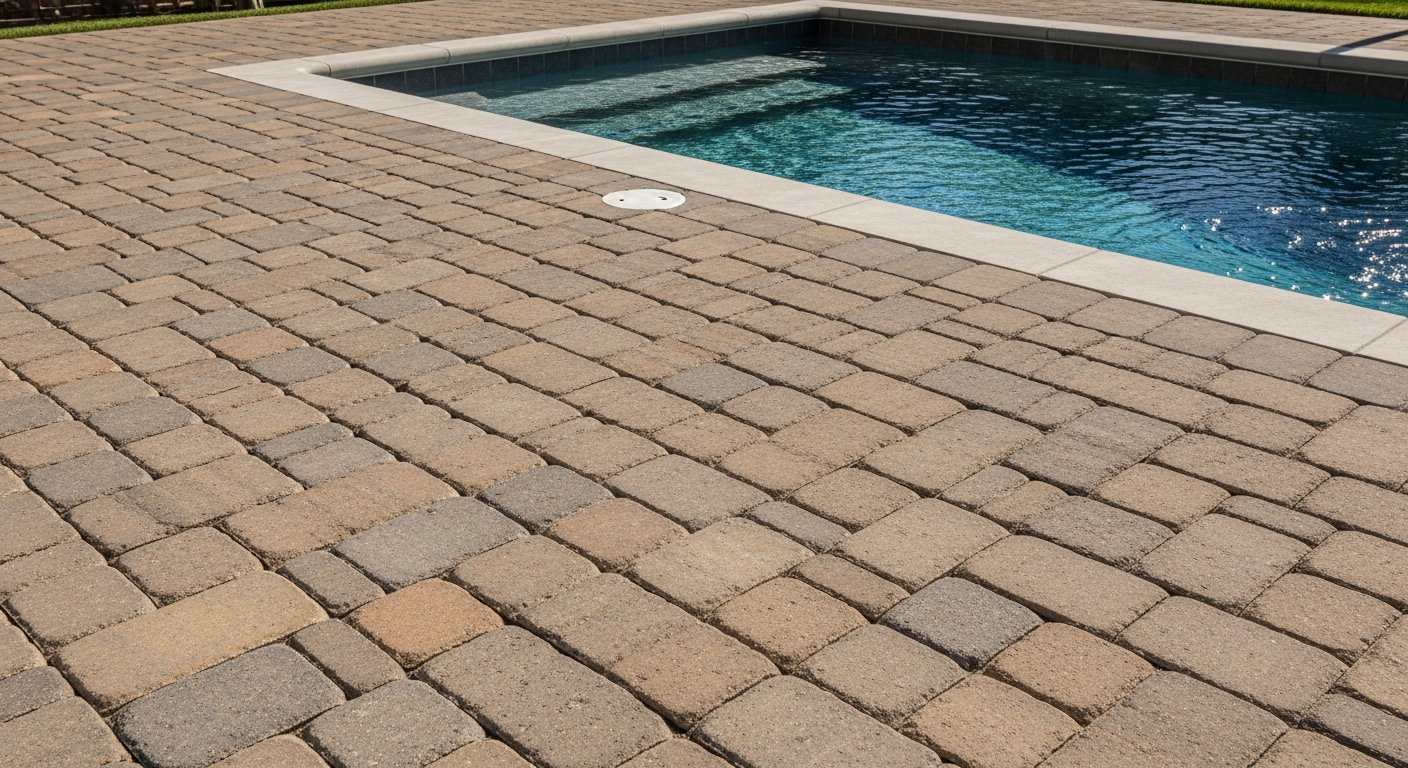
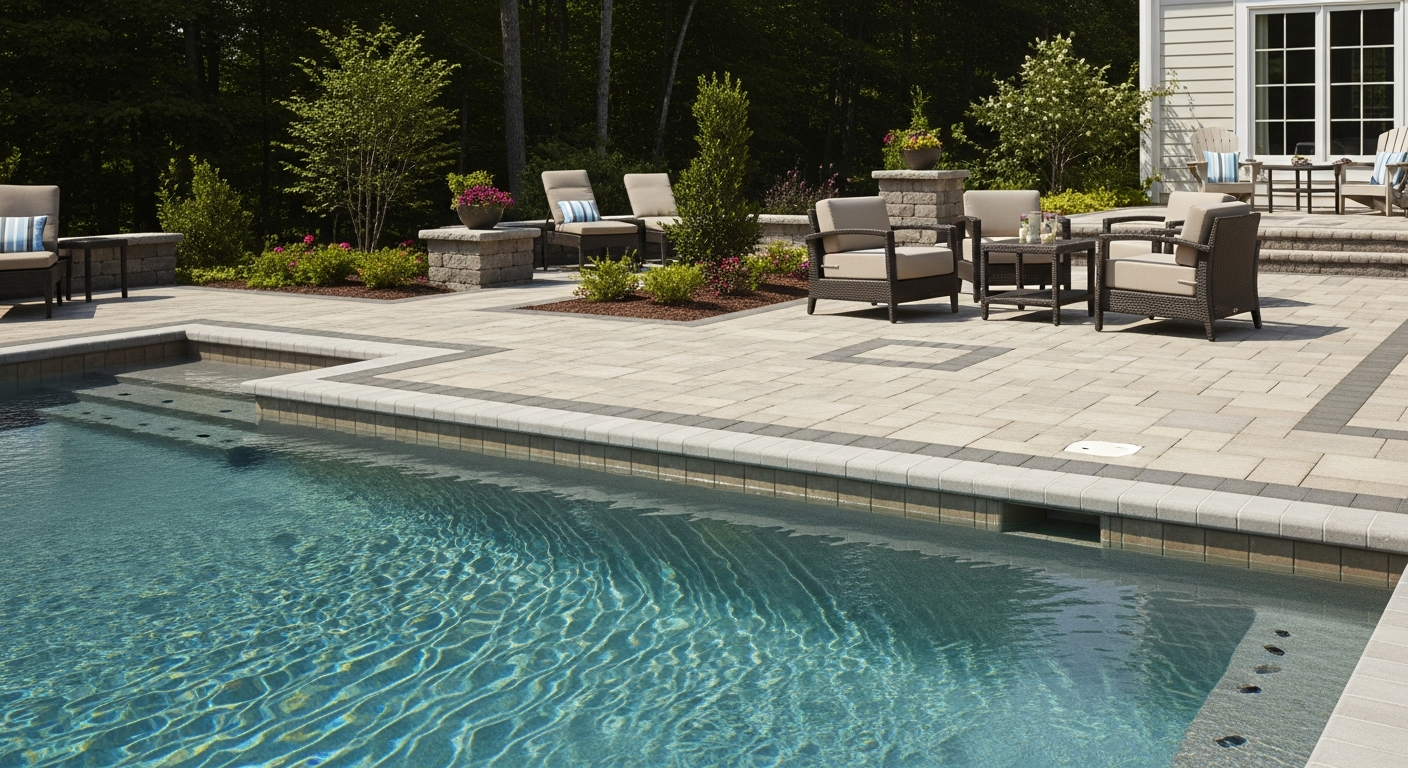
- Joint Locking & Sealing: We use high-quality polymeric sand, which hardens to lock the pavers together and prevent weed growth and ant hills. For coastal areas like Anna Maria, I specify a solvent-based, UV-resistant sealer with a non-slip additive to protect against salt spray degradation and provide safe footing around pools. This can increase paver lifespan by at least 25%.
Post-Installation QC: My Checklist for Efflorescence Control and Long-Term Stability
My job isn't done when the last paver is set. I perform a final quality control check 72 hours after installation. The most common issue I look for is efflorescence, a white, hazy deposit that can appear on new pavers. It's a natural process, but my sub-base design, which promotes rapid drainage, significantly reduces its occurrence. I educate clients that it's temporary and will dissipate, but a proper installation minimizes the initial effect. The final step is a pass with the plate compactor over the finished surface (using a protective mat) to fully set the pavers and embed them into the bedding sand. This final "lock-in" is what ensures a smooth, unified surface that feels solid underfoot. My quality standard isn't just to meet the Interlocking Concrete Pavement Institute (ICPI) guidelines; it's to exceed them in a way that is specifically adapted for the unique environmental stresses of Manatee County. Before you approve your next paver project, have you asked your contractor how their sub-base design specifically counteracts the hydrostatic pressure from Manatee County's water table?Written by

Tags
black concrete pavers
brick patio patterns
herringbone pavers
paver patterns
modern pavers
Paver Designs in Manatee FL FAQ
Will my new paver deck sink or become uneven over time?
A properly installed paver deck should not sink or shift, as the stability comes entirely from the compacted base underneath, not the pavers themselves. The critical step is excavating to the correct depth and using a mechanical plate compactor to create a solid, multi-layered base of aggregate. A common failure point is skimping on this base preparation, leading to uneven settling and tripping hazards within a few years. Ensure your installer guarantees a minimum of a 15 cm (6-inch) compacted base, which is essential for preventing movement, especially in regions with freeze-thaw cycles.
How do you repair a single cracked or stained paver in the middle of the deck?
Individual pavers can be replaced without disturbing the surrounding area, which is a major advantage over poured concrete. The process involves using specialized paver extractors to pull the damaged stone, adjusting the sand bedding beneath, and setting a new paver in its place. The non-obvious but critical step is to use new polymeric sand to refill the joints around the replacement paver. Simply sweeping in regular sand will wash out quickly, allowing the new paver to shift and compromising the interlock with its neighbors.
Are certain types of pavers better for saltwater pools?
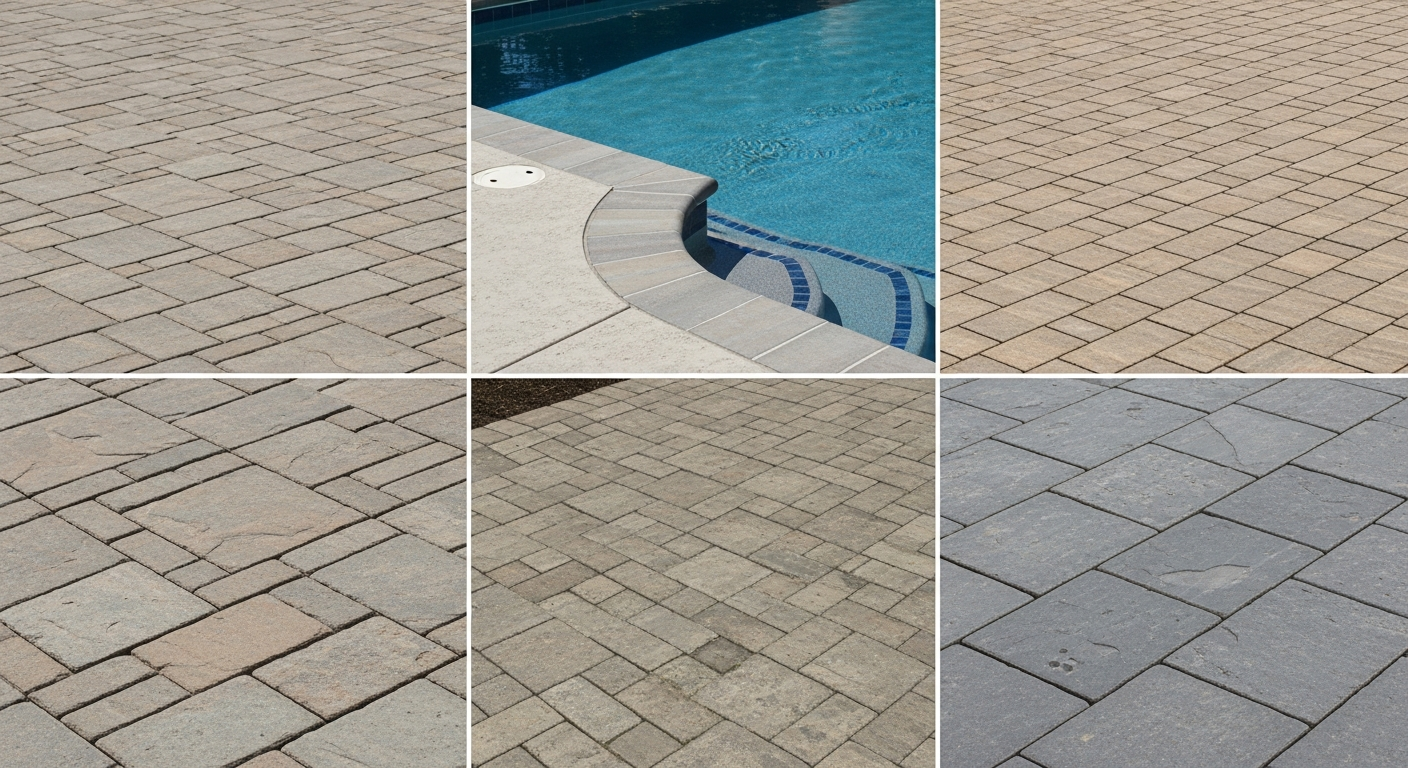
Yes, dense, high-quality concrete pavers or natural stone like travertine are excellent choices for saltwater pools due to their low porosity and resistance to salt degradation. Avoid porous, low-density pavers or certain types of sandstone, as they can absorb saltwater which then crystallizes and causes the surface to flake and spall over time. This process, known as salt efflorescence, not only looks bad but structurally weakens the paver. Always confirm the paver you choose has a specific manufacturer rating for use with salt chlorine generators.
Will pavers get too hot for bare feet in direct summer sun?
The heat absorption of a paver is determined more by its color and material than the fact that it's a paver. Lighter-colored pavers, such as those in tan, light gray, or white, will stay significantly cooler than dark charcoal or black options. Travertine is a popular, albeit more expensive, choice specifically because its natural composition keeps it cooler to the touch. A common mistake is choosing a dark paver for aesthetics without considering that its surface temperature can become dangerously high, making the pool deck unusable without footwear on sunny days.
How do pavers drain water away from the pool to prevent puddles?
Proper drainage is engineered into the deck's slope and the base, not the pavers themselves. The entire paver system must be installed with a subtle, consistent grade of at least 2% (a 2 cm drop for every 1 meter of length) sloping away from the pool's edge. This ensures water sheets off the surface into designated drains or lawn areas. The joints filled with polymeric sand are water-resistant but not waterproof; the real work of preventing puddles and sub-base erosion is done by this carefully planned deck slope.
What's the best way to prevent weeds and ants from coming up through the joints?
Using polymeric sand in the joints is the most effective method for preventing both weed growth and insect intrusion. Unlike regular sand, this material contains a special polymer that, when wetted, hardens to lock the pavers together and form a durable, semi-flexible barrier. A common DIY error is applying the sand incorrectly, either leaving a haze on the paver surface or not watering it enough to activate the polymers. This results in a weak joint that will crack and allow weeds to push through within a single season, defeating its purpose.