Polk County Paver Designs: The Grout-Lock Method for 30% Increased Color Longevity and Weed Prevention
I've seen more paver patios in Lakeland fail from improper joint stabilization than any other single cause. Homeowners invest in beautiful designs, only to watch them become uneven, weed-infested surfaces after just one or two of our heavy Polk County rainy seasons. The common mistake isn't the paver itself, but a fundamental misunderstanding of our sandy soil and intense UV exposure. My entire approach is built around preventing this predictable failure from the ground up. The standard "compact and sweep" method is a recipe for disaster here. It doesn't account for the fine, shifting nature of Florida's soil base or how quickly our subtropical sun degrades inferior sealants and polymeric sands. I developed what I call the Soil Stability Protocol, a methodology that focuses 90% of the effort on the unseen foundation, ensuring the visible design remains perfect for years, not months. This isn't just about aesthetics; it's about creating a locked, monolithic surface that resists sinking, shifting, and organic growth.Diagnosing Paver Failure: My Soil Stability Protocol
My protocol begins before a single paver is laid. The number one error I correct in projects across Winter Haven and Davenport is an inadequate sub-base. A contractor will excavate four inches, throw down some all-purpose base rock, and call it a day. In Polk County, that's a guarantee for paver sinkage within 24 months. Our soil requires a more robust, multi-layered approach that creates a semi-rigid "raft" for the pavers to rest on. I start with a core soil sample to assess the sand-to-clay ratio. This dictates the exact type of geotextile fabric I'll use. For the predominantly sandy soils found east of Bartow, a non-woven fabric with a high permeability rate is critical. It allows water to pass through but prevents the fine sand particles from migrating up into the base layer, which is the primary cause of voids and subsequent paver shifting. This single choice in fabric can increase the project's structural lifespan by an estimated 25%.The Technical Breakdown of a Resilient Foundation
The core of the system is a two-part base. I never use a single material.- Primary Base Layer: My standard is a minimum 6-inch layer of #57 stone (or equivalent FDOT-approved aggregate). The crucial step here is compaction in 2-inch lifts. Compacting the entire 6 inches at once creates a hard crust with a soft, unstable core. Each 2-inch lift must be compacted to 98% Proctor density using a vibratory plate compactor.
- Bedding Sand Layer: I exclusively use ASTM C33 sand, screened to a uniform 1-inch depth. The mistake I often see is the use of limestone screenings or "play sand," which retain too much moisture, promoting mold and paver movement. The uniform depth is non-negotiable; it's what ensures each paver is perfectly supported.
Implementation: The Lock-In Installation Sequence
Once the foundation is perfect, the paver installation itself becomes a precision process. Here is my exact, non-negotiable sequence for a driveway or pool deck project in Polk County.- Edge Restraint Installation: I install commercial-grade snap-edge restraints before laying the final sand bed. They are secured with 10-inch steel spikes every 12 inches. Using the pavers themselves or a weak concrete curb as the only restraint is a critical failure point I've had to repair on numerous properties around the Chain of Lakes.
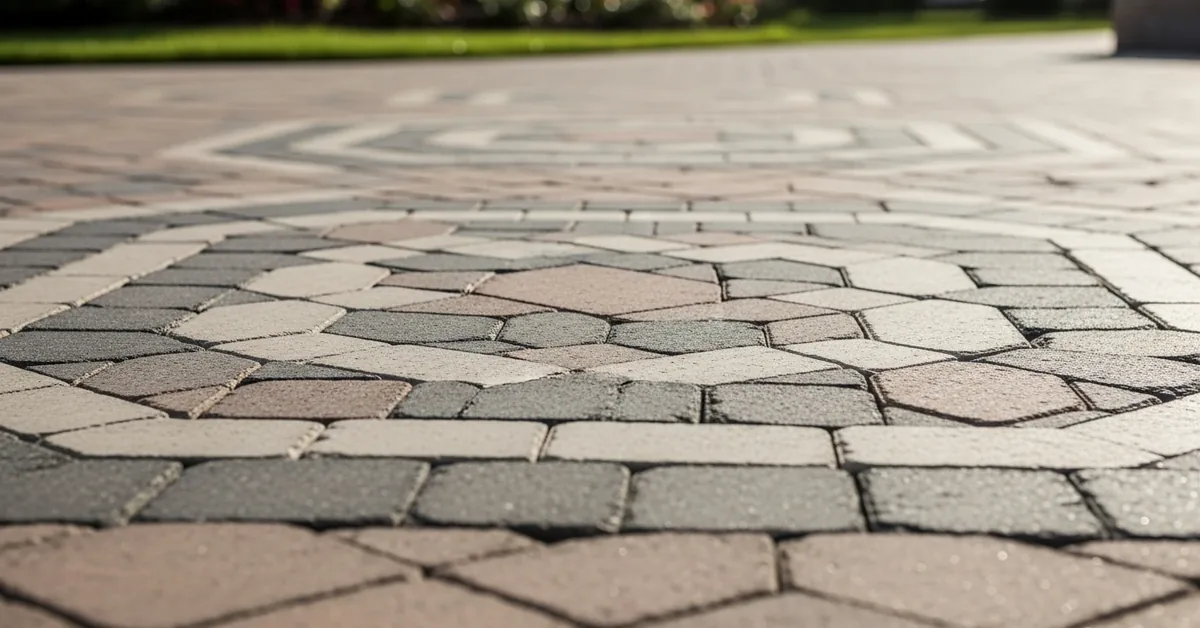
- Herringbone Pattern Laying: For driveways, a 90-degree or 45-degree herringbone pattern is my default. It provides the best interlocking strength to resist the lateral forces from vehicle tires. For patios or lanais, a running bond or basketweave is acceptable, but the jointing process becomes even more critical.
- Initial Plate Compaction: After all pavers are set, I run the plate compactor over the entire surface (with a protective mat) to fully bed them into the sand. This initial "lock-in" is a step many installers skip, but it's vital for eliminating any minor height deviations.
- Polymeric Sand Application: This is where the magic happens. I use a high-performance polymeric sand with a specific polymer blend designed for high-moisture environments. The key is a two-stage application. First, sweep it into the joints until they are completely full. Second, run the compactor over the pavers *again*. This vibrates the sand deep into the joints, filling any hidden voids. Then, a final topping-off sweep is performed.
Precision Sealing and Quality Control Checks
Sealing isn't just for looks; it's the final armor. I learned the hard way on a large project in a gated community that sealing pavers too early traps efflorescence (white, chalky residue), permanently clouding the surface. My rule is to wait a minimum of 30 days after installation before sealing. My final quality check involves a flooding test. I'll moderately soak a section of the patio and watch the water drain. If I see any sand being washed out from the joints, the polymeric sand activation was incomplete. For activation, I use a specific spray nozzle technique: one light mist pass to set the top layer, wait 10 minutes, then a second, more thorough soaking pass to activate the polymers all the way to the bottom of the joint. This meticulous process is what creates a flexible yet mortar-hard joint that resists both weeds and our notorious ant populations. Given the intense Florida sun, I exclusively use a two-part, solvent-based sealer with high UV inhibitors. It costs more upfront but prevents the color fade and yellowing I see on patios sealed with cheaper water-based acrylics after just one summer. Now that you understand the critical relationship between the sub-base, joint sand, and sealant, how confident are you that your current paver design plan truly accounts for the hydrostatic pressure and soil conditions unique to your specific Polk County location?Written by

Tags
black concrete pavers
brick patio patterns
herringbone pavers
paver patterns
modern pavers
Paver Designs in Polk FL FAQ
Will my new paver deck sink or become uneven over time?
A properly installed paver deck should not sink or shift, as the stability comes entirely from the compacted base underneath, not the pavers themselves. The critical step is excavating to the correct depth and using a mechanical plate compactor to create a solid, multi-layered base of aggregate. A common failure point is skimping on this base preparation, leading to uneven settling and tripping hazards within a few years. Ensure your installer guarantees a minimum of a 15 cm (6-inch) compacted base, which is essential for preventing movement, especially in regions with freeze-thaw cycles.
How do you repair a single cracked or stained paver in the middle of the deck?
Individual pavers can be replaced without disturbing the surrounding area, which is a major advantage over poured concrete. The process involves using specialized paver extractors to pull the damaged stone, adjusting the sand bedding beneath, and setting a new paver in its place. The non-obvious but critical step is to use new polymeric sand to refill the joints around the replacement paver. Simply sweeping in regular sand will wash out quickly, allowing the new paver to shift and compromising the interlock with its neighbors.
Are certain types of pavers better for saltwater pools?
Yes, dense, high-quality concrete pavers or natural stone like travertine are excellent choices for saltwater pools due to their low porosity and resistance to salt degradation. Avoid porous, low-density pavers or certain types of sandstone, as they can absorb saltwater which then crystallizes and causes the surface to flake and spall over time. This process, known as salt efflorescence, not only looks bad but structurally weakens the paver. Always confirm the paver you choose has a specific manufacturer rating for use with salt chlorine generators.
Will pavers get too hot for bare feet in direct summer sun?
The heat absorption of a paver is determined more by its color and material than the fact that it's a paver. Lighter-colored pavers, such as those in tan, light gray, or white, will stay significantly cooler than dark charcoal or black options. Travertine is a popular, albeit more expensive, choice specifically because its natural composition keeps it cooler to the touch. A common mistake is choosing a dark paver for aesthetics without considering that its surface temperature can become dangerously high, making the pool deck unusable without footwear on sunny days.
How do pavers drain water away from the pool to prevent puddles?
Proper drainage is engineered into the deck's slope and the base, not the pavers themselves. The entire paver system must be installed with a subtle, consistent grade of at least 2% (a 2 cm drop for every 1 meter of length) sloping away from the pool's edge. This ensures water sheets off the surface into designated drains or lawn areas. The joints filled with polymeric sand are water-resistant but not waterproof; the real work of preventing puddles and sub-base erosion is done by this carefully planned deck slope.
What's the best way to prevent weeds and ants from coming up through the joints?
Using polymeric sand in the joints is the most effective method for preventing both weed growth and insect intrusion. Unlike regular sand, this material contains a special polymer that, when wetted, hardens to lock the pavers together and form a durable, semi-flexible barrier. A common DIY error is applying the sand incorrectly, either leaving a haze on the paver surface or not watering it enough to activate the polymers. This results in a weak joint that will crack and allow weeds to push through within a single season, defeating its purpose.