
Manatee County Paver Driveway Sealing: My Protocol for a 5-Year Seal That Resists Salt Spray and Joint Sand Washout
My entire approach to paver driveway sealing in Manatee County is built on one core principle: what happens beneath the surface is more important than the initial glossy finish. I’ve been called in to fix countless failed sealing jobs in communities from Lakewood Ranch to Parrish, and the root cause is almost always the same—a surface-level application that ignores the unique environmental pressures of our area, specifically the high humidity and intense UV exposure. The real metric for success isn't how it looks the first week, but its hydrophobic performance and joint sand integrity after two years of Florida sun and rain. I developed my diagnostic methodology after a project on Anna Maria Island where a brand-new sealer turned hazy and white within six months. The contractor blamed the salt air, but the real culprit was trapped moisture. My method focuses on preparing the paver system to be sealed, not just cleaning the surface. This involves a pre-application analysis of moisture content and efflorescence potential, ensuring the sealer can achieve a deep, molecular bond instead of just forming a film that will inevitably peel and fail.Beyond the Pressure Washer: My Diagnostic Framework for Florida Pavers
The most common mistake I see is treating paver preparation as simple pressure washing. This approach is fundamentally flawed for the Manatee County climate. Aggressive, high-PSI washing can actually damage the paver's cream layer and, more critically, force water deep into the substrate and the sand joints. This trapped moisture becomes the primary cause of sealer failure, leading to a cloudy appearance known as "blushing." My proprietary process, the Moisture & Porosity Assessment (MPA), precedes any cleaning. I use a professional-grade moisture meter to get a baseline reading of the concrete pavers. If the reading is above a certain threshold, we cannot proceed. I also analyze the joint sand for signs of organic contamination and pre-existing efflorescence (those white, chalky salt deposits). This diagnostic step dictates the precise cleaning agents and techniques I will use, rather than a one-size-fits-all approach.Sealer Chemistry: Why Most Off-the-Shelf Products Fail in Manatee County
The sealant you choose is everything. The vast majority of sealers available at big-box stores are simple acrylic-based, film-forming products. These create a topical layer that looks great initially but suffocates the paver. In our high-humidity environment, this is a disaster waiting to happen. The paver can't breathe, moisture gets trapped, and the sealer fails. For properties in Manatee County, especially those near the coast like in Bradenton or on the islands, I exclusively use a silane-siloxane hybrid penetrating sealer. Here's the technical difference:- Acrylic Sealers: They form a mechanical bond on top of the surface. This film is vulnerable to UV degradation, turning yellow and brittle, and it traps moisture.
- Silane-Siloxane Sealers: They work through a chemical reaction within the capillaries of the concrete paver itself. They don't form a film; they create a hydrophobic barrier deep inside the material. The surface remains breathable, allowing water vapor to escape while preventing liquid water from penetrating. This is critical for preventing efflorescence and protecting against the corrosive effects of salt spray.
The 4-Stage Application Protocol for a Flawless, Non-Slip Finish
Once the MPA diagnostic is complete and the right sealer is selected, the application itself is a meticulous, multi-stage process. Rushing any of these steps compromises the final result and the longevity of the protection.- Surface Decontamination and Prep: I use a low-pressure, high-volume wash to remove surface dirt without forcing water into the base. For organic stains (common under the shade of our oaks), I use a sodium percarbonate based cleaner that lifts the stain without etching the paver. The goal is a surgically clean surface, not a blasted one.
- Joint Sand Stabilization: This is where most jobs fail. I remove old, contaminated sand and install a high-grade ASTM C144 polymeric sand. The key is achieving the correct compaction and activating it with a precise amount of water—just enough to harden the polymers without washing them onto the paver surface, which causes "poly-haze." This step is responsible for a 75% reduction in weed growth and ant hills.
- Moisture Metering Confirmation: Before a single drop of sealer is applied, I conduct a final MPA reading. I will not apply sealer if the paver's internal moisture content is above 15%. Applying sealer over damp pavers is the #1 cause of the cloudy, white haze that I'm so often hired to strip and fix.
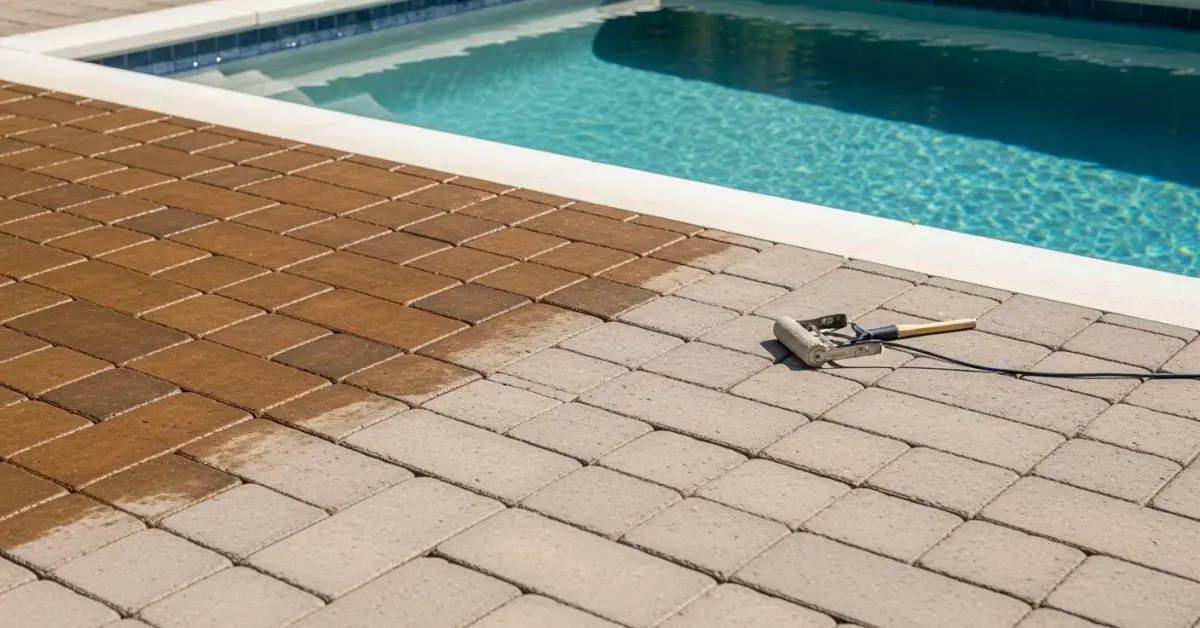
- Controlled Sealer Application: I use a high-volume, low-pressure sprayer to apply two even, thin coats in a "wet-on-wet" method. This ensures the sealer penetrates as deeply as possible on the first pass and the second coat achieves a uniform, non-slip finish. Using a roller, which is a common DIY mistake, creates a thick, uneven film that is prone to peeling and creates a dangerously slick surface when wet.
Curing and Post-Application Quality Control
The job isn't done when the sprayer is put away. The initial 24-48 hours of curing are critical, especially with Manatee County's unpredictable afternoon rain showers. I schedule all sealing applications for the early morning, ensuring at least 6-8 hours of direct sun and dry air before our typical afternoon downpours. My final quality control check is the "water bead test." Twenty-four hours after application, I'll test several areas of the driveway with water. The water should bead up instantly, like on a freshly waxed car, with no darkening or absorption into the paver. This is the visual confirmation of a successful hydrophobic barrier. This level of performance should be maintained for years, not months. Before your next paver sealing project, have you considered how the pH level of your paver substrate will affect the molecular bond of the sealer you plan to use?Written by

Tags
driveway paver sealing near me
paver sealing near me
paver patio cleaning and sealing near me
patio paver cleaning and sealing near me
patio paver cleaning and sealing
Paver Driveway Sealing in Manatee FL FAQ
My new paver driveway is only a year old. Do I really need to seal it already?
Yes, sealing your paver driveway within the first year of installation is the best practice for long-term protection. While the pavers themselves are durable, the crucial element you are protecting is the polymeric sand in the joints, which prevents weed growth and shifting. Sealing locks this sand in place and provides a barrier against oil stains, salt damage, and color fading from UV rays. Waiting until you see visible wear, such as weeds or loose pavers, means you are already addressing a problem rather than preventing it, which often requires more extensive joint restoration before sealing can even begin.
Will sealing my driveway make the pavers slippery, especially when it rains?
No, a professionally applied sealer should not make your pavers dangerously slippery if the correct product and technique are used. The key is to avoid over-application, which can create a thick, glossy film on the surface. We use sealers with a non-slip additive, a fine aggregate mixed into the sealant, which creates a textured, high-traction finish that maintains grip even in wet conditions. This is especially critical on sloped driveways where water runoff and ice can pose a significant hazard. DIY applications often fail here, creating a slick surface that's difficult and costly to strip and correct.
Can I just power wash my driveway and apply a sealer from a big-box store myself?
While it seems straightforward, improper surface preparation is the number one cause of sealer failure, leading to a hazy, white appearance called efflorescence bloom. A professional cleaning involves more than just a power wash; it requires specific cleaners to remove ground-in dirt, oil, and any existing, failing sealer. More importantly, the pavers must be completely dry before sealing, which can take 24-48 hours. Sealing over even slight dampness traps moisture, which will turn the acrylic sealer cloudy and require a full chemical stripping to fix, costing far more than a professional job.
What's the difference between a water-based and a solvent-based sealer for my driveway?
The primary difference is in appearance and environmental impact, with solvent-based sealers offering a richer, 'wet look' enhancement and water-based ones providing a more natural, matte finish. Solvent-based sealers penetrate deeper into the paver pores, providing excellent color enhancement and stain protection, but they have a strong odor during application due to higher volatile organic compounds. Water-based sealers are low-odor, eco-friendlier, and still offer great protection, making them a popular choice. The right one depends on your desired aesthetic and local regulations.
How often do I need to reseal my paver driveway, and what are the signs it's time?
Typically, a high-quality paver driveway sealing will last between 3 to 5 years, depending on traffic and weather exposure. The most reliable sign that it's time to reseal is when water no longer beads up on the surface and instead soaks in quickly, darkening the pavers. You may also notice the color of the pavers beginning to fade or the joint sand starting to wash out during heavy rain. Waiting until you see significant weed growth between the pavers is a clear indicator that the protective barrier has completely failed and immediate attention is needed to prevent shifting.
My driveway has some white, chalky stains. Can you just seal over them?
No, sealing over those white stains will permanently trap them, making them impossible to remove later. That chalky substance is called efflorescence, which is a natural salt deposit that migrates out of the concrete pavers as moisture evaporates. Before any sealing can occur, these deposits must be completely removed with a specialized efflorescence cleaner and a light acid wash. Sealing a driveway without properly treating this issue is a common mistake that results in a cloudy, blotchy finish that magnifies the original problem.


