
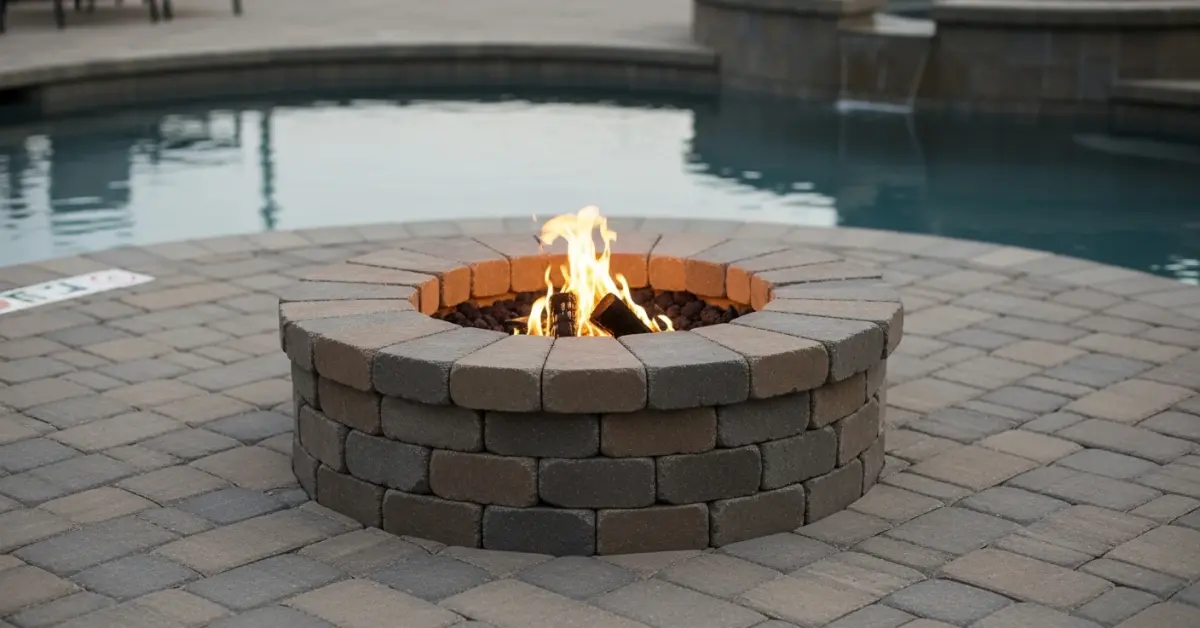
Lake County Paver Firepit Installation: My 3-Layer Base Method for 15+ Year Durability
As a hardscape specialist focused on Lake County, the most common and costly failure I see in paver firepits isn't the blockwork or the capstones; it's the foundation. A standard gravel base that works in other regions simply can't withstand the combination of our sandy subgrade soil and intense summer downpours. The result is almost always the same: sinking, shifting, and a complete rebuild in under five years. I’ve been called to fix these exact issues in developments from Clermont to Mount Dora. My approach was born from correcting these expensive mistakes. I developed what I call the CGG Protocol (Compaction-Grid-Geotextile), a base system engineered specifically for our local conditions. This isn't just about digging deeper; it's a multi-layered system that locks the base together, ensures proper drainage, and prevents the paver field from "floating" on the unstable soil, guaranteeing a minimum 15-year structural lifespan for the entire installation.The CGG Protocol: Diagnosing Base Failure Before It Happens
The standard method many contractors use involves excavating, dumping some crushed stone, tamping it down, and hoping for the best. This is a recipe for disaster in Lake County. I learned this the hard way on an early project in Tavares, where a firepit I thought was perfectly built showed a 1-inch sag after just two rainy seasons. The problem wasn't the pavers; it was the subgrade soil mixing with my aggregate base, compromising its structural integrity. The CGG Protocol addresses three critical failure points from the outset. It’s a diagnostic methodology I apply before the first paver is even laid. First, I assess the soil's percolation rate. Then, I design a base that actively separates soil from aggregate, distributes the load over a wider area, and achieves a verifiable compaction standard that far exceeds the industry norm. This prevents the slow, insidious damage caused by hydrostatic pressure and soil migration.A Technical Breakdown of the 3-Layer System
The magic of the CGG Protocol is in the synergy of its components. Each layer performs a specific engineering function that the others rely on.- Layer 1: The Geotextile Separator. This is the foundation of the foundation. I use a specific non-woven geotextile fabric laid directly on the compacted subgrade. Its primary job is separation. It prevents our fine, sandy Lake County soil from migrating upwards into the aggregate base during heavy rain. Without this, the base effectively turns to mush over time, losing all its load-bearing capacity.
- Layer 2: The Biaxial Geogrid Interlock. About halfway up the aggregate base (typically at the 4-inch mark on an 8-inch base), I install a layer of biaxial geogrid. This is my "pulo do gato." This grid features apertures that the aggregate stone locks into during compaction. It creates a semi-rigid, stabilized platform that distributes the firepit's weight over a much larger surface area, reducing the point load on the subgrade by an estimated 30%.
- Layer 3: The 98% Proctor Density Compaction. I don't just "tamp" the base. I use a plate compactor to compact the aggregate in 2-inch lifts until I achieve 98% Standard Proctor Density. This is a verifiable engineering standard that ensures maximum particle-to-particle contact, eliminating voids that can hold water and lead to shifting during our freeze-thaw micro-cycles in the winter.
Executing the Build: A Step-by-Step Breakdown for Flawless Results
Applying the CGG Protocol is a precise, non-negotiable process. Cutting corners on any of these steps invalidates the entire system. Here is my exact workflow for a typical residential firepit project in an area like the rolling hills of Minneola.- Excavation and Subgrade Prep: I excavate to a depth of 10 inches below the final paver grade. The subgrade soil is then graded for drainage and compacted thoroughly.
- Geotextile Fabric Installation: The non-woven geotextile fabric is laid down, extending 12 inches beyond the paver field on all sides.
- First Aggregate Lift: A 4-inch layer of 3/4-inch clean-crushed aggregate is spread evenly across the fabric.
- Geogrid Placement: The biaxial geogrid is rolled out over the first lift of aggregate.
- Final Aggregate Lifts & Compaction: The remaining 4 inches of aggregate are added in 2-inch lifts. Each lift is wetted and compacted with the plate compactor until the 98% density target is met. The result is a base that feels as solid as concrete.
- Bedding Sand and Paver Installation: A 1-inch screeded layer of coarse bedding sand is applied before laying the pavers and the firepit ring blocks according to the manufacturer's specifications.
Fine-Tuning for Longevity: Adhesives, Sealing, and Drainage
With the base perfected, the final details ensure the firepit withstands the Lake County climate. The single most common mistake I see DIYers and even some professionals make is using the wrong adhesive for the capstones. Standard construction adhesive will fail under the thermal cycling of a firepit. I exclusively use a high-temperature masonry adhesive rated for over 2,000°F. Furthermore, for the surrounding paver joints, I always use a high-quality polymeric sand. The key is the application: it must be done on a low-humidity day to ensure a proper cure, something that requires careful planning during a Leesburg summer. I also engineer a subtle 1-degree pitch on the entire patio, directing water away from the home and the seating area, preventing pooling and water infiltration into the base. Now that you understand the base is an engineered system, not just a layer of gravel, are you still confident your firepit's adhesive is rated for the thermal expansion and contraction cycles of a Florida fire?Written by

Tags
paver patio with fire pit
paver patio and fire pit
pavers for fire pit area
firepit patio stones
paver patio designs with fire pit
Paver Firepit in Lake FL FAQ
Can I build a firepit directly on top of my existing paver patio?
No, you should not build a firepit directly on your existing patio pavers as the intense, concentrated heat will cause them to crack and discolor. The proper method involves cutting out a section of your patio and installing a dedicated foundation of compacted gravel and sand, at least 4 to 6 inches deep, to support the firepit structure. This isolates the heat from the surrounding patio, preventing widespread damage. Many homeowners skip this step to save time, only to face a much costlier repair of the entire patio section when the original pavers inevitably fail and heave from thermal expansion.
Do I absolutely need a steel ring insert for my paver firepit?
Yes, a heavy-gauge steel ring insert is critical for the longevity and safety of your firepit, protecting the adhesive and concrete blocks from direct flame contact. Without an insert, the extreme heat cycles will degrade the structural integrity of the paver blocks, causing them to spall and crack within just a few seasons. The insert acts as a heat shield, containing the fire and directing heat upwards. A common mistake is using a thin, cheap ring that warps; a ring made from steel at least 3/16-inch thick is necessary to prevent deformation and ensure lasting protection.
What is the best material to put at the bottom of the firepit itself?
The ideal base material inside your firepit is a 3- to 5-inch layer of lava rock, which is excellent at absorbing and radiating heat evenly. Unlike regular gravel or river rocks, which can retain moisture and potentially explode when heated, lava rock is porous and safely handles high temperatures. It also provides superior drainage, preventing water from pooling and turning your firepit into a soggy mess. Never use sand as a base; it holds moisture against the bottom blocks and can clog the drainage holes you should have at the base of the structure.
How far away from my house and other structures should the firepit be?
Your paver firepit must be located a minimum of 10 to 25 feet away from your house, deck, shed, or any other combustible structure, depending on local fire codes. Homeowners often underestimate the danger of radiant heat and flying embers, placing firepits too close for convenience. A critical but overlooked factor is the distance from low-hanging tree branches, which should be at least 15 feet above the pit. Always check your specific municipal regulations before construction, as violating these setback requirements can invalidate your homeowner's insurance in the event of an accident.
Will a wood-burning firepit stain my light-colored pavers with soot?
Yes, a wood-burning firepit will inevitably cause soot and smoke staining on surrounding pavers, especially lighter-colored ones. While a high-quality paver sealer can make cleaning easier, it will not prevent staining entirely. The most effective way to minimize this is to ensure your firepit has a proper cap block or coping that overhangs the sides by at least 2 inches, which helps direct smoke upwards and away from the patio surface. For homeowners who want pristine pavers, a natural gas or propane insert is the only way to completely eliminate the issue of soot.
Can I use any type of paver to build the firepit walls?
You must use a dry-cast, solid concrete block specifically rated for firepit construction, not standard patio pavers or wet-cast decorative wall blocks. Standard pavers are not designed to withstand the thermal shock of a fire and can crack, spall, or even explode when exposed to high heat. Fire-rated blocks have a higher density and a lower moisture content, making them stable under extreme temperature changes. Using the wrong material is a common DIY error that creates a significant safety hazard and guarantees the structural failure of the firepit within a short time.


