Collier County Paver Pressure Washing: A Protocol to Prevent Interlock Failure and Efflorescence Bloom
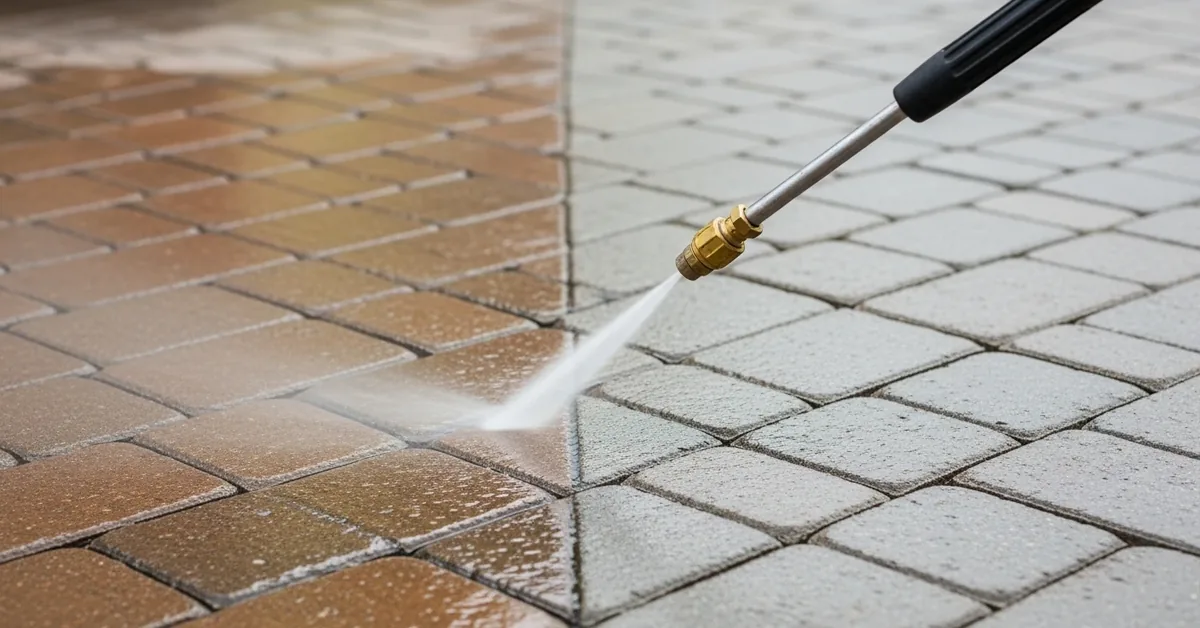
Most paver cleaning services in Collier County get it fundamentally wrong. They rely on extreme pressure, which I've seen cause irreversible damage to pavers from Port Royal to Marco Island. This high-PSI approach blasts away the crucial jointing sand, leading to paver shifting and instability—what I call interlock failure. It also etches the surface, making it more porous and susceptible to future staining. My entire methodology is built on a different principle: using a low-pressure, chemically-driven process that cleans deeper and preserves the paver system's integrity, directly combating the effects of Florida's intense humidity and sun. The objective isn't just a superficial clean; it's to restore the surface and extend its life by at least 30%. I've refined this process after correcting botched jobs on countless lanais and driveways that were left with "tiger stripes" and faded color. The secret isn't the machine's power, but the precise calibration of cleaning solutions and technique to fight the specific organic growth—like Gloeocapsa magma algae—that thrives in our subtropical climate.The Diagnostic Flaw in Standard High-Pressure Methods
When I'm called to a property, often in communities like Pelican Bay or Golden Gate Estates, my first step is a diagnosis, not a quote. I’m looking for signs of efflorescence (a white, chalky deposit) and the state of the jointing sand. The common mistake is to treat all pavers the same. Blasting travertine around a pool deck with the same 3000+ PSI used on a concrete sidewalk is a recipe for disaster. This is where I implemented my own system, which I call the Surface-Specific Surfactant Protocol. This protocol is based on a simple truth: the chemical solution should do 90% of the work, and the water pressure is just for rinsing. For instance, on a driveway in Naples Park suffering from deep oil stains and organic growth, I identified that the homeowner's previous service had not only eroded the paver joints but had also forced the efflorescence deeper into the paver pores by using high pressure without a proper neutralizing agent. My method starts with identifying the paver material and the type of stain to create a custom chemical blend, ensuring the surface is cleaned without compromising its structural or aesthetic qualities.Calibrating PSI and Chemical Ratios for Florida's Climate
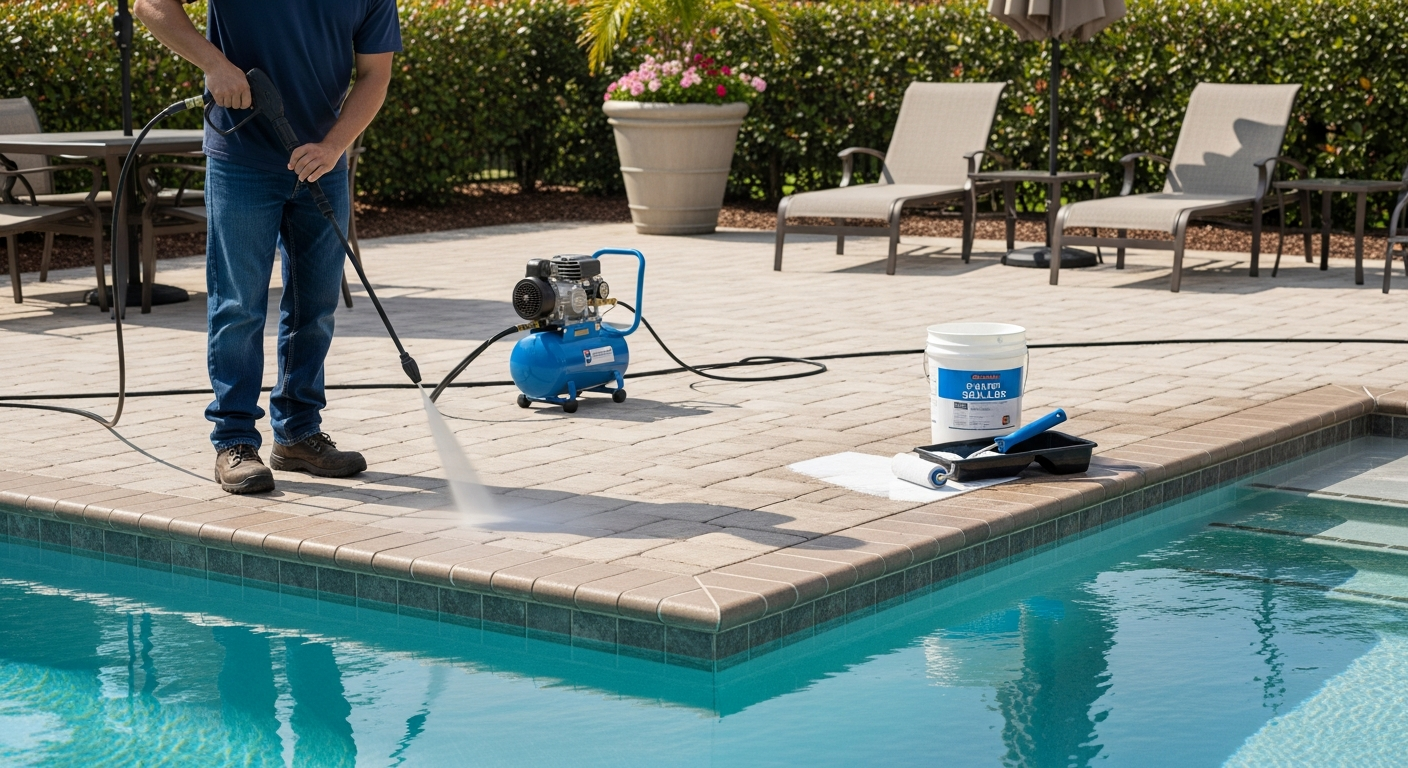
Here's where the technical details matter. My baseline for paver cleaning never exceeds 1200 PSI. For delicate materials like aged travertine, I may go as low as 800 PSI. The real workhorse is a carefully metered solution of sodium hypochlorite, buffered with a proprietary surfactant that helps it cling to the surface and break down organic matter without aggressive force. The intense Collier County sun can cause chemicals to evaporate too quickly, so I always work in manageable sections and often during cooler parts of the day. For a typical paver lanai darkened by mold due to high humidity and poor air circulation, my mix might be a 3% to 4% sodium hypochlorite solution. For stubborn oil stains on a driveway, I'll first apply a specialized degreaser and allow it to dwell before the main cleaning process. The key is the dwell time—letting the chemicals work for 10-15 minutes is far more effective and safer than trying to force dirt off with a high-pressure jet. The water is simply a tool to gently rinse away the now-loosened grime and neutralized organic material.My 5-Step Low-Pressure Execution Framework
Over the years, I've standardized my process into a repeatable framework that ensures consistent, high-quality results while protecting the property. This isn't just about spraying and rinsing; it's a systematic restoration.- Surface Preparation and Pre-Soak: Before any chemical is applied, I clear all debris. Then, I thoroughly saturate the pavers and all surrounding vegetation with plain water. This critical step prevents plants from absorbing the cleaning solution and protects the paver surface from streaking.
- The Calibrated Soft Wash Application: I apply my custom-blended solution using a low-pressure applicator. The goal is complete coverage without oversaturation. I pay close attention to heavily soiled areas, ensuring they receive adequate dwell time to break down stubborn algae and mildew.
- The Controlled Rinse: This is where the pressure washer is finally used, but with a 40-degree white fan tip held at a consistent distance from the surface. I work from the highest point downwards, using overlapping passes to rinse away all grime and chemical residue, preventing the dreaded "tiger striping."
- Joint Sand Installation: After the pavers are completely dry—a process that can take up to 24 hours in our humid climate—I sweep in fresh polymeric sand. This is a non-negotiable step. This type of sand contains a polymer that hardens when wet, locking the pavers in place, preventing weed growth, and deterring ant infestations.
- Application of a Penetrating Sealer: For maximum longevity, I recommend a high-quality silicate or acrylic sealer. This final step protects the pavers from UV degradation and staining, makes future cleaning easier, and enhances their natural color. A proper sealing can extend the results of the cleaning by 2-3 years.
Precision Adjustments and Quality Control Standards
The job isn't finished when the equipment is packed up. My final quality check is the most important part. I inspect the pavers from multiple angles under direct sunlight to spot any residual chemical haze or faint striping that might not be visible otherwise. A common error I see from others is improper rinsing, which leaves a subtle film that dulls the pavers' color. If I notice any inconsistencies, I'll do a final post-rinse with a very low-pressure, high-volume water flow. For polymeric sand, I ensure the activation misting is done correctly to avoid washing the polymer haze onto the paver surface. It's this final 5% of effort that separates a standard cleaning from a professional restoration that truly enhances a property's value and curb appeal, satisfying even the strictest of Collier County HOAs. Instead of asking how much pressure is needed to clean your pavers, what if the critical question is actually what surfactant concentration is required to break the biofilm's bond on your specific paver type without compromising the jointing sand?Written by

Tags
paver cleaner for pressure washer
wash and seal pavers
power wash and seal pavers
pressure wash and seal pavers
paver pressure washing and sealing
Paver Pressure Washing in Collier FL FAQ
Can pressure washing my pool deck pavers cause damage or leave ugly lines?
Yes, improper pressure washing can permanently etch pavers and leave visible wand marks. Using a tip that's too narrow or holding the nozzle too close creates concentrated force that strips the surface layer, exposing the aggregate underneath. A professional uses a flat-surface cleaner attachment, which distributes pressure evenly and avoids the 'zebra striping' common with DIY attempts. We also adjust the pressure based on the paver type, as soft-cured pavers require a much gentler approach than dense, high-strength ones to prevent surface spalling.
Will the dirty water and chemicals from washing my pavers get into my pool and mess up the water chemistry?
Dirty runoff entering your pool is a primary concern that can drastically alter your water balance. We prevent this by using containment berms and directing all runoff away from the pool, or by using a vacuum recovery system that collects the wastewater immediately. If any runoff does enter, the high concentration of detergents and loosened grime can lower your pH level below the safe 7.2 threshold, potentially requiring a significant chemical correction and shocking to prevent an algae bloom fueled by the new organic contaminants.
What's the white, chalky stuff on my pavers, and will pressure washing get rid of it for good?
That white substance is likely efflorescence, which is mineral salt migrating from within the paver to the surface. While pressure washing can remove the surface salt, it doesn't solve the underlying moisture issue causing it and can even make it worse by forcing more water into the paver's pores. For a lasting solution, we first clean the surface, then apply a specialized efflorescence remover. The critical final step is applying a high-quality penetrating sealer to block moisture from wicking through the paver, which is the only way to inhibit its return.
I have dark, slippery spots on my pavers. Is this just dirt or something worse?
Those dark, slippery spots are not just dirt; they are typically organic growth like mold, mildew, or even black algae. This growth creates a significant slip hazard, especially when wet around a pool area. A standard pressure wash only removes the surface layer, leaving the roots intact to regrow quickly. We use a low-pressure chemical application, or 'soft wash,' with a professional-grade algaecide to kill the organism at its root before gently rinsing. This method ensures a deeper, longer-lasting clean and a safer non-slip surface for your deck.
Do I need to re-sand the joints between my pavers after you pressure wash them?
Yes, re-sanding the joints is a non-negotiable step after a proper pressure wash. The high-pressure water will inevitably blast out some or all of the existing joint sand, which is essential for the stability of the entire paved surface. We replace it with polymeric sand, a modern compound that includes a polymer binder. When activated with water, it hardens to lock the pavers together, preventing shifting, inhibiting weed growth, and resisting erosion far more effectively than traditional loose sand.
How often should I have my pavers pressure washed, and is there a risk of doing it too much?
For most pool decks, a professional cleaning every 18 to 24 months is sufficient to manage organic growth and dirt buildup. Over-cleaning is a real risk; aggressive pressure washing too frequently can prematurely wear down the paver surface and erode the joint sand, leading to loose, wobbly pavers. The key is maintenance, not repeated deep cleaning. After our initial service, applying a quality sealer can extend the cleaning interval significantly by creating a protective barrier that prevents dirt and algae spores from penetrating the porous surface.