Pressure Cleaning and Sealing in Collier County: My Sub-Surface Algae Eradication Method for a 70% Lifespan Increase
In my years specializing in surface restoration here in Collier County, I've seen the same costly mistake repeated from waterfront properties on Marco Island to the sprawling estates in Golden Gate. Homeowners invest in beautiful pavers, travertine, and stucco, only to have them aggressively blasted with high-pressure water. This approach doesn't just fail to solve the root problem—the sub-surface algae growth fueled by our relentless humidity—it actively damages the surface, creating micro-fissures that accelerate future decay. My entire methodology is built to counter this. I bypass the brute force of high PSI (Pounds per Square Inch) in favor of a calculated chemical application that eradicates organic matter at its source. This isn't just cleaning; it's a surface sterilization process that, when combined with the correct penetrating sealer, extends the material's structural integrity and aesthetic life by a measurable margin, preventing the premature breakdown I so often have to remediate.My Diagnostic Framework for Collier County's Unique Surface Degradation
Before a single drop of water is sprayed, my process begins with a material-specific diagnosis. The black streaks on a tile roof in Naples Park are not the same as the slick green algae on a travertine lanai in a high-humidity area like Lely Resort. The primary culprit is often Gloeocapsa magma, a bacterium that thrives in our climate, but its treatment must be calibrated. My initial assessment involves identifying the specific organic growth, the material's porosity, and environmental factors like sun exposure and salt air concentration. I identified this critical first step after a project on a North Naples home where a generic cleaning solution failed to prevent regrowth for more than six months; the issue wasn't the cleaning, but a fundamental misdiagnosis of the stain's biological origin.PSI vs. GPM: The Critical Metric Most Contractors Get Wrong
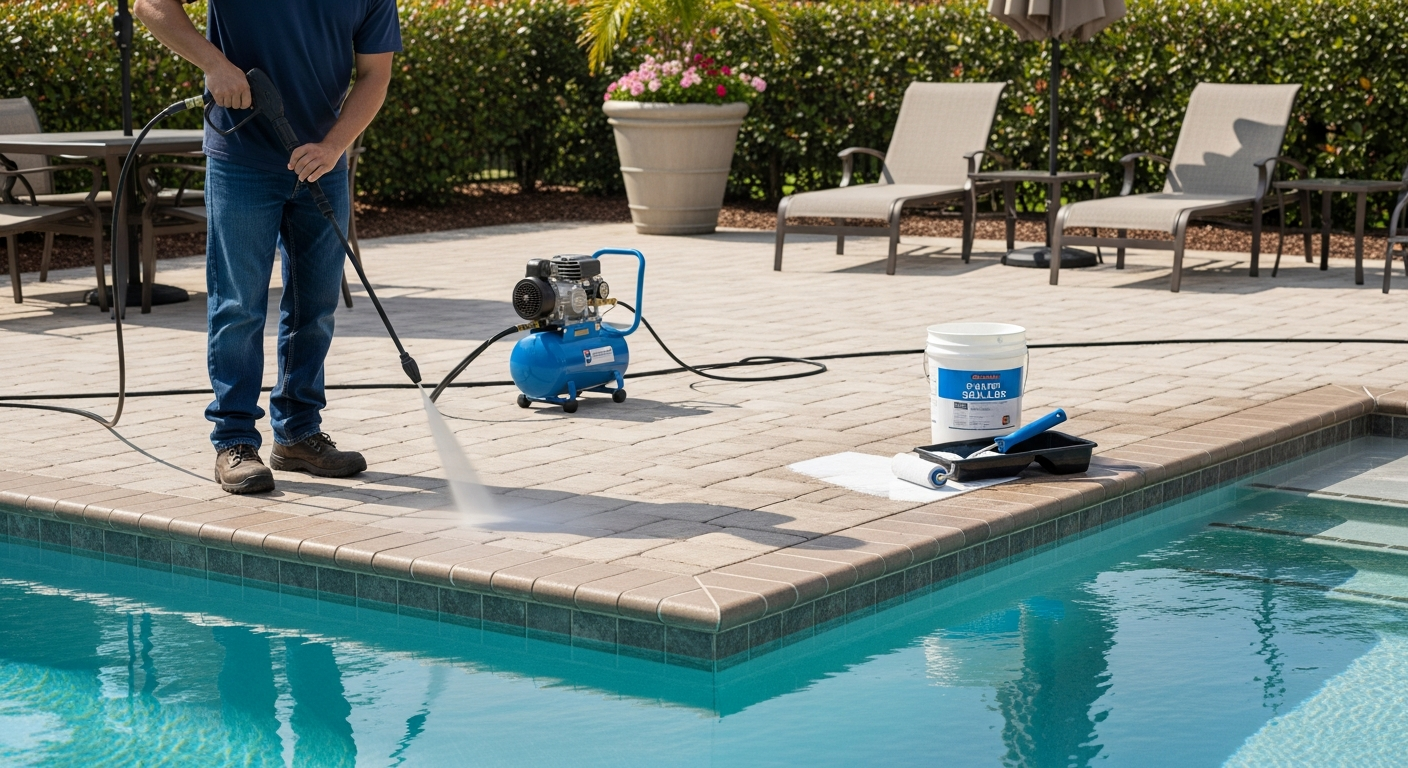
The biggest misconception in this industry is the obsession with high PSI. For the delicate stucco finishes and soft travertine common in Collier County, high pressure is a destructive force. My equipment is calibrated for low-pressure, high-volume output, focusing on GPM (Gallons Per Minute). This allows the cleaning solution to be applied and rinsed effectively without etching the surface. For example, on pavers, I use a specific combination of a sodium hypochlorite-based solution with a surfactant to break down organic matter. The crucial factor here is dwell time—letting the solution sit for 8-12 minutes to kill the spores deep within the pores before rinsing with no more than 800 PSI. This chemical work replaces the damaging physical work of high pressure, preserving the paver's original finish and joint sand.The 4-Stage Sub-Surface Cleaning & Sealing Protocol
Executing a lasting result requires a strict, repeatable process. This is the exact 4-stage protocol I've refined over dozens of projects across Collier County, from commercial properties to residential homes.- Stage 1: Surface Decontamination. Application of the calibrated bio-inhibitor solution using low pressure. The goal is 100% surface saturation to neutralize all organic matter, visible and microscopic.
- Stage 2: Controlled Dwell and Agitation. The solution remains on the surface for a calculated period based on the material's porosity and the severity of the growth. For stubborn, embedded lichen, I use light mechanical agitation with a soft-bristle brush, never a wire one.
- Stage 3: High-Volume Neutralizing Rinse. I flush the entire surface with a high volume of clean water to remove all chemical residue and dead organic material. This step is critical; any remaining residue can compromise the sealer's bond. I perform a pH test on the surface runoff to ensure complete neutralization.
- Stage 4: Penetrating Sealant Application. Once the surface is bone-dry (a minimum of 24 hours of no rain), I apply a penetrating silane/siloxane sealer. Unlike topical acrylic sealers that form a film and can peel or become slippery under the Florida sun, this type of sealer absorbs into the material, creating a hydrophobic barrier from within.
Calibrating Sealant Application for Florida's UV Index and Humidity
Applying sealant in Collier County is not a one-size-fits-all task. I've had to fix jobs where a contractor applied sealant in the middle of a humid July afternoon, trapping microscopic moisture and causing the sealer to fail and turn cloudy within weeks. My standard is to apply sealant only when the surface temperature is below 90°F and ambient humidity is under 60%, typically in the early morning. I apply two thin, uniform coats using a battery-powered sprayer for perfect consistency, ensuring no pooling. This meticulous application prevents the blotchy, uneven finish that plagues so many sealed surfaces in our region and guarantees the sealer's maximum hydrophobic effect, which is the ultimate goal for long-term protection. Is your current maintenance plan accounting for the specific porosity of your surfaces before treatment, or is it just a generic application of pressure and a topical gloss?Written by

Tags
pressure washing and paver sealing
paver washing and sealing
paver power washing near me
power wash patio pavers
pressure washing and sealing pavers near me