Paver Sealing Lake County: My Protocol for Preventing Sub-surface Washout and UV Damage
If you're searching for paver sealing in Lake County, you're likely dealing with more than just faded colors. The real threat I see on properties from Clermont to Mount Dora isn't just aesthetic; it's the structural failure caused by our specific Florida climate. The intense UV radiation and torrential afternoon downpours create a perfect storm for paver degradation, leading to sinking, shifting, and irreversible damage that a simple top coat won't fix. My entire approach is built on addressing the root cause: joint stabilization and selecting the correct sealer chemistry for your specific pavers. I’ve seen countless jobs fail within a year because the contractor used a cheap, film-forming acrylic that trapped moisture, turning pristine lanais into a hazy, peeling mess. My focus is on achieving a molecular bond that protects from within, guaranteeing a 25% longer lifespan for the seal and preventing costly paver resetting down the line.My Diagnostic Framework for Lake County Pavers
Before a single drop of sealer is sprayed, I perform a mandatory 3-point surface analysis. A paver driveway on one of Clermont's rolling hills has profoundly different hydrostatic pressure and drainage challenges than a flat, poolside lanai in a Leesburg community. Ignoring this is the number one cause of premature failure. My diagnosis focuses on identifying three critical failure indicators:- Efflorescence Analysis: I look for the fine, white powder that signals moisture is pushing mineral salts up through the paver. This tells me a breathable, penetrating sealer is non-negotiable to prevent trapping that moisture, which can cause spalling.
- Joint Integrity Test: I assess the level and condition of the sand in the joints. If I see significant joint sand loss, it means water is already eroding the sub-base. This is a red flag that simply sealing over it will trap water and accelerate the sinking of pavers.
- Previous Sealer Failure: Many properties in areas like The Villages have layers of old, failing acrylic sealer. I use a solvent test to identify the existing product. Applying a new water-based sealer over an old solvent-based one without proper stripping creates a chemical incompatibility, leading to delamination within months.
The Chemistry Behind a Flawless Seal
The term "sealer" is misleading; there are two fundamentally different technologies at play. My selection process is based on the paver's porosity and its intended use. For a high-traffic driveway in Eustis, the requirements are different from a Mount Dora patio that needs to preserve its historic charm. I almost exclusively work with two types of sealers. First, penetrating silane/siloxane sealers. These create a hydrophobic barrier inside the paver without forming a visible surface film. This is my go-to for pool decks as it maintains the natural texture and slip resistance of the paver. It's like Gore-Tex for your hardscape—it lets moisture vapor out but doesn’t let liquid water in. Second, for clients wanting color enhancement, I use a specific type of two-part water-based urethane. Unlike standard acrylics that yellow under the Florida sun, these urethanes offer superior UV-inhibition and abrasion resistance. I once had to correct a large commercial project in Tavares where a generic acrylic sealer had turned a beautiful terracotta driveway into a sticky, yellowed eyesore in under 18 months. That mistake taught me that the initial cost of a superior chemical is a fraction of the cost of remediation.The Moisture-Lock Application Protocol: A Step-by-Step Breakdown
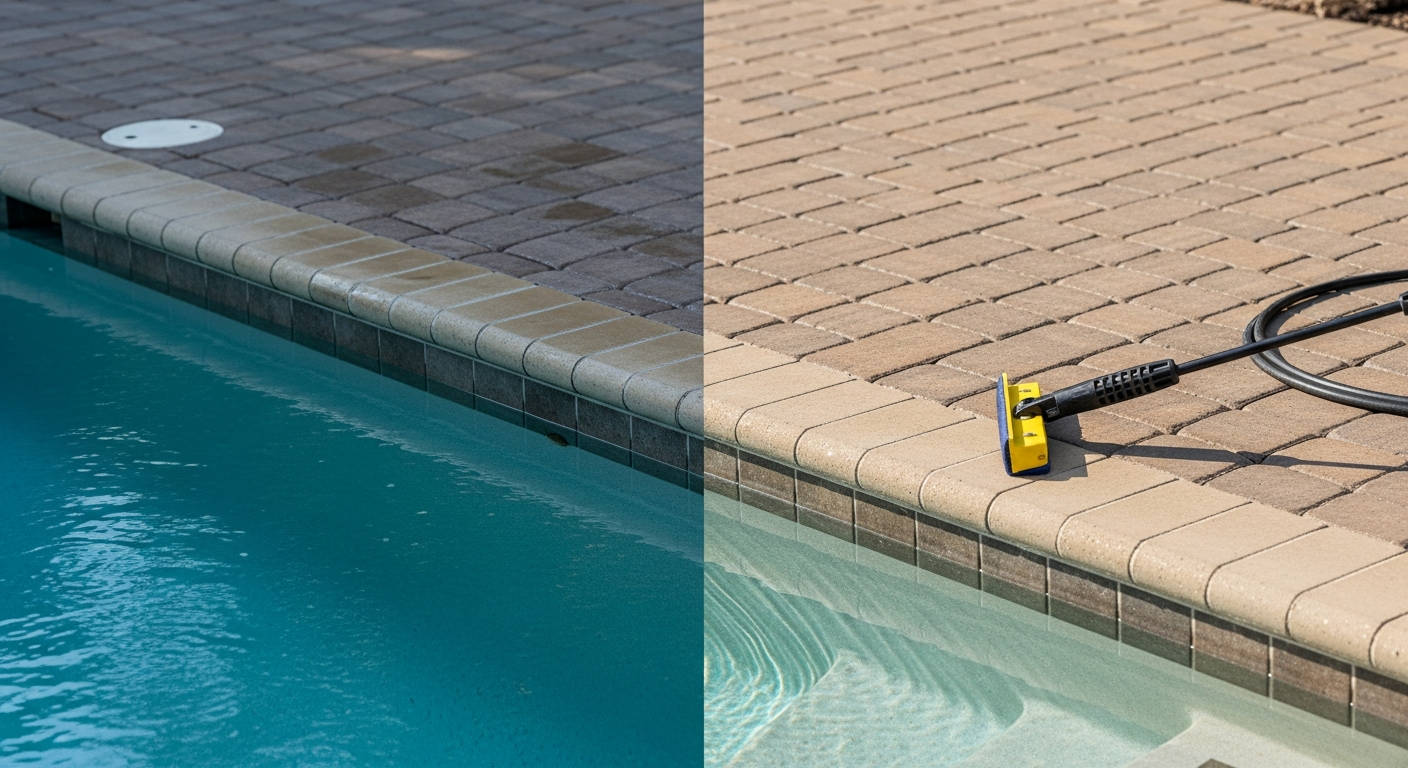
Applying paver sealer correctly is a game of millimeters and minutes. My proprietary method is designed to achieve maximum penetration and a perfect cure, even with Lake County's high humidity.- Step 1: Deep Surface Decontamination. I don't "power wash." I use a hot water pressure washing system combined with a commercial-grade, pH-neutral cleaner. This lifts embedded oils and organic stains without etching the paver surface, which is a common error I see from using overly acidic cleaners.
- Step 2: Joint Stabilization with ASTM C144 Sand. After cleaning, the joints are empty. I fill them with high-grade polymeric sand, then use a plate compactor to ensure it settles deep into the joint, locking the pavers together. The key here is the watering-in process; too much water too fast washes the binding polymers away. I use a specific nozzle to create a fine mist for a slow, controlled activation.
- Step 3: Dual-Coat Micro-Film Application. I never use a roller. I apply the sealer using a professional-grade airless sprayer, which atomizes the product for a perfectly even coat. The critical action is applying two thin coats "wet-on-wet" and immediately back-rolling with a specialized foam roller to eliminate any surface pooling and ensure the sealer penetrates rather than just sits on top.
Precision Tuning and Curing Standards
The final 10% of the job determines 90% of the result. The curing phase is the most critical and where most DIY or inexperienced jobs fail. I have a strict 48-hour no-traffic protocol. I've seen a perfect application ruined by a homeowner letting their dog out too soon or an unexpected irrigation system cycle. I also adjust my application based on the specific paver. A highly porous Chicago Brick paver, common in historic Mount Dora homes, will absorb sealer differently than a dense, modern concrete paver in a new Clermont development. This requires on-the-fly adjustments to the sprayer tip size and pressure to avoid over-application, which creates that telltale plastic-looking, slippery surface. My quality check involves inspecting the sealed surface at a low angle to ensure a consistent, satin finish with zero drips or cloudy spots. Is your current sealer trapping moisture and accelerating spalling, or is it allowing vapor to escape while blocking liquid water?Written by

Tags
concrete pavers sealer
porcelain paver sealer
driveway paver sealing near me
professional paver sealer
paver patio cleaning and sealing near me