Backyard Pavers Manatee County: My Framework for a 30-Year Lifespan Against Florida Humidity
After a decade specializing in hardscape engineering here in Manatee County, I can tell you the single biggest point of failure for backyard paver patios isn't the paver itself—it's water. Specifically, it's the catastrophic combination of our torrential summer downpours and the sandy, often unstable soil found from Lakewood Ranch to the coastal areas near Palma Sola. Standard installation guides simply don't account for the hydrostatic pressure and soil subsidence we face. I've been called in to fix countless sinking, weed-infested patios, and the root cause is almost always an inadequate base and a complete misunderstanding of local drainage dynamics. My entire approach is built around creating a permeable, yet incredibly stable, foundation that works *with* our subtropical climate, not against it. This isn't just about laying stones; it's about engineering a system that increases the functional lifespan of your investment by at least 25-30% compared to standard methods.The Subtropical Paver Failure Point: Beyond Simple Installation
The core issue I’ve identified in failing Manatee County paver projects is a reliance on generic, one-size-fits-all specifications. A 4-inch gravel base might work in Georgia, but here it's a recipe for disaster. My proprietary methodology, which I call the Dynamic Drainage Foundation, is a three-part system designed specifically for our local conditions. It starts with a diagnostic phase that most installers skip entirely. I analyze the property’s grade, soil percolation rate, and proximity to structures to map out a sub-surface drainage plan before a single shovel hits the ground. This prevents the water-logging that leads to paver shifting and joint sand washout.Why Your Paver Base is Failing: A Manatee County Soil Analysis
The soil here is a mix of sand and marl, which has a very low load-bearing capacity when saturated. This is why you see pavers sinking after just a few rainy seasons, especially in newer developments in Parrish where the ground hasn't fully settled. The technical solution is a non-negotiable, two-part base reinforcement. First, we must use a non-woven geotextile fabric. This is critical. It acts as a separator, preventing our aggregate base from sinking into the subsoil over time. Second, the base itself must be a minimum of 6 inches of compacted crushed concrete or granite aggregate, not pea gravel. It must be compacted in 2-inch lifts to achieve a 98% Proctor density. I once saw a high-end project in The Lake Club fail in 18 months because the contractor compacted a 5-inch base in a single pass—a fatal shortcut.Executing the Dynamic Drainage Foundation: A Step-by-Step Breakdown
Once the diagnostic is complete, the physical implementation must be flawless. Every step is a critical control point that contributes to the final system's integrity. Deviating from this process is what separates a 5-year patio from a 30-year one.- Site Excavation: I mandate an excavation depth of 8 to 10 inches. This accounts for 6 inches of base, a 1-inch sand setting bed, and the paver height. This depth is non-negotiable for proper water management.
- Subgrade Compaction: Before any material is added, the native soil subgrade itself must be compacted and graded with a 1/4 inch per foot slope away from any structures.
- Geotextile Installation: The fabric is laid down with a 12-inch overlap between sections. This ensures total separation and stabilization.
- Base Material Application: We lay the first 3-inch lift of aggregate, moisten it slightly to aid compaction, and then run a plate compactor over it a minimum of three times. We then repeat the exact same process for the second 3-inch lift.
- Screeding the Bedding Sand: A 1-inch layer of coarse, washed concrete sand is screeded to create a perfectly level setting bed. This sand quality is crucial to prevent erosion from beneath.
Joint Stabilization and Sealing Protocols for Coastal Air
The final piece of the puzzle is joint stabilization, an area particularly vulnerable to Manatee County's humidity and salt air. Standard polymeric sand can fail to cure properly in our high-humidity environment, leading to a hazy residue or a weak bond. I only use a moisture-curing, high-performance polymeric sand. It uses ambient humidity to create a rock-solid, flexible joint that resists weed growth and insect intrusion. For homes near the coast, like those in Northwest Bradenton or on Anna Maria Island, the final step is a two-coat application of a penetrating, breathable silane/siloxane sealer. This doesn't just create a top-level film; it chemically bonds within the paver to repel saltwater intrusion and prevent UV-related color fading, effectively locking in the patio's integrity. Given the soil's low load-bearing ratio in most of East Manatee, is a standard 4-inch aggregate base ever truly sufficient for a lifetime installation?Written by

Tags
backyard pavers cost
cement backyard
outdoor pavers for patio
patio pavers for sale
patio pavers near me
Pavers Backyard in Manatee FL FAQ
My pavers are sinking in one spot right next to my pool. What's causing this?
Sinking pavers next to a pool are almost always caused by a water leak from the pool's underground plumbing or a structural crack in the pool shell. This water erodes the sand and gravel base beneath the pavers, creating a void that causes them to collapse. While poor initial compaction of the base can be a factor, a sudden dip strongly suggests a leak. A leak as small as 3 mm can wash away the sub-base over time. Ignoring this can lead to a much larger, more expensive structural failure of the pool wall or the surrounding deck, as the saturated ground loses its ability to provide support.
Can I just lift the sinking pavers and add more sand underneath to level them?
Adding more sand is a temporary fix that fails to address the root cause, which is likely water erosion from a leak. The new sand will simply wash out again, and the problem will return, often worse than before. The correct approach is to first perform a pressure test on the pool's plumbing lines to pinpoint the leak. Only after the pipe is repaired and the source of water is stopped should the pavers be removed, the base material re-compacted, and the pavers re-laid. Simply adding sand is like putting a bandage on a broken bone; it hides the problem but guarantees future failure.
Are pavers a bad choice for a pool deck? I'm worried about them getting too hot and being slippery.
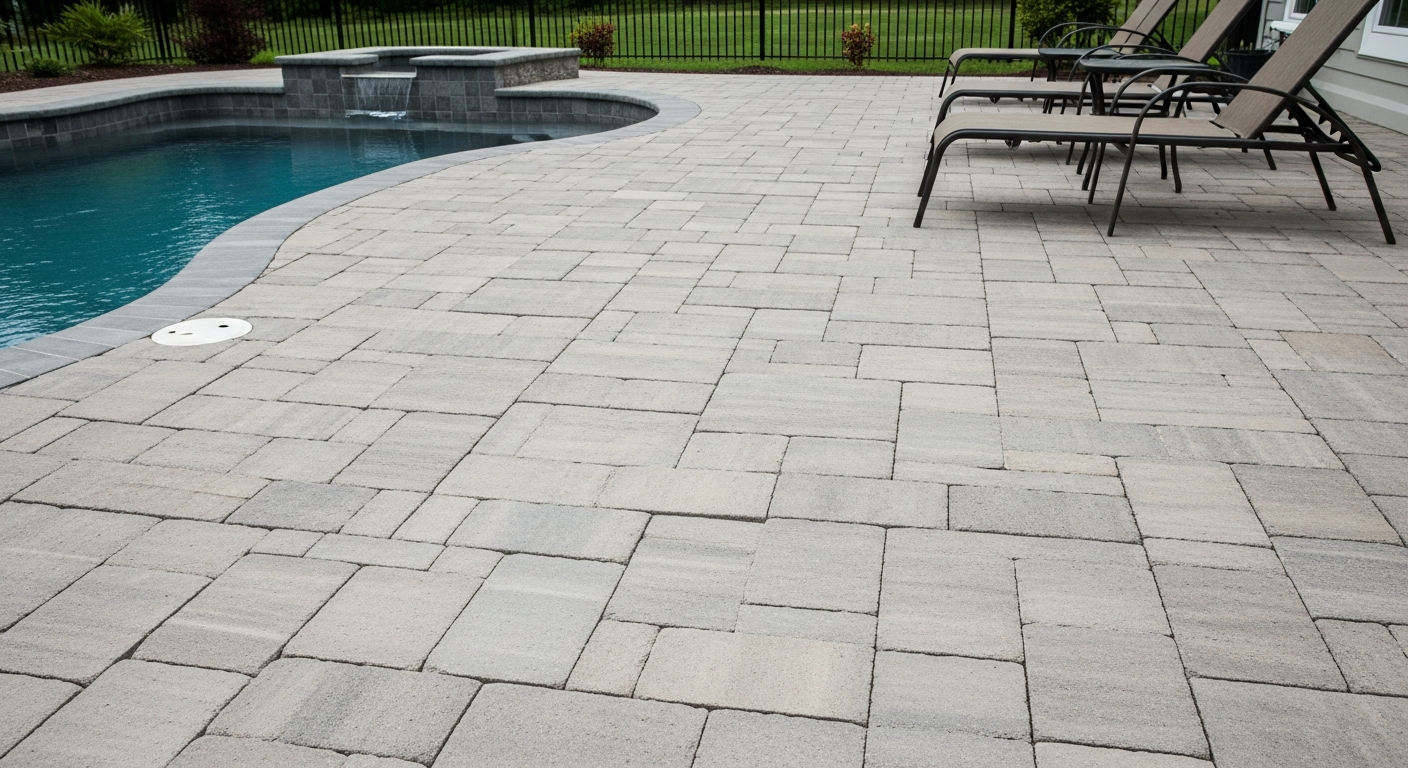
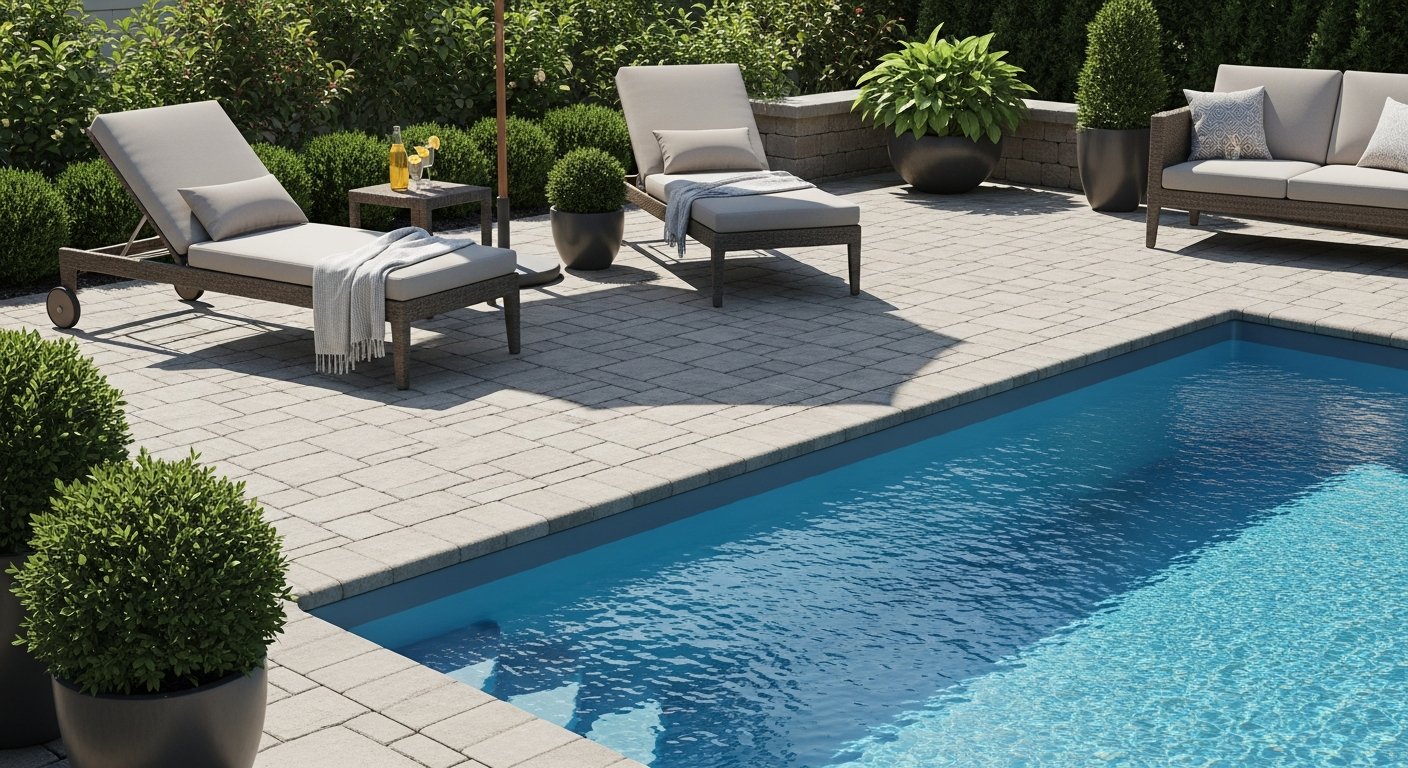
Pavers are an excellent choice for a pool deck, provided you select the right type and they are installed correctly. Light-colored, high-quality concrete pavers have a higher solar reflectance and stay cooler than dark stone or poured concrete. Many are manufactured with a textured, non-slip surface specifically for pool use. The critical, often overlooked factor is the polymeric sand used in the joints. Using cheap sand or improper installation will lead to it washing out, causing weed growth and paver movement, which are the most common complaints, not issues with the pavers themselves.
I see white, chalky stuff on my pavers near the pool coping. How do I get rid of it?
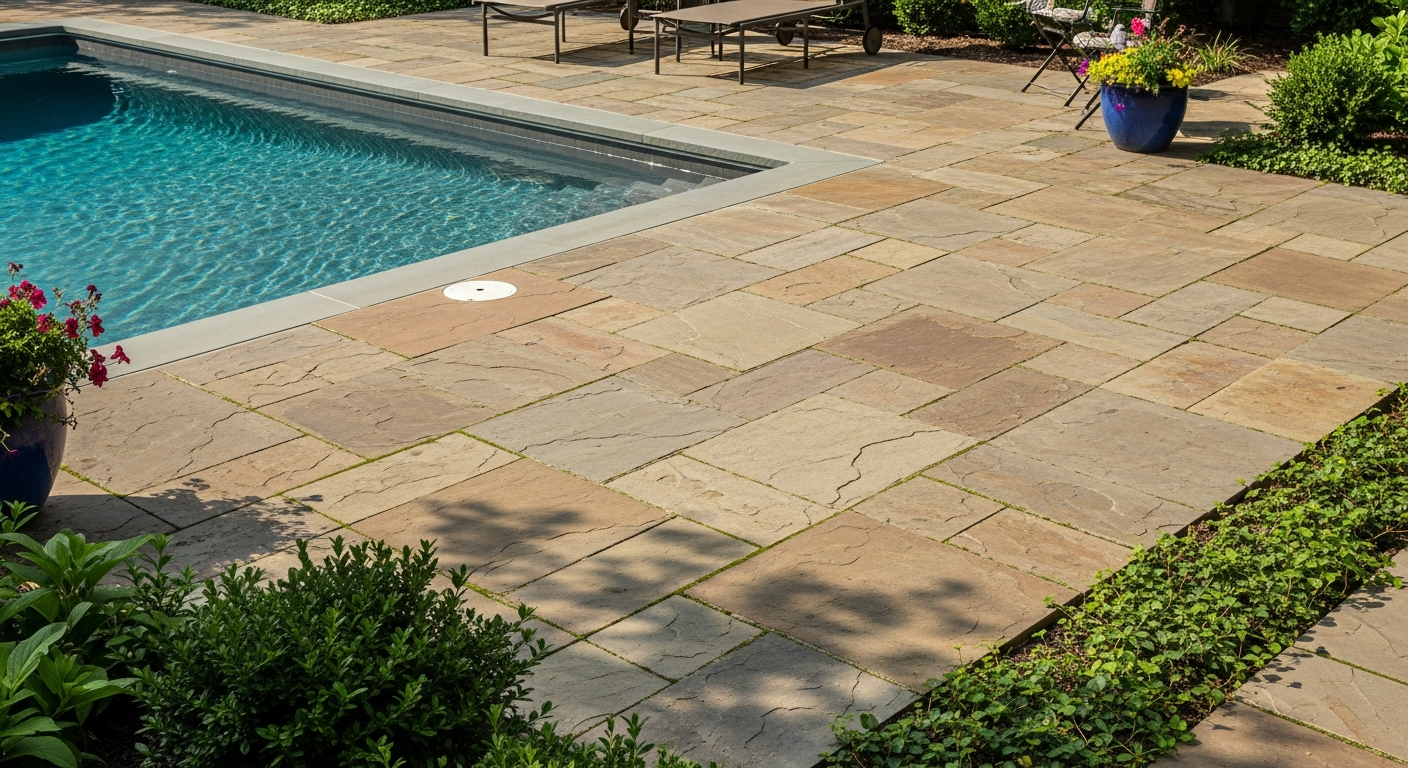
That white residue is likely efflorescence, which is salt deposits left behind as moisture evaporates from within or beneath the pavers. Around a saltwater pool, this is often exacerbated by splash-out, which introduces high concentrations of salt. While you can clean it with specialized efflorescence removers, the key is to address the moisture source. A hidden leak or poor drainage is often the culprit. A critical, non-obvious cause can be improper sealing of the coping joint, allowing pool water to seep underneath the pavers, creating a persistent moisture problem that constantly fuels the efflorescence cycle.
Weeds and ants are coming up through the joints in my pavers. Is there a permanent solution?
A permanent solution requires removing the existing joint material and replacing it with a high-quality polymeric sand. Weeds and ants thrive when the original sand has washed or broken down, creating a perfect environment for them. Simply spraying weed killer is a temporary fix. For a lasting repair, the joints must be completely cleaned out, and then a new, water-activated polymeric sand must be swept in, compacted, and properly cured. This hardens into a durable, flexible mortar that forms a physical barrier, effectively locking out both weeds and insects for years.
If I need a major pool repair, will my entire paver deck have to be ripped out?
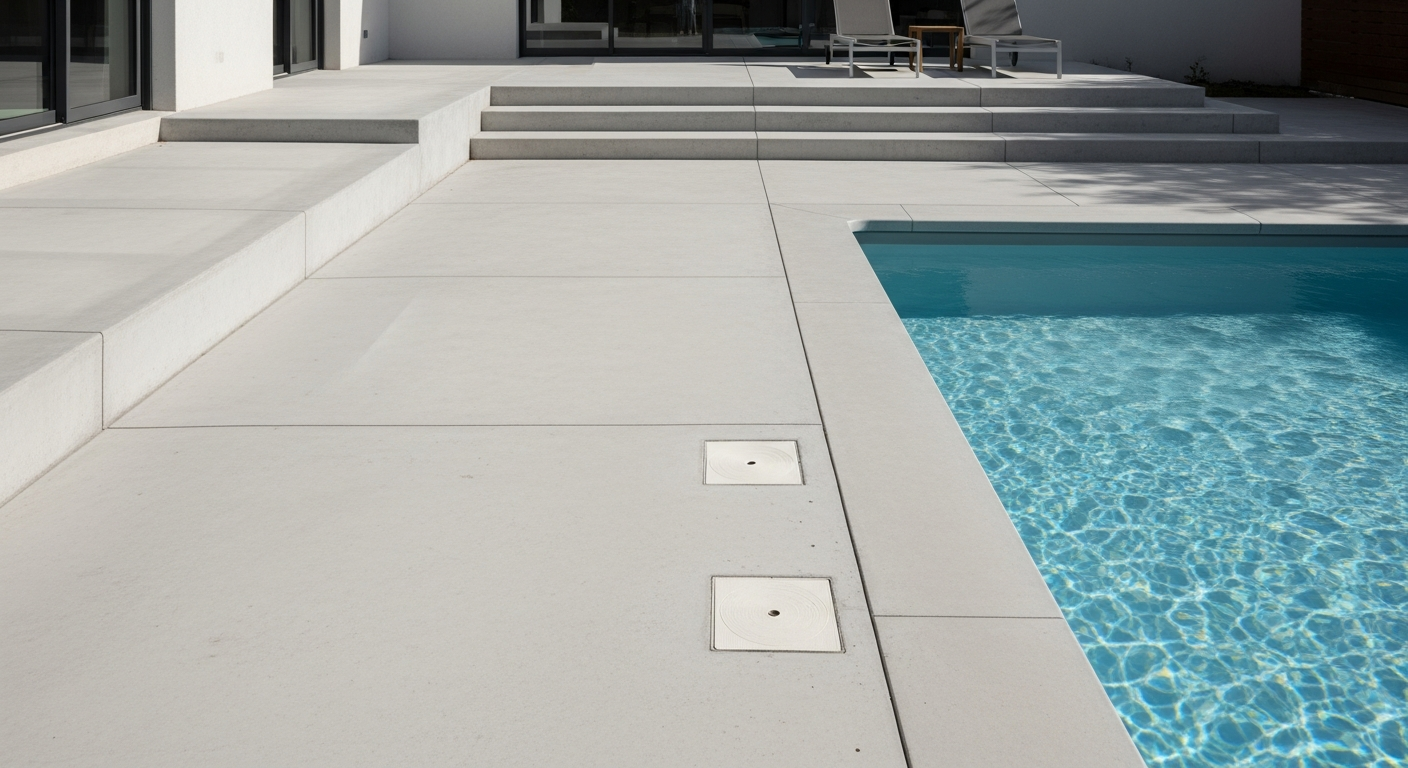
No, one of the primary advantages of a paver deck is that it does not require complete demolition for underground repairs. A skilled technician can carefully lift only the specific pavers needed to access the leaking pipe or damaged area. After the repair is complete, the original base is regraded, and the same pavers are reinstalled, leaving little to no evidence of the work. This is a significant cost and time advantage over a poured concrete deck, where a repair requires saw-cutting the concrete, resulting in unsightly patch marks that never perfectly match the original slab.