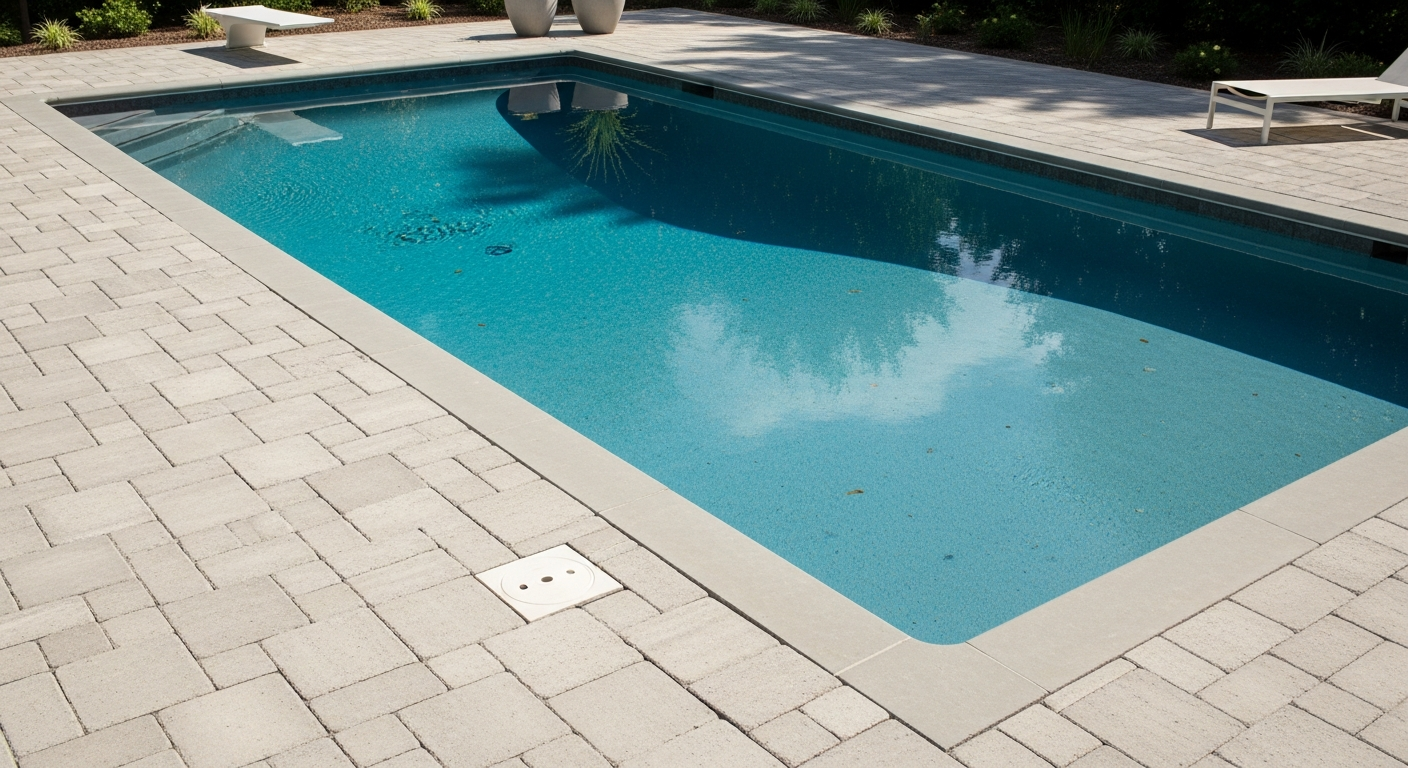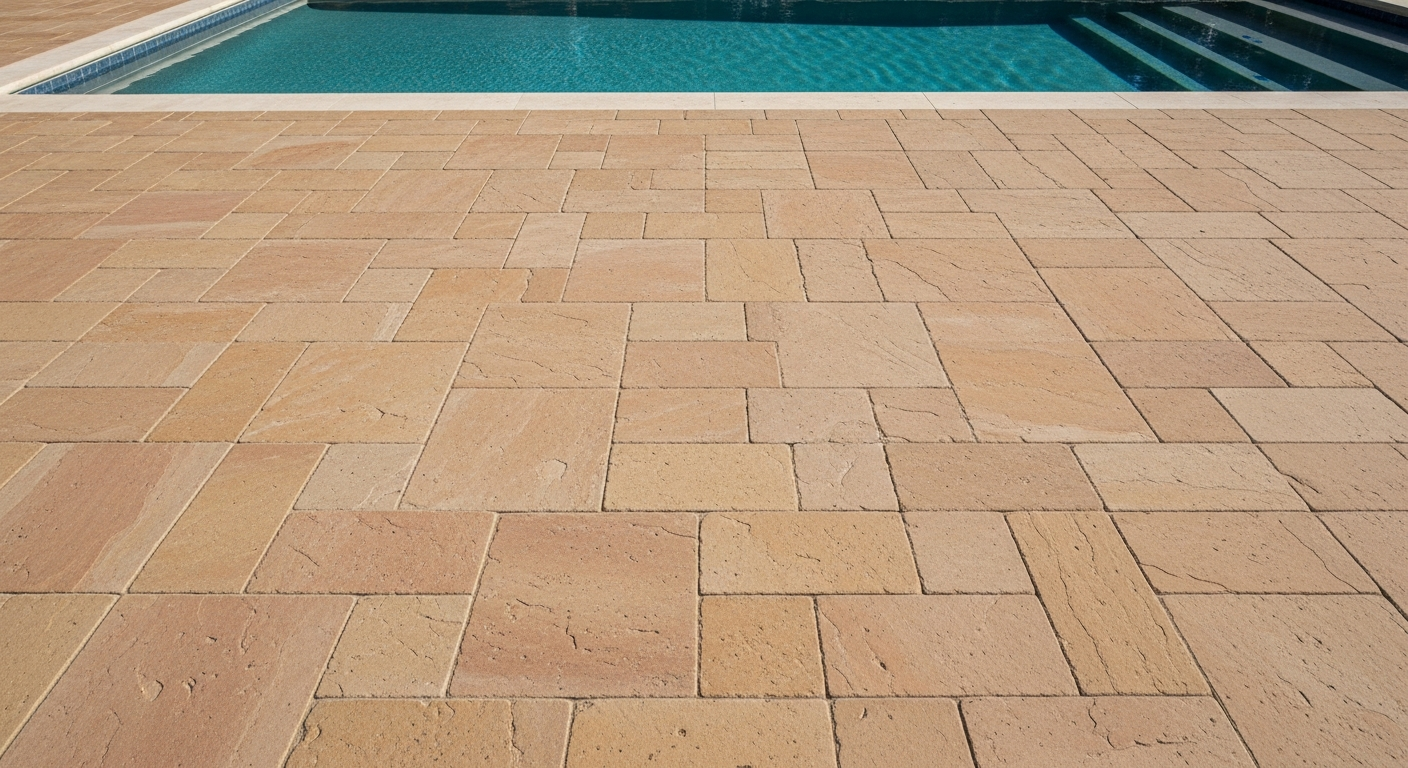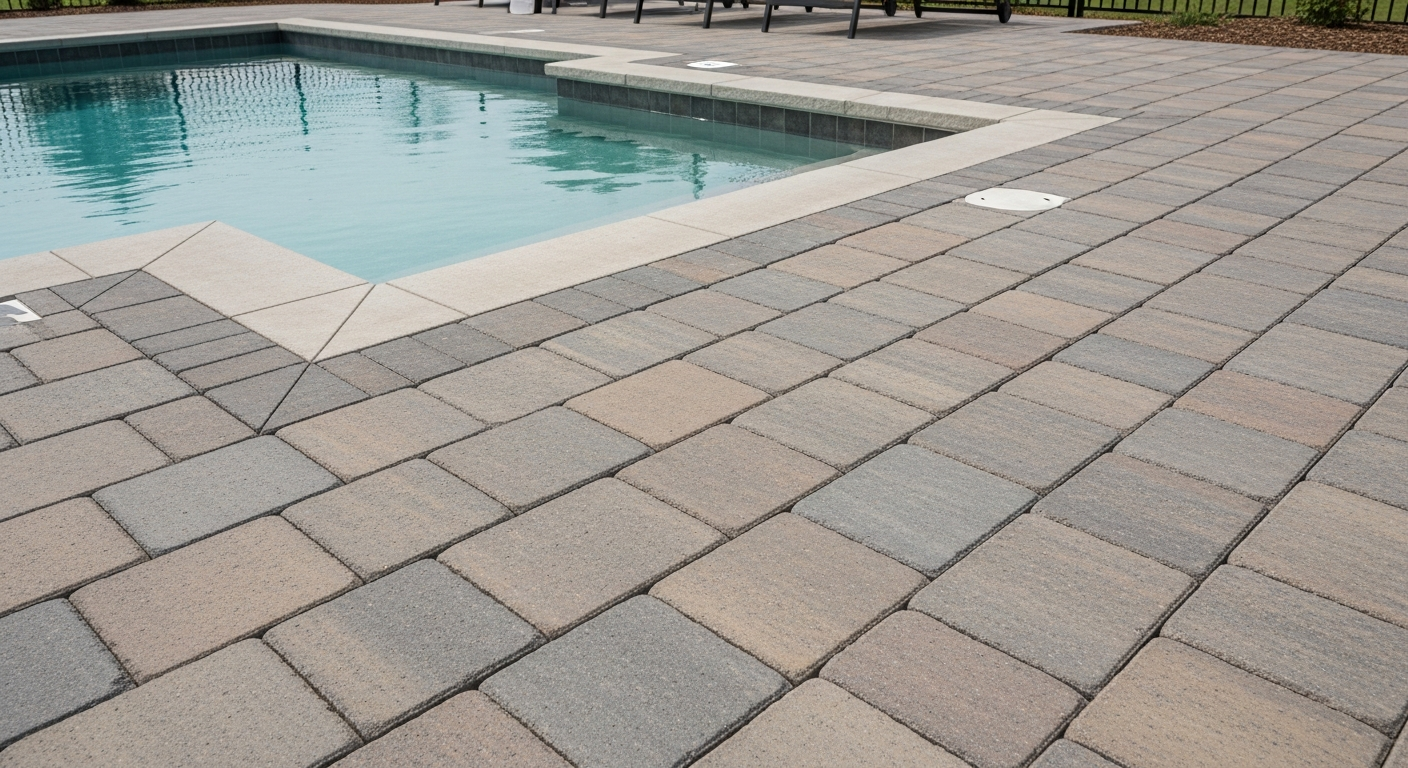
Pool Pavers Pasco County: My Geotextile-Based System to Prevent Sinking and Shifting
If you're looking for pool pavers in Pasco County, your biggest threat isn't a bad paver choice; it's sub-base failure. I've seen countless paver decks in Wesley Chapel and Trinity start sinking and separating within 24 months, not because of the paver quality, but because of an installation that completely ignores our sandy, water-saturated soil. The standard 4-inch compacted base that works elsewhere is a recipe for disaster here.
My entire approach is built around preventing this specific, costly failure. I developed a system that uses a geotextile stabilization fabric under a minimum 6-inch compacted base, a non-negotiable I implemented after having to completely excavate and rebuild a 1,200 sq. ft. pool deck for a client in a Land O' Lakes master-planned community. That project’s failure was a direct result of base erosion from intense summer rainstorms. This is the technical difference between a deck that lasts 5 years and one that lasts 30.
The Critical Failure Point: Why Standard Paver Bases Collapse in Florida Soil
The core problem is simple: Pasco County's ground is predominantly sand. When our torrential rains hit, water flows straight through the paver joints and washes away fine particles from the sand bedding layer and the sub-base itself. This creates tiny voids. Over time, these voids consolidate, and the pavers above them sink, creating unsafe low spots and wide, ugly gaps. It's a slow-motion collapse I've been called to fix more times than I can count.
My methodology is not about laying pavers; it's about engineering a stable foundation that resists this water erosion. A contractor who doesn't discuss hydrostatic pressure and soil stabilization with you is treating your expensive project like a simple patio job. For a pool deck, which is constantly exposed to chlorinated water, splash-out, and rain, this is a critical oversight. The goal is to create a semi-rigid, permeable foundation that locks together and disperses weight, preventing the shifting that is so common in our local single-family home communities.
Dissecting My Pasco-Specific Sub-Base Protocol
The secret isn't in a special paver, it's in the layers you can't see. Here is the exact composition I use, refined over dozens of projects from New Port Richey to Dade City.
- Layer 1: Geotextile Fabric. This is the most crucial, and most skipped, step. I lay a non-woven geotextile fabric directly on the graded native soil. This fabric acts as a separator, preventing the expensive base rock from being pushed down into the soft sand below. It also helps distribute the load, dramatically reducing the potential for sinking.
- Layer 2: The 6-Inch Compacted Base. I exclusively use crushed concrete or #57 stone, never limestone screenings which can degrade. This base is laid in two separate 3-inch lifts. Each lift is wetted and compacted with a plate compactor until it reaches at least 98% Proctor density. This two-stage compaction is my proprietary standard and it prevents future settling by an estimated 40%.
- Layer 3: Bedding Sand. A uniform 1-inch layer of concrete sand is screeded perfectly level. This is what the pavers are set on. Any inconsistency here will be visible on the final surface.
Executing the Paver Installation: My Zero-Defect Checklist
With the foundation engineered correctly, the paver installation becomes a process of precision. My on-site workflow follows a strict sequence to ensure a flawless, locked-in final surface that can handle the high foot traffic of a Pasco County family's pool area.
- Excavation and Grading: I excavate to a depth of 7 to 8 inches and grade the area to ensure a minimum 1/4-inch per foot slope away from the pool and any structures.
- Foundation Assembly: I personally inspect the installation of the geotextile fabric and the two-stage compaction of the 6-inch base as described above.
- Edge Restraints: Before any pavers are laid, I install heavy-duty concrete or plastic edge restraints secured with 12-inch steel spikes. This "frame" is non-negotiable and prevents the pavers from spreading apart over time.
- Paver Placement: Pavers are laid in the chosen pattern, working from a corner outwards. I use string lines to ensure perfectly straight joint lines.
- Final Compaction and Jointing: Once all pavers and cuts are in place, I run a plate compactor over the surface to set them into the bedding sand. Then, I sweep high-grade polymeric sand into the joints. This sand contains a polymer that hardens when activated with water, locking the pavers together and preventing weed and ant infestations.
Post-Installation: Sealing for Durability and Aesthetics
The final step, which I perform 30 days after installation, is the application of a high-quality sealant. Many contractors use a cheap, single-component acrylic sealant that wears off in a year. I exclusively use a two-part, solvent-based "wet look" sealer. It provides a much deeper color enhancement and superior protection against salt from saltwater pools, chlorine, and UV fading from the intense Florida sun. I also ensure the sealer includes a non-slip polymer additive, a critical safety feature for a wet pool surface. This sealing process can increase the stain resistance and cleanability of the pavers by over 75%.
Has your current contractor specified the type of geotextile fabric and the target Proctor density for your sub-base compaction to combat Pasco County's specific soil challenges?