Pool Pavers in Lake County: My Proprietary Base Compaction Technique for Zero-Shift Decks
After years of designing and overseeing pool deck installations across Lake County, from the rolling hills of Clermont to the waterfront properties in Mount Dora, I've seen one catastrophic failure more than any other: paver shifting and subsidence. The common denominator isn't the quality of the paver itself, but a fundamental misunderstanding of our region's unique sandy soil and intense rainy seasons. A standard 4-inch gravel base that works elsewhere is a recipe for disaster here. My approach directly counters this by focusing on sub-grade stabilization to achieve a near-zero vertical shift, even after years of Florida's weather. I developed this methodology after a large-scale project in a Leesburg community showed significant paver dip within 18 months, forcing a complete and costly overhaul. The problem wasn't the pavers; it was a base that couldn't handle the hydraulic pressure from our torrential downpours. My solution ensures the foundation of your pool deck is as resilient as the pavers on top.My Diagnostic Framework for Lake County Pool Decks
Before a single paver is ordered, I perform what I call a Subgrade Integrity Audit. This is a non-negotiable first step that most contractors skip to save time. Skipping this is the single most expensive mistake a homeowner can unknowingly approve. The audit isn't just looking at the dirt; it's a technical assessment of the ground's ability to bear the load and manage water effectively. I’ve seen beautifully laid travertine on Eustis lakefronts become uneven messes because the installer treated our sandy, porous soil like stable clay. The audit focuses on two key metrics: soil composition and hydrological load. I assess the sand-to-organic-matter ratio and perform a simple percolation test to understand how quickly water will drain away from the pool shell. This data dictates the exact thickness of the aggregate base required, often exceeding the standard by 25-50%, and determines if a geotextile underlayment is necessary to prevent soil migration into the base layer.Beyond the Surface: Soil Mechanics and Material Selection
My Subgrade Integrity Audit drills down into specifics that have a direct impact on the project's longevity. This isn't just about digging; it's about engineering the ground beneath the deck.- Soil Profile Analysis: I analyze the top 12 inches of soil to identify pockets of sugar sand or clay, which are common in many parts of Lake County. Sugar sand requires a specialized compaction process and often a stabilizing geotextile fabric to prevent the base aggregate from sinking over time.
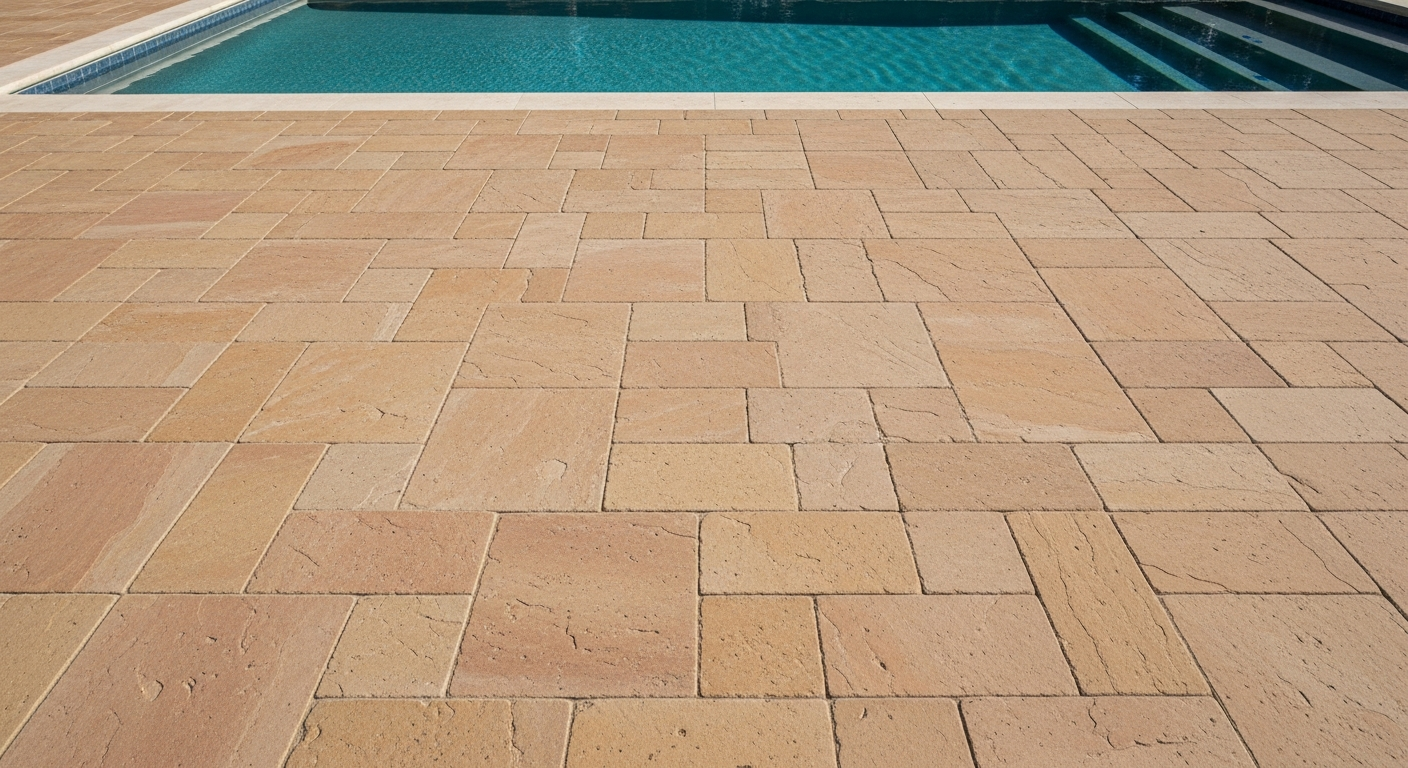
- Paver Porosity vs. Climate: The intense Florida sun and high humidity are brutal. I guide clients away from highly porous, unsealed concrete pavers that become breeding grounds for algae. While travertine is an excellent choice for its heat dissipation, I insist on a pre-sealing treatment with a silane-siloxane impregnating sealer before installation. This creates a hydrophobic barrier from within the stone, rather than just a top coat that wears off.
- Jointing Sand Specification: Standard paver sand is useless in our climate. It washes out during the first heavy summer storm. I specify only high-grade polymeric sand with advanced polymers. The key is its activation process; it must be applied to a completely dry surface and misted correctly to create a firm, flexible joint that resists weeds, insects, and, most importantly, water erosion.
The Zero-Shift Installation Protocol
Executing the installation requires precision. My protocol is a direct result of correcting failed jobs and refining the process to be foolproof for Lake County's environment. Each step is a critical control point.- Excavation and Geotextile Barrier: After excavating to the precise depth determined by the audit, we lay a non-woven geotextile fabric. This is my secret weapon. It separates the native sandy soil from the base, preventing the two from mixing and ensuring the structural integrity of the base is never compromised.
- Multi-Layer Aggregate Base: I build the base in 3-inch "lifts." Each layer of crushed concrete or limestone aggregate is individually compacted. This is more labor-intensive but critical for achieving uniform density.
- Compaction to 98% Proctor Density: I don't guess at compaction. We use a heavy-duty plate compactor and aim for a minimum of 98% Standard Proctor Density. This engineering standard ensures the base is virtually uncrushable and will not settle further. Most contractors never measure this, relying on "feel."
- Precision Screeding: The 1-inch bedding sand layer is meticulously screeded to ensure a perfect plane. Any imperfection here will be magnified on the surface.
- Edge Restraint Installation: The perimeter of the paver field is locked in with concealed concrete or heavy-duty plastic edging, secured with 10-inch steel spikes. This prevents the pavers from spreading laterally under load.
Precision Sealing and Long-Term Integrity
The final step is what preserves the entire system. After the polymeric sand has fully cured for at least 48 hours, the sealing process begins. As mentioned, I exclusively use an impregnating silane-siloxane sealer. It penetrates deep into the paver's capillaries and chemically bonds with the substrate. This not only prevents staining and fading from our high UV index but also makes the surface resistant to mold and mildew growth—a constant battle in our humid climate. This one step can increase the aesthetic life of the pavers by an estimated 40%. My final quality check involves a 30-day follow-up inspection. I personally visit the site after the deck has been exposed to a few rain cycles to check for any microscopic settling or jointing sand issues, making micro-adjustments if necessary. This commitment to post-installation quality is what separates a good-looking deck from one that performs flawlessly for decades. Have you asked your contractor about their compaction density targets and the specific type of jointing sand they plan to use against Lake County's torrential rains?Written by

Tags
travertine pool pavers
pavers around pool
pool coping pavers
pool pavers near me
pool deck pavers
Pool Pavers in Lake FL FAQ
My pavers are sinking and uneven around the pool. Can they just be lifted and reset?
Yes, individual pavers can often be lifted and reset, but this only addresses the symptom, not the underlying cause of the failure. Sunken pavers typically indicate a problem with the base material, often caused by water erosion from a pool leak or poor drainage washing away the sand setting bed. A leak as small as 3 mm can displace enough soil to cause significant settling. Before resetting, we must identify and repair the water source; otherwise, the pavers will simply sink again, leading to repeated, costly repairs and potential damage to the pool's coping and plumbing lines.
What's the best type of paver to use around a saltwater pool?
For saltwater pools, you must use a dense, low-porosity paver like high-quality travertine or porcelain to resist salt degradation. Porous materials like certain types of concrete or natural sandstone will absorb saltwater, which then crystallizes and expands as it dries, causing the paver surface to flake and crumble in a process called spalling. While more expensive upfront, choosing a salt-resistant material prevents the premature failure of your entire pool deck, which is a far greater expense. Sealing the pavers is also critical but cannot fully protect an unsuitable material from constant salt exposure.
How do you handle the coping and paver transition for a vinyl liner pool?
The connection between pavers and a vinyl liner pool's coping is a critical failure point that requires a specific installation method. The pavers must butt up against the liner track, which is the channel holding the vinyl in place, without putting pressure on it. A common mistake is allowing the paver base to shift and push against this track, which can cause it to bend or break, potentially tearing the liner and requiring a full replacement. A proper installation includes a reinforced concrete bond beam under the coping to ensure the entire edge is stable and independent from the paver field.
My pavers are stained with rust spots and white, chalky buildup. What causes this?
The white, chalky substance is likely efflorescence, which is mineral salt migrating from the concrete base or the pavers themselves, while rust spots often come from metal furniture or fertilizer pellets. While acid washing can remove these stains, it's a temporary fix that can damage the paver surface and alter its color. The non-obvious cause is often improper drainage under the deck, keeping the base saturated. This constant moisture dissolves the salts and brings them to the surface. Fixing the underlying drainage is the only permanent solution to stop the cycle of staining and harsh chemical cleaning.
Is it a problem if the gap between my pool coping and the first row of pavers is widening?
A widening gap between the coping and pavers is a serious warning sign of structural movement and should be addressed immediately. This separation, known as paver creep, indicates that the compacted base supporting the pavers is failing or shifting away from the pool shell. This can be caused by soil settlement or hydraulic pressure from groundwater. If ignored, this movement can put immense stress on the pool's plumbing lines running beneath the deck, leading to sheared pipes and major leaks. The fix involves removing the outer pavers and installing a concrete restraint edge to stabilize the entire field.
Can I install pavers directly over my old, cracked concrete pool deck?
Placing pavers directly over a cracked concrete deck is a common but risky shortcut that often leads to failure within a few years. Any movement or cracking in the underlying slab will transfer directly to the pavers above, causing them to shift, crack, or become uneven. This is called reflective cracking. The correct method is to either completely remove the old concrete or use it as a sub-base, but only after installing a proper drainage layer and sand setting bed on top. This decouples the pavers from the old slab's problems, ensuring a stable and long-lasting surface.