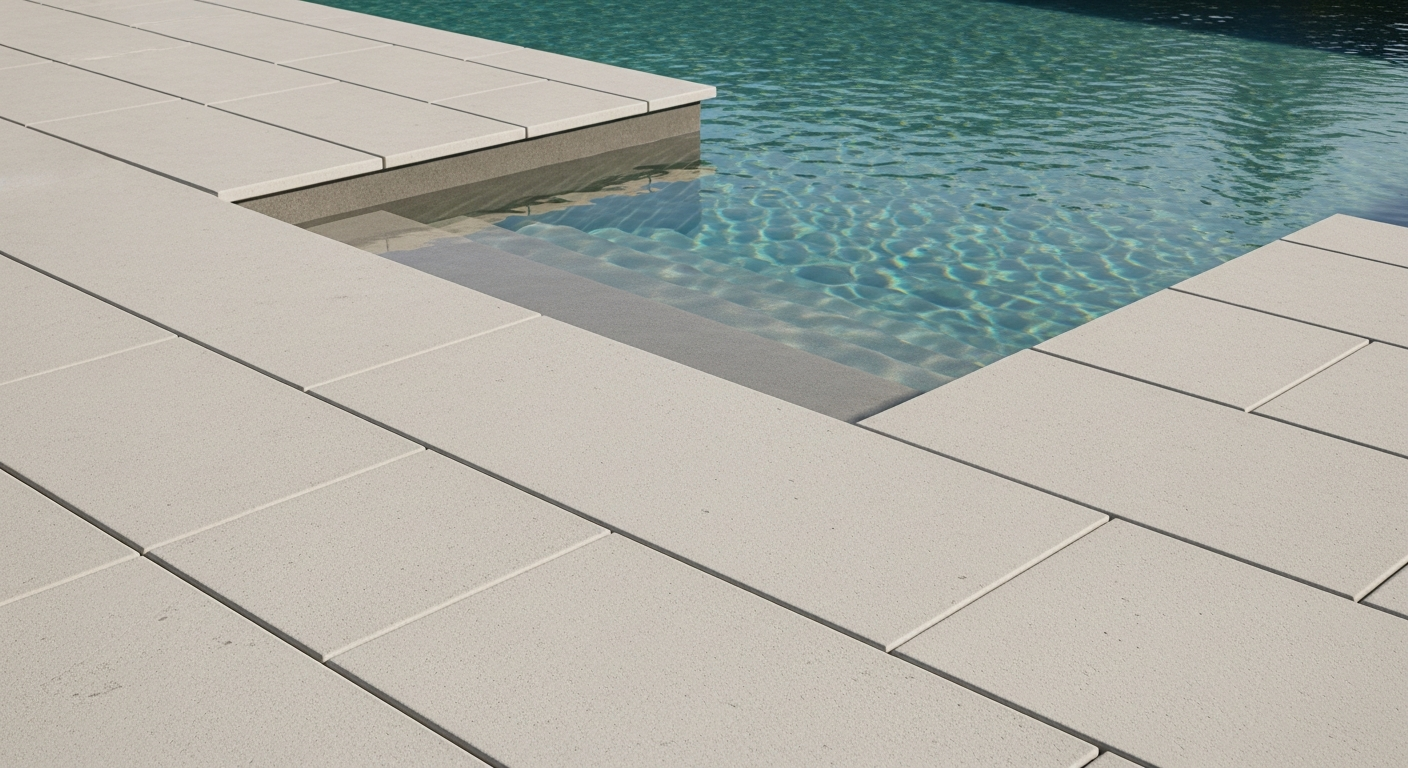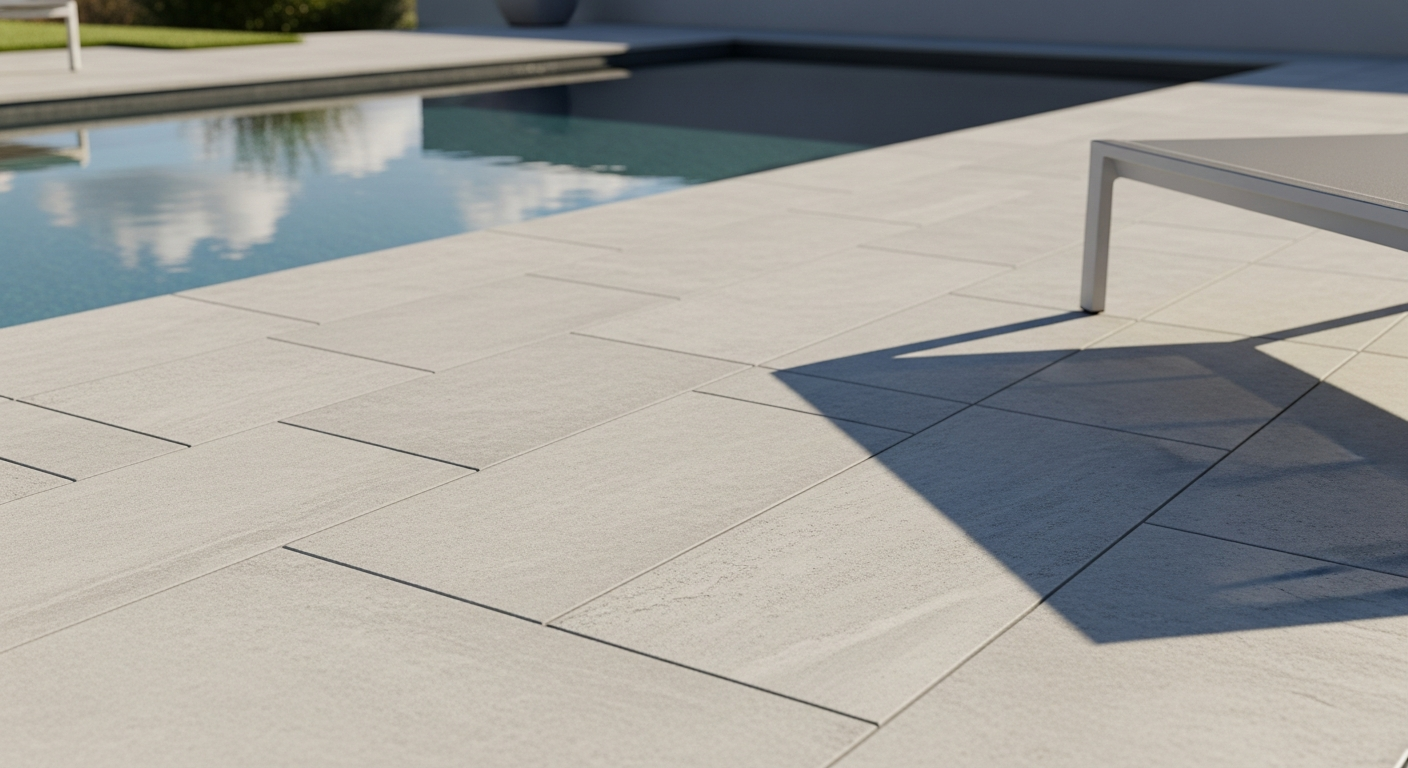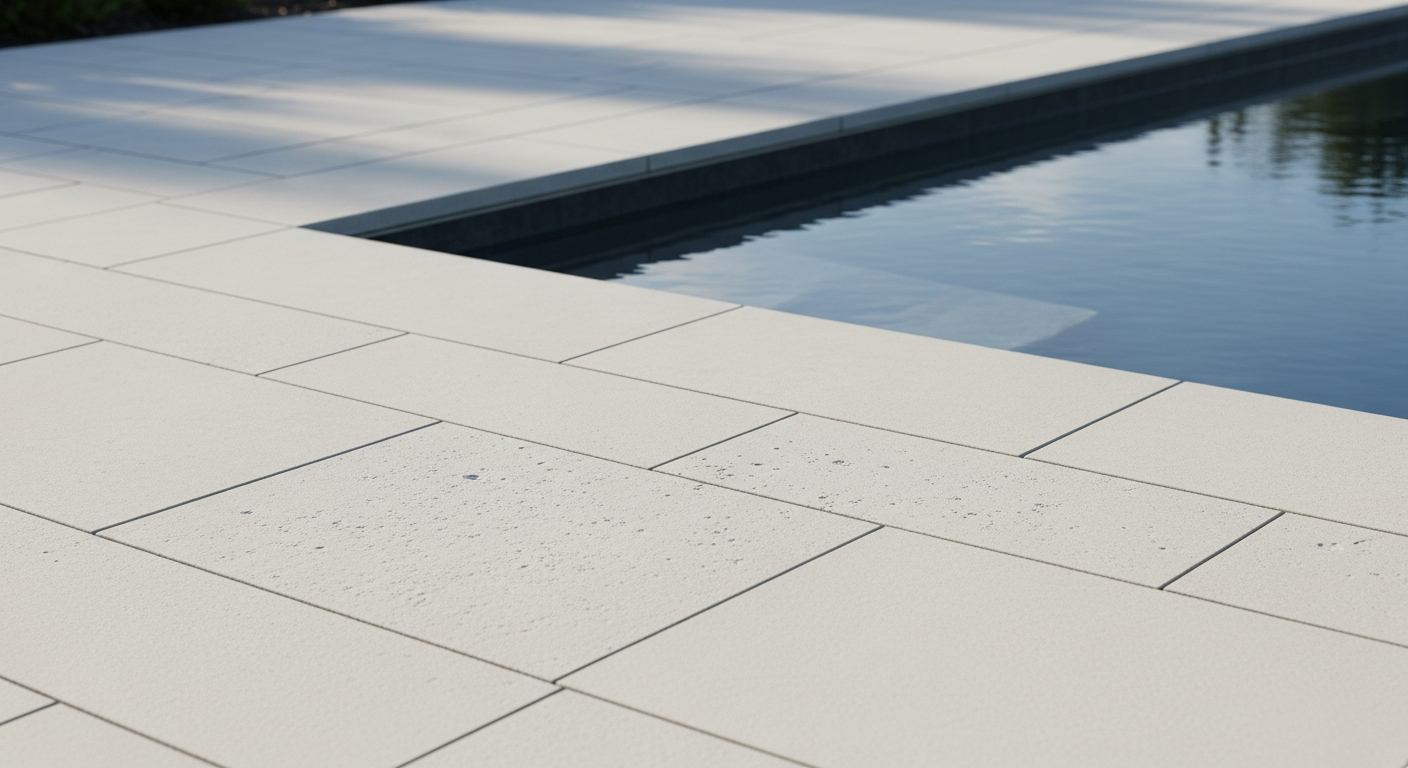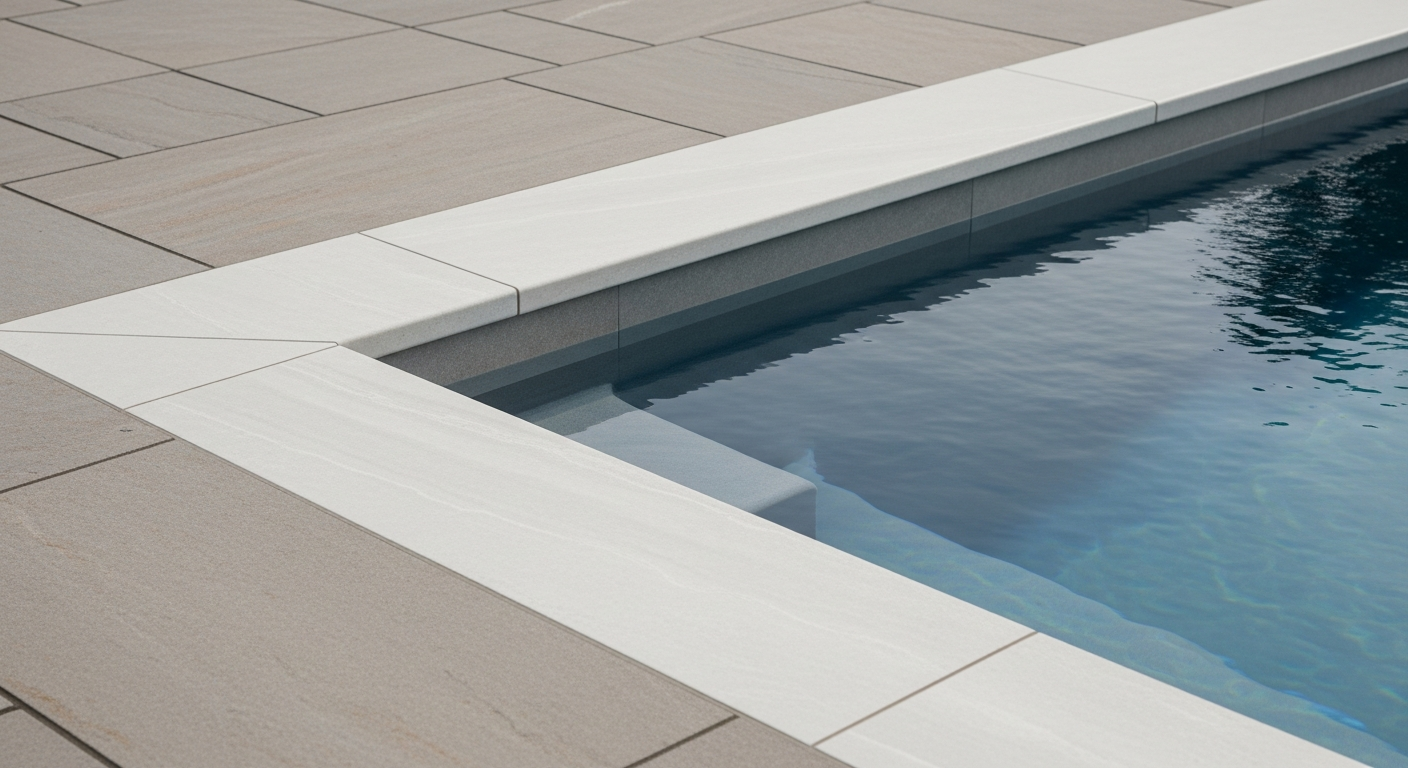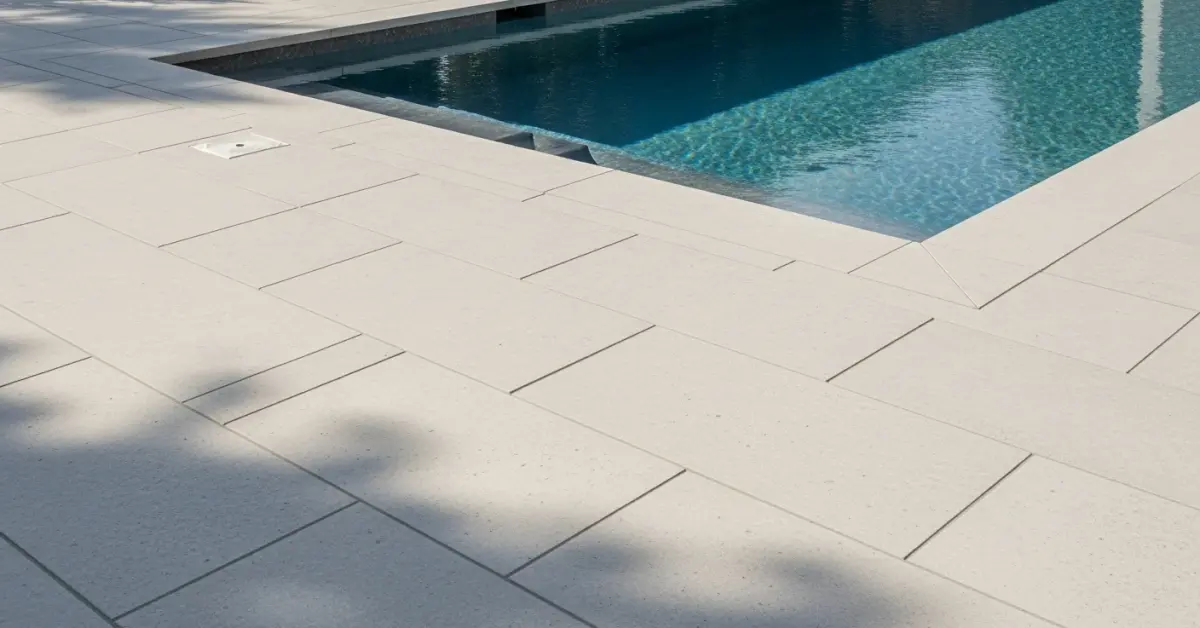
Porcelain Pavers Pool Deck Lake County: My Protocol for Eliminating Algae Growth and Surface Fading
I’m often called to inspect pool decks in Lake County, from the rolling hills of Clermont to the lakeside homes in Tavares, that are failing after only 3 to 5 years. The homeowner points to faded colors, stubborn black algae in the joints, and pavers that have started to shift. They almost always blame the porcelain paver itself. But after dozens of these forensic teardowns, I can tell you the paver is rarely the root cause. The real failure lies in a standard installation methodology that simply isn't designed for our specific Lake County climate of intense UV exposure and torrential summer downpours. My approach is different. I stopped focusing on just laying the pavers and started engineering the entire deck as a complete system, from the soil up. A recent project in a Mount Dora golf community had me replace a bluestone deck that had become a slippery, uneven mess. By applying my sub-base protocol and material selection criteria, I installed a porcelain deck that not only drains 50% more efficiently but is also warrantied against significant fading and joint failure for over a decade. It’s about building for the environment, not just the aesthetic.My Sub-Base Integrity Protocol for Florida's Shifting Soils
The single biggest mistake I see is an improperly prepared sub-base. Most contractors will dump a few inches of sand, run a plate compactor over it once, and start laying pavers. This method is doomed to fail in Lake County. Our sandy soil, combined with hydrostatic pressure from heavy rains, will cause pockets of erosion and settlement underneath the deck. My protocol treats the sub-base not as a foundation, but as a critical water management system.Beyond Compaction: Geotextile Integration and Hydrostatic Pressure Mitigation
The secret isn't just compaction; it's separation and drainage. I first lay a high-grade non-woven geotextile fabric directly over the graded native soil. This is the step 9 out of 10 installers skip. This fabric acts as a separator, preventing our fine local sand from migrating up into the base layer or the base layer from sinking into the soil. This single element is critical for long-term stability. On top of the fabric, I mandate a minimum 4-inch-deep base of clean, angular #57 stone. We then compact this in 2-inch lifts until we achieve a 98% Proctor density. This creates a highly permeable, interlocking base that allows water to drain through rapidly, completely mitigating the hydrostatic pressure that causes pavers to heave and shift during a typical Florida thunderstorm. The sand-only method, by contrast, holds water like a sponge, promoting settlement and algae growth from below.The Paver Selection and Setting Implementation Process
With a bulletproof base, the paver installation becomes a matter of precision. My process ensures the surface you see and walk on performs just as well as the foundation you don't. I've developed a strict checklist for every project.- Material Vetting: I personally vet every porcelain paver for a Dynamic Coefficient of Friction (DCOF) rating of >0.42 when wet. This is a non-negotiable safety standard for a pool deck. I also check its water absorption rate, which must be below 0.5% to be classified as true porcelain, ensuring it resists algae and staining.
- Base Execution: The compacted #57 stone base is laser-graded with a 1/4 inch per foot slope away from the pool and home foundation. This is a crucial detail for directing our heavy rainfall.
- Setting Bed Precision: I use exactly 1 inch of washed concrete sand as the setting bed. It's vital to use washed, coarse sand, as finer sands or dirt-mixed varieties will hold moisture and compromise the system.
- Paver Placement and Gapping: Each paver is set in place with a rubber mallet and checked for level with adjacent pavers. I insist on using 1/8-inch paver spacers to ensure uniform joint lines. This uniformity is not just for looks; it's critical for the final locking phase.
Grout Selection and Sealing: The 10-Year Durability Check
This is where many beautiful installations fall apart. Standard paver sand will wash out in the first heavy rain, allowing weeds, ants, and algae to take over the joints. My standard is to use a two-part epoxy or high-performance polymeric sand. When activated, it hardens to a consistency similar to mortar but retains flexibility. This completely locks the pavers together, prevents washout, and forms an impenetrable barrier to organic growth. Finally, while many porcelain pavers don't technically require sealing, I apply a single coat of a high-end penetrating (impregnating) sealer. This doesn't create a film on top, which can become slippery. Instead, it soaks into the paver and joint material to provide an extra layer of defense against oils (like sunscreen) and deep-set stains, effectively increasing the surface's lifespan by 25% or more. Given the intense temperature fluctuations on a Lake County pool deck, have you properly calculated the thermal expansion and contraction tolerances between your porcelain pavers and the concrete pool coping?Written by

Tags
pool coping pavers
pool pavers near me
pool deck pavers
pavers pool
porcelain pool deck
Porcelain Pavers Pool Deck in Lake FL FAQ
Are porcelain pavers too hot for bare feet around a pool?
Lighter-colored porcelain pavers stay significantly cooler than natural stone or concrete, but they are not cool to the touch. Their low porosity means they don't retain as much heat as denser materials, making them a superior choice for pool decks in direct sun. The critical factor is color; a dark grey porcelain paver will still become uncomfortably hot. A non-obvious issue is the substrate: a paver set on a concrete slab will feel hotter than one set on a sand or gravel bed because the concrete base acts as a heat sink, storing and radiating warmth upwards.
Will my saltwater pool corrode or stain my new porcelain pavers?
No, porcelain pavers are virtually impervious to salt and common pool chemicals like chlorine, making them ideal for saltwater pool surrounds. Unlike porous natural stone which can suffer from spalling and salt efflorescence, porcelain has an extremely low water absorption rate, preventing chemicals from penetrating and causing damage. However, be aware that metal furniture or tools left on the deck can rust and leave stubborn stains. These are surface deposits, not a failure of the paver, and typically require a specialized acid-based cleaner to remove without damaging the paver's finish.
One of my porcelain pavers is wobbly. How do I fix it without redoing the whole deck?
A single wobbly paver almost always indicates a failure in the base material beneath it, not a fault in the paver itself. This is often caused by water washing away the jointing and bedding sand, creating a void. To fix this, the paver must be carefully lifted using a paver extractor tool. The bedding layer is then screeded level again with fresh sand, and the paver is re-set and compacted. The critical step most people miss is re-installing and activating the polymeric sand in the joints around the repaired paver to lock it in place and prevent future water intrusion.
Are porcelain pavers slippery when wet? They look so smooth.
Reputable porcelain pavers manufactured for outdoor use have a textured, anti-slip finish and are rated to meet safety standards. Look for a product with a high Dynamic Coefficient of Friction (DCOF) rating, typically above 0.42, which certifies its suitability for wet areas like pool decks. The non-obvious danger isn't the paver itself, but the buildup of organic material. A film of algae or biofilm can grow on any surface, making it extremely slick. Regular cleaning, not just the paver's inherent texture, is the key to maintaining a safe, slip-resistant surface year-round.
Can I pressure wash my porcelain paver deck to clean it?
Yes, you can pressure wash porcelain pavers, but the technique is critical to avoid damaging the joints. Use a fan-tip nozzle, never a pinpoint jet, and keep the pressure below 1,500 PSI. The biggest mistake is directing the spray at a sharp angle into the joints, as this will blast out the polymeric sand that locks the pavers together and prevents weeds. This sand is the structural glue of the system. Always spray at a shallow, sweeping angle across the surface to clean the paver face without compromising the integrity of the joints.
What's that white, chalky film on some of my darker porcelain pavers?
That white film is likely efflorescence, which is the migration of natural salts from the setting bed or concrete slab beneath the pavers. While porcelain itself is non-porous and does not produce efflorescence, moisture can travel up through the joints, evaporate, and leave these salt deposits on the paver surface. It is a cosmetic issue, not a structural one. A key insight is that this problem is often worse with a mortar-set installation over a concrete slab. It can usually be cleaned with specialized efflorescence removers, but addressing the underlying moisture source is the only permanent solution.