
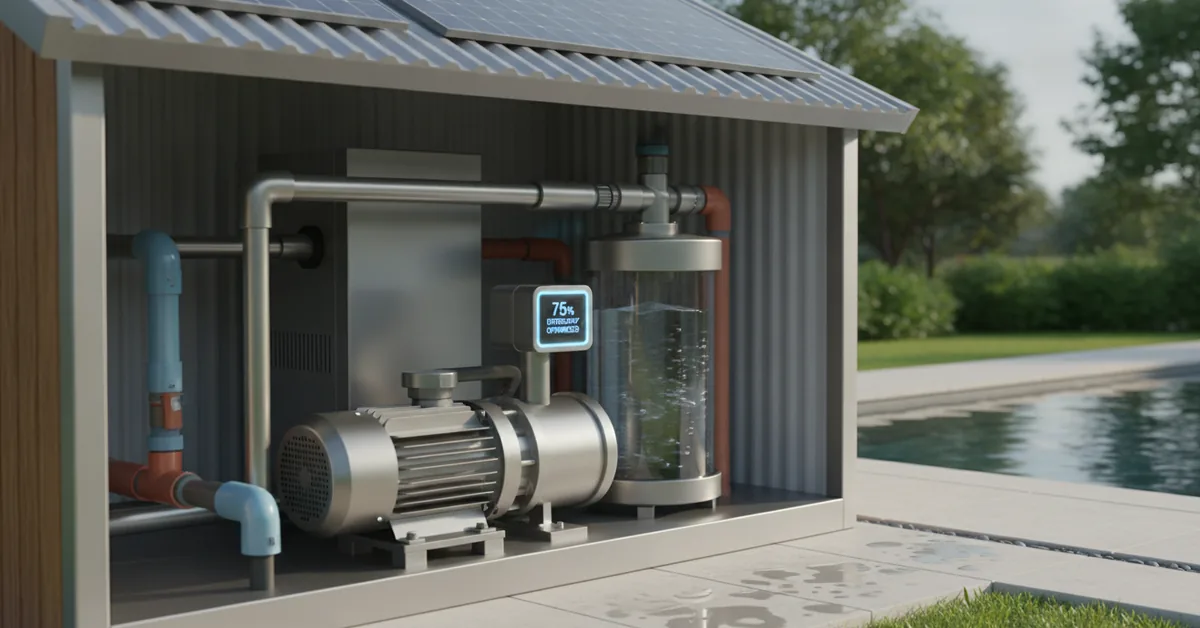
The client in The Landings showed me his FPL bill, pointing to a sharp spike that started in May. He'd recently had his single-speed pump replaced, and the new one was "more powerful," as the installer had promised. The problem wasn't the pump's power; it was that its power was non-negotiable, running at full blast for eight hours a day to circulate water that only needed that velocity for a fraction of the time. His savings were being consumed by wasted energy.
Your Pool's Real Energy Drain in Sarasota
In my 15 years of optimizing pool systems across Florida, I've seen a consistent pattern in Sarasota: homeowners focus
In my 15 years of optimizing pool systems across Florida, I've seen a consistent pattern in Sarasota: homeowners focus on chemical costs while the real financial leak is the energy consumption of single-speed pumps and oversized heaters. An efficient system isn't about buying the most expensive gear; it's about matching variable-speed technology to the actual hydraulic needs of your pool. This means running the pump at low speeds for filtration most of the day and only ramping up for cleaning cycles or water features, a strategy that directly combats our high year-round usage demands.
- A properly calibrated variable-speed pump (VSP) can reduce pool-related electricity costs by up to 90%.
- Sarasota County building codes now mandate VSPs for new installations or major replacements on pumps of 1 HP or greater, aligning with state energy conservation goals.
- The typical breakeven period for upgrading from a single-speed to a VSP in Sarasota is 18 to 24 months, factoring in FPL rebates.
- System efficiency is also about hydraulics: undersized plumbing or a dirty filter can force even the best pump to work harder, negating savings.
The Planning Failures That Inflate Your FPL Bill
The most common mistake is focusing solely on the purchase price of a new pump or heater. Homeowners see a $500 single-speed pump and compare it to a $1,500 variable-speed model, choosing the former to save money upfront. This is a classic financial trap in a climate like ours where pumps run over 3,000 hours a year. The initial savings are wiped out by exorbitant electricity costs within the first year.
The Mismatch Between Pump Power and Plumbing Reality
I frequently encounter powerful 1.5 HP or 2.0 HP pumps installed on standard 1.5-inch PVC plumbing, a setup common in older Sarasota homes. This is like putting a V8 engine in a sedan with bicycle tires. The undersized pipes create massive back-pressure (measured as 'feet of head'), forcing the pump to work inefficiently and causing premature wear on the motor and seals. The correct approach is a hydraulic audit: calculating the flow rate needed for your specific pool volume and filter, then selecting a pump that achieves it at the lowest possible RPM.
How a System Efficiency Upgrade Works in Practice
An energy efficiency upgrade is a systematic process, not just a simple equipment swap. It begins with an assessment of your existing setup—pump, filter, plumbing, and any water features. We measure the total dynamic head of your system to understand the resistance the pump is fighting against. From there, we select and install a correctly sized variable-speed pump and program a custom schedule based on your pool's needs.
Key Selection Criteria for Sarasota Homeowners
When choosing a professional for this work, your checklist should be tailored to our local environment. Generic qualifications are not enough.
- Verifiable FPL Rebate Experience: The contractor should handle the Florida Power & Light rebate paperwork for you. They will know which models qualify and how to submit the application correctly to ensure you receive your credit, which can be up to $150.
- Licensed Electrical Contractor (EC) or Proper Subcontracting: In Florida, replacing a pool pump involves electrical work. The company must have a licensed electrician on staff or use a licensed EC. Ask for the license number (e.g., an ER or EC license) and verify it with the Florida DBPR.
- Expertise in Programming for High Humidity: A VSP's schedule in Sarasota should account for our humid summers, which promote algae growth. This might mean programming slightly longer low-speed filtration cycles or a brief high-speed burst in the afternoon to improve skimming.
- Noise Ordinance Awareness: Some Sarasota communities, especially those with properties close together like in South Gate, have noise restrictions. The contractor should recommend VSP models known for quiet operation at low speeds.
Comparing a VSP Upgrade to Other Options
Simply replacing a broken single-speed pump with another of the same kind might seem like the cheapest path, but it's often the most expensive long-term. Doing nothing and letting an inefficient pump continue to run is an even costlier choice. The data shows a clear winner for any homeowner planning to stay in their home for more than two years.
When an Efficiency Upgrade Is Not the Right Choice
There is a specific scenario where I advise against a full VSP upgrade. If a homeowner has a very small pool (under 10,000 gallons) with simple plumbing and no water features, and they are planning to sell the property within 12 months, the upfront cost may not be fully recouped. In this case, a smaller, more efficient single-speed or two-speed pump might be a more pragmatic, though less ideal, solution.
| Action | Upfront Cost (Estimate) | Estimated 3-Year Energy Cost | Total 3-Year Cost |
|---|---|---|---|
| Install New Variable-Speed Pump | $1,500 - $2,200 | $400 - $600 | $1,900 - $2,800 |
| Replace with New Single-Speed Pump | $500 - $800 | $1,800 - $2,400 | $2,300 - $3,200 |
| Do Nothing (Keep Old Inefficient Pump) | $0 | $2,100 - $2,700+ | $2,100 - $2,700+ |
Safe Hiring Checklist for Your System Upgrade
To protect your investment and ensure compliance, a few verification steps are crucial. I've seen homeowners have to pay twice because an unlicensed installer performed faulty electrical work that didn't pass inspection. This checklist is your defense against that scenario.
- Verify the Contractor's License: Use the Florida Department of Business and Professional Regulation (DBPR) website to confirm they hold a Certified Pool/Spa Contractor license (CPC). For the electrical portion, verify the associated EC or ER license.
- Request Proof of Liability and Workers' Comp Insurance: A certificate of insurance is non-negotiable. Without it, you could be liable for any accidents that occur on your property during the installation.
- Confirm They Will Pull a Permit: For a pump replacement, Sarasota County may require a permit, especially if electrical wiring is being altered. A reputable contractor will insist on pulling one to ensure the work is up to code.
- Ask for a Written, Itemized Quote: The proposal should clearly state the pump model, total cost, warranty details, and confirmation that they will handle the FPL rebate submission.
- Check for Local Reviews and References: Look for reviews specifically mentioning energy efficiency upgrades or VSP installations in the Sarasota area. Generic "pool cleaning" reviews are less relevant.
Decisions That Determine the Outcome
The success of an energy efficiency project hinges on a few key decisions made before any work begins. The most critical is resisting the urge to buy the equipment yourself online to save a few dollars. Professionals get access to better warranties and ensure the model purchased is the correct one for your specific hydraulic needs, not just a popular one.
The Moment Homeowners Get It Wrong
The critical mistake happens during the programming of the new variable-speed pump. Many installers use a default factory setting or a generic "high/low" schedule. The right way is to perform a flow test after installation to find the lowest possible RPM that still achieves adequate turnover and sanitation for your pool. This single step, which takes an experienced technician about 30 minutes, is what unlocks the maximum energy savings and is often skipped by less thorough installers.
Practical Answers About Operating in Sarasota
Navigating the local requirements is as important as choosing the right hardware. Here are the answers to the questions that come up on nearly every project I manage in this area.
What is the permit process for a pump replacement in Sarasota County?
For a straightforward like-for-like replacement, a permit might not be needed. However, if you are upgrading from a single-speed to a variable-speed pump and it requires new electrical wiring or bonding, a permit from the Sarasota County Building Department is typically required. The licensed contractor is responsible for pulling this permit, and the work will need to be inspected to ensure it meets the Florida Building Code.
How do HOA rules in communities like Lakewood Ranch affect my equipment choice?
Many Sarasota HOAs, particularly in master-planned communities, have covenants regarding the visibility and noise level of pool equipment. A VSP is advantageous here because at the low speeds they run for filtration, they are significantly quieter than single-speed pumps. Your contractor should confirm the new equipment will be placed in a location compliant with your HOA's architectural guidelines, often requiring it to be shielded from street view.
How does Florida's energy code impact my choices?
The Florida Building Code, Energy Conservation (Chapter 13) mandates that any new or replacement pool filtration pump of 1.0 total horsepower or greater must be a variable-speed or two-speed model. This isn't a suggestion; it's state law. A contractor who suggests installing a new single-speed pump of that size is asking you to violate code, which could cause problems during a home inspection when you go to sell your house.
