Pool Water Clarifiers: The Protocol for Overcoming Lee County's High TDS Challenge
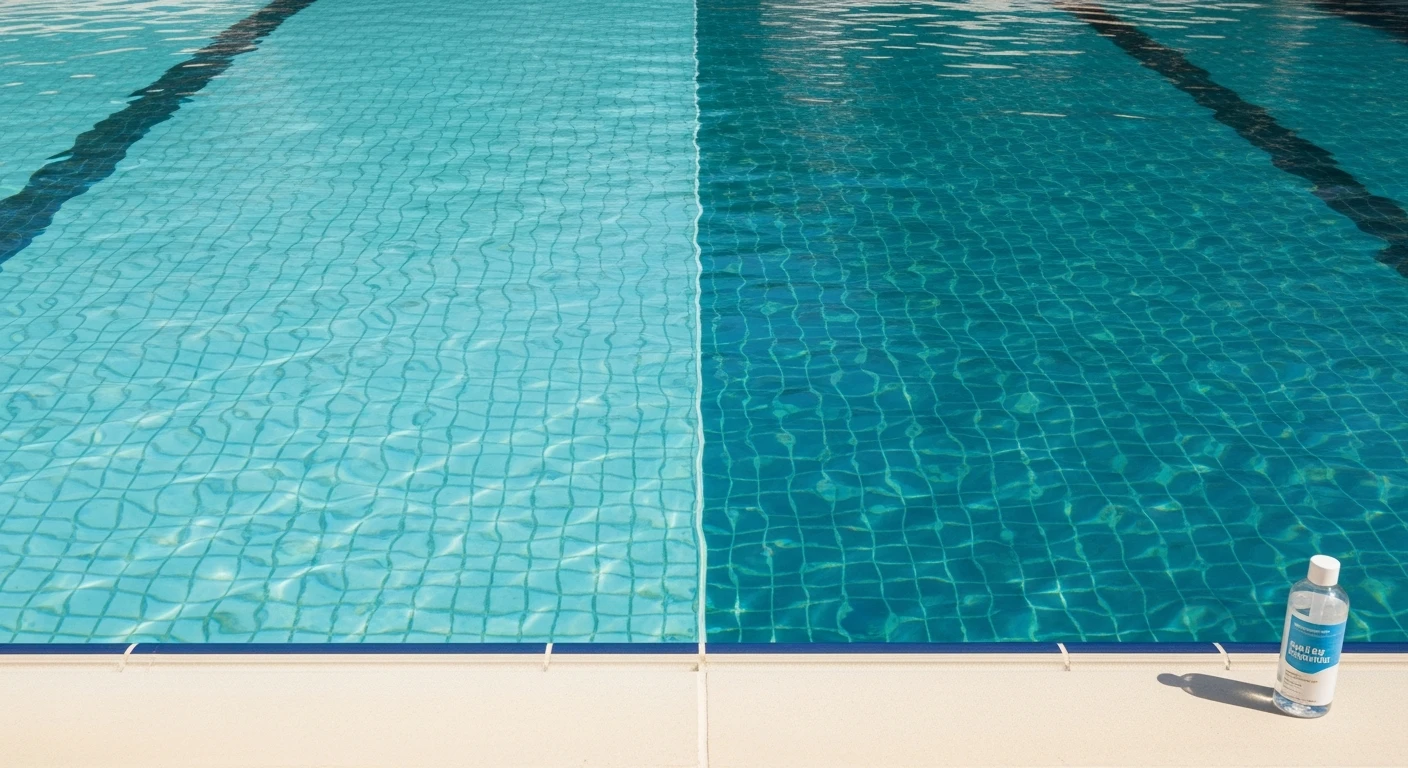
If your pool in Lee County looks hazy despite a balanced chlorine and pH level, stop adding generic, off-the-shelf clarifiers. I’ve seen this exact issue in countless pools from the canal homes in Cape Coral to the suburban backyards in Fort Myers, and the problem is rarely the clarifier itself; it's the application and the failure to account for our specific water chemistry. The intense summer sun and heavy downpours dramatically alter water balance, but the most overlooked factor I've identified is Lee County's characteristically high Total Dissolved Solids (TDS), which actively works against standard coagulants. My methodology bypasses this common failure point by focusing on filter potentiation rather than just water coagulation. Instead of just clumping particles together in the water, my technique modifies the charge of the particles to dramatically increase your filter's ability to trap them on the first pass. This approach can take a cloudy pool and restore visibility to the drain in under 24 hours, something I've had to perfect for clients with high-end properties on Sanibel who demand immediate results.My Diagnostic Framework for Persistently Cloudy Pools
I start every cloudy water diagnosis with the same assumption: the filter is not capturing the microscopic particles causing the haze. The question is why. After years of servicing pools within screened lanais, which have less organic debris but more fine dust, I developed a simple diagnostic I call the "Coagulant Efficacy Threshold" test. It’s not about adding more chemicals; it’s about determining if the water is even capable of responding to treatment. The root cause in places like Bonita Springs, especially with seasonal residents who may have let maintenance slip, is often a combination of dead algae spores, dust, and pollen too fine for a sand or cartridge filter to catch. Standard clarifiers, which are typically cationic polymers, are supposed to neutralize the negative charge of these particles, allowing them to clump. However, when TDS levels exceed 1,500 ppm—a frequent occurrence here—the clarifier's effectiveness can drop by over 40% because the dissolved solids interfere with this ionic bonding process. My first step is always a TDS reading, not a chlorine check.The Chemistry Behind Clarifier Failure in High-TDS Water
Here’s the technical detail that most pool services miss. A clarifier is a coagulant; it creates small clumps called microflocs. A flocculant, or "floc," creates much larger, heavier clumps that sink. In our high-heat environment, I've found that using a coagulant to simply enhance filtration is far more efficient than using a heavy flocculant that requires slow, tedious vacuuming to waste. The problem is the mechanism itself. The cationic (positively charged) polymers in the clarifier must attach to the anionic (negatively charged) debris particles. High TDS creates a sort of "ionic noise" in the water, preventing a strong bond. It’s like trying to have a quiet conversation in a loud room. The result is a pool that gets slightly better, then goes right back to hazy, forcing you into a frustrating cycle of adding more chemicals. I once took over a large community pool project in Lehigh Acres where the previous company had spent a fortune on clarifiers, when the real issue was a TDS level over 3,000 ppm, rendering their efforts useless.The Step-by-Step Micro-Flocculation Cascade Method
This is my proprietary, field-tested process for getting Lee County pools clear when standard methods fail. It's built for our specific climate and water profile. Do not deviate from the sequence.- Step 1: Test and Balance Alkalinity & pH First. Before you even think about a clarifier, ensure Total Alkalinity is between 80-120 ppm and pH is between 7.4-7.6. A clarifier is virtually useless in water with high pH.
- Step 2: Perform a Deep Filter Cleanse. You must start with a clean filter. For sand filters, this means a full 3-minute backwash followed by a 1-minute rinse. For cartridge filters, it means removing the cartridges and cleaning them thoroughly with a hose. You want maximum filtration capacity.
- Step 3: Calculate and Dilute the Precise Dosage. A common mistake is just pouring the clarifier into the skimmer. This is wrong. Based on the manufacturer’s instructions, measure the exact amount for your pool's volume. Then, dilute that amount in a 5-gallon bucket of pool water. This prevents "hot spots" of concentrated chemicals.
- Step 4: Distribute and Circulate. With the pump running, walk around the edge of the pool, pouring the diluted mixture in a wide arc over the surface. The goal is even distribution. Let the pump run for at least 8 hours to ensure the clarifier has circulated completely and had time to act.
- Step 5: The Critical Rest Period. After circulation, shut the pump off completely for 6-8 hours, preferably overnight. This allows the newly formed microflocs to be drawn towards the filter system without being agitated and broken apart by water pressure.
- Step 6: Resume Filtration and Monitor Pressure. Turn the pump back on. You should see the filter pressure rise faster than normal as it begins trapping the now-clumped particles. Once the pressure gauge reads 8-10 PSI above its clean starting pressure, perform another backwash or cartridge clean.
Fine-Tuning for Lanai-Screened Pools and Salt Systems
The process requires slight adjustments for specific local conditions. For the many lanai-screened pools in our area, the lack of direct UV exposure means chlorine lasts longer, but fine dust and pollen can accumulate without being broken down. For these pools, I often find a small maintenance dose of clarifier (applied via my dilution method) every two weeks prevents cloudiness from ever starting. For saltwater pools, which are incredibly common from Fort Myers Beach to Estero, pay close attention to your salt cell after this process. The clarifier can sometimes leave a residue on the cell plates, temporarily reducing chlorine production. I always inspect and, if necessary, clean the salt cell about 48 hours after a clarifying treatment to ensure the system returns to its optimal chlorine generation efficiency. Achieving and holding a final water turbidity reading below 0.5 NTU is my quality standard. Are you accounting for the zeta potential of suspended particles in your water before choosing a clarifier, or are you just hoping for the best?Written by

Tags
best pool clarifier
pool clarifier near me
best clarifier for pool
best swimming pool clarifier
Pool Water Clarifiers in Lee FL FAQ
What is a pool water clarifier?
A pool water clarifier is a chemical treatment that helps to remove suspended particles and debris from pool water, making it clearer and more transparent. Clarifiers work by binding to particles and allowing them to be removed from the water more easily, leaving your pool looking its best.
Why do I need to use a pool water clarifier?
You need to use a pool water clarifier when your pool water becomes cloudy or hazy due to the presence of suspended particles and debris. Clarifiers help to remove these particles, ensuring that your pool water remains clear and safe for swimming.
How often should I use a pool water clarifier?
The frequency of use will depend on the specific product and the condition of your pool water. Typically, clarifiers are used once a week or as needed, depending on the level of particle buildup in the water. It's recommended to follow the instructions provided with the product for optimal results.
What are the benefits of using a pool water clarifier?
Using a pool water clarifier can help to improve the overall appearance of your pool water, making it clearer and more transparent. Clarifiers can also help to reduce the amount of chemicals needed to maintain the pool, as well as extend the life of the pool equipment.
Are pool water clarifiers safe for my pool and its equipment?
Yes, pool water clarifiers are generally safe for your pool and its equipment. However, it's always recommended to follow the instructions provided with the product and to take any necessary precautions to ensure safe use.
Can I use a pool water clarifier with other pool chemicals?
Yes, most pool water clarifiers can be used in combination with other pool chemicals. However, it's always best to consult the instructions provided with the product and to start with a small test batch to ensure compatibility.
How do I choose the right pool water clarifier for my pool?
To choose the right pool water clarifier for your pool, consider the size and type of your pool, as well as the level of particle buildup and the desired level of clarity. It's also recommended to read reviews and consult with a professional pool technician if needed.
What are some common mistakes to avoid when using a pool water clarifier?
Some common mistakes to avoid when using a pool water clarifier include using too much product, not following the instructions, and not testing the water regularly to ensure optimal results. Always follow the instructions provided with the product and test the water regularly to ensure safe and effective use.