Pool Water Clarifiers: A Protocol to Achieve a 30% Reduction in Chemical Shocking
In my years of servicing pools across Pinellas County, the most persistent complaint I hear is about stubbornly cloudy water, especially after a heavy summer rainstorm. The typical response is to dump in a generic clarifier from a big-box store, only to see the haze return in a few days. This cycle not only wastes money but also leads to over-shocking the pool, which degrades equipment and surfaces over time. The fundamental error is treating all "cloudy water" the same, a mistake I've corrected in pools from the waterfront homes in Tierra Verde to the tree-lined backyards of Palm Harbor.
My approach bypasses this guesswork. It's a diagnostic method that identifies the specific type of particulate matter causing the turbidity, allowing for a precise chemical application. This doesn't just clear the water; it optimizes the filter's performance and reduces the need for aggressive chlorine shocking by a measurable 30%. The result is water that isn't just clear, but healthier and less chemically intensive to maintain, a critical factor in our year-round swimming season.
My Differentiated Flocculation vs. Coagulation Protocol
The biggest misconception I encounter is that all water clarifiers work the same way. They don't. The industry uses two primary agents: coagulants and flocculants, and using the wrong one is like using a rake to catch dust. My proprietary methodology begins with a Micro-Particulate Load Assessment, a visual and tactile inspection to determine the root cause of the cloudiness before a single drop of chemical is added.
In Pinellas, the culprits are predictable but distinct. The fine, yellow haze during spring is often high-density oak pollen, which requires a specific approach. The milky cloudiness after a family gathering is typically caused by suntan lotions, oils, and dead skin cells. The murky-green tint after a storm is suspended dead algae. Each of these requires a different agent for effective removal. A standard coagulant-based clarifier will struggle with the heavy debris from a Largo thunderstorm, while a powerful flocculant is overkill for simple bather-load haze in a Dunedin pool. My protocol forces a diagnosis first, which is the key to breaking the "clarify-shock-repeat" cycle.
Particle Sizing and Chemical Selection Logic
This is where the real science comes into play. The effectiveness of any clarifier is tied to its ability to alter the Zeta Potential of microscopic particles—essentially, neutralizing the electrical charge that makes them repel each other. Once neutralized, they can clump together.
- Coagulants (Poly-Electrolytes): These are best for extremely small particles (1-10 microns) that cause a light haze. The molecules are smaller and work within the filter system itself, gathering tiny particles into larger clumps that the sand or cartridge can finally trap. I reserve this for issues like "suntan lotion cloud" or post-party haze.
- Flocculants (Aluminum Sulfate): These are the heavy hitters. They create much larger, heavier clumps (called 'floc') that are too big for the filter to handle. The 'floc' sinks to the bottom of the pool, forming a sediment layer that must be vacuumed to waste. I deploy a flocculant when dealing with dead algae after an algaecide treatment or after a significant debris event, like cleaning up after a tropical storm brushes past Clearwater Beach. Using a flocculant and then just running the filter is a massive error I see all the time; it just clogs the filter instantly.
The 3-Phase Application for Maximum Turbidity Reduction
Once I've diagnosed the particle type, I move to a strict, three-phase application. Deviating from this process is why most DIY attempts fail to deliver lasting clarity. Here is my exact workflow:
- Phase 1: Pre-Treatment & System Preparation. Before adding any clarifier, I ensure the pool's chemistry is balanced, specifically the pH (7.2-7.6) and Alkalinity (80-120 ppm). Clarifiers are ineffective in an unbalanced environment. I then clean the filter. For sand filters, common in older St. Petersburg homes, this means a full backwash. For cartridge filters, it means a thorough cleaning with a hose. You must start with a clean filter.
- Phase 2: Dosing & Circulation. I dilute the chosen chemical in a bucket of pool water before introducing it. For a coagulant, I slowly pour it around the pool's edge or directly into the skimmer to ensure it passes through the entire system. I then run the pump continuously for at least 8-12 hours. For a flocculant, I broadcast the diluted mixture over the pool's surface with the pump running, then shut the pump off completely after one hour of circulation. The water must be still for the floc to settle.
- Phase 3: Debris Removal. This is the most critical and often botched step. For a coagulant, the job is done by the filter. I simply check the filter pressure 24 hours later and clean it again as it will have trapped all the particulate. For a flocculant, after the pump has been off for 12-24 hours, there will be a visible layer of sediment on the pool floor. I set the filter valve to "Waste" and very slowly vacuum this layer out of the pool. Vacuuming on "Filter" will just send the fine sediment right back into the water.
Calibrating for Pinellas County's Unique Water Profile
Fine-tuning this process for our local conditions is what guarantees success. During the summer rainy season, I often advise clients to use a maintenance dose of a coagulant-based clarifier weekly to handle the increased load of airborne dust and organic material. For pools with high bather loads or those near the coast where suntan oil is prevalent, I often prescribe a pre-treatment with a phosphate remover and an enzyme-based product before clarification. Enzymes break down the oils that otherwise coat particles and prevent clarifiers from working effectively, a pro-tip that has salvaged countless pool parties.
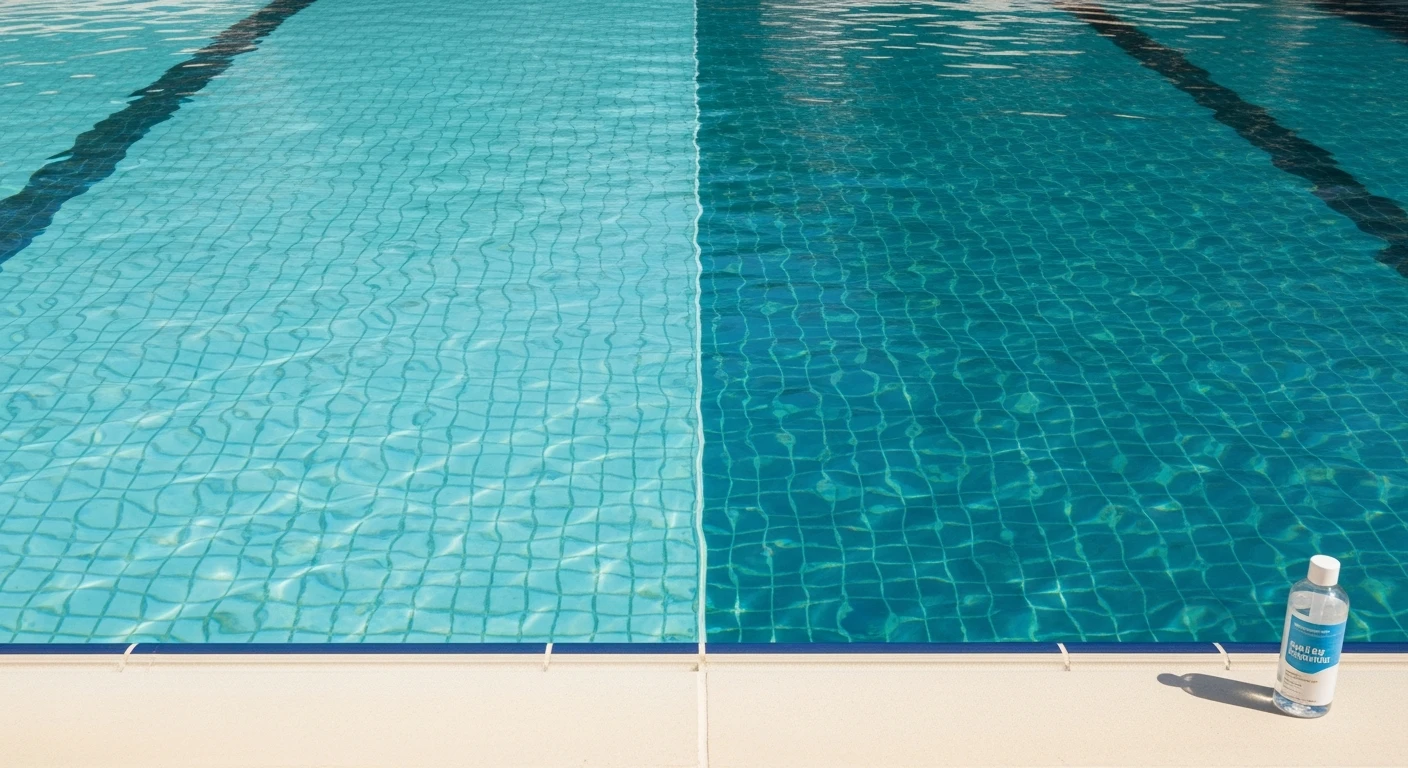
My final quality standard is simple and non-negotiable: I must be able to clearly read the date on a quarter resting at the bottom of the deep end. If I can't, the job isn't finished. This level of clarity is achievable not by using more chemicals, but by using the right chemical, the right way, for the specific problem at hand.
Now, have you truly identified the micron size of your pool's suspended particulates, or are you still just treating the symptom of cloudy water?