Polk County Water Treatment: My Protocol for Preventing 99% of Scale-Related Plumbing Failure
Having serviced countless homes across Polk County, from the historic properties in Lakeland to the newer developments in Davenport and Haines City, I've seen firsthand the destructive impact of our local water. The issue isn't just "hard water"; it's a specific mineral composition, drawn from the Floridan Aquifer, that standard salt-based softeners often manage poorly. My entire approach is built on diagnosing the specific chemistry of your water and applying a solution that neutralizes the threat at a molecular level, rather than just swapping ions. This isn't about making water feel "slippery." It's about a precise, scientific intervention that protects your pipes, fixtures, and appliances from the inside out. I’ve reversed scale buildup in systems that were on the verge of complete replacement, purely by addressing the root cause instead of the symptom. My methodology focuses on **Template Assisted Crystallization (TAC)**, a far more efficient and sustainable technology for our region's specific water challenges.My Diagnostic Framework for Polk County's Unique Water Profile
Before I even think about recommending a piece of equipment, I perform a comprehensive water chemistry analysis on-site. A generic water test kit is useless here. The mineral content in Winter Haven, with its chain of lakes, can have a different particulate profile than the water in Bartow. My first step is to establish a baseline, measuring not just **Grains Per Gallon (GPG)** of hardness, but also the levels of iron, manganese, and **Total Dissolved Solids (TDS)**. I once worked on a home in the Lake Wales area where the owner had a top-of-the-line salt softener, yet their dishwasher and water heater failed within three years. The problem wasn't the hardness; it was a high concentration of silica that the ion-exchange system couldn't handle. My diagnostic process identified this immediately. This level of granular detail is the difference between a temporary fix and a permanent solution. I map these findings against the age and material of the home's plumbing to create a full risk profile.Why Salt-Based Softeners Are an Inefficient Fix for Floridan Aquifer Water
The go-to solution for most companies is a traditional salt-based ion exchange softener. In my experience, this is often a critical mistake for Polk County homes. These systems work by swapping calcium and magnesium ions for sodium ions. While this technically "softens" the water, it introduces two major problems. First, it adds sodium to your water, which many residents dislike for health and taste reasons. Second, the system requires a constant supply of salt and discharges a brine solution during regeneration, which is an environmental concern and a recurring cost. My preferred technology, **Template Assisted Crystallization (TAC)** media, doesn't add or remove anything. Instead, it uses a specialized ceramic media to convert the dissolved hardness minerals into microscopic, inert crystals. These crystals are too small to bind to surfaces, so they flow harmlessly through your plumbing system without forming scale. This physically prevents scale buildup on heating elements, in pipes, and on shower heads, effectively neutralizing the threat of hard water without chemicals or salt. It's a physical solution to a physical problem.System Integration: A 5-Step Process for Flawless Installation
A high-performance system is only as good as its installation. Over the years, I’ve refined my process into a five-step protocol that guarantees optimal performance and longevity, preventing common failure points I’ve seen in countless other jobs.- Pre-filtration Audit: The first step is always installing the right pre-filter. For homes in more rural parts of Polk County or those on well water, a sediment filter is non-negotiable. I specify a 5-micron sediment filter to capture sand and particulates before they can damage the TAC media or your appliances.
- Flow Rate Calculation: I calculate the home’s peak demand **flow rate in GPM (Gallons Per Minute)**. Sizing the system incorrectly is the most common installation error. An undersized unit will fail to treat water effectively during high usage (like running laundry and a shower simultaneously), while an oversized one is an unnecessary expense.
- Strategic Placement: The system must be installed on the main water line after the shutoff valve but before the line splits to the water heater and other fixtures. This ensures 100% of the water entering the home is treated. I also ensure there is adequate space for future filter changes, a detail many installers overlook.
- Bypass Loop Installation: Every system I install includes a three-valve bypass loop. This is critical for maintenance. It allows you or a technician to isolate the treatment system for service without shutting off water to the entire house.
- Post-Install Water Chemistry Test: After the system is running, I perform a second water test. While a TAC system doesn't lower the GPG reading (since the minerals are still present), I verify that the system is functioning correctly by confirming proper water pressure and flow, ensuring there are no leaks.
Post-Installation Calibration: The Difference Between a Good and a Great System
My job isn't done after the final wrench turn. The first 30 days are crucial for fine-tuning. I establish a custom **sediment filter replacement schedule** based on your specific water quality and consumption. For a family in a new construction zone in Auburndale, this might be every three months due to higher sediment from ongoing development. For a retired couple in a settled Lakeland neighborhood, it might be every six months. Furthermore, I check the **downstream water pressure** to ensure the new filters and media tank haven't caused a significant pressure drop. A drop of more than 3-4 PSI indicates a potential issue with sizing or a blockage. This fine-tuning process is what I consider my quality guarantee, and it’s why my systems often result in a measurable increase in appliance lifespan, sometimes by as much as 30%. Are you merely softening your water, or are you actively restructuring its mineral content to protect your entire plumbing infrastructure?Written by

Tags
ion exchange water filter
water treatment
uv water filtration system
water purifying systems
Water Treatment in Polk FL FAQ
Why is my pool water cloudy even though the chlorine level is correct?
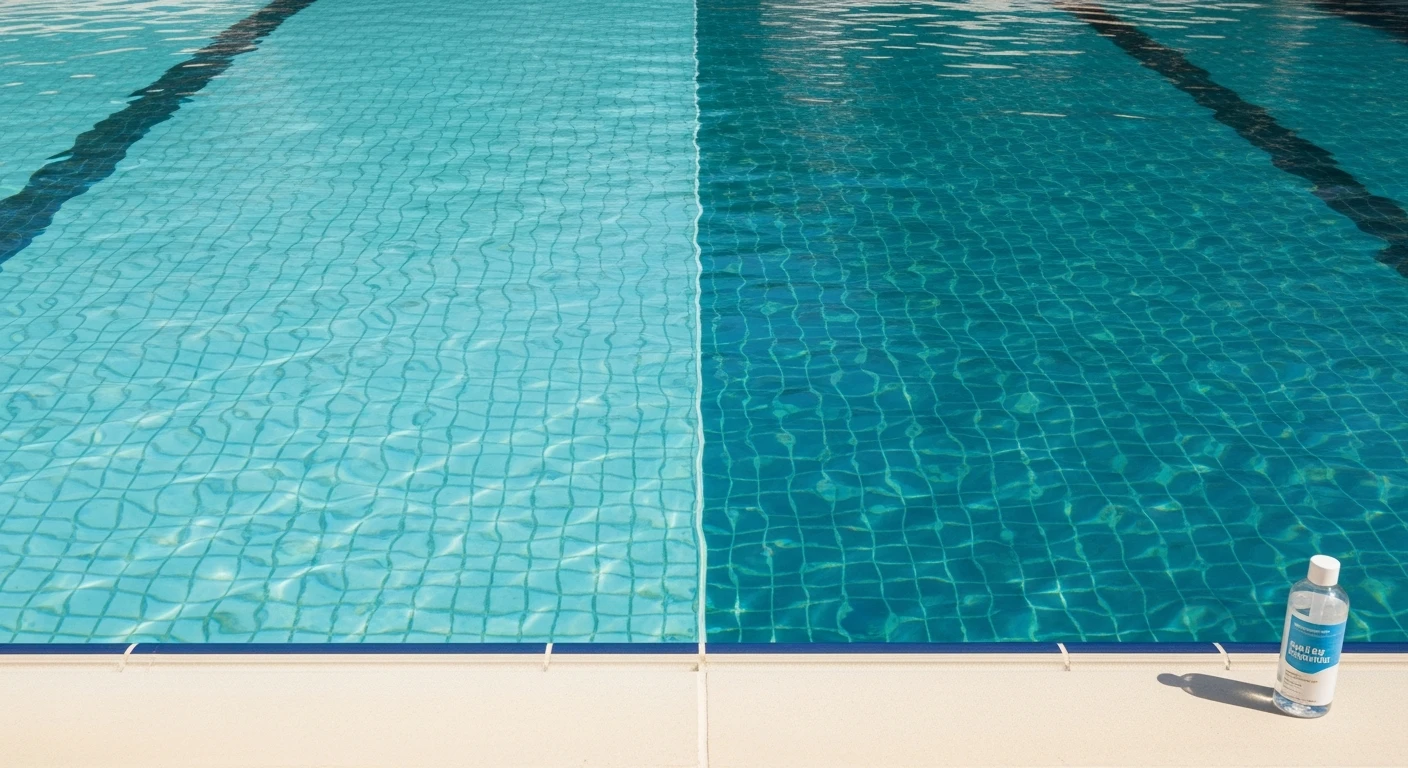
Cloudy water with normal chlorine often points to an issue with your filtration system or imbalanced water chemistry beyond just sanitizers. Your filter might be clogged or need backwashing, but a common culprit is high Total Dissolved Solids (TDS), which makes chemicals less effective. Another possibility is an early-stage algae bloom that chlorine alone can't manage without a clarifier or flocculant. A non-obvious cause is a failing pump motor impeller, which reduces water circulation even if the motor sounds like it's running normally, preventing proper filtration.
My kids complain about burning eyes. Do I have too much chlorine in the pool?
Eye and skin irritation is almost always caused by an incorrect pH level, not high chlorine. The ideal pH range for swimmer comfort and chemical efficiency is between 7.2 and 7.6, which closely matches the pH of human tears. When pH is too low (acidic) or too high (alkaline), chlorine becomes less effective and forms irritating compounds called chloramines. These chloramines, not the chlorine itself, are what produce the strong “chlorine” smell and cause discomfort. Balancing your pH is the first and most critical step to solve this.
What are these dark stains on my pool walls that won't brush off?
Dark, stubborn stains that resist brushing are a classic sign of black algae, which is notoriously difficult to remove. Unlike green algae that floats, this type grows roots that penetrate into your pool's plaster or grout, requiring aggressive treatment. Simply shocking the pool will not work. The process involves scrubbing the heads of the algae with a wire brush to break their protective layer, followed by direct application of a granular algaecide or chlorine pucks. In severe cases, the only permanent solution is an acid wash or even replastering the pool surface.
How often should I really be shocking my pool, and what's the right way to do it?
Shock your pool approximately every one to two weeks during peak season, or after a heavy bather load, a major rainstorm, or a heatwave. The key mistake owners make is adding the shock during the day; sunlight degrades unstabilized chlorine rapidly, wasting most of its sanitizing power. Always add pool shock at dusk or night and let the pump run for at least eight hours to circulate it fully. This ensures the chlorine has maximum contact time to eliminate contaminants without being destroyed by the sun's ultraviolet rays.
Is a saltwater pool easier to maintain than a traditional chlorine pool?
A saltwater pool is not chlorine-free; it uses a salt chlorine generator to produce its own chlorine from salt, providing a more consistent sanitizer level. This automation reduces the daily task of adding chlorine but does not eliminate other maintenance. You still must regularly test and balance pH, alkalinity, and stabilizer levels. Salt cells also require periodic cleaning to remove scale buildup and eventually need replacement, which can be a significant expense. While often more pleasant for swimmers, they introduce different, not fewer, maintenance tasks.
I keep adding chemicals, but my water balance is always off. What am I missing?
If you are constantly fighting to balance your water, the likely issue is low Total Alkalinity (TA), which acts as a buffer to prevent wild pH swings. Without a stable TA level, typically between 80-120 parts per million, any chemical addition or even rainwater can cause your pH to crash or spike dramatically. Home test strips often give a poor reading for TA. Before adding more pH adjusters or chlorine, get your TA professionally tested and properly adjusted. This single step stabilizes the water chemistry and makes all your other chemical treatments far more effective and predictable.