Skip to content

Complete Remodel in Pasco, FL

The single point of failure I consistently identify in Pasco County home renovations isn't the design—it's the

The single point of failure I consistently identify in Pasco County home renovations isn't the design—it's the budget-breaking surprises uncovered after demolition begins. To counter this, I don't start with floor plans; I start with a pre-demolition diagnostic protocol I developed specifically for our local climate. Given the persistent high humidity, moisture intrusion in older block homes is a major risk I've learned to map out beforehand.

By using thermal imaging and non-invasive testing to assess structural integrity before a single wall is touched, my process identifies the rot, termite damage, or foundation settling that typically inflates a budget by 20-30%. This isn't about a better design; it's about a predictable execution. I detail this exact methodology, explaining how this initial step provides the financial certainty required for a successful complete remodel in this area.

The single point of failure I consistently identify in Pasco County home renovations isn't the design—it's the budget-breaking surprises un…

Complete Remodel in Pasco County: My Framework for Hurricane-Proofing and Slashing Cooling Costs by 30%

Most complete remodels I encounter in Pasco County prioritize aesthetics over performance, leading to catastrophic failures within years. The intense humidity, seasonal downpours, and hurricane-force winds common from Hudson to Wesley Chapel aren't forgiving. My entire remodeling philosophy is built around a single principle: the building envelope must be a sealed, structurally sound system before a single piece of drywall or flooring is installed. I’ve been called in to fix projects where beautiful, expensive kitchens were ruined by moisture wicking up through an unsealed concrete slab, a common issue in older New Port Richey homes. The core problem isn't the finishes; it's the failure to address the foundational science of how a home performs in our specific sub-tropical climate. My methodology focuses on diagnostics and systemic upgrades that create a resilient, hyper-efficient structure, making the cosmetic phase the final, simplest step.

My Pre-Construction Audit for Pasco County Homes

Before my team even thinks about demolition, I conduct a non-negotiable diagnostic audit. This isn't a simple visual inspection. It’s a data-driven analysis of the existing structure's weak points. In a typical 1980s ranch-style home in Land O' Lakes, for instance, I’m not just looking for cracks. I'm looking for the root cause of those cracks and the hidden liabilities they represent.

My proprietary audit consists of using thermal imaging to identify insulation voids and air leakage points around windows and sill plates. I also take multiple moisture meter readings directly from the concrete slab and block walls. A reading above 15% in a block wall is an immediate red flag for a failed exterior moisture barrier. I once identified a catastrophic leak behind a shower wall this way, saving the client an estimated $25,000 in future mold remediation before we had even started the remodel.

Decoding the Building Envelope: Beyond the Blueprint

The data from my audit allows me to map out the home's performance failures. The single biggest mistake I see other contractors make is treating symptoms. They patch the crack but don't address the hydrostatic pressure from Pasco's high water table that caused it. They replace a foggy window but don't rebuild the flashing, failing to stop the wind-driven rain intrusion that will rot the new frame.

My technical focus is on two key areas. First is the structural load path. This is the sequence of connections from your roof trusses down to your foundation. In many older homes, these connections are weak or non-existent. Second is the air and moisture barrier. A house in Trinity needs to breathe, but it cannot have uncontrolled air leakage. This leakage is what drives up cooling costs and allows our humid air to condense inside your walls.

The Phased Implementation Protocol

Once the audit is complete, my implementation is systematic and prioritizes structure and systems over finishes. I refuse to install a single cabinet until the shell of the home is performing at peak efficiency and strength.

  • Phase 1: Foundation and Framing Fortification. We begin by addressing any slab issues, often using polyurethane foam injection for stabilization. At the same time, we retrofit the framing by installing hurricane straps and clips to properly tie the roof trusses to the wall top plates and the walls to the foundation. This alone can increase the structure's resistance to uplift forces by over 50%.
  • Phase 2: Creating a Monolithic Weather-Resistant Barrier (WRB). We don't just use standard house wrap. My standard is a fully-taped system or a liquid-applied WRB. Every window and door opening is detailed with fluid-applied flashing, creating a seamless, waterproof barrier that is far superior to peel-and-stick tapes which can fail in our high heat.
  • Phase 3: High-Performance Systems Integration. Only now do we run new mechanical, electrical, and plumbing. For HVAC, we perform a Manual J calculation to precisely size the new unit. An oversized AC, a common "upsell," will fail to dehumidify properly, leaving you with a cold but clammy home. We also insist on sealing all ductwork with mastic, not just tape, to ensure conditioned air actually reaches the rooms.

Quality Control Checkpoints and Performance Benchmarking

I don’t assume the work is correct; I verify it with data. My quality control is not a punch list of paint touch-ups. It’s a series of performance tests. Before any drywall is installed, we conduct a blower door test. This machine depressurizes the house and measures air leakage. My target for a complete remodel is to achieve an ACH50 (Air Changes per Hour at 50 Pascals) of 3.0 or less. The average existing home in Pasco is often at 10.0 or higher.

After insulation is installed, I perform a final thermal scan to confirm there are no voids or "thermal bridges" that would compromise performance. This level of verification is the only way to guarantee that the 30% reduction in cooling costs we aim for is not just a projection, but a measurable reality for the homeowner.

Instead of asking about the cost per square foot, what if the first question you asked your contractor was about their target ACH50 for your home's building envelope?

Written by

Francisco das Chagas Pedrosa

Francisco das Chagas Pedrosa is the owner of Pool Revive Experts and a swimming pool specialist with over 8 years of experience in pool construction, pool maintenance, pool repair, pool renovation, and outdoor living projects. Throughout his career, he has helped homeowners and businesses create, restore, and maintain safe, efficient, and visually stunning pools. His expertise covers leak detection, equipment installation, water treatment, remodeling, and custom pool design. Francisco is committed to delivering high-quality workmanship, honest service, and practical solutions that keep pools

Tags

pool remodel pool remodeling near me pool renovation cost pool deck remodel

Complete Remodel in Pasco FL FAQ

Can my old, cracked concrete pool be resurfaced, or does it need a full structural rebuild?
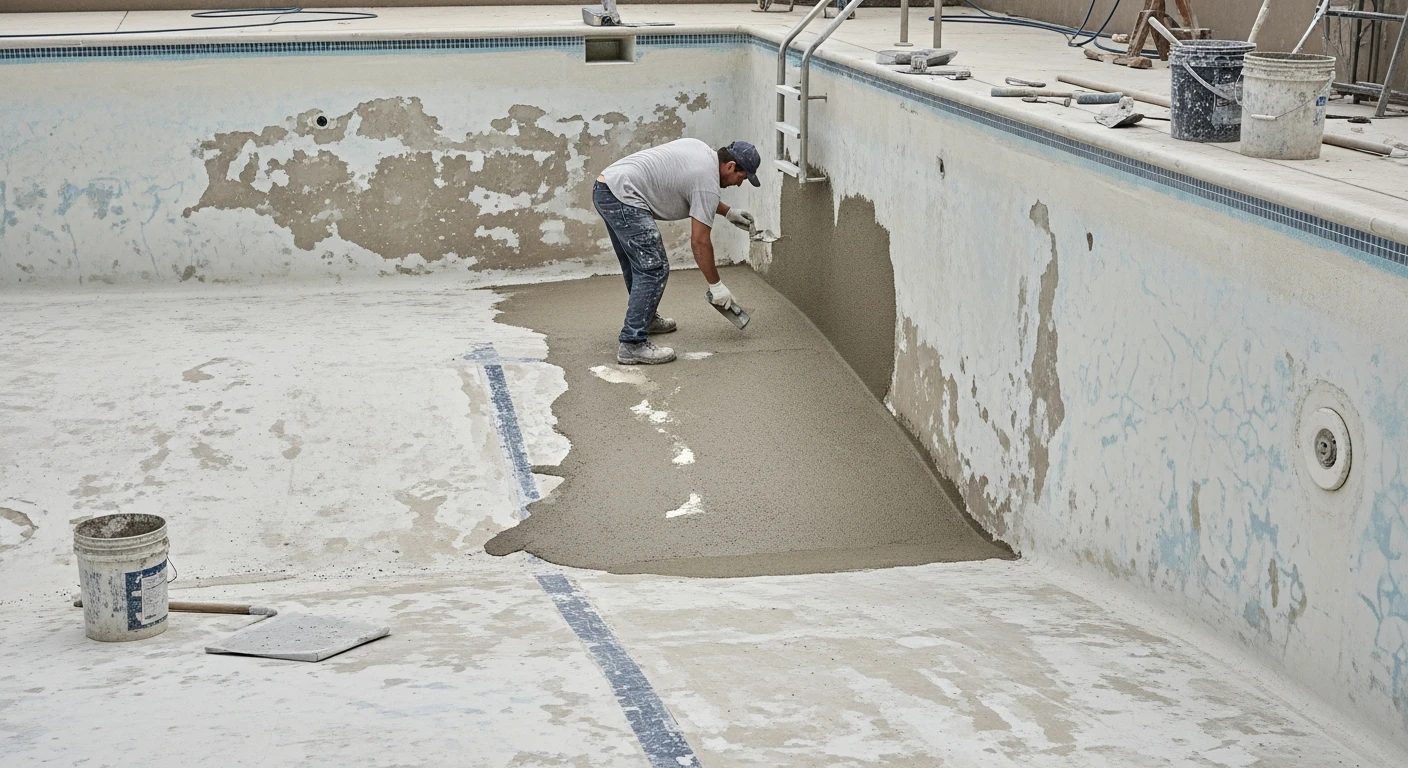
Most cracks can be repaired during a remodel, but the method depends entirely on whether they are structural or superficial. Superficial plaster crazing is addressed during the resurfacing prep, but deep structural cracks require a more invasive fix, often involving staples and high-strength epoxy injection before any new surface is applied. Simply plastering over a structural crack is a guaranteed failure; the crack will transfer through the new finish within a year. A proper assessment involves 'sounding' the shell for hollow spots and evaluating the crack's depth and movement, which dictates the true scope of the remodel.
How long will a complete pool remodel take and what will my yard look like?
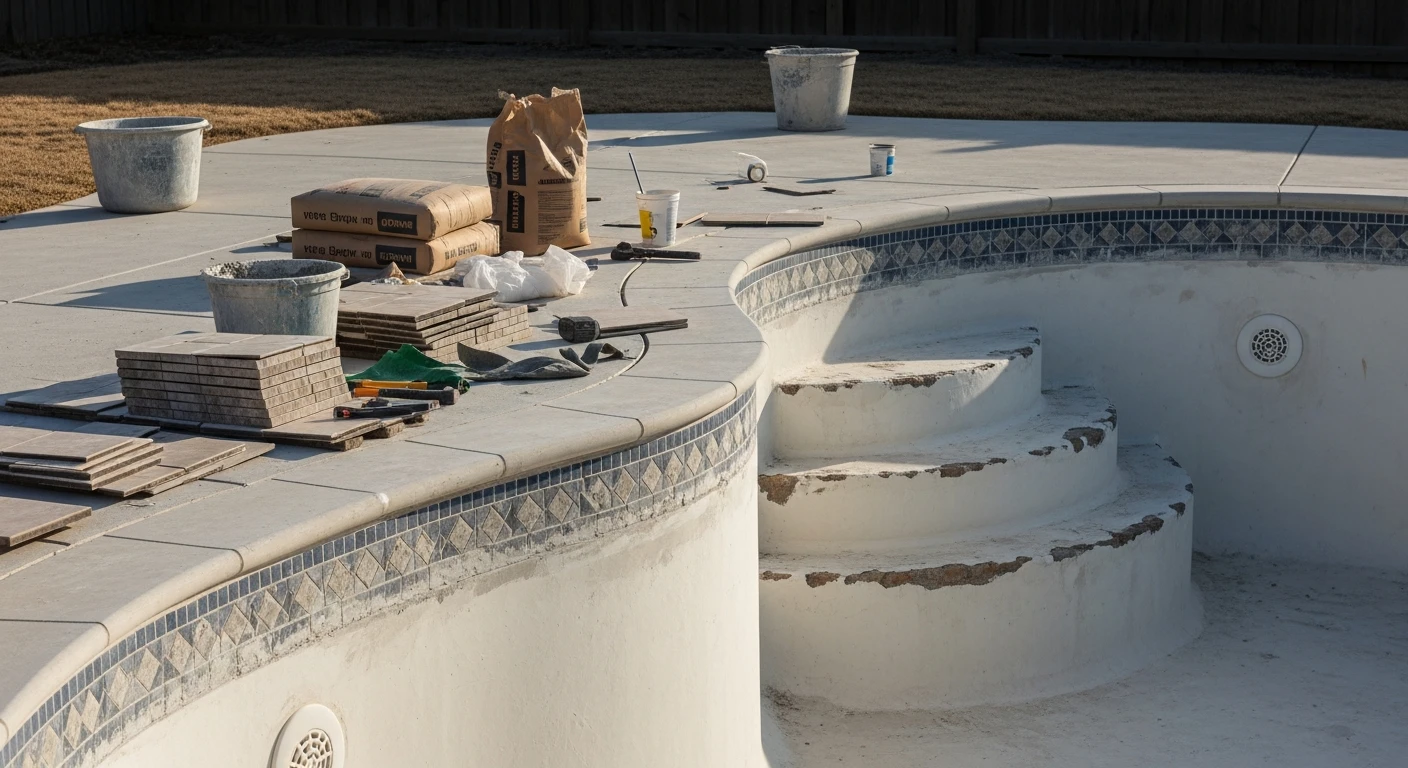
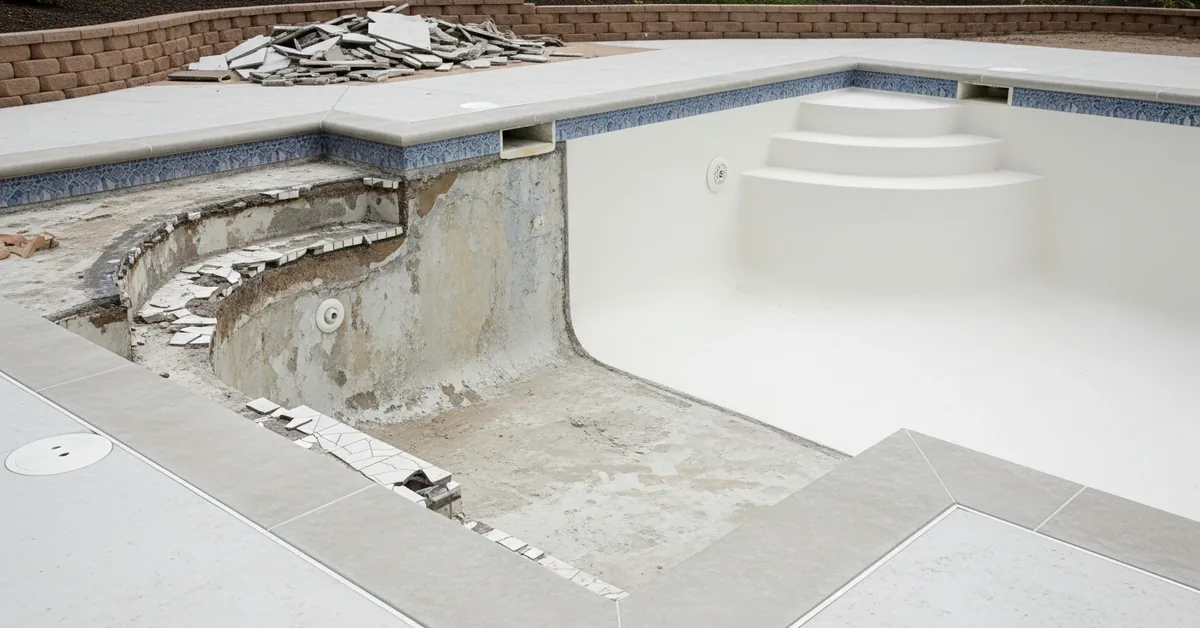
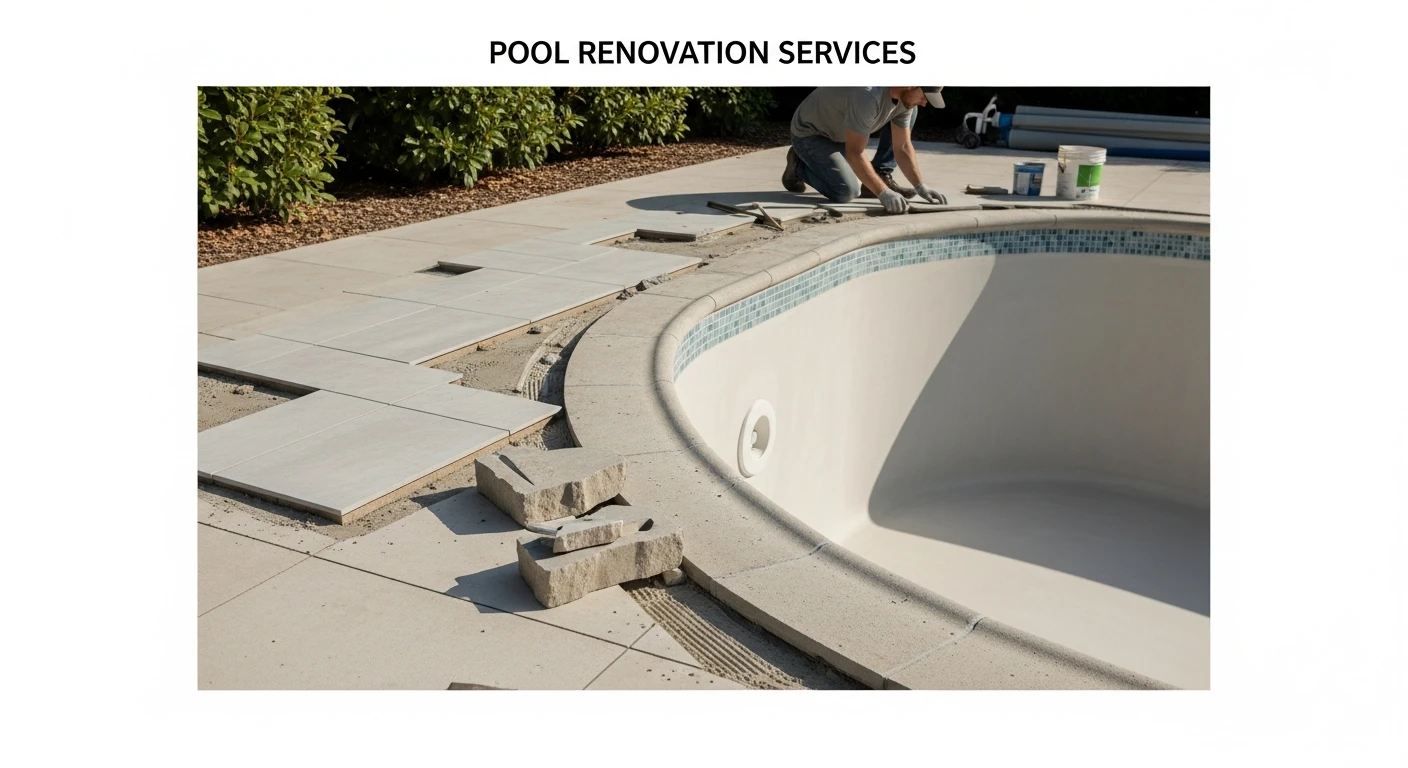
A standard remodel involving draining, resurfacing, new tile, and coping typically takes three to five weeks, not including weather delays. Expect your yard to become a construction zone with heavy equipment, dust, and noise, especially during the demolition and gunite or plaster application phases. A critical, often overlooked, delay is the curing time for new materials; for instance, fresh plaster requires a specific startup chemistry process for several weeks after filling to prevent staining and scaling. Rushing this phase will drastically shorten the lifespan of your new surface.
Is it worth upgrading my old pump and filter during the remodel?
Yes, upgrading your equipment during a remodel is the most cost-effective time to do it, especially if your pump is over eight years old. A modern variable-speed pump can save you significantly on electricity bills compared to an old single-speed model. More importantly, a remodel is the perfect opportunity to resize plumbing and ensure the new equipment's flow rates are perfectly matched to your pool's volume and features. Installing a high-efficiency pump on undersized, old plumbing is a common mistake that throttles performance and causes premature equipment failure.
What are the real differences in longevity and feel between plaster, pebble, and tile finishes?
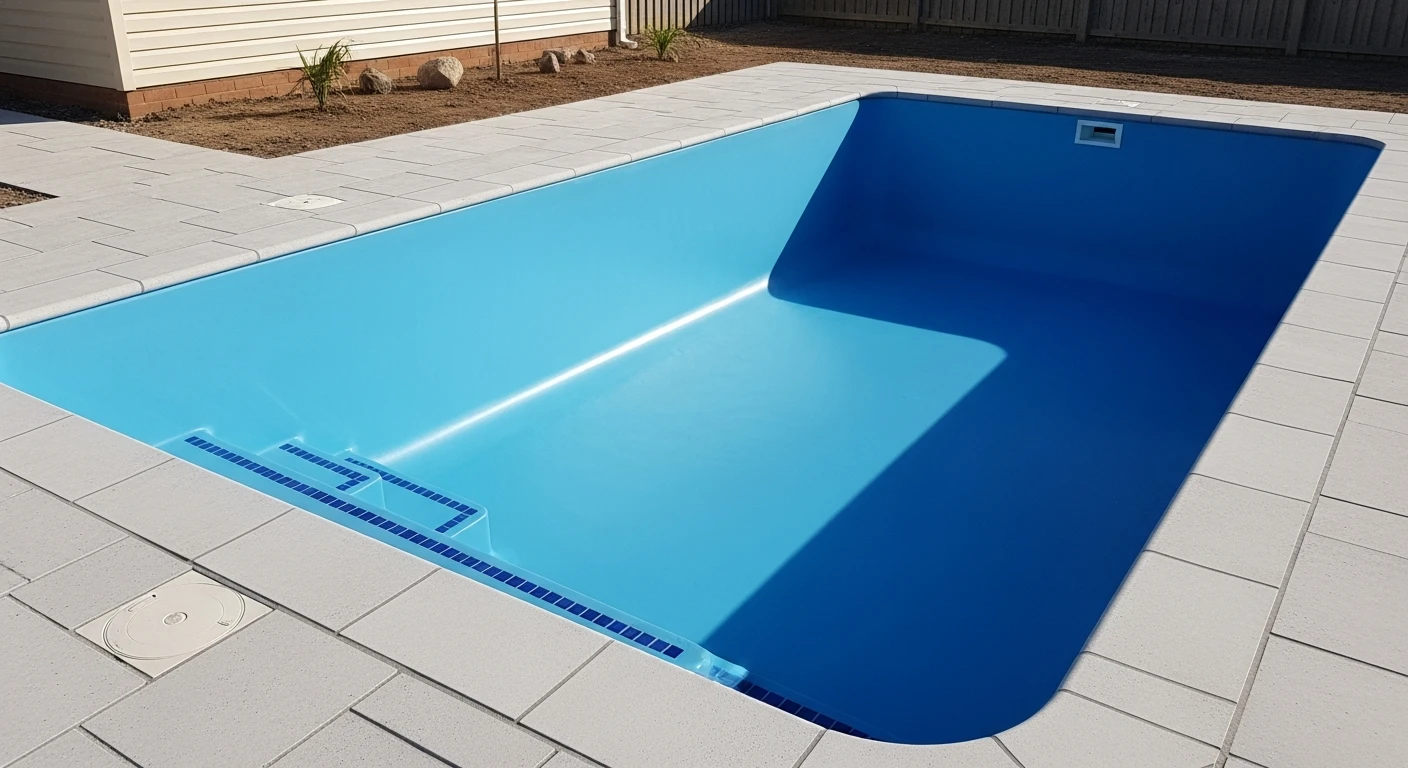
The primary difference is durability and texture, which directly impacts long-term cost. Standard plaster is the most affordable but has the shortest lifespan (7-10 years) and is susceptible to staining. An aggregate pebble finish is more expensive upfront but lasts 15-20+ years and is highly resistant to chemical imbalances and stains. An all-tile finish is the premium option, lasting decades with minimal chemical wear, but is the most labor-intensive and costly. A key trade-off people miss is that the texture of a pebble finish is rougher on feet than smooth plaster, a crucial comfort consideration.
My pool loses water. Will the remodel automatically fix the leak?
A remodel will not automatically fix a leak unless the leak is in the pool's surface, which is being replaced. Leaks are often located in the underground plumbing, skimmer, or main drain, which are separate systems from the pool shell. Before any cosmetic work begins, a comprehensive pressure test of all plumbing lines is essential. Skipping this step is a costly error; discovering a pipe leak after you've installed a brand-new deck and finish means everything must be torn up again. A water loss of more than 0.6 cm per day strongly indicates a leak, not just evaporation.
Do I have to replace my old drain covers during the remodel?
Yes, you are legally required to upgrade any old, non-compliant drain covers to new, anti-entrapment models. Federal law, specifically the Virginia Graeme Baker Act, mandates that all public and residential pools have covers that prevent powerful suction from trapping a person. During a remodel that involves draining the pool, it is the perfect and necessary time to ensure all suction outlets are brought up to current safety standards. Using outdated, flat-grate covers poses a serious safety hazard, and failing to upgrade them during a major renovation is a significant liability.

Reviews · Complete Remodel in Pasco FL

See what other customers say and share your experience.

Leave a comment

It takes less than a minute. Your feedback helps others.

Rating:

You selected 5 stars

Latest Comments

Jane Wicker

Pool needs resurface and some plumbing replacement. Have worked with u before. I need to have a consultation . Please call 1-361-542-1597, Jane.

Michael Brown

Complete Remodel did a fantastic job on my bathroom remodel. Lookin' good ??! They worked with my budget and made the whole process so easy. ?

Sarah Jones

OMG, Complete Remodel totally nailed it with my kitchen reno! ? It's like a whole new space. They were super professional, kept everything clean, and even finished early! ? Would def recommend!