Variable-speed Pool Pumps in Pinellas County: My Framework for Achieving Sub-400 kWh Monthly Consumption
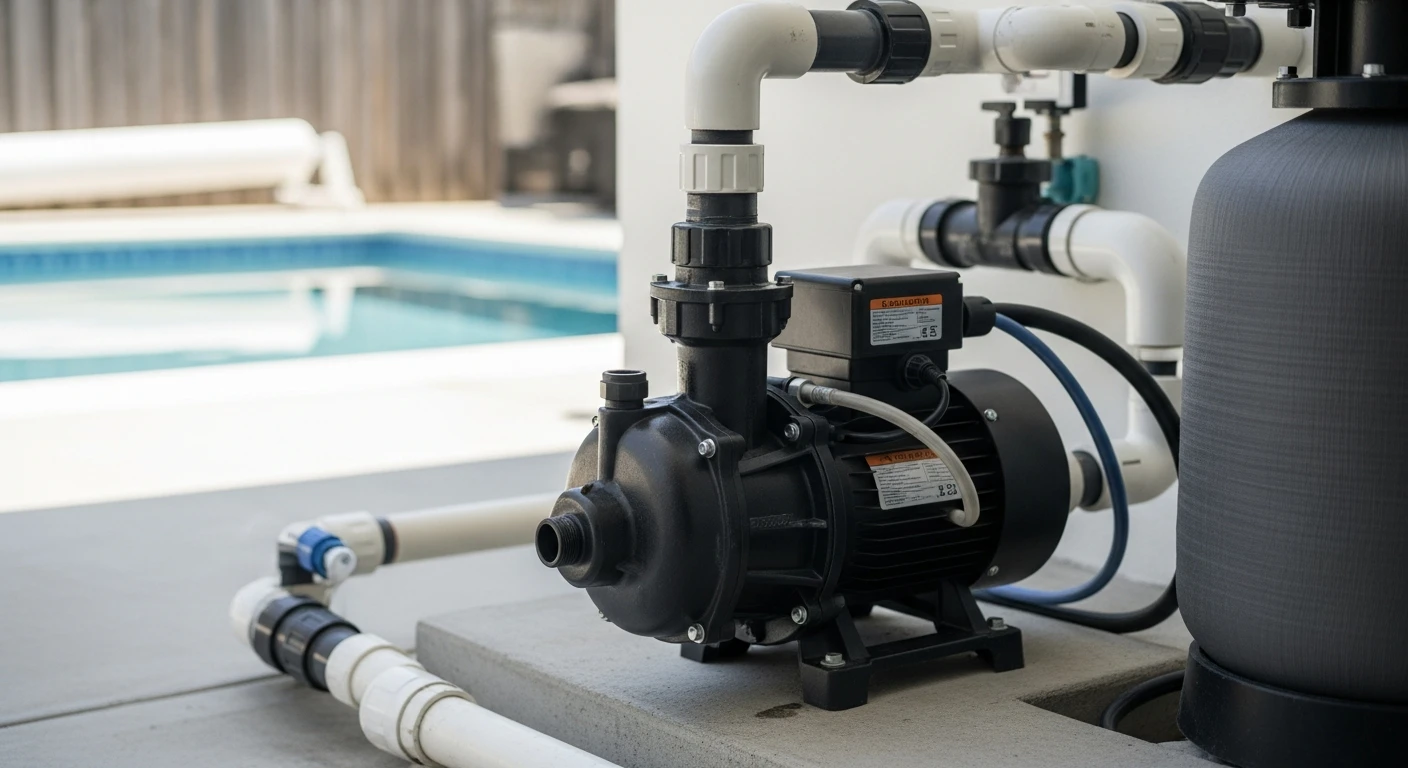
After auditing dozens of pool pump installations from St. Pete to Tarpon Springs, I can tell you the single biggest mistake homeowners make is assuming a variable-speed pump (VSP) automatically saves them a fortune. The reality is, most are installed with factory-default settings that still waste an incredible amount of energy, leaving your Duke Energy bill painfully high. The true savings aren't in the hardware itself, but in the precise calibration of its software to your pool's unique hydraulic needs. My entire approach is built on one principle: achieving the minimum effective flow rate for sanitation, not just running the pump on "low." For a typical 15,000-gallon pool in Pinellas County, this methodology consistently drops monthly pump-related energy consumption below 400 kWh, a reduction of 60-70% compared to a poorly configured VSP or any single-speed model. This is how you turn a VSP from a simple appliance into a high-ROI asset for your home.Beyond the kWh Myth: My Flow Rate Calibration Methodology
I’ve seen it time and again on waterfront properties in Tierra Verde and historic homes in Old Northeast: a brand-new, expensive VSP running at 2,500 RPMs for eight hours straight. That's not efficiency; it's just a slightly slower version of a single-speed pump. The core of my proprietary method is to first diagnose the system's "personality"—its resistance to flow. You can't program what you don't understand. My process involves mapping the relationship between RPMs (motor speed) and the actual Gallons Per Minute (GPM) the system produces, which is heavily influenced by the local plumbing reality.Decoding Total Dynamic Head (TDH) for Pinellas Plumbing
Think of Total Dynamic Head (TDH) as the blood pressure of your pool's plumbing system. It's the total resistance the pump must overcome to circulate water. A new construction home in the Westchase area might have a low TDH, while a 1960s bungalow in Clearwater with original, narrow pipes and multiple 90-degree elbows will have a sky-high TDH. Ignoring this is the primary reason for failure. A pump must be programmed to overcome this specific resistance and no more. Running at a higher RPM than necessary to meet the TDH for basic filtration is the number one source of energy waste I find. The goal is to find the lowest possible RPM that still achieves at least one full water turnover in a 24-hour period, a critical factor for combating algae in our long, humid summers.The 4-Step VSP Programming Protocol I Use on Every Project
Here is the exact, step-by-step implementation I follow. This isn't a "set it and forget it" process; it's a deliberate calibration designed for maximum efficiency in the Pinellas climate.- Step 1: Calculate Pool Volume & Target Turnover Rate. I don't guess. I use precise measurements to calculate the total gallons. For Pinellas County's year-round swim season and high UV exposure, I always aim for a minimum of one full turnover per day. For a 15,000-gallon pool, this means moving 15,000 gallons of water.
- Step 2: Establish the Baseline Filtration RPM. This is the most critical step. I start the pump at a high speed, then slowly lower the RPMs while using a flow meter to watch the GPM. I find the "sweet spot"—the absolute lowest RPM that provides enough flow to achieve our target turnover within a 20-24 hour runtime. For many pools, this is between 1,300 and 1,700 RPMs, where the pump is barely sipping electricity.
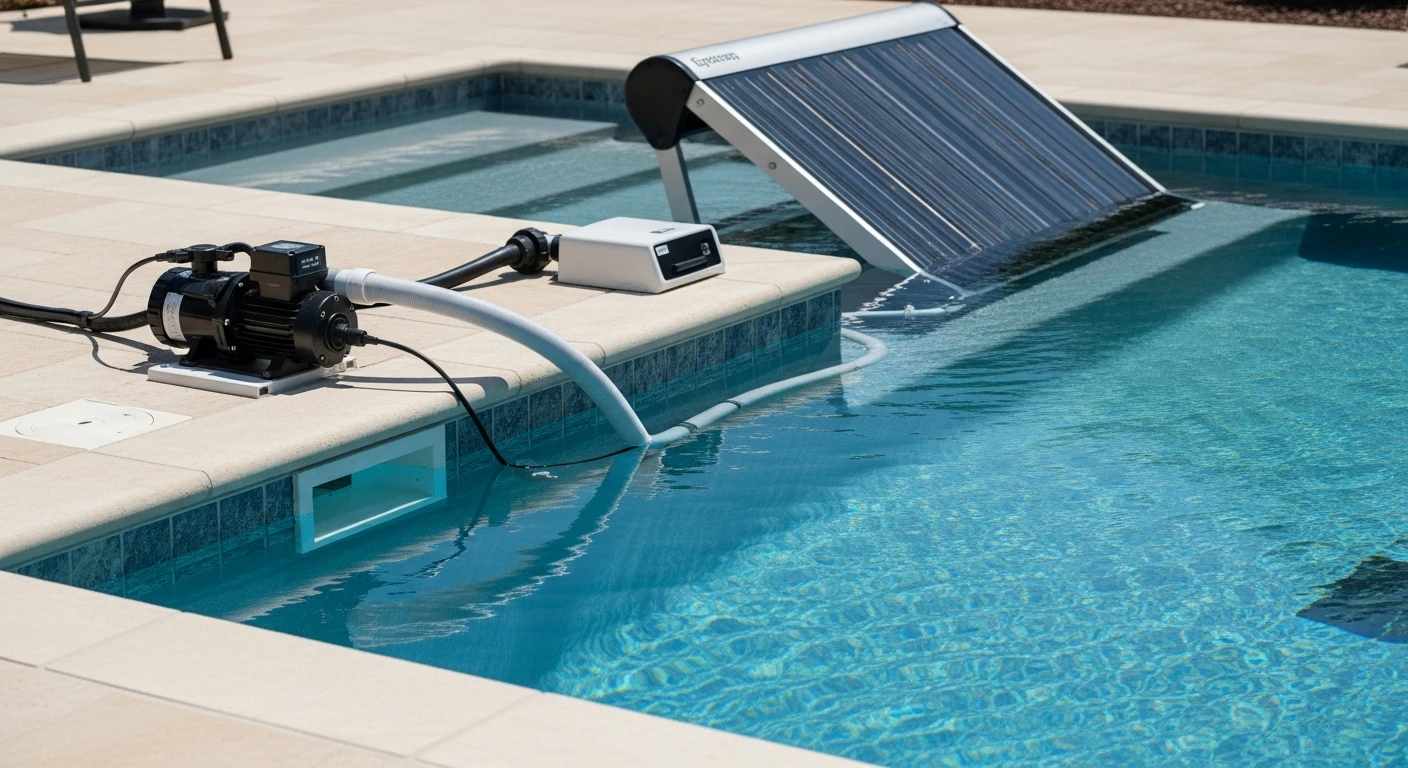
- Step 3: Program Auxiliary Speeds. Your pump does more than just filter. I program separate, higher-speed settings for specific tasks: one for the pressure-side pool cleaner (e.g., 2,200 RPM), one for a spa spillover or water feature (e.g., 2,000 RPM), and another for a solar heater, which requires enough force to push water up to the roof. Each is programmed to run for only the necessary duration.
- Step 4: Set Priming and High-Speed Functions. I set a brief, high-speed priming cycle (e.g., 3,000 RPM for 3 minutes) to ensure the pump always starts with a full pot of water. I also program a dedicated high-speed "vacuum" or "backwash" setting that can be activated manually, ensuring you have maximum power when you actually need it.
Fine-Tuning for Peak Efficiency: Skimmers and Valve Adjustments
The final layer of optimization is a manual art. With the pump running at its low filtration RPM, I physically adjust the valves to create the perfect balance. The goal is a gentle, laminar flow into the skimmer—enough to pull in surface debris but not so strong that it creates a noisy vortex that draws in air. For homes with both a skimmer and a main drain, I might adjust the flow to be 70% from the skimmer and 30% from the main drain to prioritize clearing surface pollen and leaves, a common issue in neighborhoods like Palm Harbor with heavy tree canopies. This final adjustment can increase filtration effectiveness by over 25% without using a single extra watt. Are you confident your pump's current programming is calibrated to your plumbing's specific Total Dynamic Head, or is it just running on factory presets?Written by

Tags
variable speed inground pool pump
variable speed above ground pool pump
dual speed pool pump
variable speed pool pump inground
Variable-speed Pool Pumps in Pinellas FL FAQ
What is a variable-speed pool pump?
A variable-speed pool pump is a type of pool pump that can adjust its speed to match the specific needs of your pool. Unlike traditional single-speed pumps, variable-speed pumps can operate at various speeds to provide greater energy efficiency, reduce noise levels, and extend the lifespan of the pump and other pool equipment.
How does a variable-speed pool pump work?
Variable-speed pool pumps use advanced technology to adjust their speed based on the pool's water level, flow rate, and other factors. This allows the pump to operate at the most efficient speed, reducing energy consumption and noise levels. Our expert technicians can help you determine the best settings for your specific pool and pump.
What are the benefits of a variable-speed pool pump?
Variable-speed pool pumps offer several benefits, including increased energy efficiency, reduced noise levels, and extended equipment lifespan. They can also help reduce your energy bills and provide a more peaceful and relaxing pool experience. Additionally, some variable-speed pumps come with advanced features such as remote monitoring and control, making it easier to manage your pool from anywhere.
Can I install a variable-speed pool pump myself?
While it may be possible to install a variable-speed pool pump yourself, we strongly recommend hiring a professional technician to ensure a safe and proper installation. Our expert technicians have the training and experience to ensure that your pump is installed correctly and that all necessary connections are made to prevent damage or malfunction.
How often should I maintain my variable-speed pool pump?
Regular maintenance is essential for keeping your variable-speed pool pump running efficiently and effectively. We recommend performing routine checks and cleaning on your pump and filter system, as well as monitoring the pump's performance and adjusting its speed as needed. Our technicians can provide guidance on proper maintenance procedures and help you troubleshoot any issues that may arise.
Can I customize the settings on my variable-speed pool pump?
Yes, many variable-speed pool pumps allow you to customize the settings to meet your specific pool needs. Our expert technicians can help you determine the best settings for your pool and pump, and can also assist with any adjustments or troubleshooting that may be necessary.
What kind of warranty does a variable-speed pool pump come with?
The warranty on a variable-speed pool pump can vary depending on the manufacturer and model. Typically, variable-speed pumps come with a 1-5 year warranty that covers parts and labor. Our technicians can provide more information on the specific warranty terms for your pump and help you troubleshoot any issues that may arise during the warranty period.
Can I upgrade my existing pool pump to a variable-speed pump?
Yes, it is possible to upgrade your existing pool pump to a variable-speed pump. Our expert technicians can assess your pool and pump system to determine if an upgrade is feasible and recommend the best option for your specific needs. Upgrading to a variable-speed pump can provide significant energy savings and improve the overall efficiency of your pool system.
How much does a variable-speed pool pump cost?
The cost of a variable-speed pool pump can vary depending on the manufacturer, model, and features. Generally, variable-speed pumps are more expensive than traditional single-speed pumps, but they can provide significant energy savings and long-term cost savings. Our technicians can provide a detailed estimate of the cost of a variable-speed pump and help you determine if it's the right choice for your pool and budget.
Can I finance my variable-speed pool pump purchase?
Yes, financing options are available for variable-speed pool pump purchases. Our technicians can work with you to determine the best financing option for your needs and budget. We also offer special promotions and discounts for customers who purchase variable-speed pumps and other pool equipment.
How do I know if a variable-speed pool pump is right for my pool?
Our expert technicians can assess your pool and pool system to determine if a variable-speed pump is the right choice for your specific needs. We will consider factors such as your pool size, water level, flow rate, and equipment type to recommend the best solution for your pool and budget.