
In my 15 years specializing in pool systems, particularly in coastal Florida markets, I've seen the damage a
In my 15 years specializing in pool systems, particularly in coastal Florida markets, I've seen the damage a misdiagnosed leak can cause. In Sarasota, the problem is compounded by our sandy soil, which allows water from a small plumbing leak to travel unseen, undermining expensive travertine decks and even pool foundations. Precision leak detection isn't about guesswork; it's a systematic process using advanced electronic and acoustic tools to locate the exact source of water loss without destructive measures. It is the only responsible approach for the high-value, meticulously landscaped properties common from Siesta Key to Lakewood Ranch.
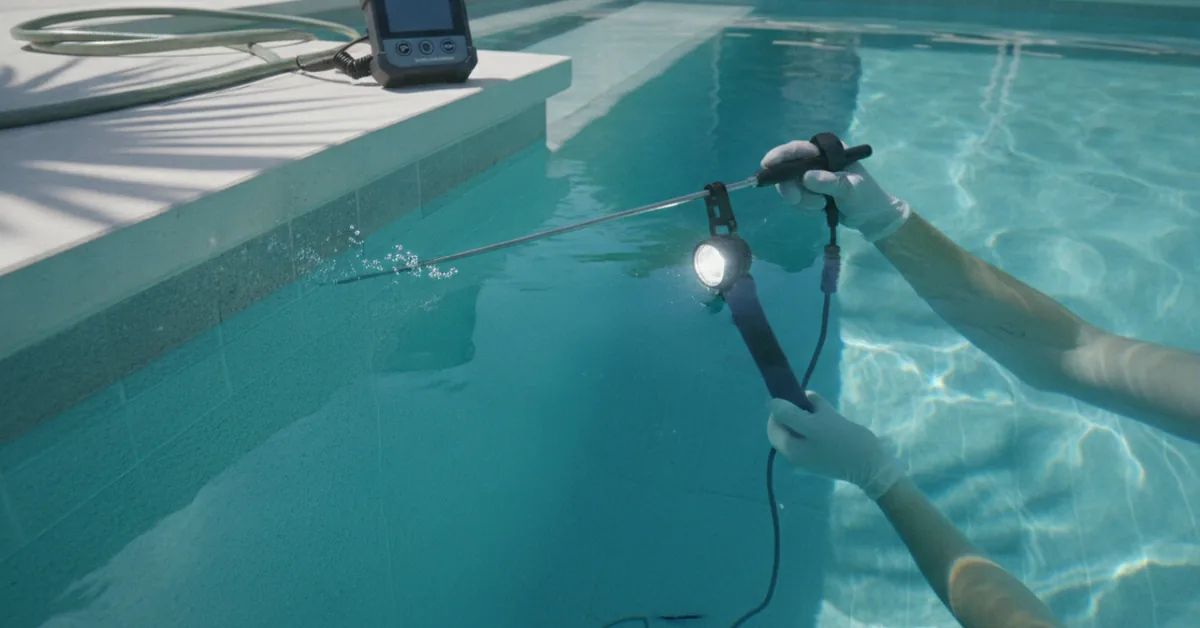
- Acoustic Listening Devices: Highly sensitive underwater microphones and ground probes that can “hear” the faint sound of water escaping from a pipe underground.
- Electronic Vinyl Liner Detection: A specialized device that sends a low-voltage electrical current into the pool water to find punctures in vinyl liners by detecting where the current grounds out.
- Pressure Testing: Isolating individual plumbing lines (skimmer, main drain, returns) and using water or air pressure to confirm which specific line is compromised.
- Tracer Gas Injection: A non-toxic, hydrogen/nitrogen gas mix is injected into a drained line; a highly sensitive gas detector then sniffs out the exact spot where the gas escapes through the ground or deck.
The Myth of Evaporation: Sarasota's Unique Challenge
The most common reason Sarasota pool owners delay a leak inspection is attributing water loss to our intense year-round sun and humidity. While evaporation is a real factor, it becomes a convenient excuse that masks a more serious problem. A quarter-inch of water loss per day might seem normal, but over a month, that's over seven inches—a significant amount that can point to a structural or plumbing issue.
The pattern I've consistently observed is that homeowners with saltwater pools are often the last to act. They see the salt cell working overtime to maintain chlorine levels and assume the system is just compensating for dilution from rain. In reality, the constant addition of fresh water to replace a leak is what's driving the imbalance, causing premature wear on a salt cell that can cost upwards of $800 to replace. The real cost of the leak isn't the water; it's the secondary equipment damage.
The Bucket Test Fallacy and Its Consequences
The “bucket test” is the first thing people find online, but it’s a blunt instrument at best. It can confirm you have a leak, but it can’t differentiate between a skimmer crack, a main drain separation, or a structural fissure. Relying solely on the bucket test often delays the professional diagnosis by weeks or months. During that time, a small underground plumbing leak can saturate the soil, creating a void under your deck. I've seen entire sections of pavers sink because a homeowner waited too long, turning a $500 plumbing patch into a $5,000 deck repair.
The Systematic Process of Pinpointing Leaks
Precision leak detection follows a strict, logical sequence to eliminate possibilities without causing damage. We don't start by digging; we start by listening and testing. The process is methodical, beginning with the least invasive checks and escalating only as needed. It's about gathering data to form a conclusive diagnosis before a single tool touches your deck.
For example, a typical inspection starts with a full visual check and dye testing around obvious points like lights and skimmer throats. If that yields nothing, we move to pressure testing the plumbing lines. This isolates the problem to a specific circuit (e.g., the return line to the spa). Only then do we deploy more advanced tools like acoustic listeners or tracer gas to find the exact point of failure along that now-identified line. This process can take two to four hours but saves days of guesswork and thousands in unnecessary demolition.
Why This Process Matters in Sarasota County
Sarasota County's building codes and the prevalence of HOAs in communities like Palmer Ranch or The Meadows add layers of complexity. Any repair involving deck cutting requires a clean, documented justification. A professional leak detection report provides this. It shows the HOA architectural review committee that the work is necessary and targeted, not a speculative excavation. It also provides the contractor with a precise location, minimizing the scope of the repair and ensuring compliance with local codes for plumbing fixes.
Comparing Detection Methods: The Modern vs. The Archaic
Choosing a leak detection company often comes down to the technology they use. An outdated approach can be just as damaging as the leak itself. Homeowners must understand the difference between a technician who shows up with a bucket and some dye versus a specialist with a van full of electronic equipment.
| Indicator | Dye Testing & Visual Inspection Only | Full Electronic & Acoustic Detection | DIY (Bucket Test & Hope) |
|---|---|---|---|
| Accuracy | Low; only finds obvious surface-level leaks. | High; pinpoints underground and structural leaks to within inches. | Extremely low; only confirms a leak exists, provides no location. |
| Invasiveness | Low, but often inconclusive, leading to exploratory digging. | Minimal to none; non-destructive. | None, but leads to delayed and more invasive repairs later. |
| Cost-Effectiveness | Deceptive. Low initial cost often leads to much higher repair bills due to misdiagnosis. | Higher upfront cost (typically $350-$550 for a full detection) but prevents thousands in unnecessary damage. | Highest long-term cost due to collateral damage. |
| Time to Resolution | Days or weeks of trial-and-error. | Typically diagnosed and located in a single 2-4 hour visit. | Months, until the problem becomes catastrophic. |
When Precision Detection Might Be Overkill
I have to be honest: this level of technology is not always the first, best step. If you can clearly see a crack in the pool plaster with water visibly seeping out, or if the leak is a steady drip from the pump housing, you don't need a full electronic workup. In those rare, obvious cases, a direct repair is more logical. The service is designed for hidden leaks where the source is a mystery—which, in my experience, accounts for over 90% of significant water loss issues.
Hiring Checklist for a Leak Detection Specialist in Florida
Hiring for this service requires more diligence than finding a weekly pool cleaner. The stakes are higher, and the required expertise is far more specialized. A mistake here can be incredibly costly.
- Verify Florida Contractor's License: Any work beyond simple detection that involves plumbing or structural repairs requires a licensed contractor in Florida. Check their license status on the Florida Department of Business and Professional Regulation (DBPR) website. A simple “pool guy” is not qualified to cut and repair pipes.
- Ask About Their Equipment: A professional should be able to list the specific tools they use, such as a LeakTronics Flash System, a Geophone, or a Gen-Ear acoustic listener. If their primary tool is “dye,” they are not a specialist.
- Inquire About Their Process: Ask them to walk you through their step-by-step diagnostic procedure. It should sound systematic, starting with pressure tests and moving to pinpointing methods. A vague answer is a major red flag.
- Request a Sample Report: A legitimate company will provide a detailed report outlining their findings, including photos and a precise mark on the ground showing where the issue is. This document is your proof for repairs.
- Check for Specific Leak Detection Insurance: General liability insurance is standard, but a dedicated specialist may carry coverage specific to errors and omissions in the diagnostic process.
The Decision That Defines the Outcome
The entire success of a leak repair hinges on one decision: choosing to pay for a definitive diagnosis before authorizing any repair work. Many pool service companies will offer a “free estimate,” which often involves a quick visual look and a guess. This is where homeowners get into trouble. They accept a low-ball quote to “fix the leak,” only to find the contractor digging in the wrong place.
I saw this unfold with a client in a gated community off University Parkway. Their pool company guessed the leak was in a return line near the skimmer. After they cut a 4x4 foot hole in the paver deck and found nothing, they recommended cutting another section. The homeowner finally called us. Our acoustic equipment located the leak 15 feet away, under a planter bed next to the deck. The initial repair quote was $800; the final cost, including restoring the now-damaged deck, was over $4,000. Paying for a proper $450 detection upfront would have saved them over $3,000.
The Moment Homeowners Go Wrong
The critical mistake is confusing a repair estimate with a diagnostic service. They are not the same. A repair quote without a pinpointed location is just a guess with your money. A true leak detection specialist charges for the detection service itself, and their findings are separate from the repair. You are paying for information—the most valuable part of the entire process. Once you have that information, you can get competitive, accurate bids for the actual repair.
Practical Realities of Leak Detection in Sarasota
Navigating a pool leak involves more than just finding the hole. It intersects with local regulations, property specifics, and the realities of our environment.
How Do Underground Voids Form from Pool Leaks?
Sarasota's ground is predominantly sandy and porous. When a plumbing line under the pool deck has a persistent leak, the water doesn't pool; it slowly and steadily washes away the sand and soil base that supports the concrete shell and the deck. This process, known as soil subsidence, creates an underground void. The deck or pool shell is left suspended over this empty space until its own weight causes it to crack and collapse.
Are Permits Needed for Leak Repairs in Sarasota County?
It depends entirely on the nature of the repair. According to the Sarasota County Building Department, simple repairs like patching a crack in the pool shell or fixing a small section of pipe often do not require a permit. However, if the repair involves extensive plumbing replacement, modifying the pool structure, or significant demolition and reconstruction of the deck, a permit is almost always required. A licensed contractor will know precisely when a permit needs to be pulled.
Do HOAs in Lakewood Ranch or Palmer Ranch Have Rules on This?
Absolutely. Most high-end HOAs in the Sarasota area have strict architectural and landscape guidelines. While they can't dictate who you hire, they can require that any repair work that is visible or alters the exterior appearance of your property (like cutting into a deck) be pre-approved. The detailed report from a precision leak detection service becomes your primary tool for getting swift approval from an Architectural Review Committee (ARC), as it proves the work is necessary and not just elective.
