
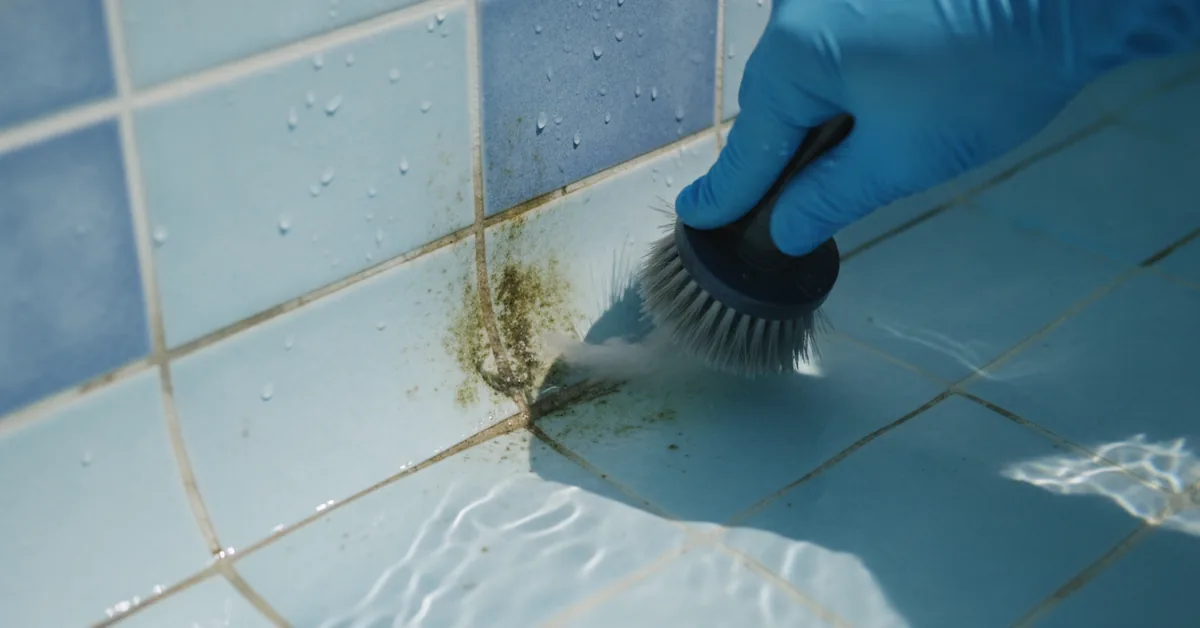
Those persistent brown, green, or black stains on your pool's surface are more than just an aesthetic problem; they are a diagnostic challenge. The truth is, the most common stain removal mistake I see in Sarasota isn't using the wrong chemical—it's misidentifying the stain's origin. A treatment for an organic leaf stain will do absolutely nothing for a metallic stain from well water, and in some cases, can make it worse by setting it permanently into the plaster.
Executive Summary: Diagnosing and Treating Sarasota's Toughest Pool Stains
From my years working on pools from Siesta Key to Lakewood Ranch, I can confirm that Sarasota’s combination of intense
From my years working on pools from Siesta Key to Lakewood Ranch, I can confirm that Sarasota’s combination of intense sun, high mineral content in water sources, and lush foliage creates a perfect storm for stubborn stains. The key is precise diagnosis before treatment. Treating a copper stain as if it were black algae, for example, is a waste of time and money that can lead to etching the pool surface. True removal requires identifying the source, applying the correct chelating or sequestering agents, and rebalancing the water chemistry to prevent recurrence.
- Stain Type is Everything: Stains are broadly categorized as organic (from leaves, algae), metallic (from iron, copper, manganese), or mineral (calcium scaling). Each requires a completely different chemical approach.
- Local Water is a Factor: Well water in areas east of I-75 often contains high iron levels, leading to rust-colored stains. City water, while treated, can still contribute to mineral buildup and scaling over time.
- Surface Matters: A treatment safe for a standard white plaster pool might be too aggressive for a colored quartz or PebbleTec finish, potentially causing discoloration or permanent damage.
- Prevention is Chemical: Effective stain removal is incomplete without a long-term prevention strategy involving regular testing and the use of sequestering agents to keep minerals suspended in the water.
The Planning Failures That Make Stains Permanent
The biggest failure I see is a homeowner's rush to action without a proper diagnosis. They see a stain, head to the pool store, and buy the strongest-looking product on the shelf. This often backfires, especially when dealing with metallic stains that have been oxidized and driven deeper into the pool's surface by the wrong chemical application.
The Most Expensive Failure: The "Shock and Scrub" Fallacy
I was called to a home in The Meadows where the owner had a few small, rust-colored spots. Believing it was algae, he triple-shocked the pool with granular chlorine and scrubbed the spots with a wire brush. The high chlorine dose oxidized the iron, turning the small spots into large, dark brown blooms that penetrated the plaster. The wire brush etched the surface, creating a perfect foothold for future algae. What could have been a simple ascorbic acid spot treatment turned into a situation requiring a full acid wash, costing over $700 and shortening the life of his pool surface.
How Professional Stain Removal Works in Practice
A professional approach is methodical and starts with identification, not action. We first test the water for metals like iron and copper. Then, we use a stain identification kit, applying small amounts of different chemicals directly to a stained area to see which one lifts it. This tells us if we're dealing with an organic problem or a specific metal.
Selection Criteria for Sarasota Homeowners
When you're looking for a professional, your checklist needs to be specific to our local challenges. Here's what I recommend asking any potential service provider:
- Do you perform on-site stain testing to identify the source before quoting a treatment?
- What is your experience with stains caused by well water high in iron, common in eastern Sarasota County?
- Can you provide examples of your work on delicate finishes like PebbleTec or darker-colored plaster?
- Does your treatment plan include a post-removal water balancing and prevention strategy using sequestering agents?
- Are you licensed and insured as required by the Florida Department of Business and Professional Regulation (DBPR) for any work beyond basic chemical balancing?
Comparison: Professional Treatment vs. DIY vs. Draining
Homeowners often face a choice between trying to fix a stain themselves, hiring a pro, or taking the drastic step of draining and acid washing. Each has significant trade-offs, particularly in our Florida climate where an empty pool is vulnerable to popping out of the ground due to hydrostatic pressure.
| Indicator | DIY Chemical Kits | Professional Stain Treatment | Drain and Acid Wash |
|---|---|---|---|
| Initial Cost | Low ($50 - $150) | Moderate ($300 - $600) | High ($700 - $1,200+) |
| Effectiveness | Low to moderate; high risk of failure or worsening the stain. | High; targets the specific stain source without draining. | Very high, but removes a layer of the pool surface. |
| Risk of Damage | High; incorrect application can set stains or etch surfaces. | Low; professionals match treatment to the surface type. | High; shortens plaster life and risks structural damage if done improperly. |
| Time to Swim | 24-72 hours | 24-48 hours | 5-7 days (includes refill and rebalancing) |
When Professional Treatment Isn't the Right Choice
There are situations where a targeted stain treatment is not the best path. If your pool's plaster is more than 10-12 years old, heavily etched, and stained throughout, a chemical treatment is a temporary fix. The money spent on stain removal would be better allocated toward a full resurfacing. Treating widespread stains on a failing surface is like painting over rust; the underlying problem will reappear quickly.
A Safe Hiring Checklist for Stain Removal Services
Finding a qualified technician in a market flooded with pool guys requires diligence. A bad hire can leave you with a permanently damaged pool surface. Your goal is to find a specialist, not just a general pool cleaner.
- Verify Florida C-39 License: For any work beyond simple water chemistry, such as an acid wash or equipment repair associated with staining, the contractor must hold a state license. You can verify this on the DBPR website.
- Request Proof of Insurance: Ask for a certificate of liability and workers' compensation insurance. A chemical spill or surface damage can be a costly accident.
- Ask for a Multi-Step Plan: A professional will present a plan that includes diagnosis, treatment, and prevention. A vague promise to "get the stain out" is a red flag.
- Inquire About Surface-Specific Experience: Explicitly ask about their experience with your specific pool surface—plaster, quartz, pebble, or fiberglass.
- Check Local Reviews and References: Look for reviews that mention stain removal specifically, not just routine cleaning. Ask for references from clients in nearby neighborhoods like Palmer Ranch or Gillespie Park.
- Understand the Guarantee: What happens if the stain returns in a month? A reputable company will explain the cause and outline a prevention plan, but be wary of unrealistic guarantees.
Decisions That Determine the Final Outcome
The success of a stain removal project is often decided before a single chemical is added to the water. It hinges on the homeowner’s willingness to invest in a proper diagnosis instead of jumping to a cheap, fast solution. Patience is the most valuable tool in this process.
The Moment Most Homeowners Get It Wrong
The critical mistake happens the moment a homeowner decides to treat the symptom instead of the cause. They see a stain and their immediate goal is to make it disappear. The correct first step is to ask, "Why is this stain here?" Is it from a rusting screw, fertilizer overspray, copper from an old heater, or iron in the fill water? Answering that question dictates the entire treatment. By shifting focus from "What chemical removes this?" to "What is causing this?", you avoid costly missteps and ensure the problem doesn't come right back.
Practical Answers for Pool Owners in Sarasota
Navigating the specifics of pool care here involves understanding local conditions and regulations. Stains are often tied to these very factors.
How does Sarasota County's water affect pool stains?
Sarasota County's water sources vary. If you are on municipal water, it is treated, but can still be high in calcium, leading to scaling that can trap dirt and appear as a stain. If you use a private well, especially in areas like Myakka City or east of the interstate, the water is often high in iron and manganese. Without a proper sequestering agent added regularly, these metals will precipitate out and stain your pool surface a rusty brown or black.
Are there local regulations for draining a pool for treatment?
Yes. You cannot simply drain thousands of gallons of chlorinated water into the street's storm drain, as it flows directly into Sarasota Bay and harms marine life. According to city and county regulations, pool water must be dechlorinated for at least 48 hours before being discharged. Fines for improper discharge can be significant. This is a key reason why non-drain treatments are often preferable.
What role do HOAs in communities like Lakewood Ranch play in stain removal?
Homeowners Associations in master-planned communities are notoriously strict about visible property maintenance. A stained, unsightly pool can result in a violation notice and potential fines. This pressure can cause homeowners to rush into improper DIY fixes. However, these same HOAs often have approved vendor lists, which can be a good starting point for finding a licensed and insured professional familiar with the community's standards.
