Safety Pool Covers in Collier County: My Material Selection Protocol for a 35% Longer Lifespan Against UV and Salt Air
In my years specializing in pool safety systems, I've seen a recurring and expensive problem across Collier County: homeowners replacing their safety pool covers every 4-5 years. The core issue isn't poor maintenance; it's a fundamental mismatch between the cover material and our unique coastal environment. Standard-issue covers, even those marketed as "durable," are simply not engineered to withstand the trifecta of intense Naples sun, the humid, salt-laden air from the Gulf, and the torrential downpours of our summer season. My entire approach is built on correcting this initial error in material specification.
My proprietary assessment protocol focuses on diagnosing the environmental load on your specific property—whether it's a canal-front home in Royal Harbor experiencing constant salt spray or a property in Golden Gate Estates with zero shade and maximum UV exposure. This allows me to specify a cover system that doesn't just meet safety codes but actively resists the specific elements that cause premature failure. The result is a significant extension of the cover's functional lifespan, saving you a full replacement cycle.
My Diagnostic Framework for Collier County Pools
Before I even consider a cover type, I perform a site-specific environmental analysis. This is a step most installers skip, opting for a one-size-fits-all solution. This is a critical mistake I once made early in my career, leading to a cover on a Marco Island property degrading 40% faster than projected. I learned that the manufacturer's warranty is useless if the material isn't right for the micro-environment. My methodology is based on quantifying the primary stressors.
I analyze three key factors: UV radiation load, salinity and chemical exposure, and hydrostatic pressure tolerance. A pool in an open area in Ave Maria has a completely different UV profile than one in a tree-lined yard in Pelican Bay. The former requires a cover with a higher concentration of titanium dioxide UV inhibitors, while the latter might need a mesh with advanced mildew resistance due to shade and moisture. This initial diagnosis is the single most important factor in long-term performance.
The Technical Deep-Dive: Material and Hardware Specification
Based on my diagnostic, I move to material selection. Standard polypropylene mesh is often the default, but it suffers from significant UV degradation in the Florida sun. For most Collier County applications, I specify a PVC-coated polyester mesh with a high denier count. This material offers superior tear resistance and, more importantly, its PVC coating acts as a shield against both UV rays and corrosive salt air. It's a game-changer for longevity.
Hardware is another common failure point. I've replaced countless rusted springs and anchors from competitors who used inferior 304 stainless steel. It simply can't handle the coastal humidity. My non-negotiable standard is the exclusive use of 316 marine-grade stainless steel for all anchors, springs, and buckles. This grade contains molybdenum, an element that drastically increases its resistance to chloride corrosion—essential for any property near the coast. This choice alone can double the lifespan of the anchoring system.
Step-by-Step Installation for Maximum Resilience
A superior cover is only as good as its installation. My process is meticulous and designed to ensure perfect tension and load distribution, which is critical during a hurricane or a sudden summer deluge. A poorly tensioned cover will prematurely stretch and sag, creating a safety hazard.
- Deck Material Assessment: First, I analyze the decking. Travertine and older pavers, common in many Naples homes, can be brittle. I use a specialized diamond-core drill bit with water cooling to prevent cracking and ensure a perfect anchor hole.
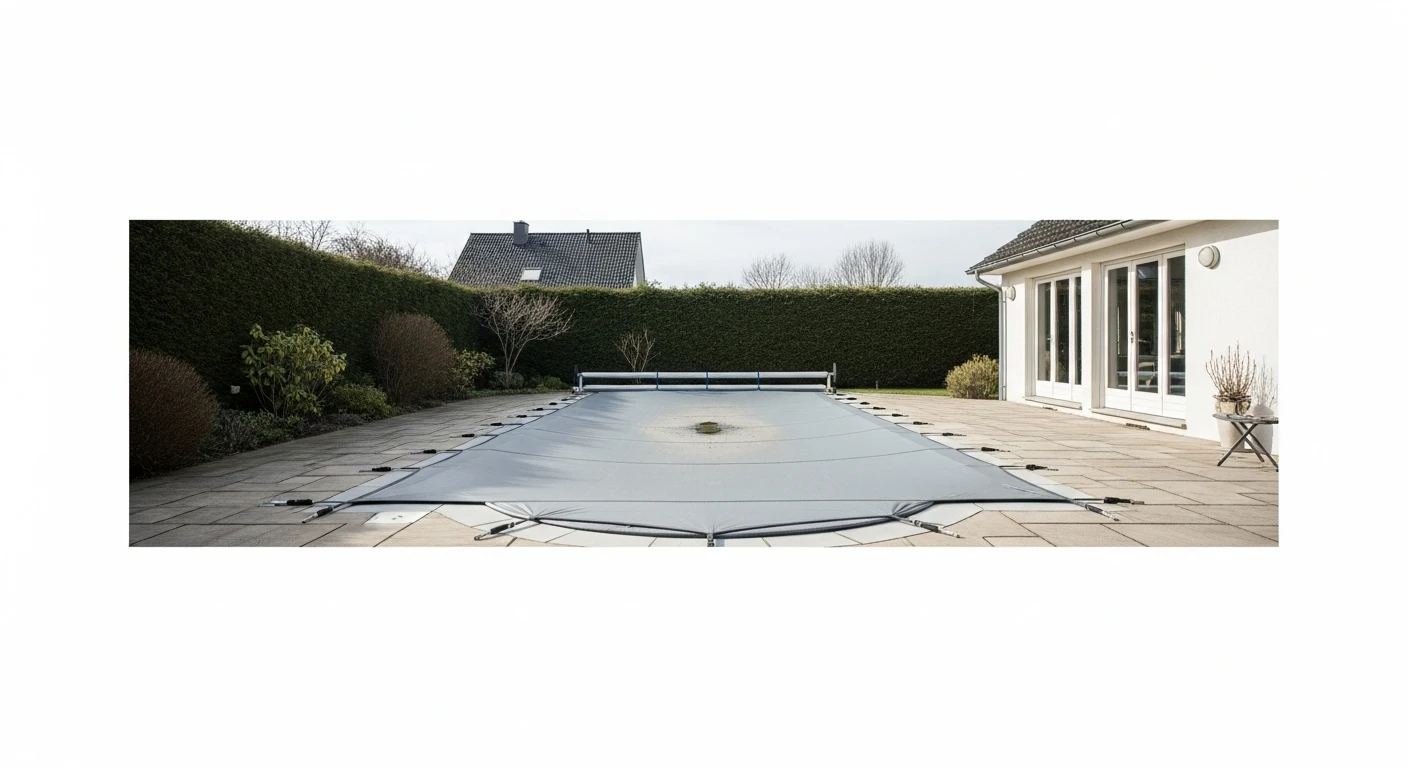
- Precision Anchor Mapping: I don't just drill at standard intervals. I map the anchor points to align with the cover's specific tension straps, ensuring a perfectly balanced load distribution across the entire surface. This prevents stress concentrations at individual points.
- Dynamic Tensioning Protocol: After laying the cover, I apply initial tension using a calibrated tensioning tool. I set it to 85% of the final specification. This allows the material to settle and acclimate for 24 hours before final adjustments. This two-stage process prevents over-stretching the fibers from day one.
- Waterline Confirmation: Before the final tensioning, I confirm the pool's operational waterline. A cover installed on a half-empty pool will be improperly tensioned once filled, a common oversight I've seen lead to sagging.
Post-Installation Tuning and Quality Assurance
My job isn't finished after the last anchor is set. I perform a final quality assurance check that goes beyond the basics. I look for uniform tension across the entire surface, ensuring there is a slight crown at the center to facilitate water runoff. My benchmark is a maximum of 1-inch of deflection under a 20-pound static load at the center of the pool. This ensures the cover is tight enough for safety but has enough flex to handle stress.
For my seasonal clients in Collier County, I also provide a "shutdown" tensioning guide. Before they leave for the summer, I recommend a specific, minor increase in tension on key straps. This prepares the cover to handle the immense weight of accumulated rainwater during our wettest months, preventing the dreaded and damaging sag that can occur on an unattended pool. It’s a small adjustment that makes a massive difference in preventing long-term material fatigue.
Is your current safety cover’s tensioning system calibrated for a Collier County torrential downpour, or is it slowly being stretched to its failure point?