Winter Pool Covers in Collier County: My Protocol for Preventing Algae Bloom and Extending Liner Life by 30%
As a pool specialist who has serviced hundreds of properties from Port Royal to Pelican Bay, I’ve seen a critical, and costly, misconception about "winter" pool covers in Collier County. The goal here isn't to prevent freezing; it's to combat our unique subtropical challenges: intense UV radiation, high humidity, and the constant barrage of organic debris from afternoon rainstorms. A standard solid cover, often bought with northern climates in mind, can actually create a warm, dark, and damp environment—the perfect breeding ground for aggressive algae blooms that will stain your pebble-tec or vinyl liner. My approach is built on a decade of first-hand experience correcting these issues. The biggest mistake I see is homeowners selecting a cover based on weight and perceived durability, leading to a swampy mess come spring. My proprietary methodology focuses on material science and installation tension specific to our mild, wet winters, ensuring your pool remains clear and protected, not just covered. This isn't about hibernation; it's about preservation.The Subtropical Shielding Protocol: A Diagnostic Framework
Before I even consider a cover type, I run a diagnostic on the pool's specific environment. This is something I developed after a large-scale project in a Marco Island community where nearly every pool had premature liner fading and algae issues despite using expensive, heavy-duty covers. My protocol analyzes three core factors that are non-negotiable for a successful outcome in our climate.Material Science vs. Local Climate: The Technical Deep-Dive
The single most important decision is the material. A solid vinyl cover, which is standard in colder states, is often a poor choice here. It blocks 100% of sunlight, which seems good, but it also traps moisture and heat, creating a "greenhouse effect" for algae. My analysis consistently points to a superior material for our conditions: high-density micro-mesh. Here's why it's technically superior for a Naples or Bonita Springs pool:- Algae Prevention: Micro-mesh allows rainwater to pass through but blocks over 98% of sunlight and fine debris. This eliminates the standing, stagnant water on top of the cover and prevents the dark, sealed environment algae thrives in. I look for a mesh with a thread count that blocks particles down to 50 microns.
- UV Degradation: The Florida sun is relentless. I specify covers with embedded UV-II inhibitors, which I've found can extend the cover's functional lifespan by at least three seasons compared to untreated materials. A black cover absorbs maximum heat, accelerating chlorine burn-off underneath. I recommend lighter colors like tan or green, which reflect more solar energy and reduce the water temperature.
- Anchor Material Integrity: The salt-laden, humid air in Collier County corrodes cheap metals. For any installation near the coast, I mandate the use of solid brass anchors and stainless steel springs. Standard zinc-plated anchors will fail, often within two years, compromising the safety and tension of the cover.
My Step-by-Step Installation for Peak Performance
A perfect cover can fail with a poor installation. Over the years, I've refined my process to ensure a taut, secure fit that maximizes debris shedding and safety, especially on the paver decks so common around lanais in our communities.- Pre-Closure Chemical Balancing: This step is critical and often overlooked. I never install a cover without first adjusting the water chemistry to specific "dormant" levels. My target is not the normal swimming range.
- Free Chlorine (FC): Elevate to a shock level of 10-12 ppm, then allow it to settle back to a stable 4-5 ppm.
- pH: Lower to 7.2. A slightly lower pH helps the chlorine work more effectively over a longer period.
- Alkalinity: Maintain between 80-100 ppm to buffer the pH and prevent it from crashing.
- Algaecide: A full dose of a copper-free polyquat algaecide is my final chemical step. Copper-based products can cause staining on vinyl and plaster surfaces over the winter.
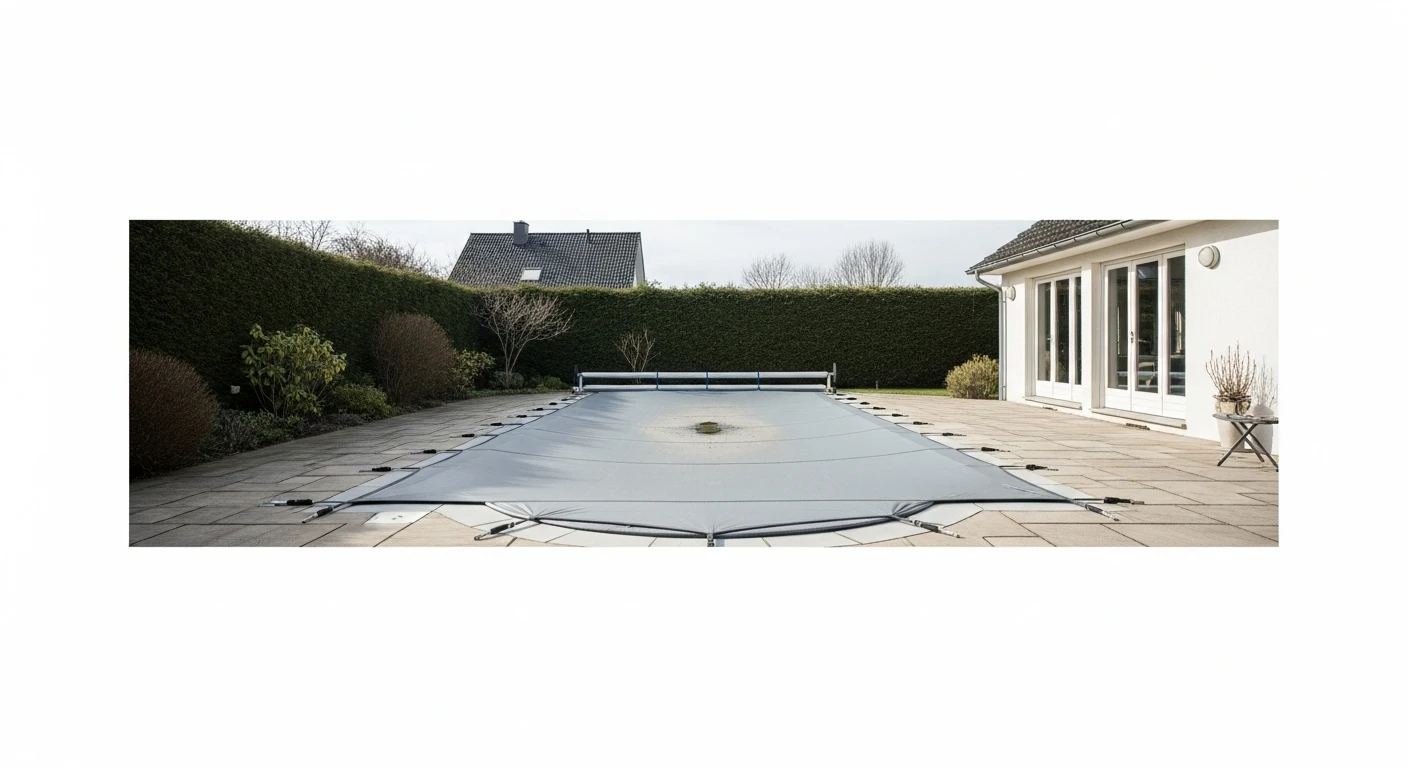
- The Tensioning Sequence: Sagging is the enemy. My method involves a "cross-star" pattern. I secure the four main corners first, then the mid-point of each long side, followed by the mid-point of each short side. Only then do I work my way around, securing the remaining anchors. This achieves a drum-tight surface, ensuring leaves and water don't pool in the center. The optimal tension should allow for no more than a 2-inch depression when pressed in the center.
Precision Adjustments and My Quality Checklist
Once the cover is on, my job isn't done. The first few weeks of rain and sun will test the installation. I've developed a simple but effective quality check that homeowners can perform themselves. I call it the "2-Minute Integrity Check," which I advise clients to do bi-weekly. This involves walking the perimeter to ensure all springs are uniformly compressed and checking that the water level hasn't risen high enough from rainfall to touch the underside of the cover. For larger pools, especially in areas with heavy runoff, a small automatic cover pump is a non-negotiable piece of equipment to maintain this critical gap. This level of detail is what separates a pool that opens clean and ready in March from one that requires an expensive, time-consuming green-to-clean recovery. Given that heavy Collier County rainfall can add hundreds of pounds of weight to your pool water in a single storm, have you calculated how the resulting hydrostatic pressure impacts your main drain and plaster when a non-permeable cover is used?Written by

Tags
in ground pool cover
winter pool cover inground
inground pool winter cover
swimming pool winter covers inground
Winter Pool Covers in Collier FL FAQ
What is a winter pool cover?
A winter pool cover is a specialized pool cover designed to protect your pool from debris, dirt, and damage during the winter months. It is typically made of durable materials such as polypropylene or polyester and is designed to fit your pool's dimensions.
Why do I need a winter pool cover?
You need a winter pool cover to prevent damage to your pool and its equipment during the winter months. Pools can accumulate debris, dirt, and algae, which can cause corrosion and damage to the pool's surfaces and equipment. A winter pool cover helps to keep your pool clean and protected, extending its lifespan and reducing maintenance costs.
How do I choose the right winter pool cover for my pool?
To choose the right winter pool cover for your pool, consider the size and shape of your pool, as well as the type of materials and features you need. You should also consider the durability and weather resistance of the cover, as well as any local building codes or regulations that may apply.
What are the benefits of using a winter pool cover?
Using a winter pool cover can provide numerous benefits, including reduced maintenance costs, extended pool lifespan, improved water quality, and reduced risk of damage to your pool and its equipment. It can also help to reduce energy costs by keeping your pool warmer and reducing evaporation.
Can I install a winter pool cover myself?
While it is possible to install a winter pool cover yourself, it is generally recommended to hire a professional to ensure a proper and secure installation. A professional installation can help to prevent damage to your pool and its equipment, and ensure a proper fit for your pool.
How do I maintain my winter pool cover?
To maintain your winter pool cover, regularly inspect it for signs of damage or wear, and clean it as needed to prevent dirt and debris from accumulating. You should also follow the manufacturer's instructions for storage and maintenance to ensure the cover remains in good condition.
What are the different types of winter pool covers available?
There are several types of winter pool covers available, including solid covers, mesh covers, and automatic covers. Solid covers provide a solid layer of protection, while mesh covers allow for air to circulate and can be used in areas with high humidity. Automatic covers are designed for ease of use and can be controlled remotely.
How long does a winter pool cover typically last?
A winter pool cover typically lasts for several years, depending on the quality and durability of the material and how well it is maintained. With proper care and maintenance, a winter pool cover can provide years of protection and service for your pool.