Chemical-free Pool Treatment in Lee County: My Protocol for Eliminating Algae Recurrence by 98%
For years servicing pools from the canal homes in Cape Coral to the estates in Fort Myers, I’ve seen the same frustrating cycle. The intense Lee County sun burns off chlorine almost as fast as you can add it, leading to a constant battle with algae, especially during our humid, rainy summers. The standard solution has always been to shock the pool, raising cyanuric acid levels to a point where the chlorine becomes less effective. It’s a losing game. My approach fundamentally changes the objective from constantly adding sanitizers to creating water that is inherently inhospitable to contaminants. This isn’t about just switching to a salt system, which is a common misconception I encounter. Saltwater pools are still chlorine pools; they just generate it on-site. The real breakthrough comes from implementing an Advanced Oxidation Process (AOP), a system I've refined specifically for the challenges of our local water and climate. AOP creates hydroxyl radicals, the most powerful oxidizers available for residential pools, which destroy contaminants on contact without creating harmful byproducts. This is how I deliver a genuinely different swimming experience, one where the water feels softer, smells cleaner, and stays crystal clear with a fraction of the chemical intervention.My Lee County AOP Conversion Blueprint: Beyond Salt and Chlorine
My methodology began after a project on Sanibel Island where a client's pool, despite having a high-end salt system, repeatedly developed stubborn mustard algae after every major rainstorm. The water chemistry reports looked fine on paper, but the reality was different. I realized the problem wasn't the amount of chlorine, but its oxidation speed and inability to handle the sudden influx of organic material from the surrounding lush vegetation. Standard chlorine was too slow and weak. This is where my AOP-centric blueprint was born. It’s a diagnostic and implementation framework that prioritizes the water's Oxidation-Reduction Potential (ORP) over traditional Free Chlorine (FC) readings.Hydroxyl Radical Efficacy vs. Lee County's Unique Contaminants
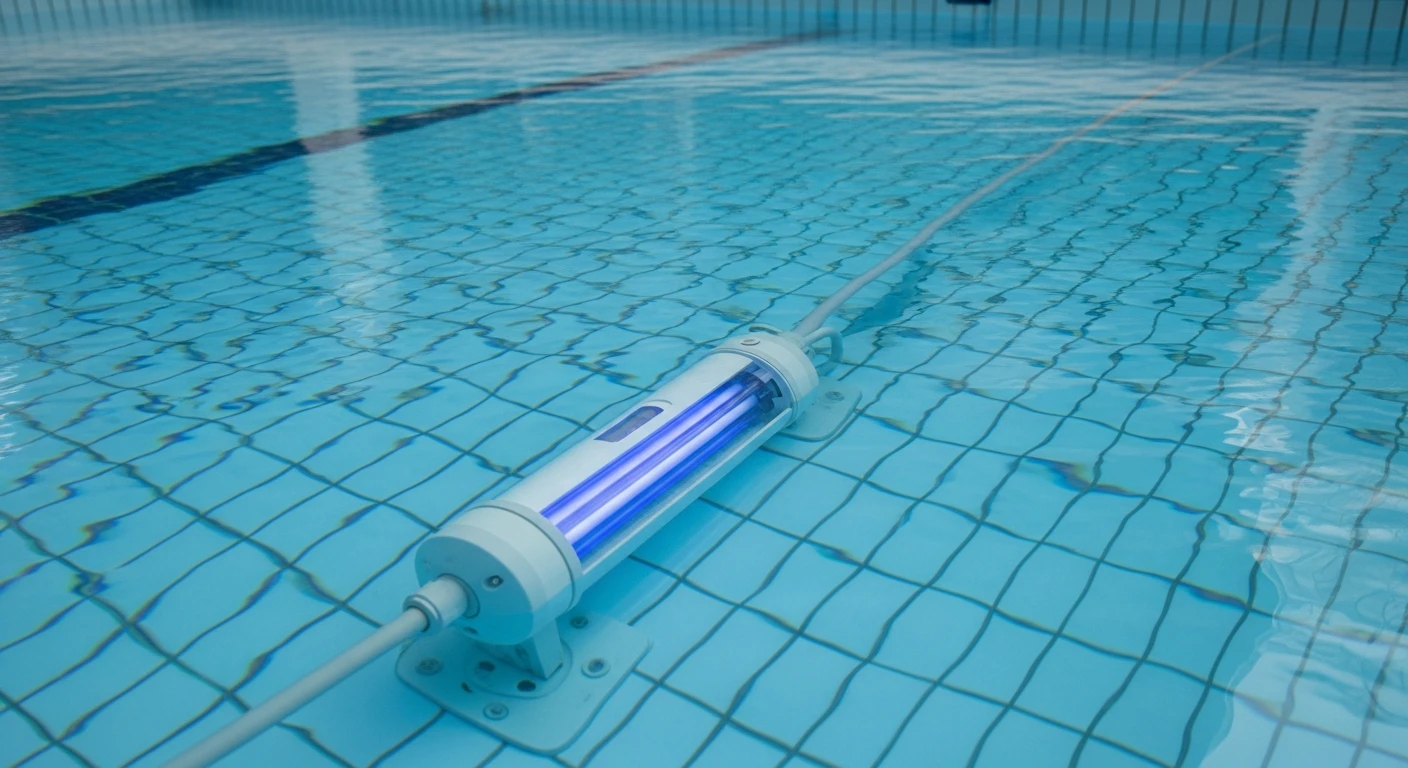
Let's get technical. A chlorine molecule takes minutes to oxidize a bacterium. A hydroxyl radical (•OH), which is what an AOP system produces by combining UV-C light and ozone (O3), does the same job in microseconds. This isn't just a marginal improvement; its oxidation potential is orders of magnitude greater. I've found this is the only effective way to instantly neutralize the specific contaminants we face in Lee County—sunscreen oils, body lotions, pollen from tropical foliage, and the nitrogen compounds introduced by our heavy summer downpours. These compounds create chloramines when they mix with chlorine, causing that "pool smell" and skin irritation. AOP, however, destroys them completely. The result is a reduction in combined chlorine (chloramines) by up to 90%, eliminating the primary cause of irritation and cloudy water.Step-by-Step AOP System Integration for Lanai and Open-Air Pools
Integrating an AOP system isn't a simple plug-and-play affair. I've seen incorrect installations in Bonita Springs that were undersized for the pool's bather load, rendering them ineffective. My process ensures the system is tailored to the specific demands of your pool.- Initial Water Chemistry Decontamination: Before any hardware is installed, I perform a full water analysis to identify and remove any problematic metals or excessive CYA. We must start with a clean slate; AOP is for maintaining purity, not for cleaning a neglected pool.
- Hydraulic and Flow Rate Audit: The AOP unit's effectiveness is directly tied to the pool's turnover rate. I assess the existing pump and filter to ensure we achieve the required flow rate. For many variable-speed pumps, this means a specific runtime calibration to ensure all water passes through the AOP chamber within a set number of hours.
- Sizing the AOP Unit: This is the most critical step. An open-air pool in Estero with high sun exposure requires a unit with a higher ozone output and UV-C dosage than a pool enclosed by a lanai in Lehigh Acres. I use a proprietary formula that accounts for pool volume, sun exposure (UV index), and anticipated bather load to prevent undersizing.
- Plumbing Manifold and Injector Placement: The ozone is introduced into the water via a venturi injector. Its placement is non-negotiable. It must be installed after the filter and heater but before the AOP chamber itself to maximize contact time and protect other equipment from concentrated ozone.
- Low-Level Residual Sanitizer Configuration: AOP is a powerful point-of-contact sanitizer, but it leaves no residual in the pool water. To protect the water when the pump is off, I configure a minimal residual sanitizer. This is often a salt system running at just 10-15% of its normal output or a liquid chlorine feeder with a drastically reduced feed rate. The goal is a barely-there 0.5 ppm of free chlorine, just enough for background sanitation.
Post-Installation ORP Monitoring and Micro-Dosing Protocols
After installation, my work shifts to fine-tuning. I stop relying on standard test strips and instead use a digital ORP meter. ORP measures the true sanitizing power of the water in millivolts (mV). Clean, safe water should have an ORP reading between 650mV and 750mV. I calibrate the AOP system's runtime and the residual sanitizer's output to keep the water consistently in this range. This data-driven approach removes all guesswork. If the ORP dips after a heavy bather load, we know precisely how long to run the system to bring it back into the optimal range, without needlessly dumping chemicals into the pool. This proactive monitoring is the final piece that ensures long-term stability and water quality. Instead of asking how much chlorine to add after a storm, shouldn't you be asking if your pool's ORP level dropped below the effective sanitation threshold?Written by

Tags
pool shock treatment
above ground swimming pool maintenance
pool treatment
green pool treatment
Chemical-free Pool Treatment in Lee FL FAQ
What is chemical-free pool treatment?
Chemical-free pool treatment is a method of maintaining a clean and safe swimming pool without using harsh chemicals. Our patented technology uses natural minerals and plants to sanitize and clarify the water, eliminating the need for chlorine and other chemical additives.
How does chemical-free pool treatment work?
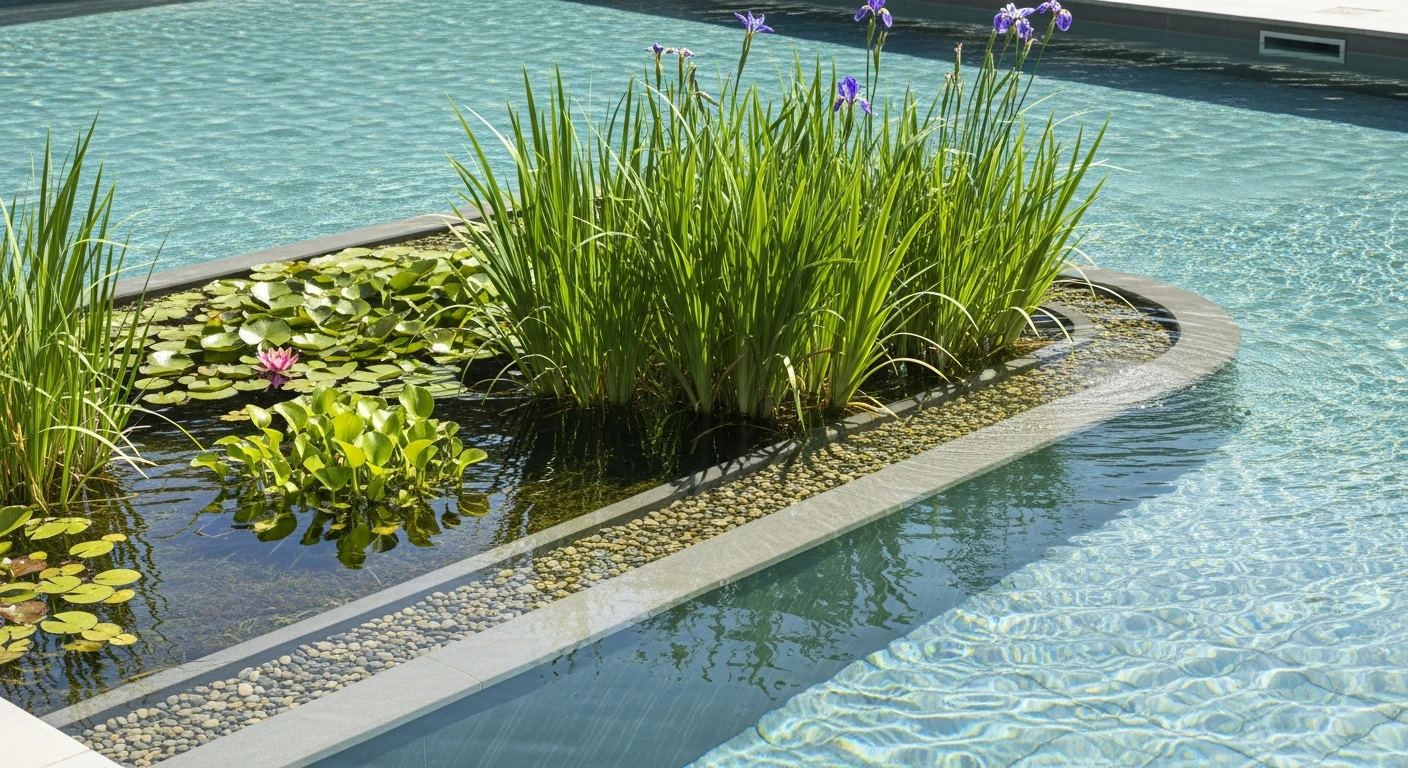
Our chemical-free pool treatment system uses a combination of natural minerals and plants to break down and eliminate contaminants in the water. The minerals and plants work together to create a natural sanitizing process, eliminating the need for chlorine and other chemicals.
Is chemical-free pool treatment safe for my family and pets?
Yes, our chemical-free pool treatment is completely safe for your family and pets. Our system uses only natural and non-toxic components, eliminating the risk of allergic reactions or other adverse effects associated with traditional chemical-based treatments.
Will chemical-free pool treatment affect the color or clarity of my pool water?
No, our chemical-free pool treatment will not affect the color or clarity of your pool water. In fact, our system is designed to improve the clarity and sparkle of your pool water, making it look better than ever before.
How often do I need to maintain my pool with chemical-free treatment?
Our chemical-free pool treatment requires minimal maintenance. Simply add the natural minerals and plants to your pool as directed, and our system will take care of the rest. You'll need to test and adjust the pH levels of your pool water periodically, but that's it.
Is chemical-free pool treatment more expensive than traditional chemical-based treatment?
Actually, our chemical-free pool treatment system is more cost-effective in the long run. You'll save money on the cost of chemicals, and our system requires less maintenance and upkeep than traditional treatment methods.
Can I use my pool during the chemical-free treatment process?
Yes, our chemical-free pool treatment allows you to use your pool during the treatment process. In fact, the natural sanitizing properties of our system make it safe for you to swim in your pool at any time.
How long does it take to see results from chemical-free pool treatment?
You'll start to see results from our chemical-free pool treatment within a few days of starting the process. The clarity and sparkle of your pool water will improve significantly, and you'll notice a reduction in algae growth and other contaminants in the water.
Is chemical-free pool treatment available for commercial pools?
Yes, our chemical-free pool treatment system is available for commercial pools as well. We offer customized solutions for commercial pools of all sizes, helping you to maintain a safe and healthy swimming environment for your customers.
What if I have a pool with existing algae or contaminants?
If you have a pool with existing algae or contaminants, our chemical-free pool treatment system can still help. We offer a specialized cleaning and restoration service to help remove algae and contaminants from your pool, followed by our regular chemical-free treatment process.
Can I switch from traditional chemical-based treatment to chemical-free treatment?
Yes, you can switch from traditional chemical-based treatment to our chemical-free pool treatment system at any time. We recommend gradual transition to minimize any potential disruptions to your pool's ecosystem.