UV and Ozonation for Lee County Pools: Achieving a 90% Reduction in Chlorine Demand
For years servicing pools across Lee County, from the canal-front homes in Cape Coral to the sprawling lanai enclosures in Fort Myers, I’ve seen the same struggle. The intense Florida sun mercilessly degrades chlorine, while our humid, subtropical climate creates a perfect breeding ground for algae. Homeowners are trapped in a costly cycle of chemical shocking and battling cloudy water, often leading to high Total Dissolved Solids (TDS) and that harsh "chlorine smell" which is actually caused by ineffective chloramines. My approach shifts the focus from constantly adding more chemicals to implementing a robust, dual-stage sanitation system that works with our environment, not against it. By correctly integrating Ultraviolet (UV-C) sterilization and Ozone (O3) oxidation, I have consistently enabled my clients to slash their chlorine consumption by up to 90%, achieving water clarity that chemicals alone simply cannot sustain. This isn't about replacing chlorine, but reducing its role to a minimal residual sanitizer, transforming the entire swimming experience.My Diagnostic Protocol for Chronic Pool Problems in Fort Myers and Cape Coral
Before I even consider equipment, my first step is a deep water chemistry analysis that goes beyond the typical pool store test strip. I’ve developed a three-point diagnostic that uncovers the root cause of 9 out of 10 "problem pools" in this area. It focuses on factors that directly impact sanitizer efficiency and are often overlooked. My methodology involves measuring not just pH and chlorine, but the critical triad of Cyanuric Acid (CYA), Oxidation-Reduction Potential (ORP), and TDS. High CYA, common from years of using stabilized chlorine pucks, effectively "binds" free chlorine, rendering it useless. I once worked on a project in a Bonita Springs community where the pool’s CYA was over 150 ppm; the water was technically "chlorinated" but had zero effective sanitizing power. Lowering the CYA was the first, non-negotiable step before any technology could be effective.Beyond Sanitation: How Ozone Acts as a Micro-Flocculant for Crystal-Clear Water
Here is where the real information gain lies, something most installers don't explain. While UV-C is brilliant at destroying organic contaminants as they pass through the chamber, ozone is the true workhorse for water quality. Ozone is a powerful oxidizer that breaks down lotions, oils, and other non-living waste. But its secret weapon is its function as a micro-flocculant. Ozone causes microscopic particles to clump together into larger masses. These newly-formed larger particles can then be easily trapped by your pool's filter. This is the technical reason why ozonated pools have that distinct "sparkling" or "polished" look. It’s not just clean; the water is physically clearer because particles that would normally pass through the filter media are being actively removed. This also significantly reduces the formation of chloramines, eliminating the chemical odor and irritation.System Integration: A Step-by-Step for Lee County Pool Plumbing
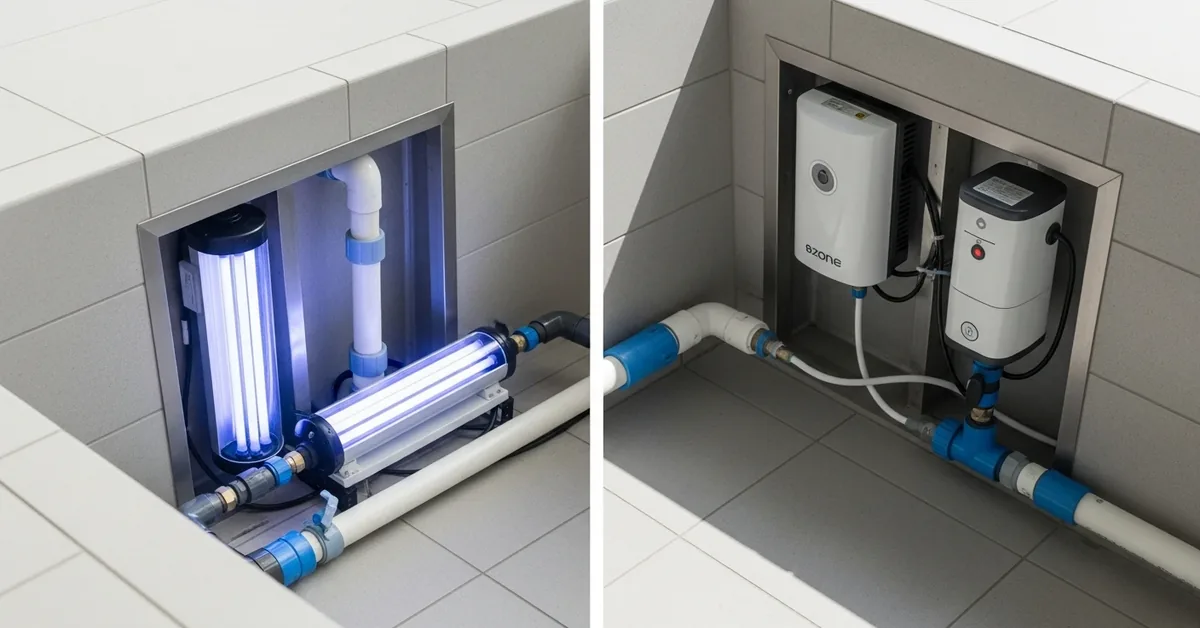
A common failure point I’ve had to correct on numerous jobs is the improper physical installation of the UV and ozone units within the plumbing circuit. The order and placement are not suggestions; they are critical for system efficacy and longevity. My standard procedure for a vinyl or fiberglass pool, which is predominant here, follows a strict sequence.- Calculate the precise GPM (Gallons Per Minute) of the system. A mismatched UV sterilizer sized for a lower flow rate is one of the most common and costly mistakes I see. The water must have adequate contact time inside the UV chamber.
- Install all units after the filter and before any heater. This is non-negotiable. You must send the cleanest possible water to the UV/Ozone system, and you must protect the heater's internal components from concentrated ozone.
- The ozone injector (a venturi injector) should be placed first in the line after the filter. This gives the ozone time to mix and begin oxidizing.
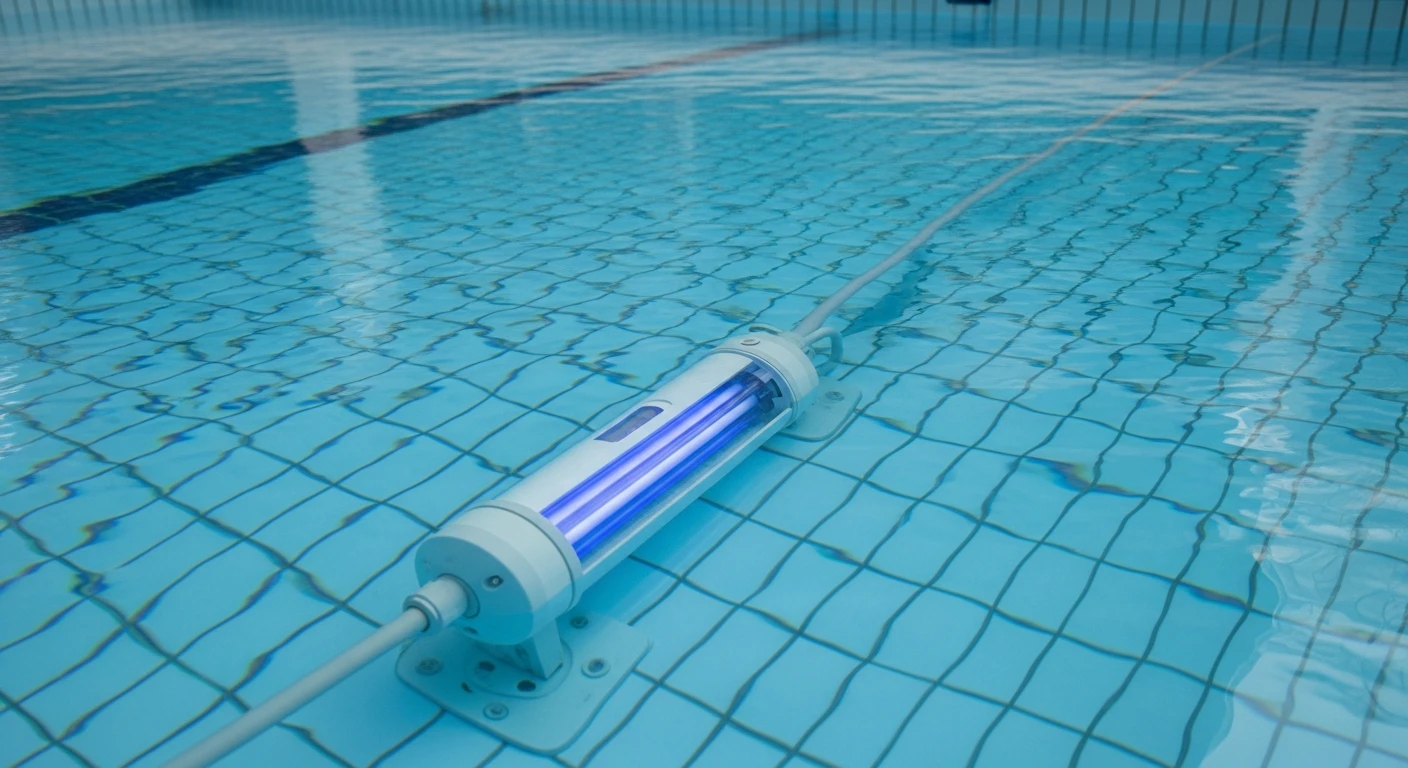
- The UV sterilizer must be the last component before the water returns to the pool. Its purpose is to eradicate any remaining bacteria or viruses and to destroy any residual ozone, protecting swimmers and pool equipment.
- I always install a corrosion-resistant check valve just before the venturi injector to prevent water backflow into the ozone generator when the system is off.
Post-Installation Calibration: Dialing in ORP for Peak Performance
Once the hardware is in, the job is only half-done. The system must be calibrated for Lee County's specific conditions. My goal is to maintain a very low Free Chlorine residual of 0.5 to 1.0 ppm, just enough to act as a sanitizer in the pool body itself. The key performance indicator I rely on is ORP, measured in millivolts (mV). ORP is a direct measure of the water's oxidizing power and, therefore, its sanitizing ability. A standard chlorinated pool might struggle to maintain 650mV. With a properly tuned UV and Ozone system, my target is a stable 700-750mV, even with minimal chlorine. This ensures rapid oxidation of any new contaminants, providing a level of safety and clarity that a purely chlorine-based system can't match, especially during our summer rainy season. Now that your sanitation is automated and your water is stabilized with minimal chemicals, how are you planning to adjust your pump's variable-speed schedule to maximize sanitizer contact time without inflating your FPL bill?Written by

Tags
uv pools
swimming pool uv system
uv light pool sanitizer
ultraviolet pool system
UV and Ozonation Technology in Lee FL FAQ
Can I completely stop using chlorine if I install a UV or ozone system?
No, you cannot eliminate chlorine entirely, but you can significantly reduce its use by 50-80%. UV and ozone systems are powerful sanitizers that destroy contaminants as water passes through them, but they do not leave a lasting residual sanitizer in the main body of the pool. A low level of chlorine, typically 0.5-1.0 parts per million, is still required to act as a residual sanitizer, ensuring that any new bacteria or algae introduced by swimmers or debris are neutralized before they can multiply. Relying solely on UV or ozone would leave the pool water unprotected once it returns from the equipment pad.
My pool installer said ozone will damage my cover and equipment. Is that true?
This is a valid concern, but modern systems are designed to prevent it. High concentrations of ozone gas can indeed degrade certain materials, but properly installed systems use a degassing unit or a mixing chamber that ensures excess ozone is neutralized before the water returns to the pool. This process prevents harmful off-gassing that could damage a vinyl liner or a solar cover. When choosing a system, verify it includes an effective method for ozone destruction or containment, which is a critical feature often overlooked in cheaper, less-engineered units.
What's the real difference between a UV system and an ozonator? Do I need both?
UV systems use ultraviolet light to inactivate microorganisms, while ozonators inject ozone gas to oxidize and destroy them. The key difference is that ozone also acts as a powerful oxidizer, breaking down non-living organic waste like lotions and oils, which improves water clarity. Combining them, often in a single unit, provides a multi-layered sanitation barrier. This dual approach is highly effective at destroying chloramines—the compounds responsible for the 'chlorine smell' and irritation—which neither system can eliminate as effectively on its own. While not strictly necessary, having both offers the most robust, low-chemical water treatment.
How often do I need to replace the bulb in my UV system or the chip in my ozonator?
UV lamps typically require replacement every 9,000 to 14,000 operating hours, which usually translates to every 12 to 24 months depending on usage. Ozone generators using corona discharge technology have components, like a chip or cartridge, that last from 2 to 5 years. It is critical to replace these on schedule, even if they still appear to be working. A UV bulb's germicidal effectiveness drops significantly after its rated lifespan, even though it still emits visible light, leaving your pool under-sanitized and vulnerable to outbreaks like black algae.
Will adding a UV or ozone system affect my pool's pH level?
Ozone systems can have a minor effect, tending to slightly raise the pool's pH over time. This is because the process of injecting and mixing ozone gas can cause some carbon dioxide to off-gas from the water, which reduces acidity. In contrast, a UV sterilizer has virtually no impact on water balance, as it is a physical process that does not add or remove any substances. In either case, the effect is gradual and easily managed with routine chemical testing and adjustments, ensuring you maintain the crucial pH range of 7.2 to 7.6 for bather comfort and equipment protection.
I have a salt chlorine generator. Is it redundant or even harmful to add UV or ozone?
It is not redundant; in fact, it creates a highly effective and synergistic system. A salt chlorine generator (SCG) produces chlorine, which provides the necessary residual sanitizer, while the UV or ozone unit handles the primary sanitation load and destroys chloramines. This combination allows you to run your salt cell at a much lower output setting, significantly extending its lifespan, which can be a costly replacement. The systems do not conflict; they complement each other by targeting different sanitation tasks, resulting in exceptionally clean water with a minimal chemical feel and reduced wear on your equipment.