
Your Executive Summary on Pool Leak Detection
From years of working on pools from Siesta Key to Lakewood Ranch, I can state that leak detection here is fundamentally
From years of working on pools from Siesta Key to Lakewood Ranch, I can state that leak detection here is fundamentally different than in inland Florida. The primary challenge isn't just finding the leak; it's correctly diagnosing its cause in an environment of high water tables and sandy, unstable soil. Misdiagnosing a structural crack caused by ground shift as a simple plumbing issue is a frequent and costly error I've seen lead to repeated, failed repairs. The goal isn't just to patch the hole, but to understand the forces that created it.
- Soil and Water Table: Sarasota's ground is saturated and sandy. This puts constant hydrostatic pressure on pool shells, making small structural cracks more likely than in areas with stable, clay soil.
- Plumbing vs. Structure: Roughly 60% of leaks I diagnose are in the plumbing (suction or return lines), but the most destructive 40% involve the pool shell, skimmer throat, or main drain—often due to ground settlement.
- Evaporation Rates: In a typical July week, a Sarasota pool can lose up to a quarter-inch of water per day to evaporation. A loss of a half-inch or more per day almost always indicates a leak.
- Diagnostic Tools: Effective detection requires a combination of electronic listening devices for underground plumbing, pressure testing for pipes, and dye testing for shell-level issues. Visual inspection alone is unreliable.
The Planning Failures That Inflate Repair Costs
The most common mistake homeowners make is waiting too long, assuming the water loss is just evaporation. This delay turns a minor plumbing fix into a major structural problem. In our sandy soil, even a small leak from a return line can create a significant void under the pool deck or shell over a few months. The ground literally washes away, unseen.
The Most Expensive Failure: Ignoring a "Settling" Pool Deck
When a client calls about a crack in their pool deck, they're often focused on the cosmetic fix. My first question is always about water loss. I've seen cases, particularly in older homes near Phillippi Creek, where a homeowner spent thousands on deck repair only to have the cracks reappear. The real problem wasn't the deck; it was a long-term, slow leak from an underground pipe that had washed out the soil base, causing the concrete to sink. The deck cracking was a symptom, and by treating it as the primary problem, they addressed the consequence, not the cause, doubling their total expense.
The Leak Detection Process in Practice for Sarasota
A professional leak detection isn't just a guy with a bottle of dye. It's a systematic, multi-step process designed to isolate the problem without destructive guesswork. We start with the least invasive methods and escalate only as needed, which is critical for preserving landscaping and expensive decking materials common in Sarasota homes.
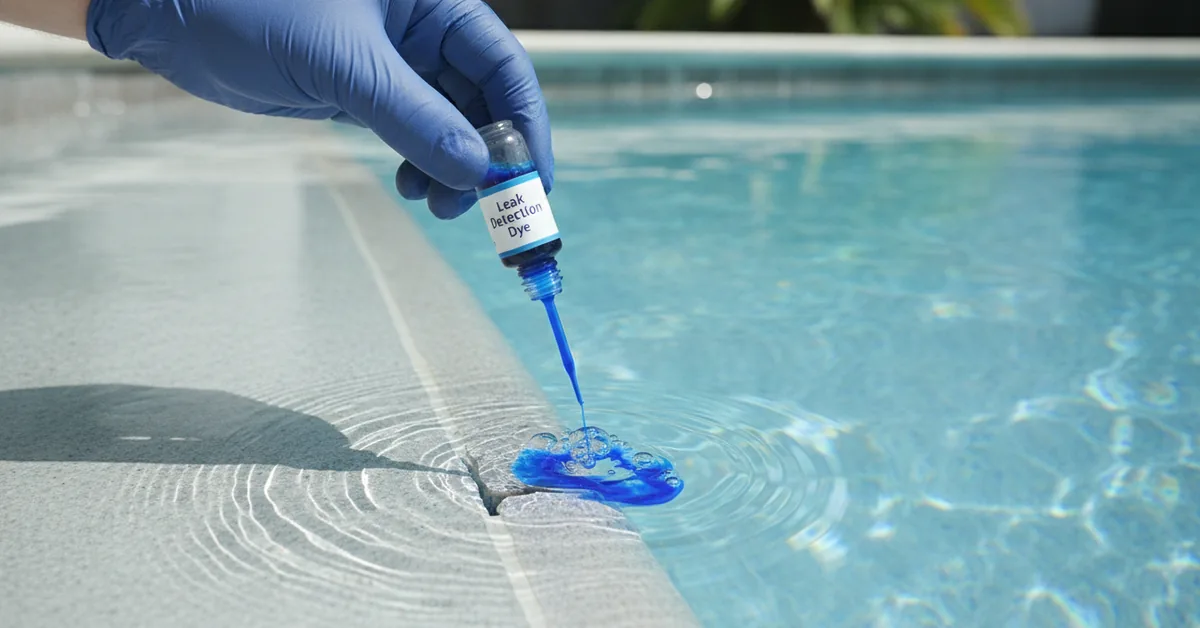
The process begins with a static test to confirm a leak exists and determine if it's in the plumbing or the shell. We then use advanced electronic equipment to listen for the sound of water escaping underground pipes, followed by pressure testing to pinpoint the exact line. For the pool shell, we meticulously dye test every potential failure point—skimmers, lights, returns, and the main drain.
Key Selection Criteria for Sarasota Homeowners
- Verifiable Licensing: Confirm the contractor holds a valid Florida Certified Pool/Spa Contractor license (CPC number). This is non-negotiable and verifiable on the state's DBPR website. A simple "pool cleaning" registration is not sufficient for leak detection and repair.
- Specialized Equipment: Ask if they use electronic listening devices and pressure testing rigs. A company relying solely on dye testing is not equipped for the majority of leaks, which are underground.
- Local Experience with Soil Conditions: A contractor from a different region may not appreciate how our high water table affects hydrostatic pressure and repair strategies. Ask for examples of work in neighborhoods like yours.
- Clear Reporting: A professional service provides a detailed report with findings, photos, and a clear estimate for the repair. Vague, verbal-only diagnostics are a red flag.
Comparing Professional Detection to DIY Methods
Homeowners often attempt the "bucket test" or use food coloring to find leaks. While these can sometimes identify an obvious issue, they are highly unreliable for the most common types of leaks that occur underground or within the pool's structure. Here’s a practical comparison for a Sarasota pool owner.
| Indicator | DIY Bucket & Dye Test | Professional Electronic Detection | Ignoring the Problem |
|---|---|---|---|
| Accuracy | Low; only finds obvious, visible leaks near the surface. Fails for underground plumbing. | High; can pinpoint leaks in underground pipes to within a few feet, saving on excavation. | Zero accuracy, high risk. |
| Upfront Cost | Under $20. | $300 - $500 for the initial detection service. | $0. |
| Long-Term Cost | High risk of missing the real leak, leading to ongoing water loss and eventual major damage. | Lowest; identifies the root cause for a permanent fix, preventing secondary damage. | Highest; can lead to $10,000+ in structural, plumbing, and deck repairs. |
When Professional Detection Might Be Overkill
There is one scenario where calling a specialist immediately might not be the right first step. If you have an above-ground vinyl liner pool and you can physically see a tear in the liner, the source of the leak is obvious. In that specific case, a simple patch kit is the correct and cost-effective solution. For any in-ground pool, however, the risk of a hidden, destructive leak is too high to rely on visual inspection alone.
A Safe Hiring Checklist for Pool Owners
Hiring the right company is more about their diagnostic process than their price. A low-cost detection that misses the real problem is no bargain. I've been called in to find leaks that two or three other companies couldn't locate, and it was always because they skipped a critical step in the diagnostic sequence.
- Verify their Florida CPC (Certified Pool Contractor) license, not just local business registration.
- Request proof of both general liability and worker's compensation insurance. A certificate should be provided directly from their insurer.
- Ask for a detailed explanation of their process. They should mention pressure testing, electronic listening, and dye testing as standard procedures.
- Inquire about their repair methodology. For underground pipe repairs in our sandy soil, do they properly bed the new pipe to prevent future settling?
- Get a firm price for the detection service itself, separate from any potential repairs. This should be a flat fee, not hourly.
- Check reviews for mentions of accuracy and professionalism, not just speed or price.
- Clarify if they handle the entire process, from detection to repair. Using separate companies can lead to finger-pointing if the repair fails.
The Decisions That Truly Determine the Outcome
Success in resolving a pool leak hinges on two moments: the decision to act quickly and the decision to invest in a comprehensive diagnosis. Many homeowners I've worked with are hesitant to spend several hundred dollars on a detection service when the problem seems minor. They try cheaper, partial solutions first, hoping to get lucky.
This approach backfires. A proper detection service isn't a cost; it's an investment to prevent a much larger expense. The peace of mind that comes from knowing the exact location and nature of the problem allows for an efficient, targeted repair that solves the issue permanently.
The Moment Most Homeowners Get It Wrong
The critical mistake happens when a homeowner receives a diagnosis and then shops for the cheapest repair quote. A company that performed a thorough, multi-hour detection has precise knowledge of the problem. A competitor offering a lower repair price without doing their own diagnosis is simply guessing. They are bidding on an incomplete picture, and their "solution" is often a patch that fails within a year, because they didn't understand the underlying cause—like the ground settlement issue I mentioned earlier.
Practical Answers About Operating in Sarasota
How do local soil conditions impact leak repairs?
In Sarasota County, the sandy soil and high water table mean that simply digging up and patching a broken pipe is insufficient. The ground around the excavation must be properly compacted and the pipe must be bedded in gravel or a similar stable material. Failing to do this causes the pipe to settle again under the weight of the deck and saturated soil, leading to a new break at the same spot within a few years.
Are permits required for leak detection repairs?
For most minor plumbing repairs (e.g., patching a single pipe), Sarasota County does not typically require a permit. However, if the repair involves significant excavation, rerouting plumbing lines, or altering the pool's structure or electrical system (like replacing a light niche), a permit is absolutely required. A reputable contractor will know precisely when a permit is needed and will handle the application process.
Does my HOA need to approve leak-related repairs?
It depends entirely on the nature of the repair and your community's rules. While the leak detection itself won't require approval, the repair might. If the fix involves cutting the pool deck, altering landscaping, or replacing noisy equipment, communities like Palmer Ranch or The Meadows will almost certainly require you to submit a plan to their architectural review committee. Always check your HOA covenants before authorizing any work that has a visual impact.
