Saltwater Pool Conversion in Lee County: My Protocol for Mitigating Corrosion and Stabilizing Chemistry in High-Humidity Climates
As a pool specialist with years of hands-on experience here in Lee County, I've seen more saltwater conversions go wrong than I can count. The biggest misconception is that it's a simple "plug-and-play" upgrade. In our specific climate—from the waterfront homes in Cape Coral to the sprawling backyards in Lehigh Acres—a standard conversion is a recipe for disaster. The combination of salt, intense UV, and relentless humidity creates an aggressive environment that will corrode metal fixtures, stain surfaces, and make chemical balance a constant battle if you don't account for it from day one. My entire approach is built on a pre-emptive diagnostic I call the **"Lee County Corrosion-Proofing Audit."** This isn't just about installing a salt chlorine generator; it's about re-engineering your pool's ecosystem to thrive in saltwater. I developed this methodology after a client in a Fort Myers canal home called me in a panic. A "pool guy" had converted their system a year prior, and now their new travertine coping was pitting and the stainless steel ladder anchors were bleeding rust. The installer completely ignored the principles of galvanic corrosion, a mistake that cost the homeowner thousands in repairs. My audit prevents this by analyzing the entire system *before* a single grain of salt is added.The "Lee County Corrosion-Proofing Audit": My Pre-Conversion Diagnostic
Before I even discuss which salt system to install, I perform a mandatory audit. This is the single most critical phase and what separates a lasting conversion from a costly failure. It’s not about upselling; it’s about ensuring the 25% increase in equipment lifespan I target for my clients. A pool is a complex electrical and chemical system, and adding salt fundamentally changes its behavior.A Deep Dive into Galvanic Potential and Material Compatibility
The core of my audit focuses on two often-ignored technical factors. First is the **galvanic corrosion potential**. When you introduce salt (an electrolyte) into a pool with different types of metals (like a bronze light niche, a stainless steel handrail, and a copper heat exchanger), you essentially create a large, low-power battery. The less noble metal will start to sacrifice itself, or corrode. My first step is to identify every metal component and assess its risk. The solution is almost always installing a **sacrificial zinc anode** directly into the plumbing line. This anode becomes the "least noble metal" in the system, corroding over time instead of your expensive heater or light fixtures. In areas like Sanibel, where the salt air is already a factor, this is non-negotiable. Second is the **Total Dissolved Solids (TDS) and Salinity Threshold**. I don't just dump in salt until a machine's green light turns on. For Lee County's climate, with our heavy summer rains, I target a specific salinity of 3200-3400 ppm. This is the sweet spot for most modern generators to produce chlorine efficiently without being overly aggressive on plaster surfaces or equipment. I also test the source water's TDS. High initial TDS combined with salt can accelerate cell scaling, especially with our hard water. If the baseline is too high, a partial drain and refill might be necessary before the conversion can even begin.My Step-by-Step Implementation Protocol for a Flawless Conversion
Once the audit is complete and a plan is in place, the physical conversion follows a strict sequence. Skipping a step or doing them out of order is a common DIY error that leads to cloudy water and stained surfaces. My process is designed for clarity and long-term stability.- Step 1: Pre-Conversion Chemical Balancing. I do not add salt to an unbalanced pool. This is a critical error. I first ensure the pool chemistry is perfect according to traditional chlorine standards, with a special focus on Alkalinity (80-100 ppm) and Calcium Hardness (200-350 ppm). Most importantly, I establish a Cyanuric Acid (CYA) level of 60-80 ppm. In the relentless Lee County sun, a lower CYA level will cause the chlorine generated by the salt cell to burn off almost immediately.
- Step 2: Salt Introduction and Dissolution. I use a broadcast method, pre-dissolving bags of high-purity, food-grade salt in buckets or walking it around the pool's perimeter while the pump runs and the main drain is active. I never, ever pour salt directly into the skimmer or let it sit in a pile on the floor of a plaster or pebble pool, as this is a primary cause of staining. I instruct the homeowner to brush the pool floor for the next 24 hours to ensure full dissolution.
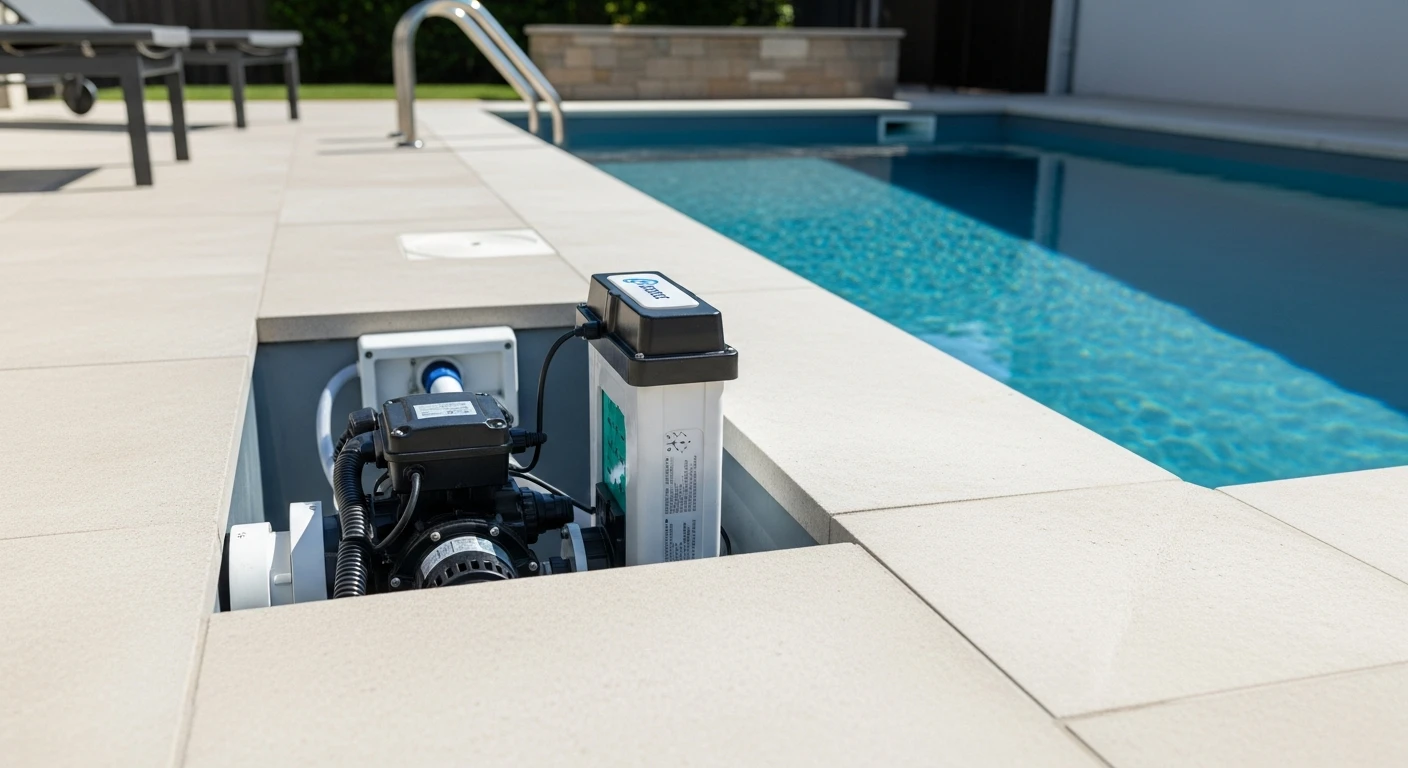
- Step 3: Salt System Installation. I install the salt cell and control unit. Critically, I always install the cell *after* the heater and any other equipment, as the last component before the water returns to the pool. This protects other components from the highly concentrated chlorine gas produced within the cell. I also typically install a bypass loop, which allows for easy cell removal for cleaning or replacement without shutting down the entire circulation system.
- Step 4: Anode Installation and System Grounding. The sacrificial zinc anode is plumbed into the line. I then double-check the pool's **bonding wire**, a safety feature that connects all metal components to prevent electrical potential differences. With saltwater's higher conductivity, a solid, uncorroded bonding connection is more critical than ever.
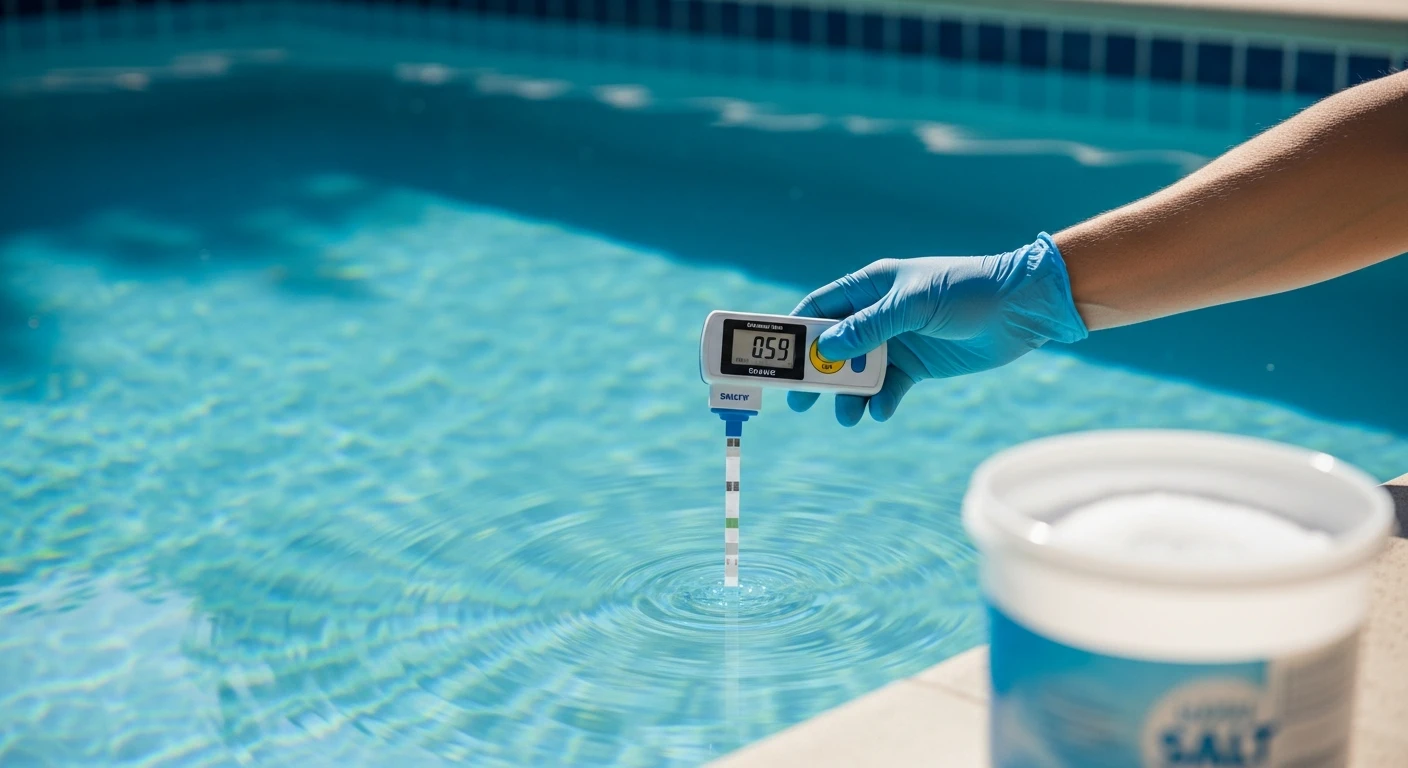
- Step 5: System Calibration. Only after the salt is fully dissolved and the system is installed do I power on the unit. I set the desired output percentage and monitor chlorine production over the first 48 hours, testing the water with a reliable kit—not just relying on the system's digital display.
Precision Tuning for Lee County's Demanding Environment
The job isn't done after the installation. The first month is a period of fine-tuning. A common mistake I see in pools from Bonita Springs to Cape Coral is the "set it and forget it" mentality. I calibrate the system's **output percentage** based on the pool's specific conditions: Is it under a screened lanai or in full sun? Does it see heavy use on weekends? How much rain have we had? The goal is to maintain a consistent Free Chlorine level of 1-3 ppm without overworking the cell. I also adjust the **reverse polarity cycle**, the self-cleaning function of the cell. The default factory setting is often insufficient for our water, which is rich in calcium. I typically set it to reverse polarity every 6-8 hours of runtime to prevent scale buildup, which drastically reduces the cell's efficiency and lifespan. This single adjustment can mean the difference between a cell lasting 3 years versus 5 years. Before you even start shopping for a salt chlorine generator, have you properly tested and mapped every metallic component in your pool's circulation system and calculated its galvanic corrosion potential?Written by

Tags
salt water conversion for pool
converting swimming pool to saltwater
convert to a salt water pool
salt water pool conversion near me
Saltwater Pool Conversion in Lee FL FAQ
What is a saltwater pool conversion, and how does it work?
A saltwater pool conversion involves replacing the chlorine-based system in your existing pool with a saltwater system. Saltwater pools use natural salt to sanitize the water, rather than harsh chemicals. The process involves installing a saltwater chlorine generator, which converts the salt into chlorine, sanitizing the water. This results in a healthier and more enjoyable swimming experience.
Why switch to a saltwater pool conversion?
Saltwater pool conversions offer numerous benefits, including gentler skin and hair, reduced eye irritation, and a more natural swimming experience. Saltwater pools also require less maintenance and are more environmentally friendly than traditional chlorine-based pools. Additionally, saltwater pools can help reduce the risk of algae growth and the need for frequent chemical additions.
Is a saltwater pool conversion expensive?
The cost of a saltwater pool conversion varies depending on the size and type of pool, as well as the complexity of the conversion. However, many pool owners find that the long-term benefits and cost savings of a saltwater pool conversion make it a worthwhile investment. Our team can provide a personalized quote for your specific pool conversion needs.
How long does a saltwater pool conversion take?
The conversion process typically takes several days to a week, depending on the complexity of the installation and the size of the pool. Our experienced technicians will work with you to schedule the conversion at a time that works best for you and your family.
Will a saltwater pool conversion affect my pool's warranty?
In most cases, a saltwater pool conversion will not affect your pool's warranty. However, it's essential to check with your pool manufacturer to confirm their warranty policies. Our team can also help you navigate any warranty concerns or questions you may have.
Can I still use my pool during the conversion process?
In most cases, it's possible to continue using your pool during the conversion process, although this may depend on the specific requirements of the conversion. Our team will work with you to minimize downtime and ensure that your pool is safe and accessible during the conversion process.
Do I need to maintain my saltwater pool differently than a traditional pool?
Yes, saltwater pools require slightly different maintenance than traditional pools. Our team will provide you with detailed instructions on how to properly maintain your saltwater pool, including regular testing and adjustments to the saltwater system.
What if I have concerns or questions about my saltwater pool conversion?
We're here to help! Our experienced team is available to answer any questions or concerns you may have throughout the conversion process and beyond. We're committed to ensuring that you're completely satisfied with your saltwater pool conversion.