Saltwater Pools in Lee County: My Protocol for 30% Longer Salt Cell Lifespan
I see this constantly across Lee County, from the canal-front homes in Cape Coral to the larger properties in Fort Myers: a homeowner invests in a saltwater pool system expecting a "set-it-and-forget-it" experience, only to face premature salt cell failure and persistent algae blooms. The core issue isn't the technology; it's the generic maintenance advice that completely ignores Southwest Florida's unique environmental pressures. The standard approach of just dumping in salt when the system light comes on is a recipe for disaster here. Our intense sun, high humidity, and hard water create a uniquely hostile environment for a salt chlorine generator. My methodology focuses on proactive chemical stabilization, not reactive problem-solving, which I’ve found extends the life of a typical T-15 salt cell by at least two seasons.Why Standard Saltwater Pool Maintenance Fails in Southwest Florida
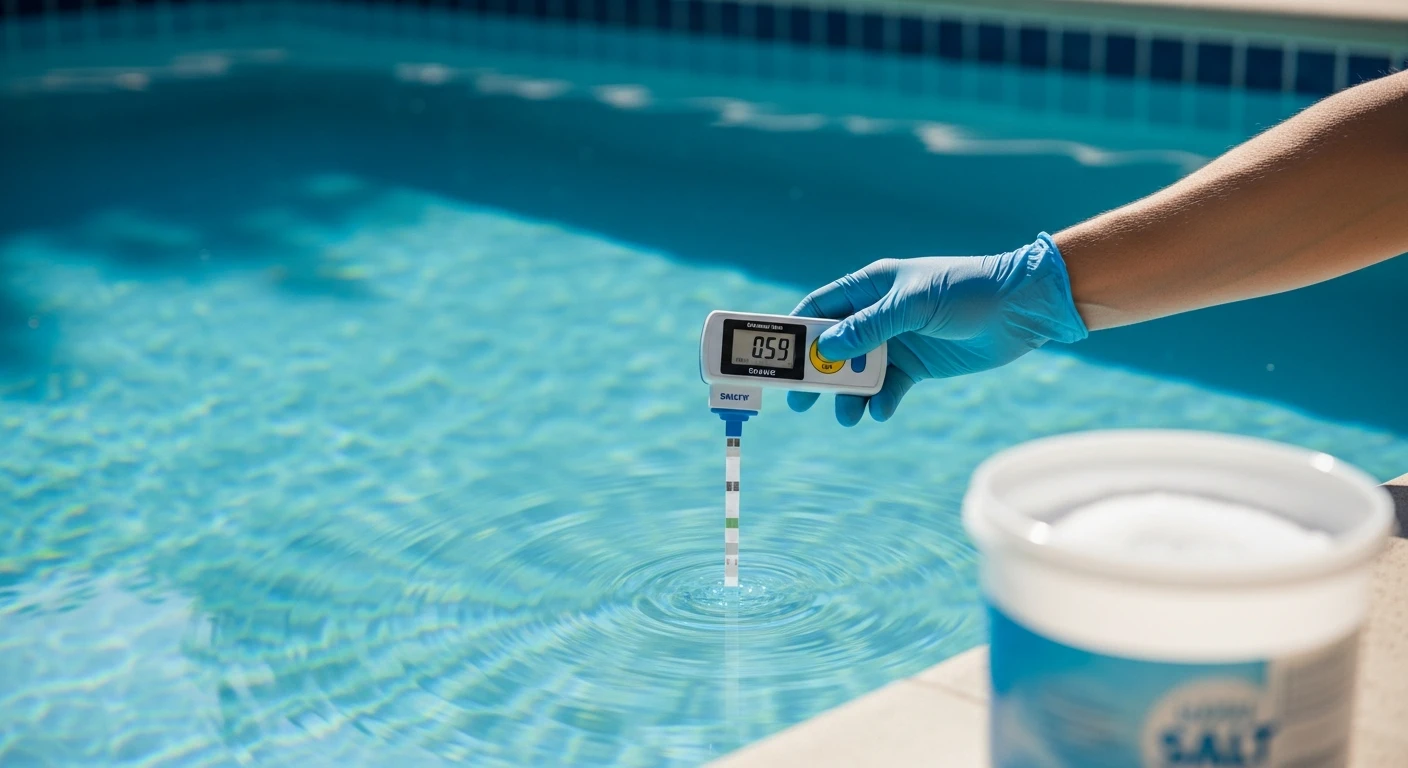
The biggest mistake I used to make was relying solely on the salt system's built-in diagnostics. On a high-end project in a Sanibel Island home, the system read 3400 ppm salinity, which seemed perfect. Yet, the pool had cloudy water and the homeowner was complaining about a "slimy" feel on the steps. A manual test with a high-quality digital salinity meter revealed the actual level was over 4500 ppm. The cell was calcified from our hard water, giving a false reading and working overtime to produce chlorine, drastically shortening its lifespan. This experience led me to develop my "TDS-to-CYA Stabilization Method." It’s based on a simple fact: in Lee County, your pool's Total Dissolved Solids (TDS) are always higher than just the salt reading due to hard water minerals and other additions. Ignoring this "TDS creep" forces the salt cell to work harder and fail faster. Furthermore, the intense UV radiation demands a precise level of Cyanuric Acid (CYA) to protect the chlorine being generated. Too little, and the sun burns it off in hours; too much, and you over-stabilize, rendering the chlorine ineffective.The Unspoken Variables: TDS Creep and Anode Protection
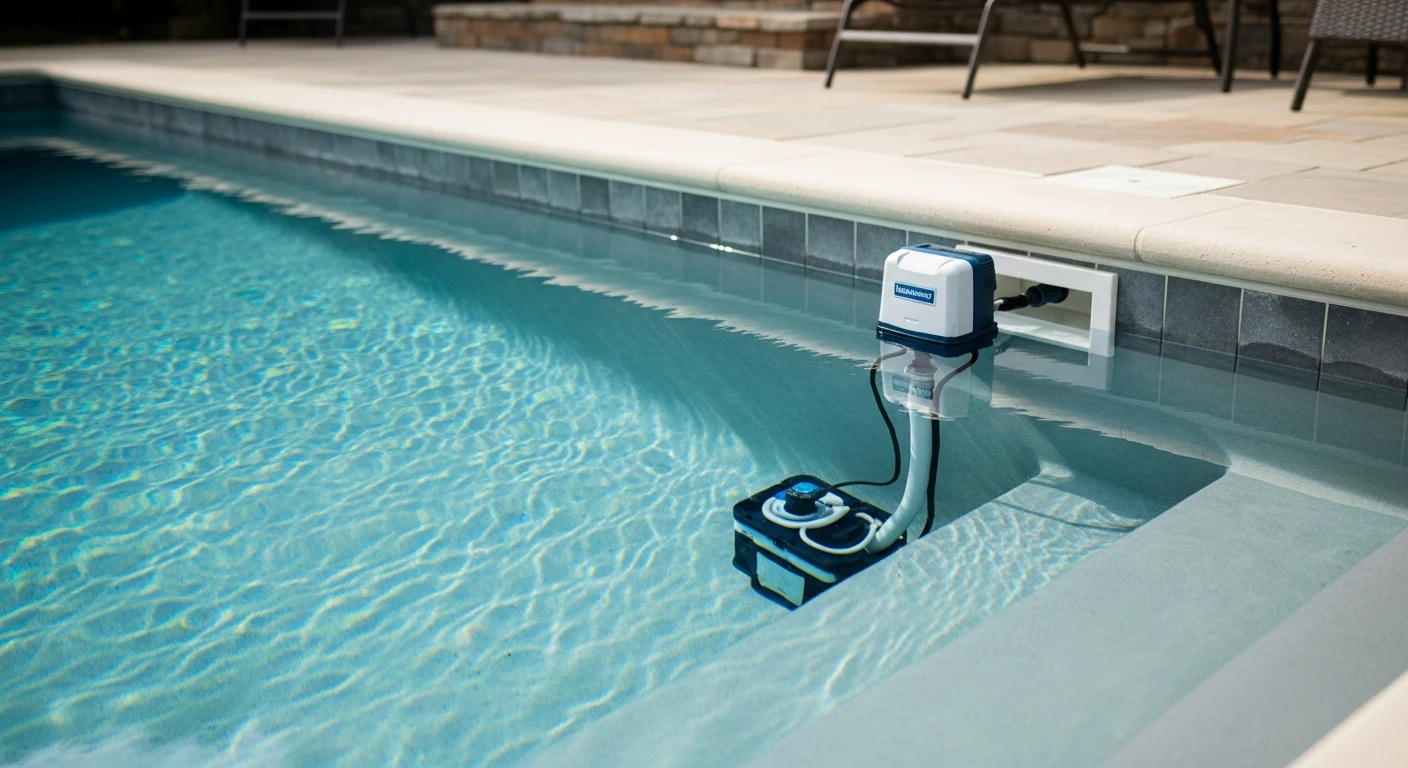
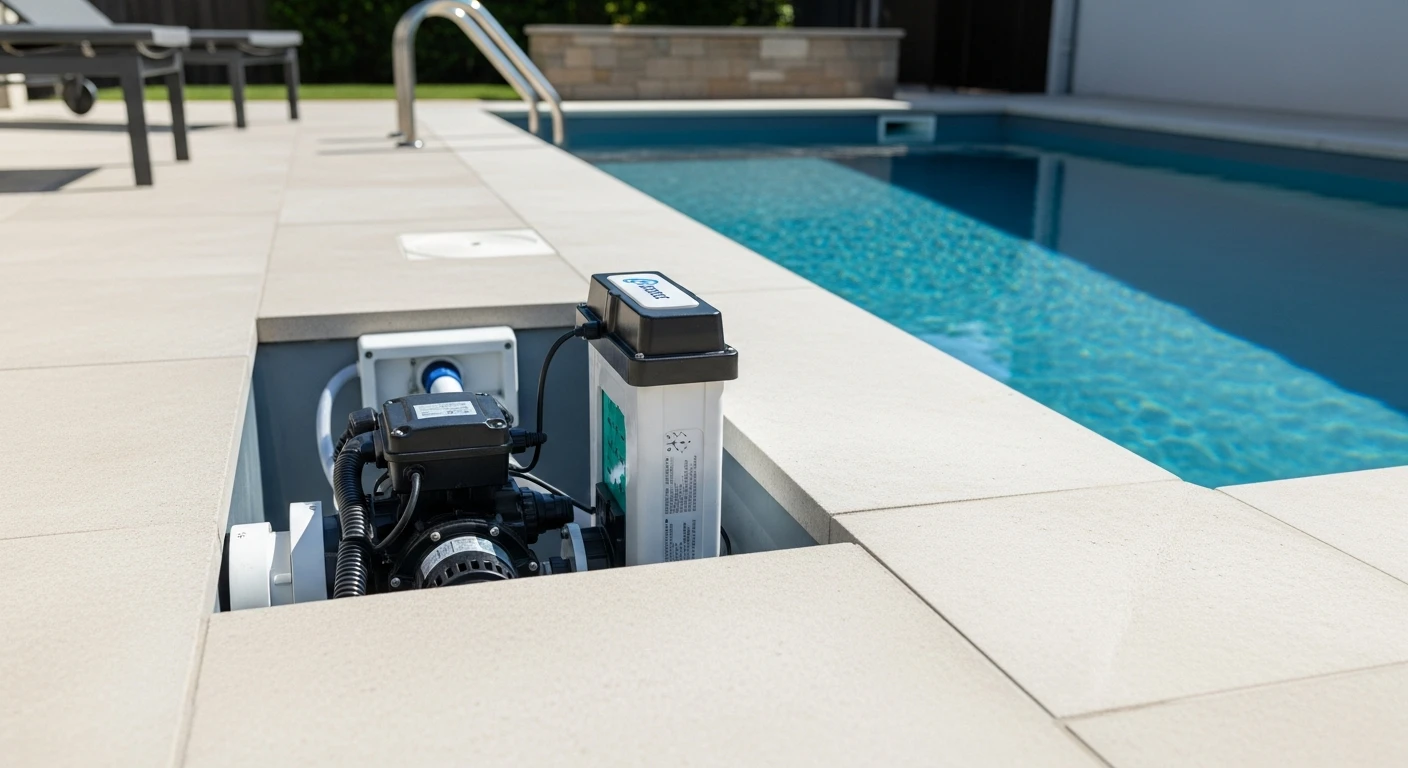
Most pool owners in our area don't realize that their salt cell's primary enemy, after scale buildup, is corrosion. The saltwater itself, combined with our humid, salty air, creates an aggressive corrosive environment. This is especially damaging to the metal components of your lanai, patio furniture, and even the internal parts of your pool heater. My solution is a non-negotiable part of any installation I oversee: a sacrificial zinc anode. This simple, inexpensive device is plumbed into the pool's circulation system. It corrodes instead of the more expensive metal components in and around your pool. I consider it malpractice to install a saltwater system in Lee County without one. I’ve seen unprotected heater heat exchangers fail in under three years, a completely avoidable expense. A properly installed anode can effectively double the life of these components.Executing the 4-Phase Lee County Salinity Calibration
Here is the exact process I use to commission a new system or troubleshoot an existing one. This isn't a "best guess" approach; it's a diagnostic protocol.- Phase 1: Baseline Water Chemistry Audit. Before adding a single grain of salt, I get a complete water profile. The key metrics are calcium hardness, total alkalinity, and CYA. I aim for a calcium hardness of 200-250 ppm to minimize scaling on the salt cell plates.
- Phase 2: Manual Salinity Targeting. I never trust the bag's instructions. I use a calibrated digital meter and add salt in stages, allowing it to fully dissolve over 24 hours with the pump running. The target is the manufacturer's midpoint recommendation (e.g., 3200 ppm), not the maximum. This provides a buffer and reduces strain on the cell.
- Phase 3: CYA Stabilization. Once the salt level is stable, I adjust the CYA to between 60-80 ppm. This range is higher than for traditional chlorine pools, but it's critical for protecting the chlorine generated by the cell from our intense UV exposure. This step alone can reduce your generator's required "on-time" by up to 20%.
- Phase 4: Anode Installation and Bonding Check. The final step is installing the sacrificial anode and verifying that the pool's water is properly bonded to the electrical system. A lack of proper bonding can accelerate galvanic corrosion, and it's a common oversight I find in older pools.
Post-Storm Recovery and Seasonal Output Adjustments
After a heavy summer thunderstorm, which is practically a daily event in Fort Myers, your pool's salinity will drop due to rainwater dilution. The knee-jerk reaction is to add more salt. This is a mistake. First, you must re-balance the alkalinity and pH, which are always affected by acidic rainwater. Only then should you test and adjust salinity. I also teach my clients to adjust the chlorine generator's output percentage seasonally. In July and August, you might need to run it at 70-80% output. But from November to February, you can often dial it back to 20-30%. This simple adjustment significantly reduces wear and tear on the cell plates, directly contributing to its longer lifespan. Are you simply reading your salt system's display, or are you actively managing the water chemistry to maximize its performance and lifespan?Written by

Tags
best salt water pool system
best pool salt system
salt water system
Switching to a saltwater system
Saltwater Pools in Lee FL FAQ
Is a saltwater pool really chlorine-free and better for my skin?
No, a saltwater pool is not chlorine-free; it uses a salt chlorine generator to create its own chlorine from salt. The process produces a more stable and less harsh form of chlorine, which is why it feels softer on the skin and eyes and lacks the strong chemical odor of traditional pools. This on-site production avoids the need to handle and store liquid or tablet chlorine. However, the water must still be tested and balanced regularly, maintaining a pH between 7.2 and 7.6 to ensure the chlorine produced is effective and non-corrosive.
Will the salt damage my concrete pool deck, coping, and equipment?
Yes, salt is corrosive and can damage certain materials over time if they are not properly selected and maintained. Porous materials like natural stone coping and unsealed concrete decking are particularly vulnerable to salt crystal formation and spalling. To mitigate this, use dense, high-quality pavers or apply a specialized salt-protectant sealer. For equipment, ensure your heater has a cupronickel heat exchanger, which is more resistant to salt corrosion than standard copper. Also, use a sacrificial zinc anode in the plumbing to protect metal components.
My 'Check Salt' light is on, but my salt level tests fine. What's wrong?
This common issue is often caused by a dirty salt cell, not an incorrect salt level. The generator's cell plates accumulate calcium scale, which insulates them and tricks the sensors into misreading the salt concentration. Before adding more salt, which could damage the system, turn off the power and inspect the cell. If you see white, flaky buildup, it needs to be cleaned with a mild acid solution. Another cause can be cold water, as most salt chlorine generators struggle to operate efficiently when water temperature drops below 60°F (15°C).
Why is my saltwater pool still turning green or cloudy?
Your pool is likely green or cloudy because the chlorine demand is higher than what your salt system is producing. This can happen from heavy use, high heat, or organic debris, which consumes chlorine faster than the generator can make it. Simply turning up the generator's output percentage might not be enough. You may need to use the 'super chlorinate' or 'boost' function for 24 hours. Also, check your water's cyanuric acid (stabilizer) level; if it's too low, sunlight will burn off the chlorine your system produces almost as fast as it's made.
Can I convert my existing vinyl liner or fiberglass pool to salt?
Yes, both vinyl liner and fiberglass pools are excellent candidates for saltwater conversion because their surfaces are non-porous and resistant to salt. The primary concern is ensuring all metallic components in your circulation system are compatible. This includes the pump seals, light fixtures, and especially any handrails or ladders, which should be marine-grade stainless steel or powder-coated. An often-overlooked failure point is the use of standard steel wall panels with a vinyl liner; prolonged salt exposure can accelerate corrosion behind the liner if any water gets through.
How often do I need to add more salt to the pool?
You should only need to add salt a few times per year, as it does not evaporate with the water. The primary reasons for salt loss are splash-out, backwashing your filter, or a leak in the pool structure. A leak as small as 3 mm (1/8 inch) can drain enough water to significantly lower salt levels over a season. Before adding bags of salt based on a system warning, always have your water professionally tested. Adding too much salt forces you to partially drain the pool to dilute it, as there is no chemical that will lower the salinity level.