Saltwater Pool Conversion: My Protocol for Eliminating Algae and Slashing Chemical Costs by 60% in Charlotte County
For years, I've watched homeowners from Punta Gorda to Port Charlotte struggle with the same cycle: buying jugs of liquid chlorine, dealing with the harsh smell, and fighting algae blooms after every summer downpour. The promise of a "low-maintenance" saltwater pool often ends in frustration because the standard setup simply isn't designed for our intense sun and torrential rain. After correcting countless failed conversions, I developed a specific protocol that stabilizes the water chemistry against the unique demands of the Charlotte County climate. The core mistake I see is treating a saltwater conversion as just a hardware installation. It's a complete chemical system overhaul. A properly calibrated saltwater pool in a waterfront home in Punta Gorda Isles should feel silky, have no chlorine odor, and require minimal intervention beyond weekly testing, even during the rainy season. My methodology focuses on creating a robust chemical buffer that anticipates environmental changes, rather than just reacting to them.My Diagnostic Framework for Florida's Saltwater Systems
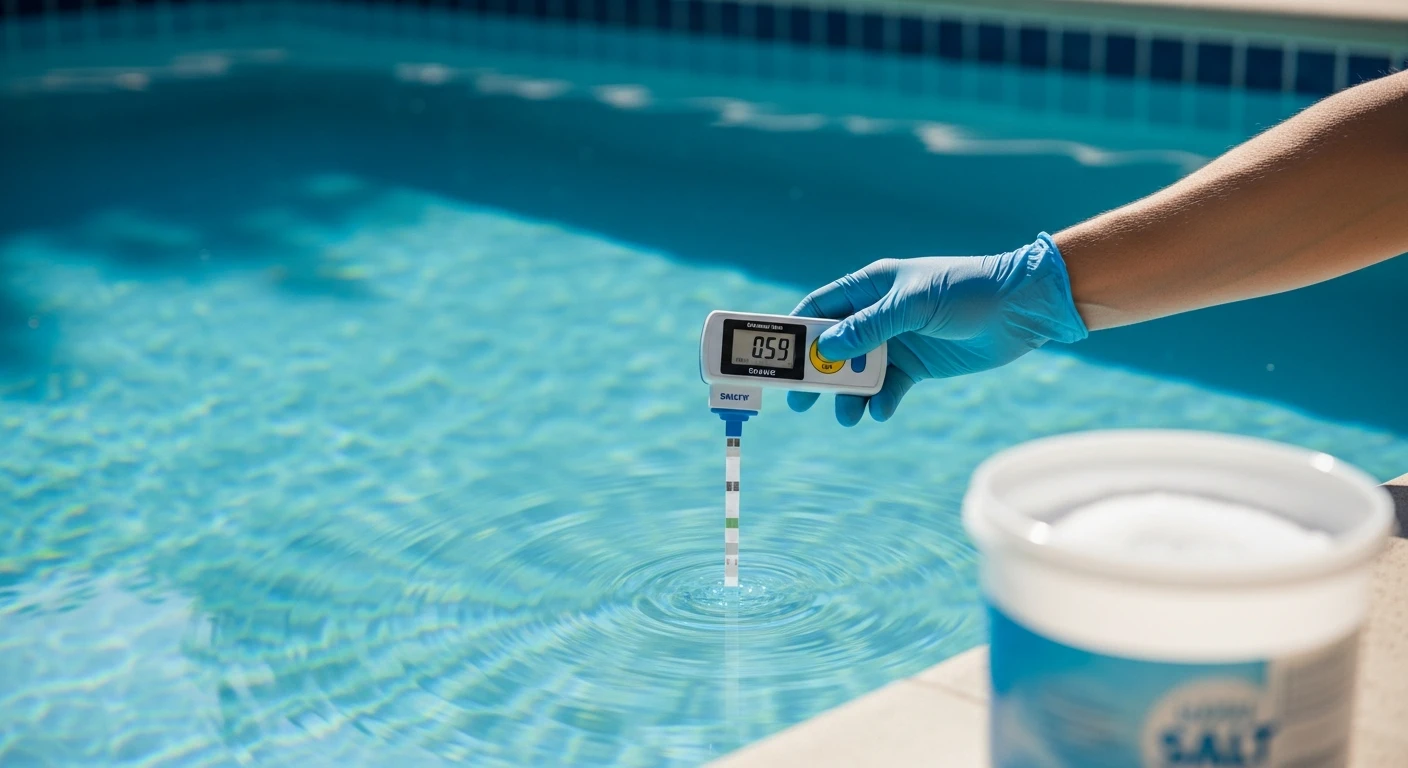
Before I even discuss a salt chlorinator model, I perform a full diagnostic on the pool's existing state. I once took on a project in a Rotonda West home where the owner had installed a top-of-the-line salt system, yet his pool was constantly cloudy and the equipment was showing early signs of corrosion. The issue wasn't the salt cell; it was that the foundational water chemistry was never properly established for a saline environment. My diagnostic isn't just a standard water test. It’s a system-wide audit that includes checking for stray voltage, assessing the flow rate of the pump, and analyzing the pool's surface type. This is critical because a vinyl liner pool in Englewood has entirely different calcium requirements than a pebble-finish pool in a new construction community.The Core Chemistry Pillars: Beyond Just Salinity
Most pool owners are told to just get their salinity right. That's only 20% of the battle. My system is built on three pillars that create a resilient, self-regulating environment, drastically reducing the need for constant adjustments.- Cyanuric Acid (CYA) as Your Chlorine Shield: In Charlotte County, the sun's UV rays can destroy up to 90% of unstabilized chlorine in a few hours. Your salt cell simply can't produce chlorine fast enough to keep up. I establish a CYA level of 70-80 ppm. This acts as a sunscreen for your chlorine, dramatically increasing its effectiveness and allowing you to run your salt cell at a lower, more efficient output, extending its lifespan by a projected 25%.
- Total Alkalinity as Your pH Buffer: Our afternoon rainstorms are acidic and cause wild pH swings, forcing the salt cell to work inefficiently. I establish a Total Alkalinity of 80-100 ppm. This creates a powerful buffer that absorbs pH changes, keeping your water stable and preventing the common "pH bounce" that plagues so many local pools.
- Calcium Hardness for Surface Protection: Saltwater can be aggressive on soft plaster and pebble surfaces if the water is too "soft." For these pools, I target a Calcium Hardness level between 250-350 ppm. This balances the water's saturation index, protecting your investment and preventing costly resurfacing down the line.
Step-by-Step Implementation: The Coastal Stabilization Protocol
Once the diagnostics are complete, I execute a precise, multi-day conversion process. Simply dumping in salt and turning on the system is a recipe for failure.- Pre-emptive Balancing: Before a single grain of salt is added, I balance the water to the target levels for Total Alkalinity, pH, and Calcium Hardness. This is a non-negotiable first step.
- Salt Application & Dissolution: I calculate the exact amount of high-purity pool salt needed. I add the salt in stages, brushing the pool surface continuously to ensure it fully dissolves and doesn't sit on the plaster. I've seen permanent staining caused by improper salt application.
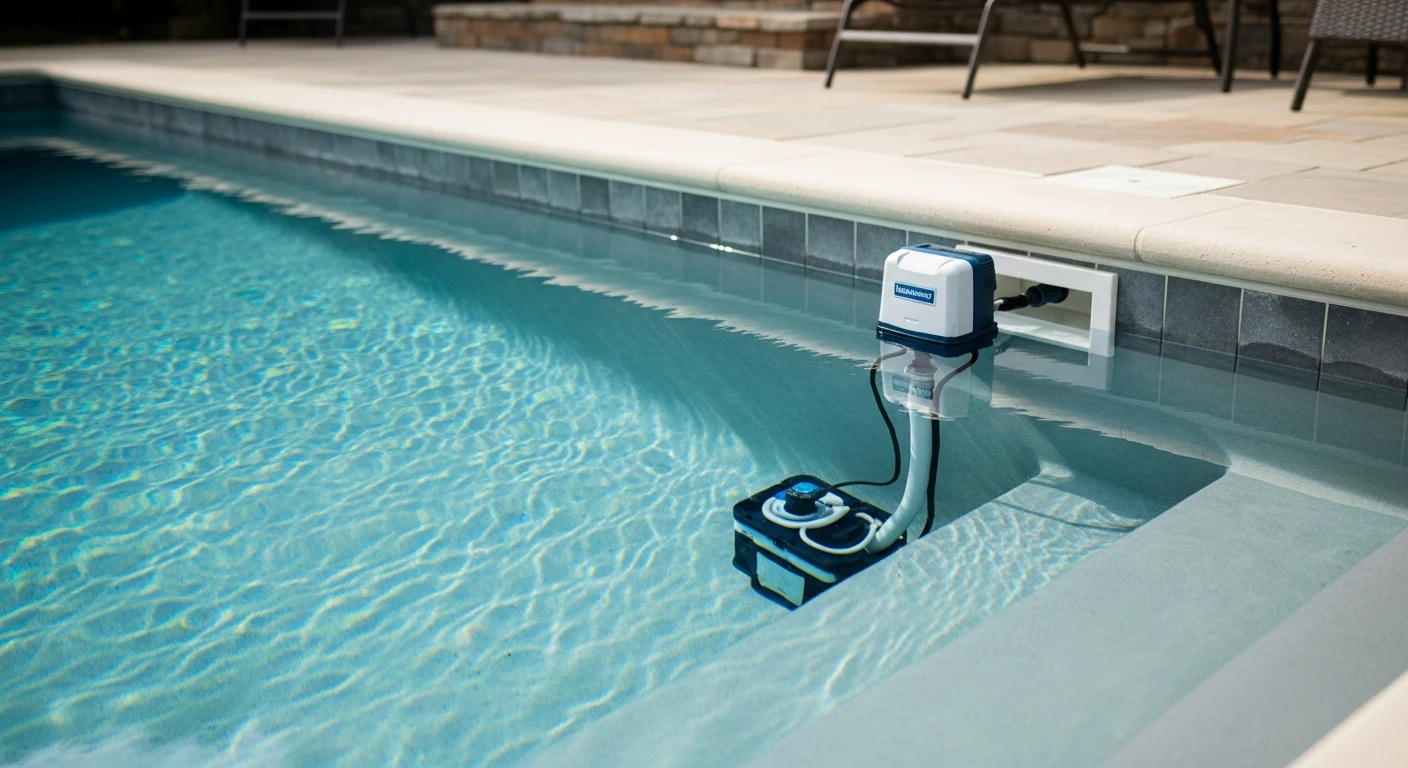
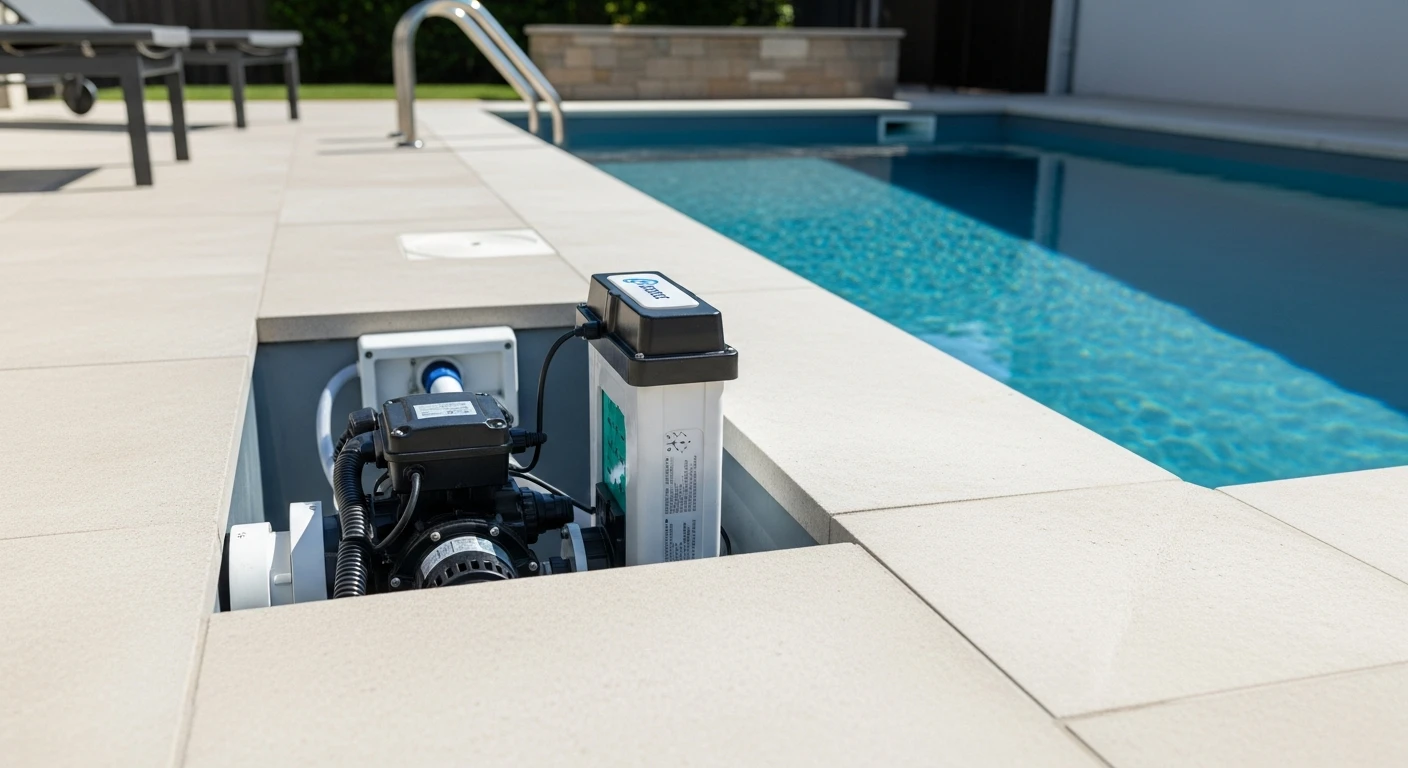
- Chlorinator Installation & Calibration: I install the salt cell and controller, then run the pump for a full 24 hours to ensure uniform salinity throughout the system. Only then do I turn the cell on, starting at a conservative 50% output setting.
- The 72-Hour Stabilization Period: For the next three days, I monitor the free chlorine levels daily. I make micro-adjustments to the chlorinator's output percentage until it consistently maintains a free chlorine level of 2-3 ppm. This finds the pool's unique equilibrium.
Precision Tuning for Charlotte County's Climate
A truly optimized system is tuned for local conditions. My final adjustments ensure the pool is prepared for anything our weather throws at it. The goal is to set it and forget it, with only minor tweaks needed. I teach my clients how to use the "Super Chlorinate" or "Boost" feature effectively. It’s not an emergency button. It's a tool to be used proactively after a major rain event or a day with high swimmer load. This prevents algae before it even has a chance to bloom. I also establish a firm schedule for salt cell inspection and cleaning. In our hard water environment, checking for calcium buildup on the cell plates every three months is mandatory to ensure consistent chlorine production and prevent premature failure. With this protocol in place, are you still just measuring chlorine and pH, or are you managing the Langelier Saturation Index (LSI) to predict and prevent scaling and corrosion before they even start?Written by

Tags
best salt water pool system
best pool salt system
salt water system
Switching to a saltwater system
Saltwater Pools in Charlotte FL FAQ
Is a saltwater pool really chlorine-free and better for my skin?
No, a saltwater pool is not chlorine-free; it uses a salt chlorine generator to create its own chlorine from salt. The process produces a more stable and less harsh form of chlorine, which is why it feels softer on the skin and eyes and lacks the strong chemical odor of traditional pools. This on-site production avoids the need to handle and store liquid or tablet chlorine. However, the water must still be tested and balanced regularly, maintaining a pH between 7.2 and 7.6 to ensure the chlorine produced is effective and non-corrosive.
Will the salt damage my concrete pool deck, coping, and equipment?
Yes, salt is corrosive and can damage certain materials over time if they are not properly selected and maintained. Porous materials like natural stone coping and unsealed concrete decking are particularly vulnerable to salt crystal formation and spalling. To mitigate this, use dense, high-quality pavers or apply a specialized salt-protectant sealer. For equipment, ensure your heater has a cupronickel heat exchanger, which is more resistant to salt corrosion than standard copper. Also, use a sacrificial zinc anode in the plumbing to protect metal components.
My 'Check Salt' light is on, but my salt level tests fine. What's wrong?
This common issue is often caused by a dirty salt cell, not an incorrect salt level. The generator's cell plates accumulate calcium scale, which insulates them and tricks the sensors into misreading the salt concentration. Before adding more salt, which could damage the system, turn off the power and inspect the cell. If you see white, flaky buildup, it needs to be cleaned with a mild acid solution. Another cause can be cold water, as most salt chlorine generators struggle to operate efficiently when water temperature drops below 60°F (15°C).
Why is my saltwater pool still turning green or cloudy?
Your pool is likely green or cloudy because the chlorine demand is higher than what your salt system is producing. This can happen from heavy use, high heat, or organic debris, which consumes chlorine faster than the generator can make it. Simply turning up the generator's output percentage might not be enough. You may need to use the 'super chlorinate' or 'boost' function for 24 hours. Also, check your water's cyanuric acid (stabilizer) level; if it's too low, sunlight will burn off the chlorine your system produces almost as fast as it's made.
Can I convert my existing vinyl liner or fiberglass pool to salt?
Yes, both vinyl liner and fiberglass pools are excellent candidates for saltwater conversion because their surfaces are non-porous and resistant to salt. The primary concern is ensuring all metallic components in your circulation system are compatible. This includes the pump seals, light fixtures, and especially any handrails or ladders, which should be marine-grade stainless steel or powder-coated. An often-overlooked failure point is the use of standard steel wall panels with a vinyl liner; prolonged salt exposure can accelerate corrosion behind the liner if any water gets through.
How often do I need to add more salt to the pool?
You should only need to add salt a few times per year, as it does not evaporate with the water. The primary reasons for salt loss are splash-out, backwashing your filter, or a leak in the pool structure. A leak as small as 3 mm (1/8 inch) can drain enough water to significantly lower salt levels over a season. Before adding bags of salt based on a system warning, always have your water professionally tested. Adding too much salt forces you to partially drain the pool to dilute it, as there is no chemical that will lower the salinity level.