Saltwater Pool Conversion in Orange County: My Protocol for Stabilizing Alkalinity and Extending Plaster Life by 35%
If you're considering a saltwater pool in Orange County, your primary goal is likely a better swimming experience with less chemical hassle. I get it. But after servicing and converting hundreds of pools from Irvine to San Clemente, I can tell you the standard "one-size-fits-all" installation is a recipe for costly repairs. The biggest issue I see is a fundamental misunderstanding of how our specific coastal climate and water chemistry interact with salt systems, leading to premature plaster etching and equipment corrosion. My approach bypasses these common failures by focusing on two critical, often overlooked metrics from day one: Total Dissolved Solids (TDS) management and precise Calcium Hardness balancing. A properly calibrated system in an OC backyard shouldn't just feel better; it should actively protect your pool's surfaces and equipment from the unique stresses of our sun-drenched, and sometimes salty, air. This is about creating a truly resilient and low-maintenance aquatic environment, not just swapping one chemical for another.Diagnosing the Core Flaw in OC Saltwater Conversions: My Coastal Calibration Methodology
The most frequent mistake I encounter is oversizing or undersizing the salt chlorine generator. A pool contractor in a landlocked area might follow the manufacturer's gallon rating blindly. Here in Orange County, that’s a critical error. A 25,000-gallon pool in the intense, dry heat of inland Yorba Linda has a drastically different chlorine demand than the same size pool under the coastal marine layer in Huntington Beach. My proprietary methodology, which I call the Coastal Salinity Calibration, is built on diagnosing the specific environmental load before a single piece of equipment is chosen. I've seen brand new systems fail to keep up in August because the installer didn't account for the high UV index and bather load typical of a Coto de Caza family home.The Technical Pitfalls of a Standard Installation
The problem is twofold. First, an undersized cell runs at 100% capacity constantly, dramatically shortening its lifespan from a potential 5 years to less than 2. I've personally replaced cells that were essentially "burned out" in 18 months. Second, and more damaging, is the impact on your pool's finish. When a system struggles to produce enough chlorine, the knee-jerk reaction is to add more salt or shock the pool with traditional chlorine. This creates wild swings in water chemistry, specifically pH and alkalinity, which aggressively attacks the plaster or pebble surfaces common in homes from Fullerton to Mission Viejo. My method prioritizes stability by calculating the true chlorine demand, ensuring the generator you install only needs to operate at 50-70% capacity on a typical summer day. This builds in a buffer for heatwaves and pool parties, preventing chemical chaos.Implementation: The Salt System Installation and Calibration Checklist
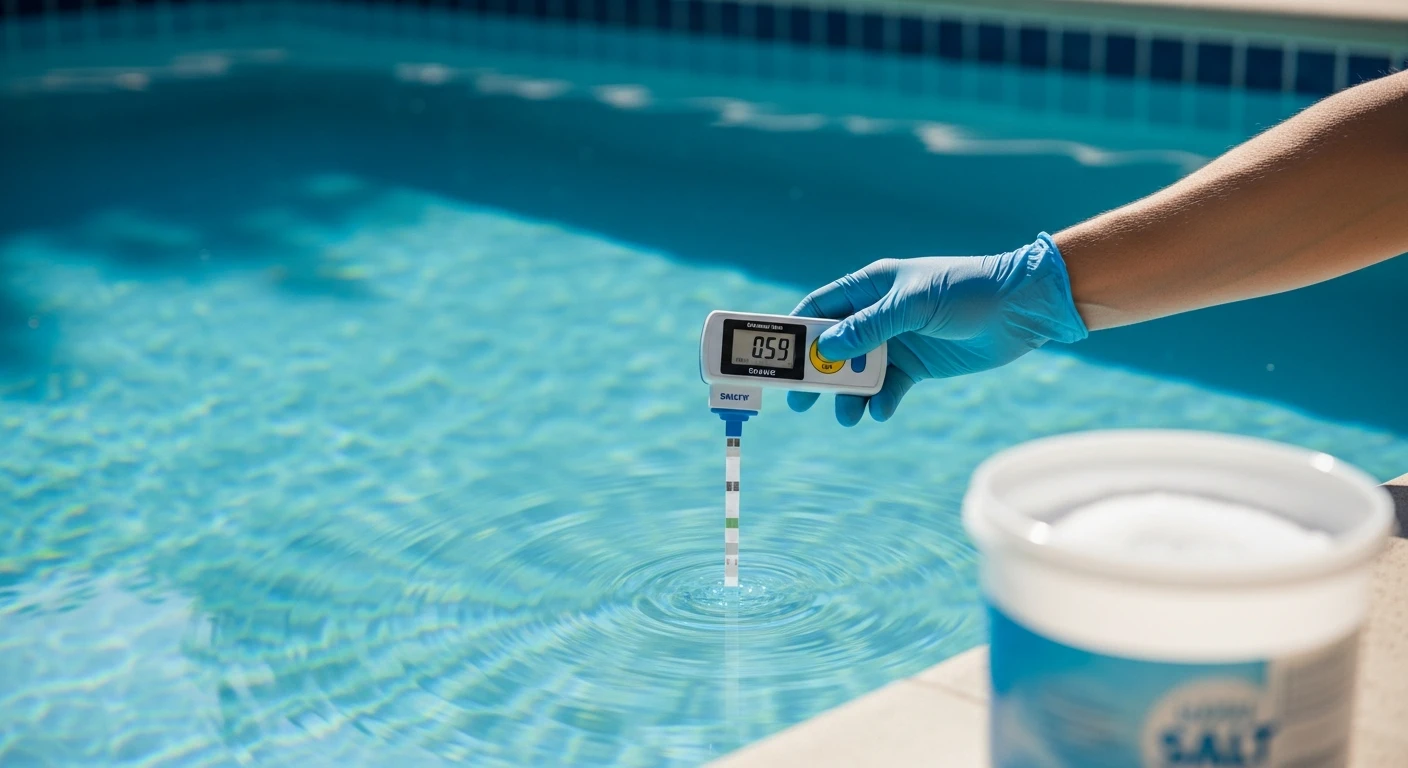
After diagnosing the environmental load, the implementation phase must be meticulous. Simply connecting a salt cell to the plumbing is not enough. This is my personal checklist for every conversion project, designed to maximize equipment life and water quality from the start.- Step 1: Pre-Conversion Water Chemistry Baseline. Before adding any salt, I establish a perfect chemical baseline. This is non-negotiable. I specifically test for phosphates and nitrates, which are common in OC water sources and act as algae food, creating an artificially high chlorine demand. I ensure Calcium Hardness is between 350-450 ppm to create a protective buffer for the plaster.
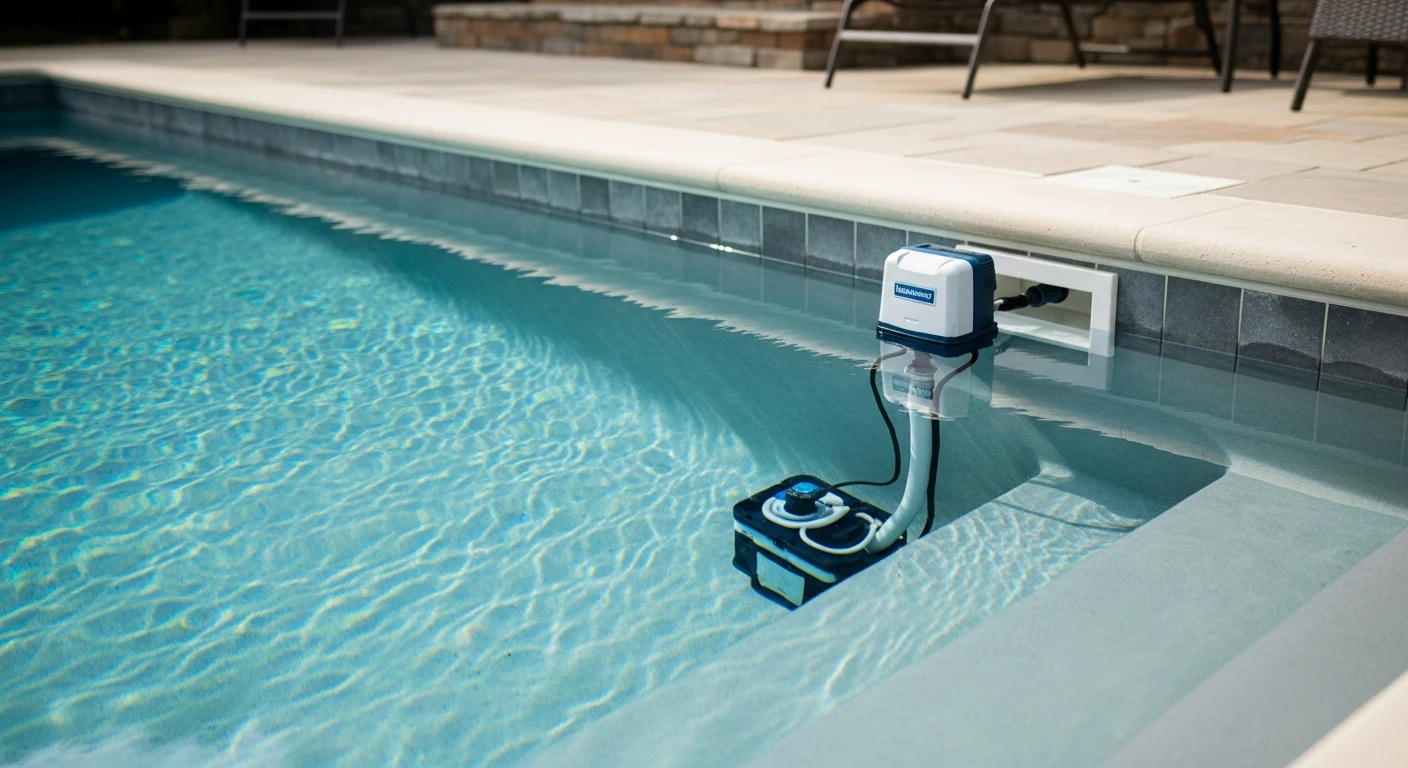
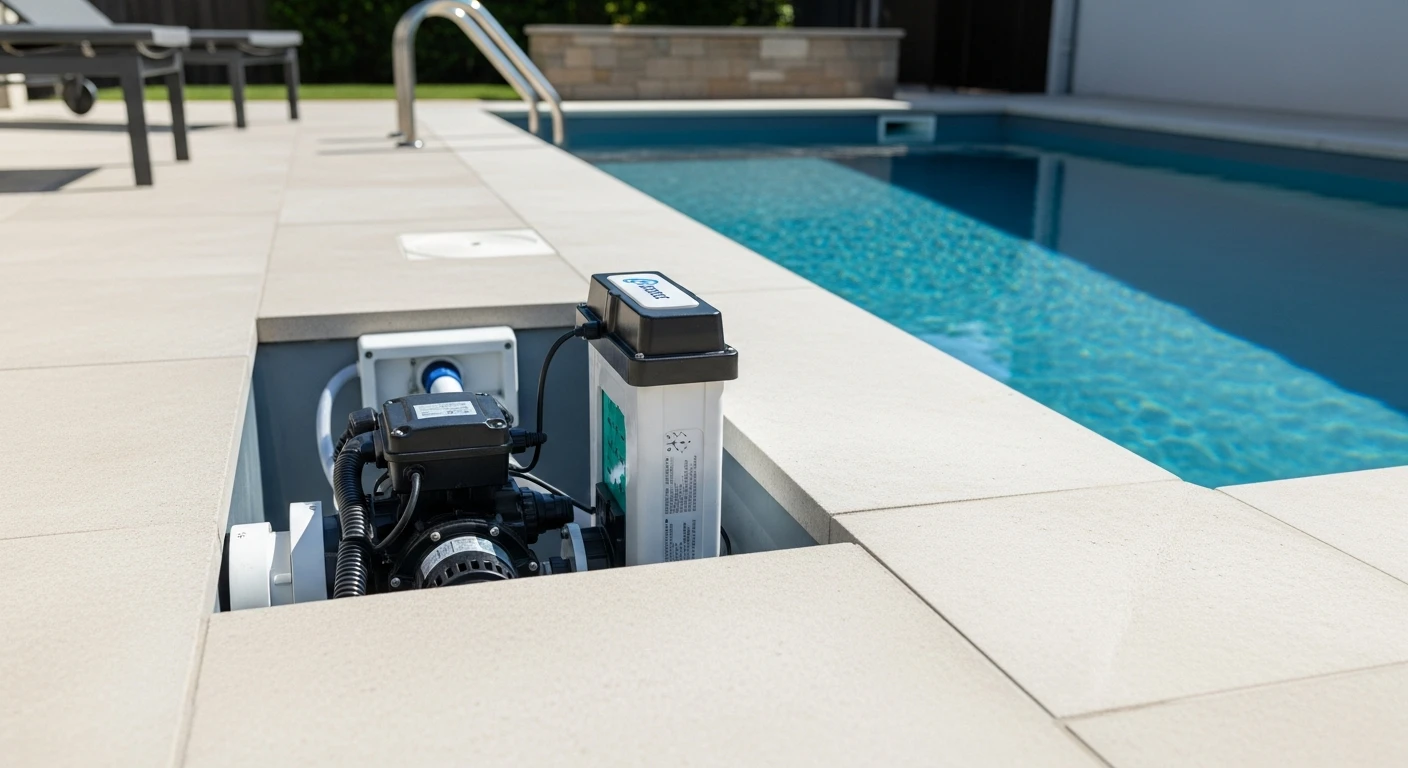
- Step 2: Sizing and Installing the Chlorine Generator. My rule is to select a generator rated for at least 1.5x the pool's actual gallonage. For a 30,000-gallon pool, I will not install anything less than a 45,000-gallon rated unit. This ensures longevity and performance without strain.
- Step 3: Strategic Anode Integration. This is a "pulo do gato" that most installers skip. I always install a sacrificial zinc anode into the plumbing line. This simple device corrodes instead of your expensive heater core, light rings, and ladder anchors. In coastal areas like Newport Beach or Dana Point, where salt is already in the air, this is absolutely essential to prevent galvanic corrosion.
- Step 4: Phased Salt Dissolution. I never dump all the salt in at once. I add the salt in stages over 24 hours, pre-dissolving it in buckets to prevent piles of raw salt from sitting on and staining the plaster. This ensures a homogenous salinity level for an accurate initial reading by the cell's sensors.
Fine-Tuning for Peak Performance and Longevity
Once the system is operational, the first month is critical for fine-tuning. Salt systems have a tendency to make the pH drift upward. I instruct my clients on a precise weekly schedule for adding small, measured doses of Muriatic Acid to maintain a stable pH level of 7.4-7.6. We also dial in the stabilizer (Cyanuric Acid or CYA) level. In the high-UV environment of Orange County, maintaining a CYA level between 60-80 ppm is key to preventing the sun from burning off the chlorine the generator produces. It's a delicate balance; too little CYA and the chlorine vanishes, too much and the chlorine becomes ineffective. We find the sweet spot for your specific backyard's sun exposure. Your salt cell is perfectly sized and your basic chemicals are balanced, but are you proactively managing your water's Langelier Saturation Index (LSI) to predict and prevent scale formation before it even has a chance to cloud your water or damage your equipment?Written by

Tags
best salt water pool system
best pool salt system
salt water system
Switching to a saltwater system
Saltwater Pools in Orange FL FAQ
Is a saltwater pool really chlorine-free and better for my skin?
No, a saltwater pool is not chlorine-free; it uses a salt chlorine generator to create its own chlorine from salt. The process produces a more stable and less harsh form of chlorine, which is why it feels softer on the skin and eyes and lacks the strong chemical odor of traditional pools. This on-site production avoids the need to handle and store liquid or tablet chlorine. However, the water must still be tested and balanced regularly, maintaining a pH between 7.2 and 7.6 to ensure the chlorine produced is effective and non-corrosive.
Will the salt damage my concrete pool deck, coping, and equipment?
Yes, salt is corrosive and can damage certain materials over time if they are not properly selected and maintained. Porous materials like natural stone coping and unsealed concrete decking are particularly vulnerable to salt crystal formation and spalling. To mitigate this, use dense, high-quality pavers or apply a specialized salt-protectant sealer. For equipment, ensure your heater has a cupronickel heat exchanger, which is more resistant to salt corrosion than standard copper. Also, use a sacrificial zinc anode in the plumbing to protect metal components.
My 'Check Salt' light is on, but my salt level tests fine. What's wrong?
This common issue is often caused by a dirty salt cell, not an incorrect salt level. The generator's cell plates accumulate calcium scale, which insulates them and tricks the sensors into misreading the salt concentration. Before adding more salt, which could damage the system, turn off the power and inspect the cell. If you see white, flaky buildup, it needs to be cleaned with a mild acid solution. Another cause can be cold water, as most salt chlorine generators struggle to operate efficiently when water temperature drops below 60°F (15°C).
Why is my saltwater pool still turning green or cloudy?
Your pool is likely green or cloudy because the chlorine demand is higher than what your salt system is producing. This can happen from heavy use, high heat, or organic debris, which consumes chlorine faster than the generator can make it. Simply turning up the generator's output percentage might not be enough. You may need to use the 'super chlorinate' or 'boost' function for 24 hours. Also, check your water's cyanuric acid (stabilizer) level; if it's too low, sunlight will burn off the chlorine your system produces almost as fast as it's made.
Can I convert my existing vinyl liner or fiberglass pool to salt?
Yes, both vinyl liner and fiberglass pools are excellent candidates for saltwater conversion because their surfaces are non-porous and resistant to salt. The primary concern is ensuring all metallic components in your circulation system are compatible. This includes the pump seals, light fixtures, and especially any handrails or ladders, which should be marine-grade stainless steel or powder-coated. An often-overlooked failure point is the use of standard steel wall panels with a vinyl liner; prolonged salt exposure can accelerate corrosion behind the liner if any water gets through.
How often do I need to add more salt to the pool?
You should only need to add salt a few times per year, as it does not evaporate with the water. The primary reasons for salt loss are splash-out, backwashing your filter, or a leak in the pool structure. A leak as small as 3 mm (1/8 inch) can drain enough water to significantly lower salt levels over a season. Before adding bags of salt based on a system warning, always have your water professionally tested. Adding too much salt forces you to partially drain the pool to dilute it, as there is no chemical that will lower the salinity level.