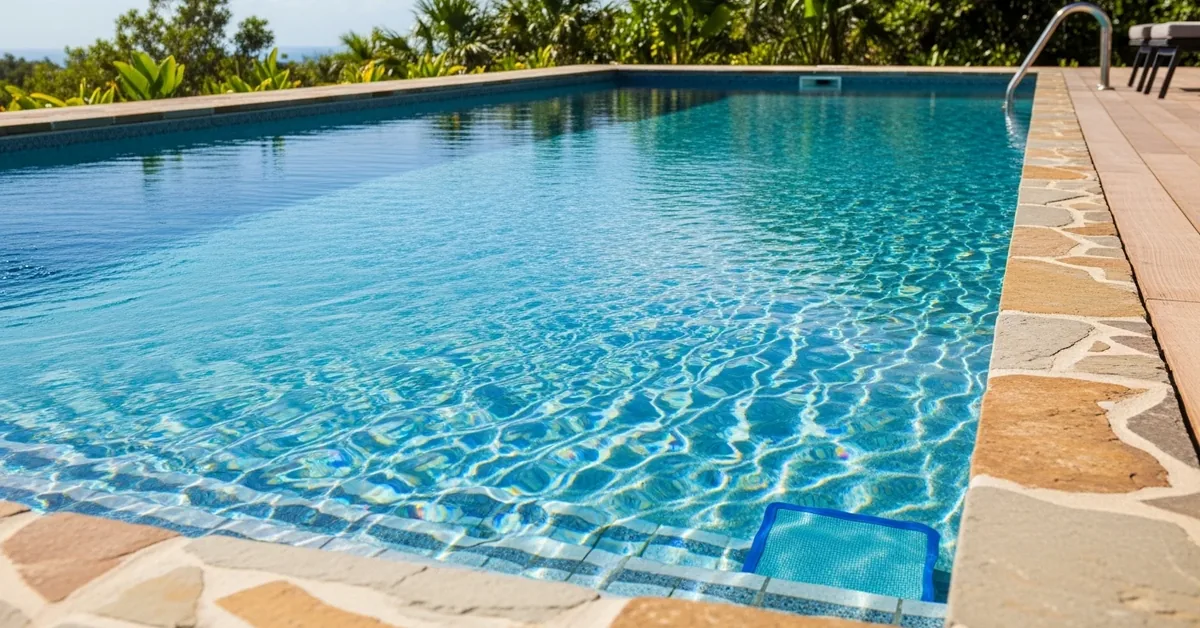
Saltwater Pools in Seminole County: My Protocol for 99% Chemical Stability and Algae Prevention
For years, I've seen homeowners in Seminole County invest in saltwater pools believing they are a "set it and forget it" solution. This is the single most expensive misconception in local pool care. The reality is, our intense Florida sun, coupled with the heavy afternoon downpours common in Lake Mary and Oviedo, creates a uniquely volatile environment for pool chemistry that a standard salt chlorine generator simply isn't equipped to handle on its own. The problem isn't the salt system; it's the failure to manage the surrounding water parameters that support it. My approach isn't about just adding salt; it's about creating a chemically buffered and stabilized environment where the salt cell can operate at peak efficiency, drastically reducing the need for constant adjustments and expensive "rescue" chemicals. I've refined a methodology that focuses on two often-ignored metrics: **Cyanuric Acid (CYA)** and **Calcium Hardness (CH)**, which are the true keys to a crystal-clear, low-maintenance saltwater pool in our specific climate.The Seminole County Saltwater Fallacy: Why Your 'Low-Maintenance' Pool Fails
I've lost count of the pools I've visited in Sanford and Winter Springs where the owner is frustrated. Their salinity is perfect according to the system, yet they're constantly fighting cloudy water or algae blooms. The root cause I identify in over 90% of these cases is a complete disregard for the foundational chemistry that makes a salt system work. They focus only on the salt reading, which is like checking the oil in a car that has no tires. After one particularly challenging project on a large screened-in pool in Heathrow, where runoff from the surrounding oaks was introducing massive amounts of phosphates, I formalized my diagnostic process. My proprietary methodology is what I call the **"Salt-Stability Triangle"**, a system focused on proactive management rather than reactive treatment.Decoding the Salt-Stability Triangle for Florida's Climate
The triangle's strength comes from understanding how its three points interact under the pressure of Seminole County's weather.- Cyanuric Acid (CYA) Management: This is your chlorine's sunscreen. Without it, the intense UV radiation we get year-round will destroy the free chlorine produced by your salt cell in under two hours. However, many pool owners, especially those who previously used stabilized chlorine pucks, start with dangerously high CYA levels. Once your CYA exceeds **80 ppm**, it begins to bind the chlorine, rendering it ineffective against algae and bacteria. For a saltwater pool in our area, the sweet spot is a tightly controlled range of 40-60 ppm. This provides UV protection without crippling your sanitation.
- Calcium Hardness (CH) Buffering: Our frequent, heavy rains are essentially distilled water, drastically diluting your pool's mineral content. In the older homes of Casselberry and Longwood with plaster or pebble finishes, low calcium hardness creates aggressive, corrosive water that will literally pull calcium from the pool's surface, causing pitting and costly damage. I aim for a CH level of 250-350 ppm to protect surfaces and equipment. This creates a stable buffer that the rain can't easily disrupt.
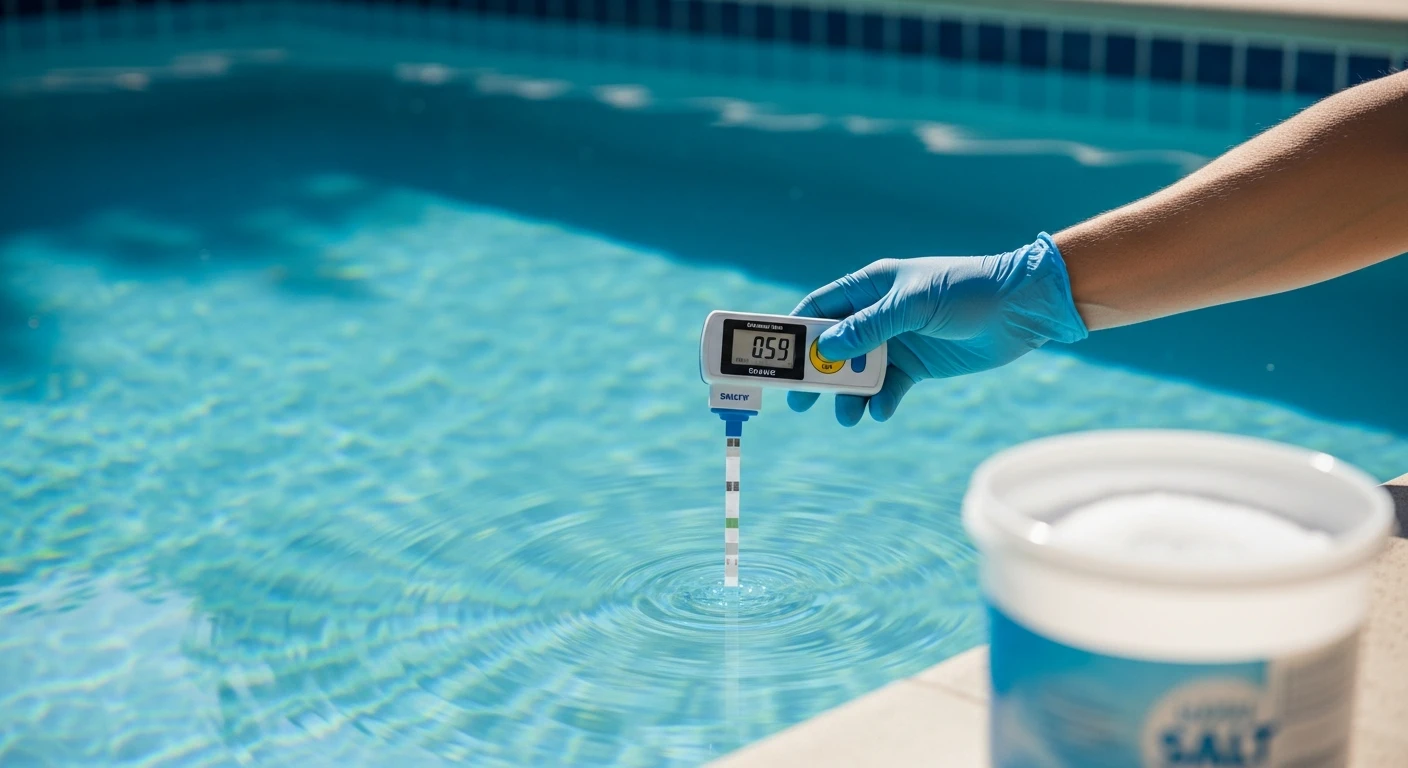
- Proactive Salinity Calibration: Your salt cell needs a specific salinity level to function—typically around **3,200 ppm**. In the dry spring, evaporation increases salt concentration. In our wet summer, deluges dilute it. Relying solely on the generator's internal reading is a mistake I've seen lead to premature cell failure. I insist on a dual-test method: comparing the system reading with a high-quality digital salt tester monthly to ensure true accuracy.
From Green to Pristine: My Field-Tested Conversion and Maintenance Protocol
Converting a traditional pool or correcting a failing saltwater system requires precision. Rushing the process or adding salt to unbalanced water is the most common error I fix. This is the exact step-by-step process I use on-site.- 1. Comprehensive Baseline Water Test: Before a single grain of salt is added, I conduct a full water analysis. I'm not just looking at chlorine and pH. I'm testing for Total Alkalinity, Calcium Hardness, CYA, and, critically, **phosphates** and **total dissolved solids (TDS)**.
- 2. Balance Core Parameters First: Using the test results, I adjust the water in a specific order. The goal is to hit these targets: Total Alkalinity between 80-120 ppm, pH between 7.4-7.6, and Calcium Hardness and CYA within the ranges mentioned above. This must be done before adding salt.
- 3. The Salt Addition: I calculate the precise amount of high-purity, granular pool salt needed. I have the pump running and add the salt directly to the deep end, then use a pool brush to agitate the water and speed up dissolution. This prevents concentrated salt from sitting on and potentially staining the pool surface.
- 4. Salt Cell Commissioning: After the salt is fully dissolved (which can take up to 24 hours), I turn on the salt chlorine generator. I always start the output at a conservative **50% setting** and monitor the free chlorine level over the next 48 hours, adjusting the output percentage up or down as needed to maintain a stable 2-4 ppm of free chlorine.
Fine-Tuning Your System: Super-Chlorination and Cell Maintenance Secrets
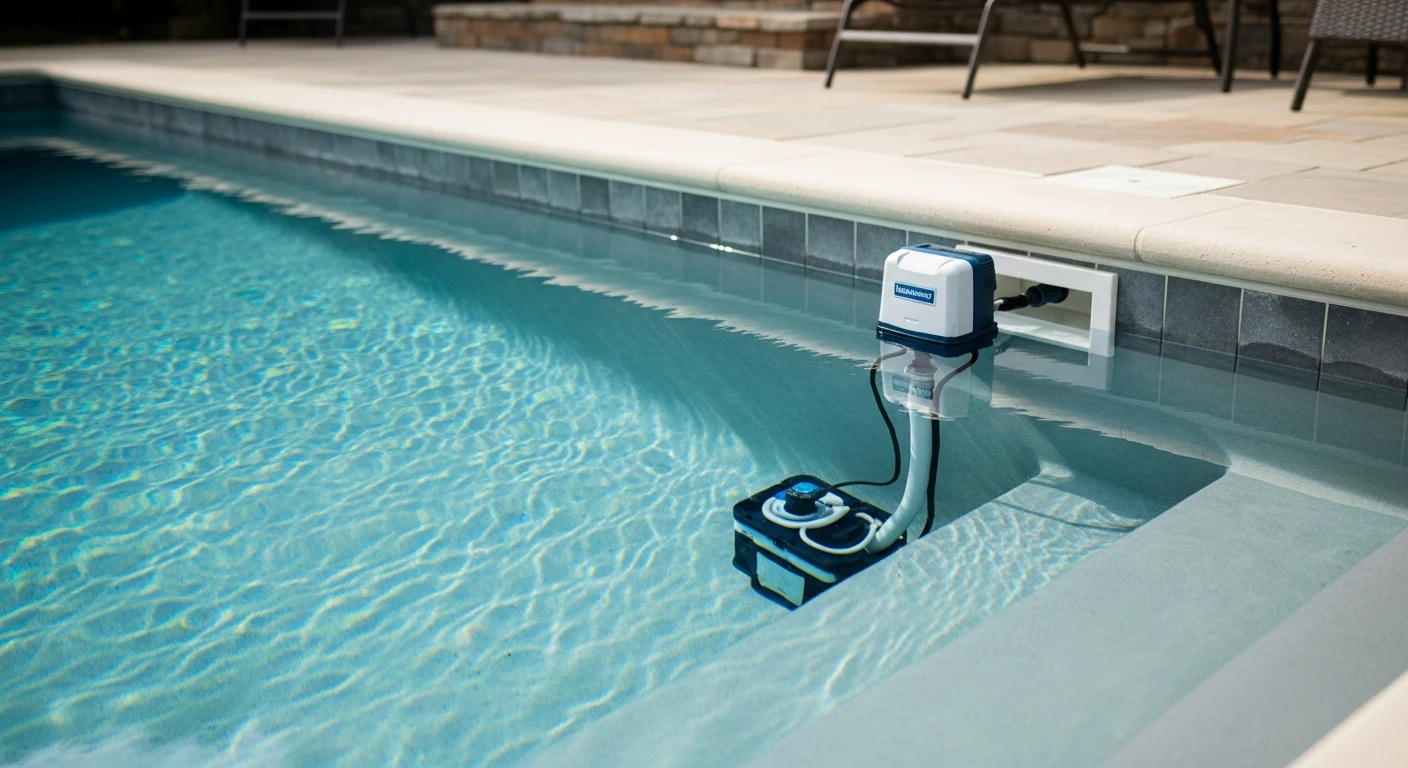
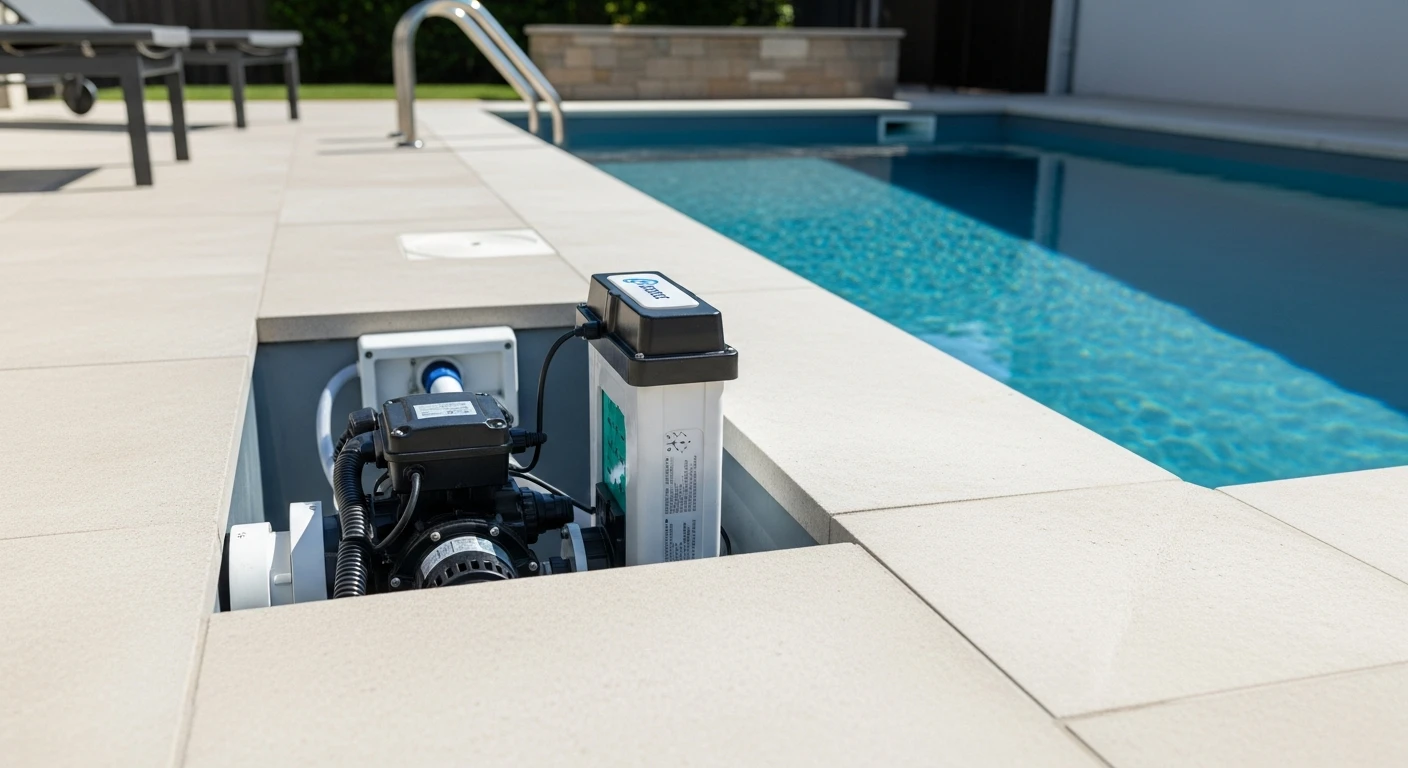
Even a perfectly balanced system needs occasional high-level maintenance. Two areas are non-negotiable for long-term success. First, "shocking" the pool is still necessary after heavy use or a major rainstorm. I advise clients to use the "Super-Chlorinate" or "Boost" function on their system, which temporarily raises output to 100%. This avoids adding bags of granular shock, which can dramatically throw off the CYA and calcium levels we worked so hard to balance. Second is **preventative cell maintenance**. In our hard water environment, calcium scaling will build up on the generator's titanium plates, reducing its effectiveness and eventually causing it to fail. Every three months, the cell must be inspected and, if necessary, cleaned with a mild acid solution to dissolve these deposits, extending its life by as much as 50%. Now that you understand the chemistry, are you still managing your saltwater pool based on salinity alone, or are you actively controlling the variables that dictate its long-term health and efficiency?Written by

Tags
best salt water pool system
best pool salt system
salt water system
Switching to a saltwater system
Saltwater Pools in Seminole FL FAQ
Is a saltwater pool really chlorine-free and better for my skin?
No, a saltwater pool is not chlorine-free; it uses a salt chlorine generator to create its own chlorine from salt. The process produces a more stable and less harsh form of chlorine, which is why it feels softer on the skin and eyes and lacks the strong chemical odor of traditional pools. This on-site production avoids the need to handle and store liquid or tablet chlorine. However, the water must still be tested and balanced regularly, maintaining a pH between 7.2 and 7.6 to ensure the chlorine produced is effective and non-corrosive.
Will the salt damage my concrete pool deck, coping, and equipment?
Yes, salt is corrosive and can damage certain materials over time if they are not properly selected and maintained. Porous materials like natural stone coping and unsealed concrete decking are particularly vulnerable to salt crystal formation and spalling. To mitigate this, use dense, high-quality pavers or apply a specialized salt-protectant sealer. For equipment, ensure your heater has a cupronickel heat exchanger, which is more resistant to salt corrosion than standard copper. Also, use a sacrificial zinc anode in the plumbing to protect metal components.
My 'Check Salt' light is on, but my salt level tests fine. What's wrong?
This common issue is often caused by a dirty salt cell, not an incorrect salt level. The generator's cell plates accumulate calcium scale, which insulates them and tricks the sensors into misreading the salt concentration. Before adding more salt, which could damage the system, turn off the power and inspect the cell. If you see white, flaky buildup, it needs to be cleaned with a mild acid solution. Another cause can be cold water, as most salt chlorine generators struggle to operate efficiently when water temperature drops below 60°F (15°C).
Why is my saltwater pool still turning green or cloudy?
Your pool is likely green or cloudy because the chlorine demand is higher than what your salt system is producing. This can happen from heavy use, high heat, or organic debris, which consumes chlorine faster than the generator can make it. Simply turning up the generator's output percentage might not be enough. You may need to use the 'super chlorinate' or 'boost' function for 24 hours. Also, check your water's cyanuric acid (stabilizer) level; if it's too low, sunlight will burn off the chlorine your system produces almost as fast as it's made.
Can I convert my existing vinyl liner or fiberglass pool to salt?
Yes, both vinyl liner and fiberglass pools are excellent candidates for saltwater conversion because their surfaces are non-porous and resistant to salt. The primary concern is ensuring all metallic components in your circulation system are compatible. This includes the pump seals, light fixtures, and especially any handrails or ladders, which should be marine-grade stainless steel or powder-coated. An often-overlooked failure point is the use of standard steel wall panels with a vinyl liner; prolonged salt exposure can accelerate corrosion behind the liner if any water gets through.
How often do I need to add more salt to the pool?
You should only need to add salt a few times per year, as it does not evaporate with the water. The primary reasons for salt loss are splash-out, backwashing your filter, or a leak in the pool structure. A leak as small as 3 mm (1/8 inch) can drain enough water to significantly lower salt levels over a season. Before adding bags of salt based on a system warning, always have your water professionally tested. Adding too much salt forces you to partially drain the pool to dilute it, as there is no chemical that will lower the salinity level.