
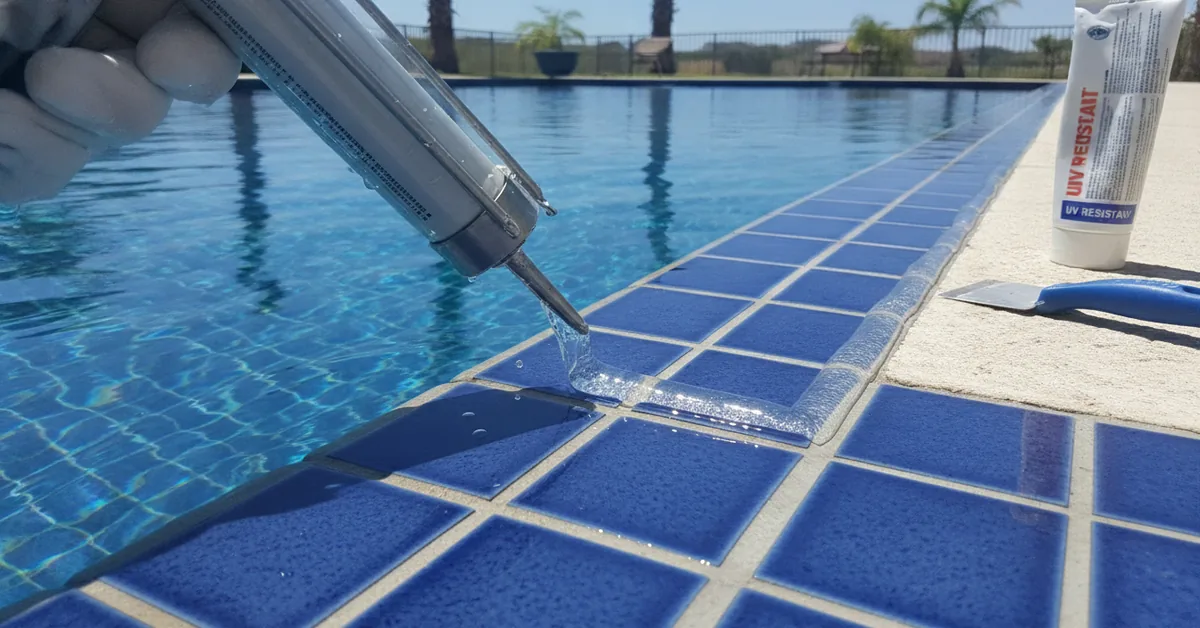
I was on a service call in a neighborhood just off Siesta Drive, one of those classic Sarasota homes with a beautiful, mature garden and a pool that had seen decades of family use. The homeowner pointed to the gap between his travertine deck and the pool coping. It was filled with a cracked, yellowed sealant that looked more like dried glue. He'd had it redone less than two years prior by a general handyman. That's the perfect illustration of what happens when you underestimate the Sarasota sun—it doesn't just fade paint; it chemically dismantles materials not designed for it.
Executive Summary: Why Standard Sealants Fail in Sarasota
After years of replacing failed expansion joints across Sarasota County, from Palmer Ranch to Lido Key, my conclusion
After years of replacing failed expansion joints across Sarasota County, from Palmer Ranch to Lido Key, my conclusion is firm: using a generic, all-purpose caulk or sealant around a pool here is professional malpractice. The relentless UV radiation, combined with our high humidity and torrential summer downpours, creates a uniquely destructive environment. A proper UV-resistant sealant application isn't an upgrade; it's the baseline requirement for preventing water from migrating under the coping and deck, which leads to soil erosion and shell movement.
- Material Science is Key: The most effective products are 100% silicone or advanced polyurethane formulations specifically engineered with UV inhibitors.
- Preparation Dictates Longevity: 80% of a sealant job's success is in the preparation—completely removing the old material and ensuring the joint is bone-dry and clean.
- Curing Time is Non-Negotiable: Applying sealant right before a predicted afternoon storm, a common Sarasota occurrence, guarantees failure. The material needs its full cure time without moisture.
- The True Cost is Failure: A failed joint can lead to thousands in repairs to the deck, pool beam, and tile line, making the investment in a professional application with the right materials negligible by comparison.
The Planning Failures That Guarantee a Second Repair Job
The most common mistake I see is focusing solely on the cost of the tube of sealant rather than the entire application process. Homeowners or their handymen will buy a cheaper product from a big-box store, believing they're saving money. In our climate, this is a financial trap. That sealant will likely become brittle, crack, and lose its bond within 18 to 24 months, starting the cycle all over again.
The Most Expensive Failure: Ignoring Joint Preparation
The costliest error is applying new sealant over old, failing material. I've seen this countless times. A contractor, trying to get the job done quickly, will just skim a new layer over the cracked, dirty surface. This new bead has no structural integrity. The first heavy rain will force water into the old cracks, trapping moisture underneath the new layer, accelerating its failure and allowing water to penetrate the joint anyway. The proper, non-negotiable method is to use grinders and cutters to remove every trace of the old sealant, clean the joint walls, and then apply the new material to a pristine surface. Skipping this step doesn't save money; it just defers a much larger expense.
How UV-Resistant Sealant Application Works in Practice
A professional application is a multi-step process that respects our local weather patterns. It begins with a complete evaluation of the existing joint and a check for any hollow spots under the deck or coping that might indicate prior water intrusion. The work itself must be scheduled during a dry spell, which can be a strategic challenge during a Sarasota summer.
Once the old material is fully removed, the joint is cleaned with a wire brush and compressed air. We then insert a closed-cell backer rod to the correct depth; this creates the ideal hourglass shape for the sealant bead, allowing it to flex without tearing. Only then is the sealant applied and tooled for a clean finish. The project's success is tied directly to the Florida Division of Business and Professional Regulation (DBPR) licensed contractor's understanding of material cure times relative to ambient temperature and humidity.
Selection Criteria for Sarasota Homeowners
- Verify the Product: Ask the contractor for the exact name and spec sheet of the sealant they intend to use. Look for terms like "100% silicone," "UV-stable polyurethane," and "ASTM C920 compliance."
- Inquire About Weather Contingencies: A professional will have a clear policy on what happens if rain is forecast. They should be proactively watching the weather, not getting surprised by a typical afternoon thunderstorm.
- Confirm Full Removal of Old Sealant: Get it in writing that the scope of work includes mechanical removal of all existing sealant, not just caulking over it.
- Check Their Sarasota County License: While a specific "sealant license" doesn't exist, the work falls under pool or general contracting. Verify their license is active with Sarasota County and the state DBPR.
Comparison with Common Alternatives
Homeowners often consider other options, sometimes out of a misunderstanding of the expansion joint's purpose. Here's how a professional sealant application compares to the alternatives I've seen attempted in the field.
| Solution | Initial Cost | Longevity in Sarasota | Effectiveness |
|---|---|---|---|
| Professional UV-Resistant Sealant | Moderate | 5-10+ years | Excellent water barrier, allows for expansion/contraction. |
| DIY with Big-Box Store Caulk | Low | 1-2 years | Poor. Rapidly degrades, cracks, and loses adhesion from sun exposure. |
| Filling Joint with Grout/Mortar | Low | Less than 1 year | Extremely poor. Cracks immediately as deck/pool shift, creating a direct path for water. |
When This Service Isn't the Right Choice
Frankly, there's no good alternative for a functional expansion joint. However, if the deck itself is failing—if you have large, structural cracks or significant sinking—simply replacing the sealant is a waste of money. In that scenario, the root cause is sub-deck soil erosion or a structural issue that must be addressed first. Applying new sealant to a moving, unstable foundation is like putting a bandage on a broken arm.
Safe Hiring Checklist for Your Pool Deck
Hiring for this job requires more diligence than a simple maintenance task. The consequences of a poor job are hidden until significant damage is done. Use this checklist before signing any contract.
- Verify their Florida Certified Pool Contractor license (CPC) or other relevant state license on the MyFloridaLicense.com portal.
- Request proof of general liability and worker's compensation insurance. A Certificate of Insurance should be sent to you directly from their insurer.
- Ask for photos and addresses of recent, local projects in Sarasota or Bradenton that you can see for yourself.
- Get a detailed, itemized quote that specifies the exact sealant product to be used and the full scope of surface preparation.
- Confirm they understand and will adhere to any specific architectural guidelines if you live in an HOA-managed community like Lakewood Ranch or The Landings.
- Discuss the plan for protecting surrounding surfaces (deck, tile, pool water) from sealant and cleaning agents.
- Clarify the warranty provided on both the material and the labor, and what it covers.
Decisions That Determine the Outcome
The success of this project hinges on two moments: selecting the right material and accepting the necessity of proper preparation. I've seen homeowners try to cut costs by opting for a lower-grade polyurethane because it's slightly cheaper than a high-performance silicone. That decision saves maybe a hundred dollars upfront but ensures a call back for repairs in three years instead of ten.
The other critical decision is patience. A proper job takes time. Rushing the curing process because you want to have a pool party that weekend is a common and costly mistake. A sealant that gets rained on before it fully cures will never perform as designed.
The Exact Moment Most Homeowners Get It Wrong
The single biggest mistake is made during the estimate phase. When presented with multiple bids, most people compare the final numbers. The right way to do it is to compare the line items for "surface preparation." The contractor with the most detailed, and likely most expensive, prep process is usually the one who will deliver the lasting result. A low bid often signals that steps are being skipped, and in sealant work, those skipped steps are always in the preparation. Ask each contractor to explain their removal and cleaning process in detail. The one who gives you the most confident and thorough answer is your best bet.
Practical Answers About Operating in Sarasota
Navigating the specifics of any home improvement project here involves understanding local nuances. Sealant work is no different, though it's typically less bureaucratic than a major renovation.
Does Pool Sealant Work Require a Permit in Sarasota County?
Generally, no. Replacing the sealant in an existing expansion joint is considered maintenance and repair. As such, it does not typically require a building permit from Sarasota County Planning and Development Services. However, if the sealant failure is a symptom of a larger issue, such as a sinking deck that needs to be replaced, that larger project would absolutely require permits.
HOA Rules on Sealant Color and Finish
In many managed communities, from Prestancia on Palmer Ranch to Casey Key, the Architectural Review Committee (ARC) has strict rules on exterior finishes. While they may not specify the brand of sealant, they often have approved color palettes. Before work begins, it's the homeowner's responsibility to confirm if a specific color (e.g., matching the deck grout or coping) is required to maintain community aesthetic standards. Doing the job in the wrong color can result in a notice of violation and a demand to redo the work at your own expense.
Impact of Florida's Rainy Season on Application
This is the biggest operational challenge in our area. From June through September, scheduling sealant application is a game of chance. A professional contractor will not apply sealant if there is a greater than 30% chance of rain within the product's initial cure window (often 24 hours). This means a one-day job can sometimes stretch over several days as the crew waits for a clear weather window. Homeowners must be flexible and understand that a weather delay is for their benefit, protecting the integrity of the investment.
