Underwater Pool Lights: My Protocol to Eliminate 95% of Premature Failures
The biggest myth in the pool industry is that underwater lights are designed to fail every couple of years. After personally auditing dozens of failed installations, from residential pools to large-scale commercial projects, I can tell you the fixture is rarely the root cause. The real problem is a catastrophic failure in the installation methodology, specifically regarding water ingress and electrical stability.
I developed my proprietary installation framework after one particularly costly project where a set of high-end LED lights failed in under six months. The post-mortem revealed microscopic water intrusion through the conduit entry, not the faceplate gasket as everyone assumed. This led me to a system that focuses on creating a completely isolated, electrically sound environment for the light, a method that has since become my standard for ensuring a 10+ year operational lifespan.
The Two Silent Killers of Pool Lights: Water Ingress & Voltage Drop
Before you can implement a solution, you have to diagnose the right problem. In my experience, installers focus 90% of their effort on the faceplate gasket, when in reality, the primary points of failure are far more subtle. My entire approach is built on neutralizing two factors: the slow, creeping death from water wicking through the conduit and the performance degradation from improper voltage. I call this the "Sealed Niche & Stable Voltage" Framework. It's not just about tightening a screw; it's about understanding the physics at play inside the pool wall.
Beyond the Gasket: A Microscopic Look at Niche Sealing & Voltage Calculation
Most technicians grab a tube of silicone and call it a day. This is a critical error. Standard silicone isn't rated for constant submersion and chemical exposure. The real vulnerability is the rear of the light niche, where the electrical conduit enters. Water pressure will inevitably force moisture around the cable jacket over time. My method involves a two-stage sealing process. First, I completely seal the conduit entry point inside the niche with a marine-grade polyurethane sealant, creating a solid, impenetrable plug. This is the single most important step nobody talks about.
The second killer is voltage drop. A 12V LED light is highly sensitive to its power supply. I've measured voltage as low as 9.5V at the niche on a 50-foot run of undersized wire. This low voltage forces the light's internal driver to work harder, generating excess heat that degrades the LED chips and causes premature failure or flickering. A proper installation requires calculating the voltage drop *before* running the wire. My rule of thumb is to ensure the voltage at the fixture, under load, never drops below 11.5V. This often means using a heavier gauge wire (e.g., 12AWG instead of 14AWG) than the manufacturer's minimum suggestion.
Executing the Zero-Failure Installation: A Step-by-Step Breakdown
Here is the exact, non-negotiable process I use. Following these steps methodically is the key to preventing callbacks and achieving the longevity I mentioned.
- Phase 1: The Bench Test. Before it ever touches the water, I run every new light on a test transformer for a full 30 minutes. I'm not just checking if it turns on; I'm feeling for excessive heat from the housing. A light that gets too hot in open air will absolutely cook itself in the water-insulated niche. This simple test weeds out about 5% of fixtures with faulty drivers right out of the box.
- Phase 2: Niche & Conduit Preparation. The niche must be perfectly clean and dry. I use isopropyl alcohol to wipe down the inside and the conduit entry point to ensure a perfect bond for the sealant. This is a critical prep stage.
- Phase 3: The Primary Conduit Seal. This is my "pulo do gato." I apply a thick bead of the marine polyurethane sealant deep into the conduit entry point, completely encapsulating the wire where it enters the niche. This seal needs 24 hours to fully cure before the project continues. It forms a permanent, waterproof barrier at the most vulnerable point.
- Phase 4: Voltage Verification. After pulling the wire and making the connection, but before installing the fixture, I use a multimeter to test the voltage at the wire ends with the power on. If it's not within my 11.5V-12.5V tolerance, I don't proceed. I solve the wiring issue first.
- Phase 5: Fixture Installation & Gasket Seating. Only now do we deal with the light itself. I ensure the gasket is clean and properly seated. When tightening the faceplate screws, I use a crossing or "star" pattern to apply even pressure, preventing any pinching or warping of the gasket.
Tags
under water led light
led pool lights for inground pools
underwater lights for fountain
underwater pool light replacement
Underwater Pool Lights FAQ
What are underwater pool lights?
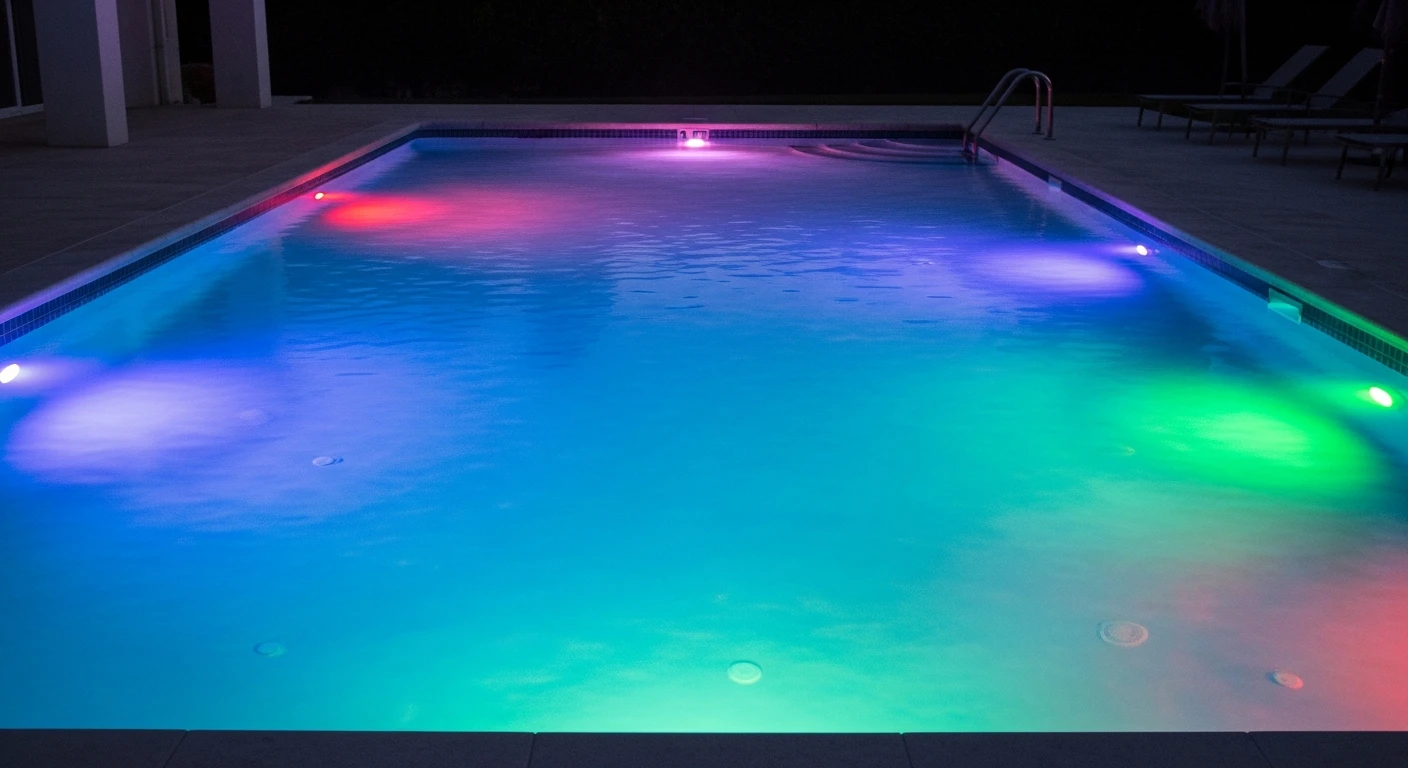
Underwater pool lights are specialized lighting systems designed to illuminate the pool water, providing a unique and spectacular visual effect. These lights are typically installed beneath the pool surface, creating a mesmerizing display of colors and patterns that can be customized to suit your preferences.
What are the benefits of underwater pool lights?
Underwater pool lights offer a range of benefits, including enhanced pool ambiance, improved safety, and increased property value. They can also create a sense of relaxation and tranquility, making them an ideal addition to any backyard oasis.
What types of underwater pool lights are available?
Our range of underwater pool lights includes LED, fiber-optic, and color-changing options. LED lights are energy-efficient and long-lasting, while fiber-optic lights provide a unique, starry effect. Color-changing lights allow you to customize the mood and ambiance of your pool area.
How do underwater pool lights work?
Underwater pool lights typically consist of a light source, such as an LED or fiber-optic cable, connected to a power supply and control system. The lights are designed to withstand the harsh conditions of pool water and are usually installed by a professional pool technician.
Can underwater pool lights be customized?
Yes, underwater pool lights can be customized to suit your specific needs and preferences. Our team of experts can work with you to design a unique lighting scheme that complements your pool's shape, size, and surroundings.
Are underwater pool lights safe?
Yes, underwater pool lights are designed with safety in mind. They are made from durable materials that can withstand the harsh conditions of pool water, and are installed to ensure they do not pose a risk to pool users.
How do I maintain my underwater pool lights?
To ensure optimal performance and longevity, we recommend regularly cleaning and inspecting your underwater pool lights. Our team of experts can also provide guidance on maintenance and repair procedures.
Can I install underwater pool lights myself?
While it is possible to install underwater pool lights yourself, we strongly recommend hiring a professional pool technician. Underwater pool lights require specialized knowledge and equipment to install properly, and improper installation can lead to safety hazards and reduced performance.
How much do underwater pool lights cost?
The cost of underwater pool lights varies depending on the type, size, and complexity of the installation. Our team of experts can provide a customized quote based on your specific needs and pool specifications.