UV Pool Sanitation in Orange County: A Protocol for 75% Chloramine Reduction
I've serviced hundreds of residential pools from the coastal communities of Newport Beach to the inland tracts of Irvine, and the primary complaint is almost always the same: the constant battle with chlorine levels and that "pool smell." The intense, year-round Orange County sun relentlessly degrades unstabilized chlorine, forcing homeowners to overcompensate with chemicals. This leads directly to the formation of chloramines, the real culprit behind skin irritation and red eyes, not the chlorine itself.
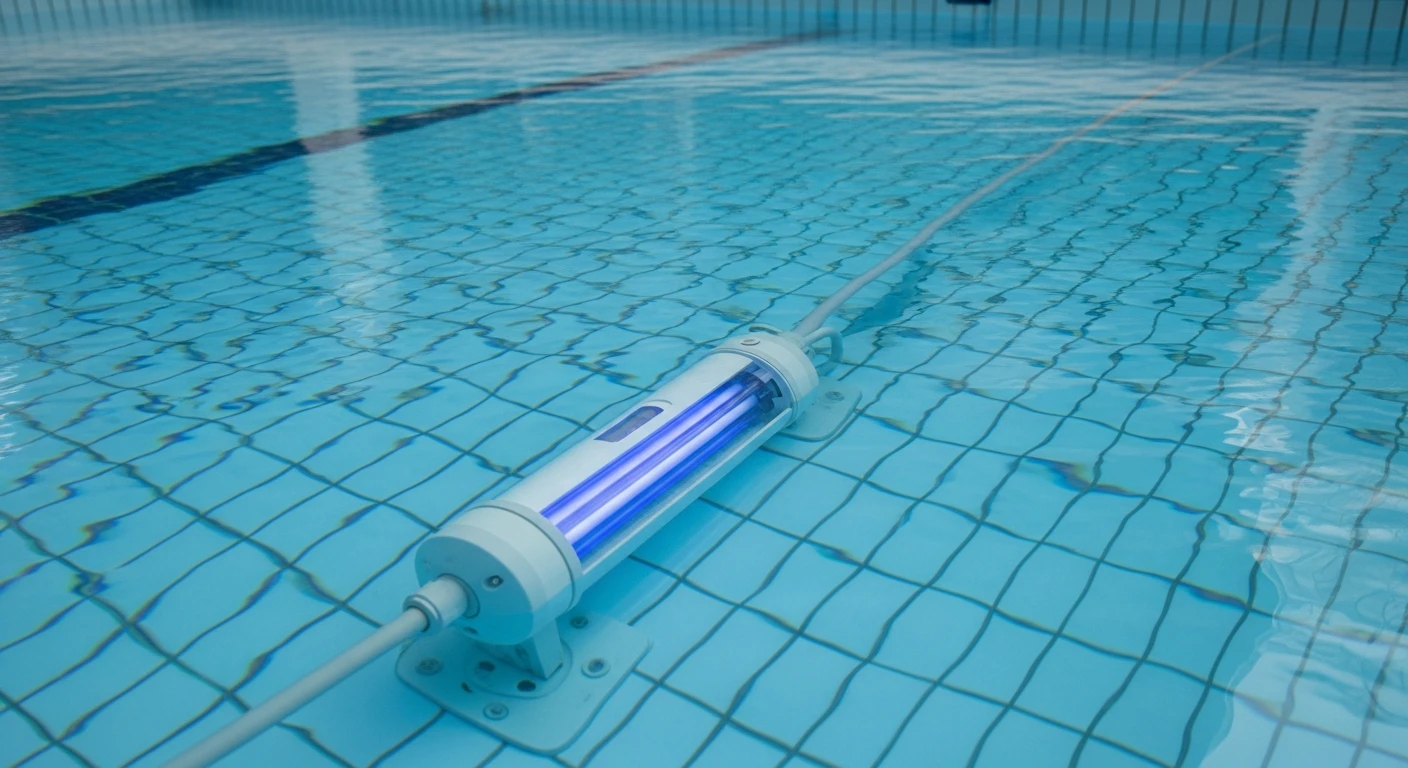
My solution isn't to add more chemicals; it's to implement a system that neutralizes contaminants before they ever react with chlorine. UV pool sanitation, when installed correctly, provides secondary disinfection that is unaffected by our high UV index. It allows me to drop the free chlorine residual to levels often found in drinking water, fundamentally changing the swimming experience and drastically reducing chemical costs for my Orange County clients.
My Diagnostic Framework for OC Pool Chemistry Imbalances
Before I even consider a UV system, my first step is a full diagnostic of the pool's hydraulic and chemical profile. The single biggest mistake I see is technicians installing a powerful UV unit on a system with an improperly sized pump or filter. It’s a complete waste of the homeowner's investment. My methodology, which I call the Flow-Matched Germicidal Inactivation Protocol, ensures the water's exposure time to the UV-C light is precisely calibrated to the system's actual flow rate, not just the manufacturer's GPM (Gallons Per Minute) rating on the pump.
In neighborhoods like Laguna Niguel, where many pools were built in the 80s and 90s with older plumbing, the actual GPM can be 20-30% lower than a new pump's rating due to friction loss. Ignoring this means the UV system is effectively oversized and underutilized. My protocol involves using a flow meter to get a real-world reading, which then dictates the exact UV wattage required for effective sanitation.
The Core of the Flow-Matched Protocol: UV-C Dosage vs. GPM
The goal isn't just to have UV light; it's to achieve a specific germicidal dosage, measured in millijoules per square centimeter (mJ/cm²). To destroy resilient pathogens like Cryptosporidium, a minimum dosage is required. This dosage is a function of UV intensity (wattage) and exposure time (determined by the flow rate). If the water moves too fast past the lamp, the dosage is insufficient. If it moves too slow, you're not turning over the pool water frequently enough.
Another critical factor specific to our region is the hard water. The water in much of Orange County has high levels of calcium and magnesium, which leads to scale buildup directly on the quartz sleeve that protects the UV lamp. A scaled sleeve can reduce UV-C light transmission by over 50%, rendering the system useless. My maintenance plans always include a semi-annual acid wash of the sleeve, a step that is almost universally overlooked by generic pool services.
Step-by-Step UV System Integration for OC Pools
Once the system is properly sized using my protocol, the installation is a matter of precision. I've corrected dozens of faulty installations in HOA community pools around Rancho Santa Margarita where the units were plumbed in backwards or without the necessary bypass for maintenance.
- Site Selection: The UV unit must be the last piece of equipment the water passes through before returning to the pool. It is always installed after the filter and heater.
- Plumbing the Manifold: I always build a bypass loop. This allows the UV unit to be isolated and serviced without shutting down the entire pool circulation system, a critical feature for year-round usability.
- Electrical Connection: The unit must be connected to a GFCI-protected circuit. I verify the breaker has the correct amperage to handle the unit's startup and running load, a common oversight that leads to nuisance tripping.
- Flow Switch Verification: A crucial safety feature is the flow switch, which turns the lamp off when there is no water flow to prevent overheating. I manually test this switch post-installation to ensure it functions correctly.
- System Priming: Before the initial power-on, I ensure the chamber is fully primed with water to cool the lamp. Firing up a UV lamp in a dry chamber will destroy it within seconds.
Post-Installation Calibration: The Final 10%
Installing the hardware is only 90% of the job. The real art is in the post-installation chemical re-balancing. A UV system isn't a "no chlorine" system; it's a "low chlorine" system. My process involves gradually lowering the output of the salt cell or the amount of tablets in the chlorinator over a period of one to two weeks. I monitor the free chlorine and total chlorine levels daily. The goal is to find the new, much lower equilibrium, typically around 0.5 - 1.0 ppm of free chlorine, while total chlorine remains almost identical, indicating a near-zero chloramine level.
This careful titration process prevents the pool from turning green from too little chlorine or continuing to be over-chlorinated, which would defeat the purpose of the UV installation. It's this final calibration that delivers the promised 75% reduction in chloramines and the crystal-clear, irritation-free water my clients expect.
Given your pool's specific turnover rate and plumbing configuration, have you calculated the required millijoule dosage to achieve secondary disinfection, or are you just guessing with a standard unit?