Weekly Pool Maintenance in Charlotte County: My Protocol for Preventing Algae Bloom and Hard Water Damage
Most pool owners in Charlotte County think weekly maintenance is just about scooping leaves and adding chlorine. I can tell you from over a decade of servicing pools from Punta Gorda to Englewood that this reactive approach is precisely why so many pools turn green after a single heavy summer rain. The real goal isn't cleaning a dirty pool; it's maintaining a precise chemical balance that actively resists contamination from our unique subtropical environment. My entire methodology is built on proactive chemical management, not reactive cleaning. The average pool service will "shock" a pool with high doses of chlorine once it starts to cloud. I focus on maintaining the Langelier Saturation Index (LSI) in a narrow band between 0.0 and +0.3. This single KPI prevents both algae growth and the calcium scaling I see on the waterline tiles of so many beautiful homes in Burnt Store Marina. It's about chemistry, not just janitorial work.My 3-Point Diagnostic Framework for Charlotte County Pools
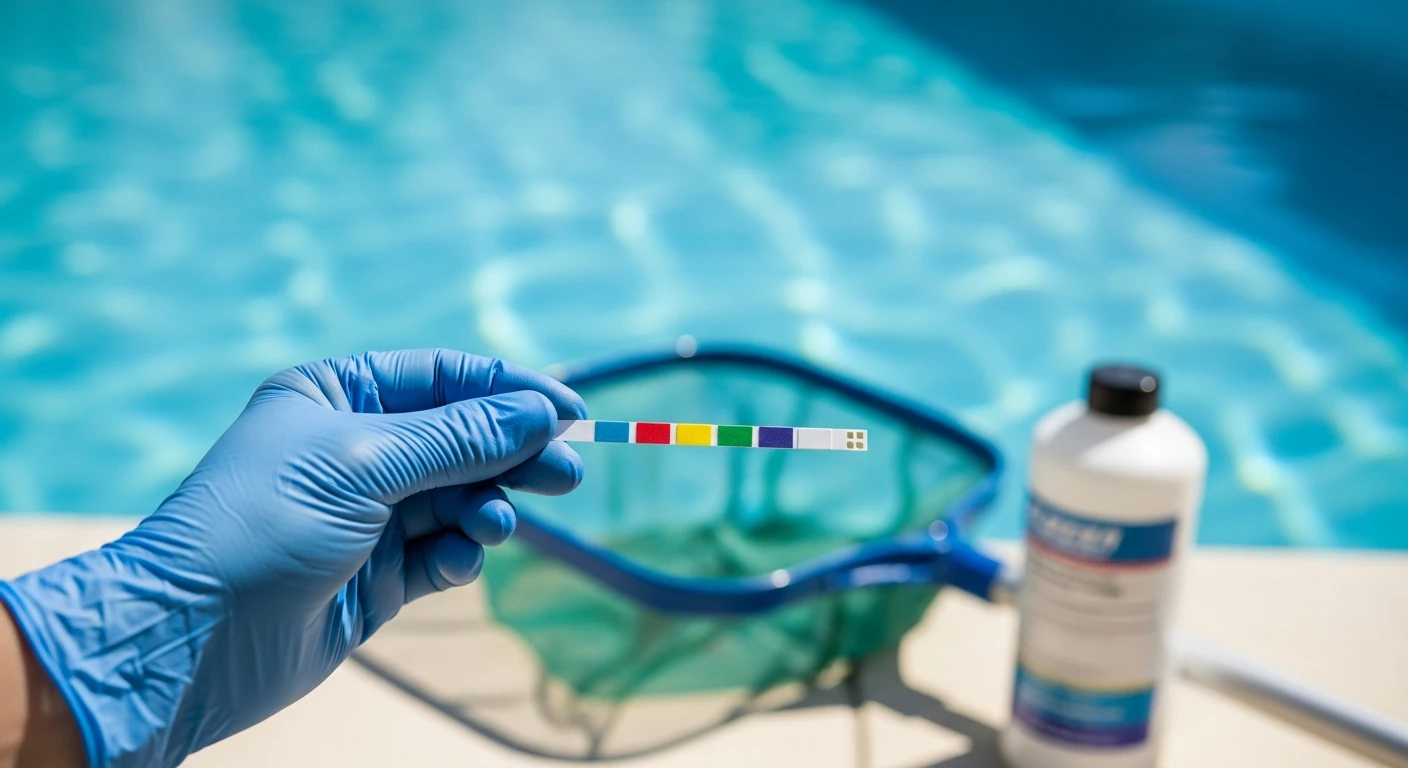
Before I even touch a pool net, I perform a rapid diagnostic based on my proprietary framework developed specifically for the Suncoast's challenges. Standard test strips just don't cut it here. I've seen perfectly "blue" strips on pools that were days away from a full-blown algae bloom because they missed the underlying issues. My process starts with understanding the three primary pressures on any local pool:- Environmental Load: This is our biggest variable. It includes the intense UV radiation that degrades unstabilized chlorine in hours, the afternoon downpours that dilute chemicals and introduce airborne algae spores, and the phosphate runoff from lawn fertilizers, especially prevalent in canal-front properties in Punta Gorda Isles.
- Bather Load: A snowbird's pool in Rotonda West used twice a week has a vastly different chemical demand than a family pool in Port Charlotte with kids swimming every day. I assess the bather load to predict the rate of Combined Chlorine (CC) buildup.
- Water Source Profile: Charlotte County's municipal water has a specific mineral content, primarily high Calcium Hardness (CH). Ignoring this from day one leads to scale buildup on salt cells and heaters, reducing their lifespan by up to 40%. I test source water to establish a baseline for every new client.
Decoding Water Chemistry for the Florida Suncoast
The key to a crystal-clear pool isn't just chlorine; it's the relationship between several key metrics. The most common mistake I fix is an obsession with Free Chlorine (FC) while ignoring its "protector," Cyanuric Acid (CYA). In our relentless sun, a pool with low CYA (below 30 ppm) will lose almost all its chlorine by midday. However, I've seen an equal number of pools with CYA levels so high (over 100 ppm) that the chlorine becomes sluggish and ineffective, a condition I call "chlorine lock." My goal is to maintain CYA between 40-60 ppm for traditional chlorine pools. Another critical factor is Total Alkalinity (TA). Think of it as a buffer for your pH. With our frequent acid rain, a pool with low TA will experience wild pH swings, making the water uncomfortable and the chlorine less effective. I aim for a TA of 80-120 ppm to anchor the pH firmly in the 7.4-7.6 range. This stability is the secret to preventing cloudy water and algae.The Weekly Execution: My Non-Negotiable Maintenance Checklist
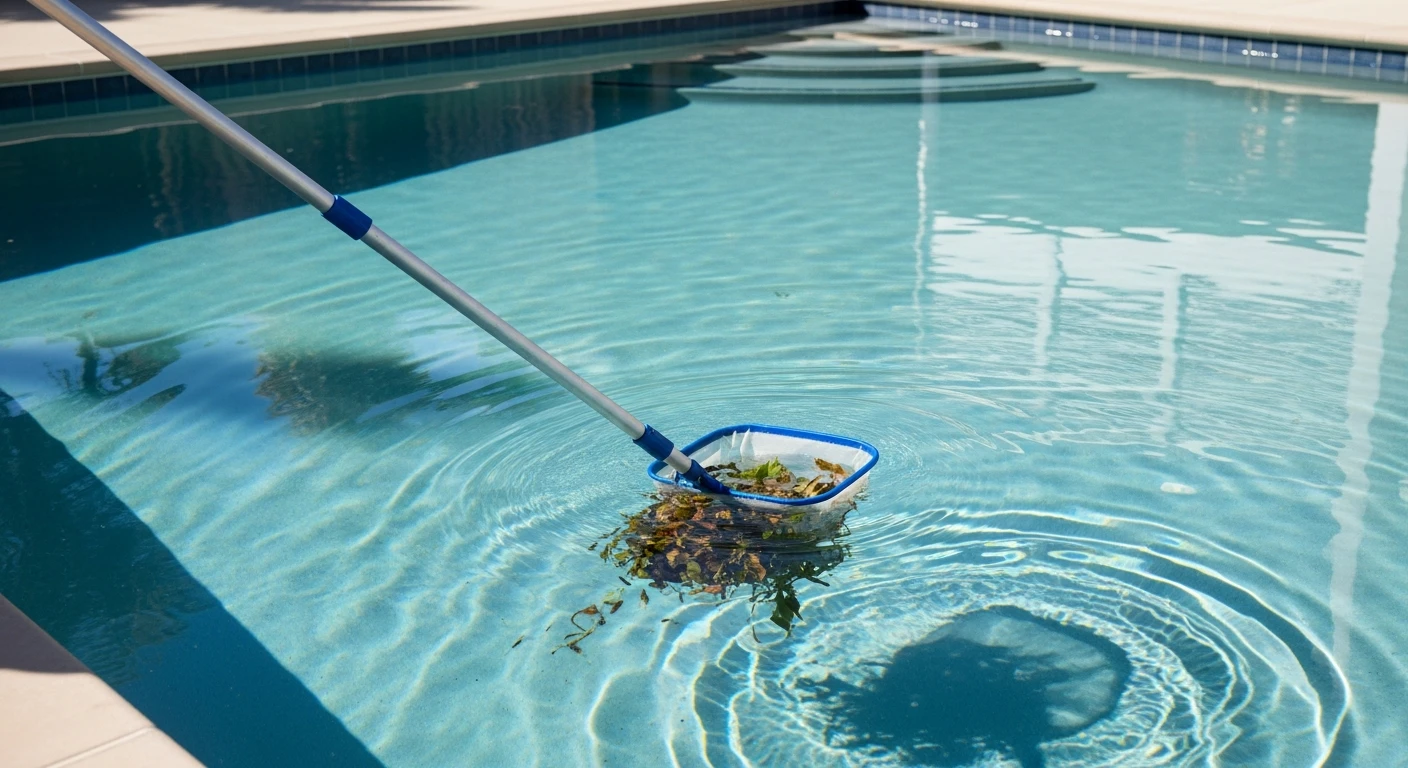
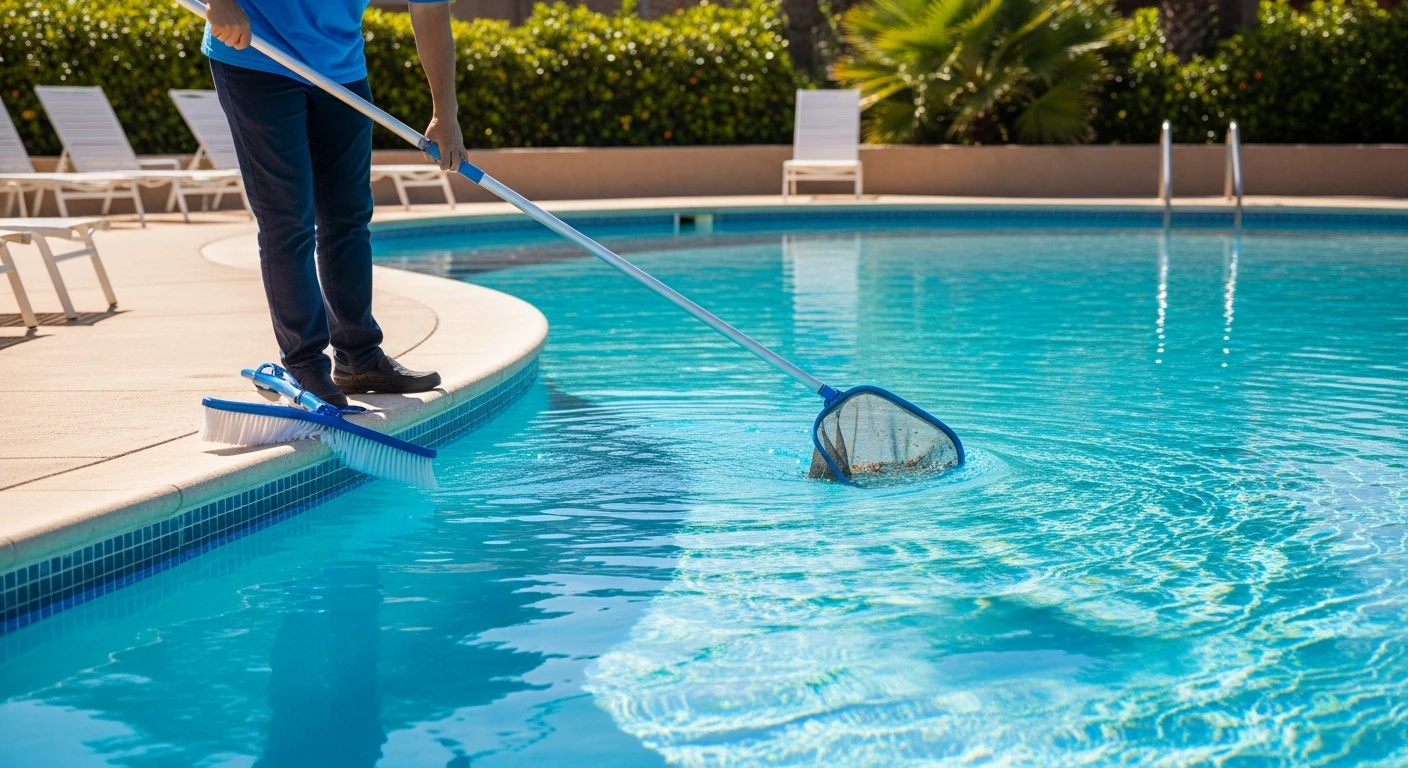
Once the chemical strategy is set, the weekly physical maintenance becomes a targeted, efficient process. This isn't just about making the pool look good for the weekend; each step is designed to support the chemical balance we've established.- Surface and Debris Removal: First, I skim the surface to remove organic matter like leaves and the dreaded lovebugs. This material, if left to sink, consumes a significant amount of chlorine as it decays.
- Wall and Tile Brushing: I brush the entire pool surface, paying special attention to steps and corners where algae spores tend to settle. This isn't just for looks; it pushes potential contaminants into the water column for the filter to capture. This step is non-negotiable for preventing mustard and black algae.
- Basket and Filter Check: I empty both the skimmer and pump baskets. A clogged basket restricts water flow, which is the number one cause of pump motor failure I encounter. I also check the filter pressure. A rise of 8-10 PSI over its clean baseline tells me it's time for a backwash or cartridge cleaning.
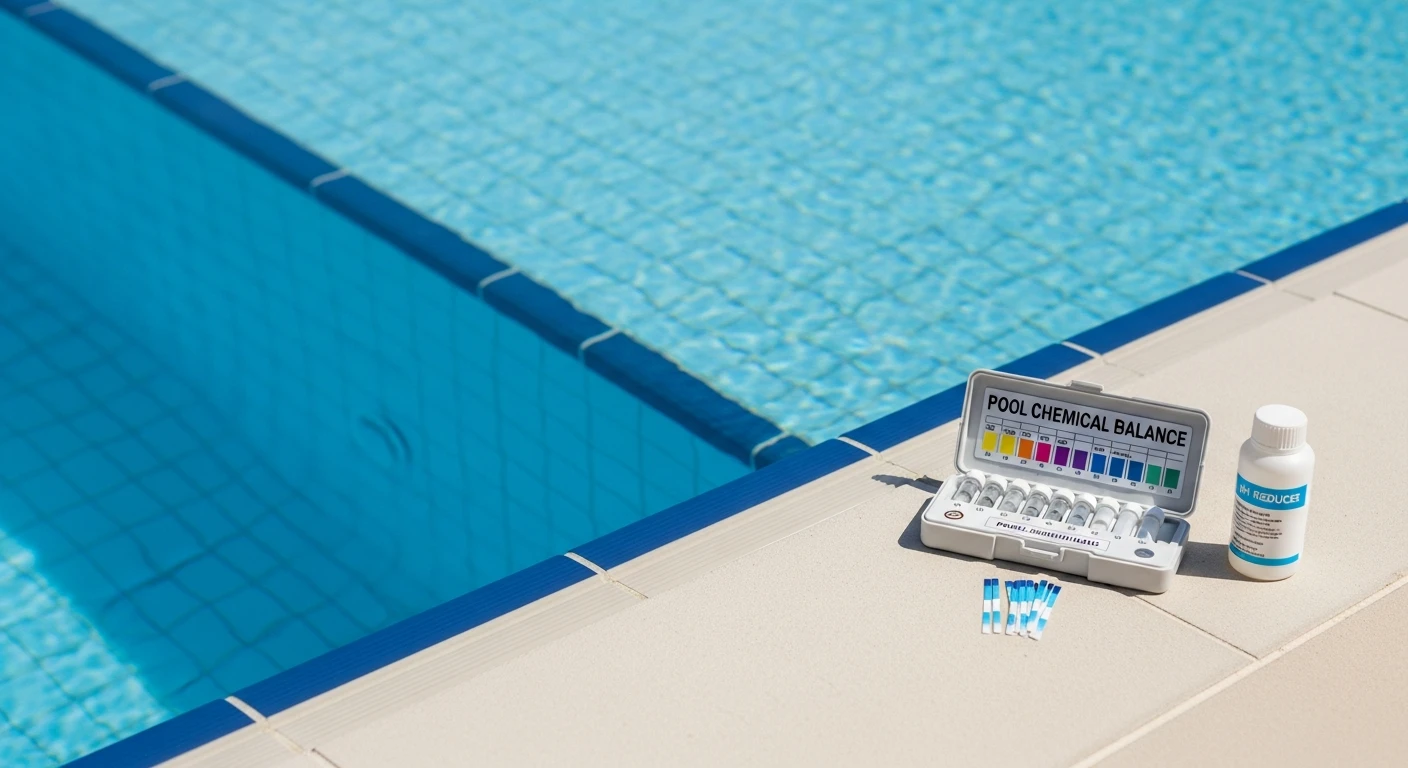
- Comprehensive Water Testing: I use a professional-grade Taylor K-2000 test kit, never strips. I test for Free Chlorine (FC), Combined Chlorine (CC), pH, Total Alkalinity (TA), and Calcium Hardness (CH) every single week.
- Precision Chemical Dosing: Based on the test results and pool volume, I calculate and add chemicals precisely. I never "dump and pray." For instance, I add muriatic acid slowly over a return jet to lower pH without causing a drastic drop in alkalinity.
Beyond the Basics: Fine-Tuning for Peak Performance
For clients who demand perfection, I track two additional metrics. The first is phosphates, which are a primary food source for algae. If a pool consistently struggles with algae despite balanced chemicals, I'll test for phosphates. If they are above 200 ppb, I use a phosphate remover. This single step has solved some of the most stubborn "green pool" cases I've ever worked on. The second is a monthly check of the Langelier Saturation Index (LSI). This calculation takes into account pH, TA, CH, temperature, and total dissolved solids. It provides the ultimate verdict on whether the water is corrosive, neutral, or scaling. By keeping the LSI in that sweet spot of 0.0 to +0.3, I can virtually guarantee the longevity of the pool's plaster, tile, and equipment, saving the homeowner thousands in premature repairs. This is the difference between a pool cleaner and a pool professional. Given the average afternoon rainfall in Port Charlotte, how are you adjusting your Total Alkalinity to prevent pH bounce, or are you just waiting for the next algae outbreak?Written by

Tags
weekly pool service near me
weekly pool cleaning service near me
weekly pool service
swimming pool weekly service
Weekly Pool Maintenance in Charlotte FL FAQ
What is the importance of regular pool maintenance?
Regular pool maintenance is crucial to ensure the health and safety of swimmers. It helps to prevent the growth of algae, bacteria, and other contaminants that can cause eye irritation, skin rashes, and other health issues. Additionally, regular maintenance can extend the lifespan of your pool and its equipment, reducing the need for costly repairs and replacements.
How often should I clean my pool?
It is recommended to clean your pool at least once a week, or more often depending on usage and weather conditions. This can include skimming the surface, vacuuming the floor and walls, and testing the water chemistry.
What is the best way to clean my pool?
The best way to clean your pool depends on its size, type, and condition. Our team of professionals can assess your pool and recommend the most effective cleaning methods and products for your specific needs.
What should I check when testing my pool water?
When testing your pool water, it is important to check the levels of pH, alkalinity, calcium hardness, and chlorine. Our experts can help you understand what these levels mean and how to adjust them to ensure safe and healthy swimming conditions.
How can I prevent algae growth in my pool?
To prevent algae growth, it is important to maintain proper water chemistry, ensure adequate filtration, and reduce the amount of nutrients that can fuel algae growth. Our team can provide guidance on how to implement these measures and prevent algae blooms in your pool.
What is the best way to store pool chemicals?
It is important to store pool chemicals in a well-ventilated area, away from heat sources and children. Our experts can provide guidance on the proper storage and handling of pool chemicals to ensure safe and effective use.
Can I perform pool maintenance myself, or do I need a professional?
While it is possible to perform some pool maintenance tasks yourself, it is generally recommended to hire a professional for regular maintenance and repairs. Our team has the training, expertise, and equipment to ensure your pool is properly maintained and safe for swimmers.
What are the benefits of hiring a professional pool maintenance service?
Hiring a professional pool maintenance service can provide peace of mind, ensure safe and healthy swimming conditions, and extend the lifespan of your pool and its equipment. Our team can provide regular maintenance, repairs, and upgrades to keep your pool in top condition.