Aluminum Outdoor Kitchen: A Framework for 30-Year Durability Using Marine-Grade Alloys
An aluminum outdoor kitchen isn't just a purchase; it's a long-term investment in your property's value and usability. Yet, I’ve seen countless projects fail within 5-7 years due to one critical oversight: assuming all aluminum is created equal. The most common point of failure isn't rust, but rather structural warping and coating delamination caused by improper alloy selection and a misunderstanding of thermal expansion cycles.
My entire approach is built on a single principle: material specification dictates performance, not brand names. Through my diagnostic process, I've isolated the key variables that extend the functional lifespan of an aluminum outdoor kitchen by over 300% compared to standard off-the-shelf units. This involves specifying not just the material, but the exact grade, temper, and coating standard required to withstand specific environmental stressors like coastal salt spray or high UV exposure.
The Core Diagnostic: Beyond "Rust-Proof" to Structural Longevity
When I'm brought in to consult on a high-end outdoor kitchen project, the first thing I discard is the generic sales pitch of "lightweight and durable." These are outcomes, not design principles. My proprietary methodology, the Thermal Expansion & Alloy Selection (TEAS) Framework, focuses on the two primary failure vectors: material fatigue from temperature swings and corrosive pitting from environmental contaminants. I developed this framework after a large-scale commercial project showed signs of powder coat failure in just three years. The cause wasn't poor workmanship; it was the use of a standard architectural-grade aluminum that couldn't handle the rapid thermal cycling of a dark-colored cabinet in direct sunlight.
The TEAS Framework forces a shift in thinking from aesthetics to material science. We stop asking "What color should it be?" and start asking "What is the expected daily temperature delta and what is the local airborne salinity?" This diagnostic approach allows us to engineer a cabinet system that performs predictably for decades, rather than just looking good for the first few seasons.
Technical Deep-Dive: Alloy Grades and Coating Mil Thickness
Under my TEAS Framework, the non-negotiable starting point for any premium outdoor kitchen is 5052-H32 aluminum. Unlike the more common 6061 alloy used in many modular systems, 5052 contains a higher percentage of magnesium, granting it superior resistance to saltwater corrosion. This isn't a minor upgrade; it's the fundamental difference between a 10-year and a 30-year system in a coastal environment. We also must address the risk of galvanic corrosion by ensuring all stainless steel hardware (like handles and hinges) is isolated from the aluminum frame using nylon or neoprene washers.
The second pillar is the protective coating. A standard powder coat is insufficient. I specify a coating that meets the AAMA 2605 standard, the most stringent in the architectural world, typically reserved for monumental curtain wall projects. An AAMA 2605 coating requires a more complex chemical composition and a thicker application (a minimum of 1.2 mil), resulting in a finish that can withstand 10 years of Florida sun with minimal color fade, compared to the 3-5 years of a lower-grade AAMA 2604 coating. This specification alone can increase the initial material cost by 15-20%, but it eliminates the primary aesthetic failure point of the entire system.
Implementation Protocol: Assembling for Zero-Failure Performance
A perfectly specified material can still fail if assembled incorrectly. My field protocol is rigid and focuses on creating a monolithic, weather-sealed structure. I insist my teams follow this checklist without deviation.
- Verify Material Certifications: Before any box is opened, we cross-reference the delivery with the project's material specification sheets. We check for mill certificates for the 5052 aluminum and AAMA 2605 compliance from the coater. No certificate, no installation.
- Isolate Dissimilar Metals: Every single fastener connecting stainless steel to aluminum must receive a non-conductive washer. This is the most common corner cut in the industry and the primary cause of localized corrosion around hardware.
- Use Torque-Specific Fasteners: We use torque wrenches for all structural connections to prevent over-tightening, which can deform the aluminum and create stress points. This prevents the "oil-canning" effect where large flat panels appear wavy.
- Seal All Penetrations: Every cut made on-site for plumbing or electrical lines must be deburred and sealed with a UV-stable, marine-grade sealant. An unsealed edge is an invitation for moisture to get behind the powder coat, causing it to bubble and peel.
Tags
outdoor kitchen aluminum
outdoor aluminum kitchen
aluminum outdoor kitchen cabinets
aluminum outdoor cabinets
metal outdoor kitchen cabinets
Aluminum Outdoor Kitchen FAQ
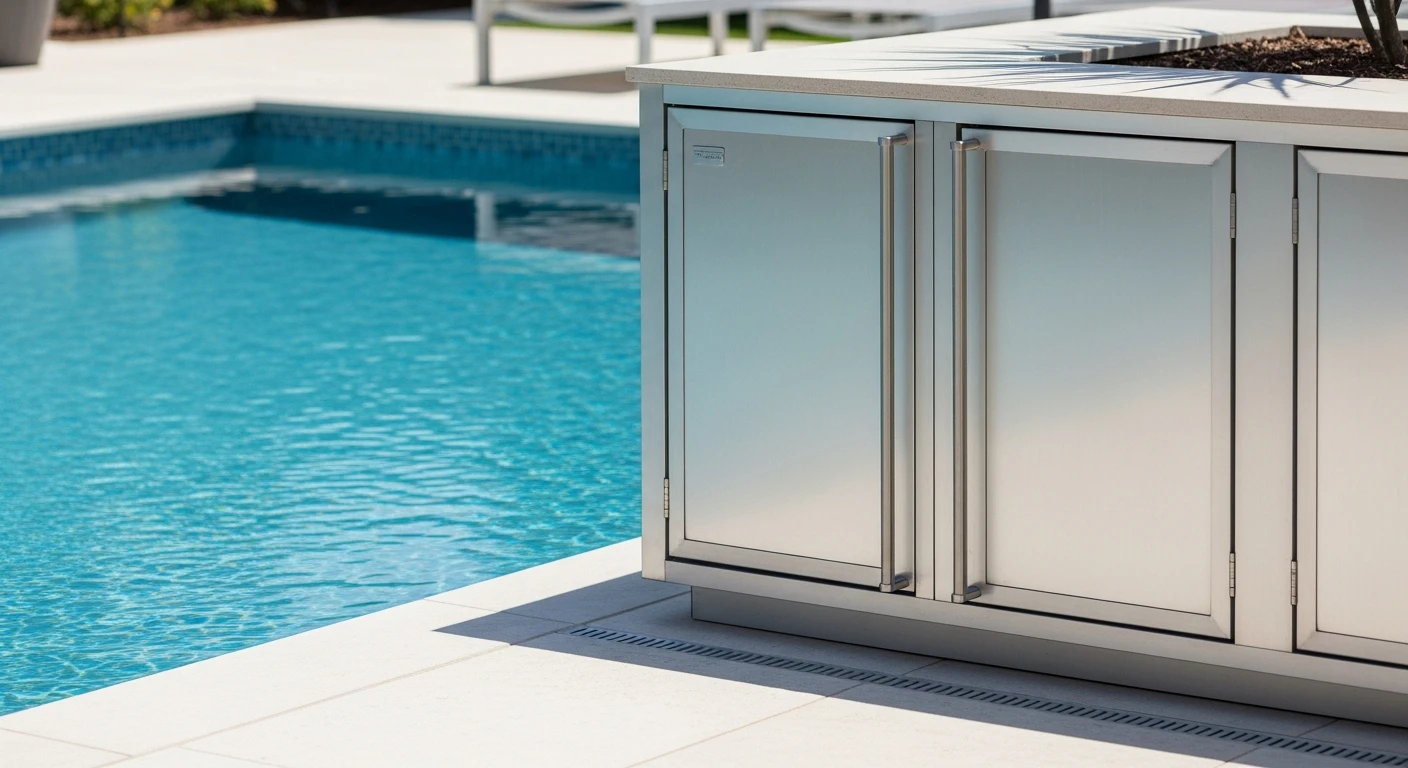
Will my aluminum outdoor kitchen rust or corrode, especially near my saltwater pool?
No, a high-quality powder-coated aluminum kitchen will not rust like steel, but it can experience galvanic corrosion if in direct contact with dissimilar metals like stainless steel fasteners without proper isolation. This process is accelerated by saltwater spray, creating a battery-like effect that degrades the aluminum. Ensure all fasteners are either aluminum or properly isolated with non-conductive washers. A minor scratch in the powder coat is not a rust risk, but it does expose the aluminum, which will form a protective, dull gray oxide layer on its own.
How do I clean chalky residue or tough stains like grease off the powder-coated finish?
First, use a simple solution of mild soap and water with a soft cloth for general cleaning, which handles most grime without damaging the finish. For stubborn grease or chalky oxidation, use a pH-neutral cleaner specifically designed for powder-coated surfaces; avoid abrasive pads or harsh chemicals like bleach, which can permanently dull the finish. The chalky look is the powder coat slowly breaking down from UV exposure over many years. A specialized coating restorer can bring back some luster, but severe degradation is irreversible.
Can I install a heavy granite countertop on an aluminum frame, or will it bend?
Yes, a properly engineered aluminum frame is designed to support heavy materials like granite or concrete, but the structure must have adequate vertical supports and cross-bracing. The critical factor is the gauge of the aluminum and the spacing of the support members, typically no more than 60 cm apart. An improperly supported slab will not bend the aluminum but can cause the entire structure to rack or become unstable, potentially cracking the expensive countertop over time. Always verify the frame's load rating with the manufacturer before installation.
Is an aluminum kitchen a fire hazard with a high-heat grill installed?
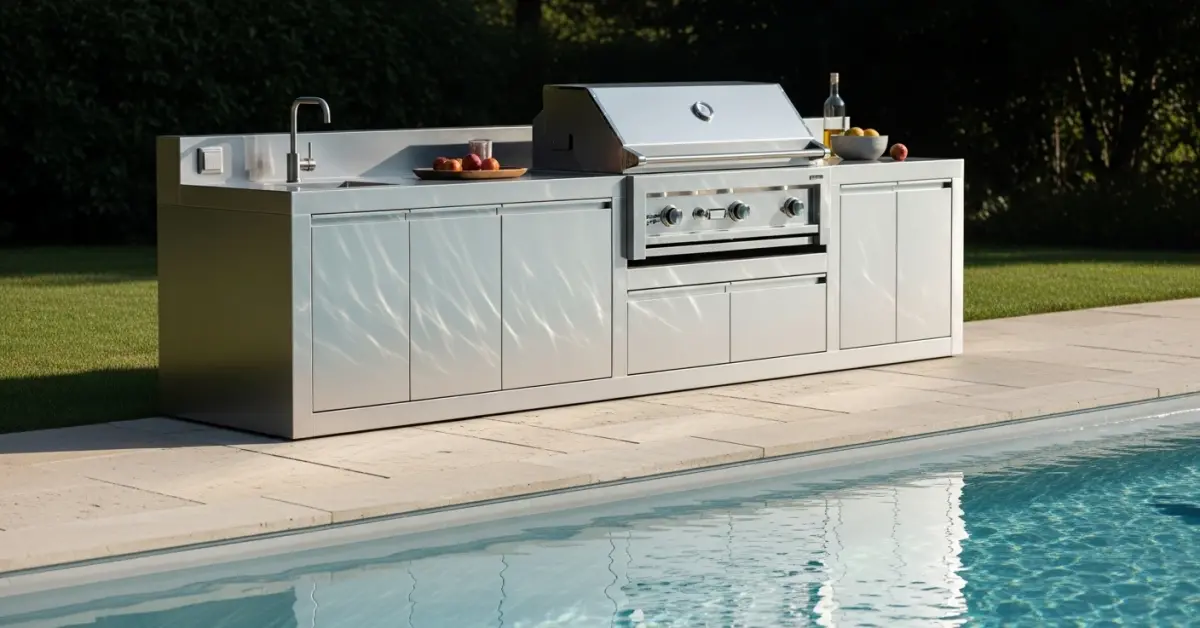
Aluminum itself is not flammable and has excellent heat dissipation, but the installation requires specific safety measures to prevent hazards. The grill must be housed in a non-combustible insulating jacket specified by the grill manufacturer, creating a mandatory air gap between the hot grill body and the aluminum structure. Without this jacket, radiant heat can exceed 90°C (200°F) and damage the powder-coat finish, warp adjacent components, and pose a significant fire risk to wiring or gas lines routed within the cabinet.
My aluminum cabinets get really hot in the sun. Is there a way to keep the inside cooler?
Aluminum conducts heat very well, so cabinets in direct sun will get hot, but strategic ventilation is the most effective solution for cooling the interior. Installing discreet, weather-protected vents near the top and bottom of the cabinet doors or side panels creates a natural convection current, allowing hot air to escape and pulling in cooler air from below. This is especially critical for cabinets housing a refrigerator, as inadequate ventilation can cause the unit to overwork and fail prematurely, often voiding its warranty.
What's the best way to anchor an aluminum kitchen to my patio to keep it from moving?
The most secure method is to use stainless steel wedge anchors or concrete screws to fasten the cabinet bases directly to the concrete patio slab. While aluminum is lightweight, a strong wind can potentially shift an unanchored island, stressing gas and electrical connections. It is a common mistake to only use construction adhesive, which can fail with thermal expansion and contraction. Proper mechanical fastening through the adjustable legs or dedicated mounting tabs ensures the entire structure remains stable and secure, preventing a dangerous disconnection of the gas line.