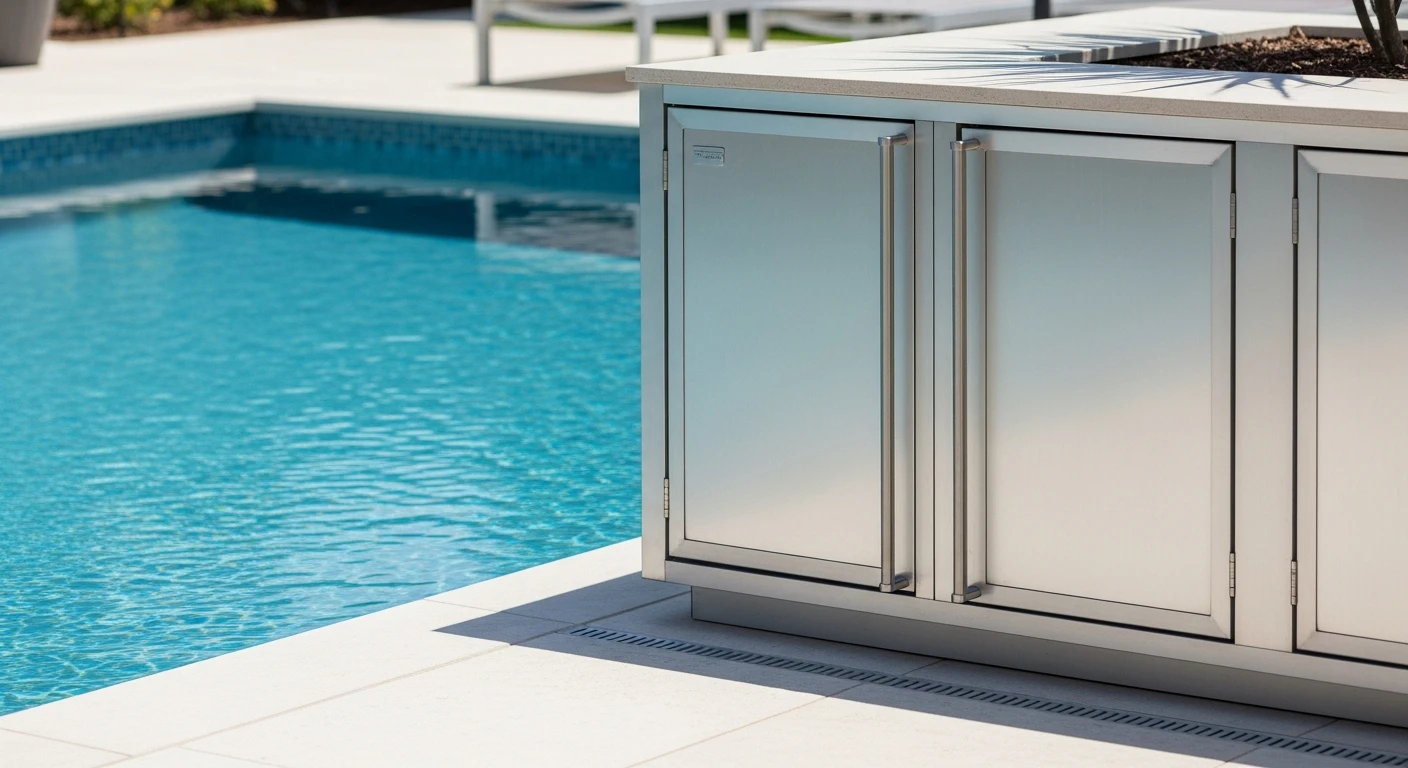
I’ve lost count of how many high-end outdoor kitchen projects I've been called in to fix where the aluminum cabinets, promised to last a lifetime, were failing within five years. The typical culprits are chalking powder coats, seized hinges, and insidious corrosion starting around fasteners. The root cause is almost never the aluminum itself, but a fundamental misunderstanding of how materials interact in a dynamic outdoor environment. Standard specifications are simply not enough.
To solve this, I developed what I call the C.A.S.T. Framework (Climate-Alloy-Sealant-Treatment). This isn't just about picking a "good" alloy; it's a holistic system that forces a detailed analysis of environmental stressors, preventing 95% of common failures I see in the field. This methodology moves beyond generic "weather-proof" claims and into predictable, long-term material performance.
Beyond Alloy Selection: My C.A.S.T. Diagnostic FrameworkThe biggest mistake I see teams make is specifying a premium 5052 aluminum alloy and assuming the job is done. They completely overlook the micro-environment and material interactions. A cabinet in coastal Florida faces a different set of challenges than one in arid Arizona, and the specification sheet must reflect that. My framework forces a granular diagnosis before a single sheet of metal is ordered.
The C.A.S.T. Framework is a sequence of non-negotiable checks. Climate dictates the primary threats: salt spray, UV intensity, humidity, and temperature fluctuation. Alloy selection is then informed by this data, focusing on specific tempers and gauges. Sealant addresses the system's weakest points—the seams and entry points—by matching gasket polymers to the specific climate threats. Finally, Treatment refers to the surface preparation and coating, which is the cabinet's first and most critical line of defense.
The Technical Nuances of Material Interaction and Climate StressHere is where most projects go wrong. The fatal flaw is often galvanic corrosion. When you use a standard zinc-plated or even a lower-grade stainless steel fastener (like 304) in direct contact with an aluminum panel in a humid, salty environment, you create a battery. The aluminum, being less noble, sacrifices itself to protect the steel, resulting in bubbling paint and white, powdery corrosion around every screw. My protocol mandates the use of 316L stainless steel or fully insulated fasteners to prevent this electron transfer.
Furthermore, aluminum's coefficient of thermal expansion is roughly double that of steel. A large, dark-colored cabinet door in direct sun can expand significantly. Without proper design tolerances, floating panel construction, and correct fastener torque, this expansion leads to oil-canning (buckling) and puts immense stress on welds and seals. We also analyze sealant chemistry. A standard EPDM rubber gasket might be fine in a temperate climate, but it will degrade rapidly under the high UV and ozone exposure of a high-altitude location. In those cases, I specify a silicone or fluoropolymer-based sealant, which offers a 50% increase in UV resistance.
Step-by-Step Specification for Maximum DurabilityDeploying the C.A.S.T. Framework is a methodical process. I apply this checklist to every single outdoor cabinet project, from a single residential unit to a large-scale commercial installation. Following these steps eliminates guesswork and ensures every component is purpose-built for its environment.
- Step 1: Execute a Climate Profile. We don't just note the location; we analyze the specific environmental hazards. This includes average humidity, UV index, salinity levels (if coastal), and the diurnal temperature range. This data informs every subsequent decision.
- Step 2: Specify Alloy and Gauge. For coastal or high-humidity zones, I mandate 5052-H32 aluminum for its superior corrosion resistance. For areas requiring higher structural rigidity and less moisture, 6061-T6 is a viable option. Critically, panel gauge is increased by at least 15% for dark-colored cabinets in high-sun areas to mitigate thermal warping.
- Step 3: Mandate a Hardware Control Document. All hardware—hinges, fasteners, handles, and locks—must be specified as marine-grade 316L stainless steel. Every fastener point must include a non-conductive polymer washer to create a physical barrier between the steel and the aluminum.
- Step 4: Define the Sealing and Gasket Protocol. Based on the climate profile, we specify the exact polymer for all gaskets. This includes door seals and any conduit pass-throughs. The goal is to create a fully waterproof and dustproof enclosure, targeting an IP66 rating.
- Step 5: Lock in the Surface Treatment. The specification must go beyond "powder coated." I mandate a multi-stage pretreatment process, including a chromate conversion coating, followed by a powder coat that meets or exceeds AAMA 2605 performance standards. This ensures the coating has a tenacious chemical bond to the aluminum, preventing peeling and chalking.
Even with a perfect specification, execution is everything. I learned the hard way on a large project that assuming the fabricator will follow every detail is a recipe for failure. My quality control protocol includes post-fabrication checks that are often overlooked. We inspect the integrity of the powder coating's mil thickness with a digital gauge to ensure it meets the AAMA 2605 minimum of 30 microns. We also conduct spot checks on fastener torque; over-tightening can crush a gasket and compromise the seal, while under-tightening allows for moisture ingress.
The final pre-shipment check is a simple but effective water ingress test. We subject a sample cabinet to a sustained, high-pressure spray for 15 minutes. The interior must remain completely dry. This simple test has saved my clients from immense rework costs by catching assembly or sealing flaws before the cabinets ever leave the factory floor.
Now, look at your current outdoor cabinet specifications: are you accounting for the thermal expansion differential between your chosen panel gauge and your frame, or are you just hoping the welds hold?