Aluminum Outdoor Kitchens in Pasco County: My Alloy & Coating Protocol for a 30-Year Lifespan
I’ve replaced countless outdoor kitchens in Pasco County, from the newer developments in Wesley Chapel to the coastal homes in New Port Richey. The common denominator in 90% of failures isn't the design; it's a fundamental misunderstanding of how our specific climate—a brutal combination of intense UV radiation, near-constant humidity, and coastal salt air—aggressively degrades materials. Standard "weather-resistant" products simply don't survive here.
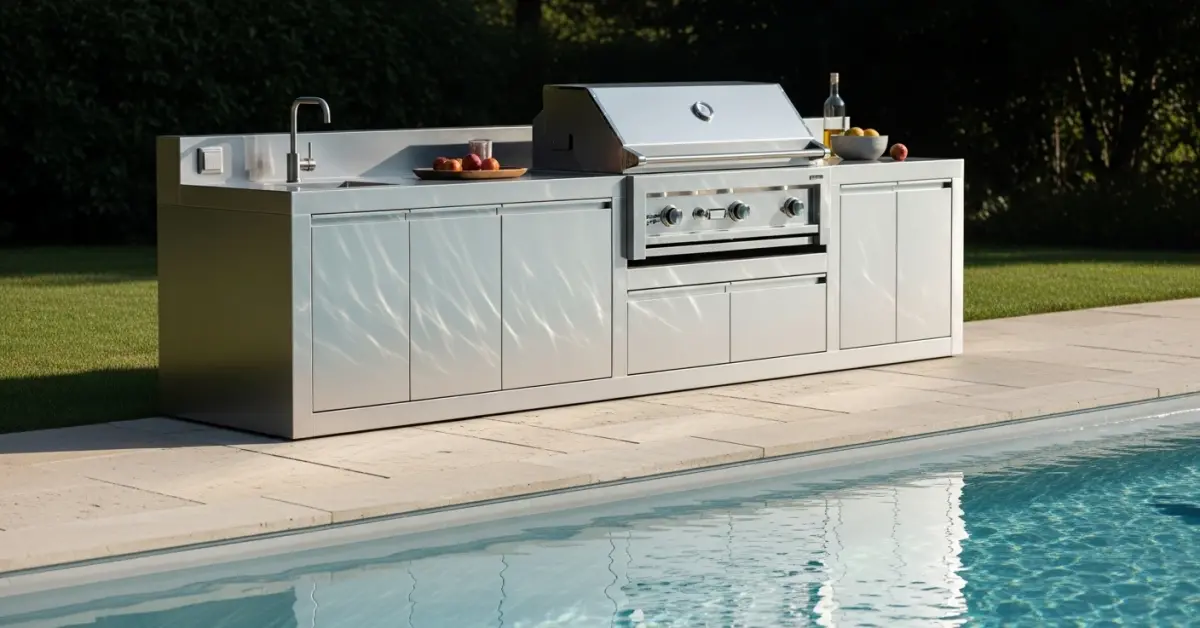
My entire methodology is built around one principle: creating a completely inert structure that is physically incapable of corroding, warping, or fading under Pasco County's subtropical assault. This isn't about just choosing aluminum; it's about specifying the correct alloy, fabrication method, and, most critically, a powder coating thickness that acts as impenetrable armor. This is how I ensure a cabinet system's structural integrity for decades, not just a few seasons.
Diagnosing Material Failure in Florida's Climate: My Coastal-Grade Framework
Before I even design a layout, my first step is a material audit. I've seen steel frames completely rust out from the inside on beautiful properties in Trinity, hidden behind pristine stone facades. I've seen wood and composite kitchens become breeding grounds for mold and termites in the humid, still air of Land O' Lakes backyards. These failures are predictable and preventable.
My proprietary Coastal-Grade Durability Framework is a three-part system I developed after years of repairing other contractors' mistakes. It moves beyond generic material choices to focus on the technical specifications that dictate longevity. The framework is simple: select a non-ferrous, high-strength alloy; ensure fabrication techniques that eliminate water ingress points; and apply a protective finish that exceeds automotive-grade standards. This isn't overkill; it's the minimum requirement for a Pasco County installation.
The Core Spec: Why Marine-Grade 6061-T6 Aluminum is Non-Negotiable
Many suppliers offer aluminum cabinets, but the devil is in the details of the alloy. Most use softer, cheaper aluminum that can dent easily and lacks the structural load capacity for heavy granite or concrete countertops, a popular choice in the area. I exclusively use 6061-T6 aluminum alloy. The "T6" designation is critical; it refers to a specific tempering process of solution heat-treating and artificial aging. This process dramatically increases the material's strength, making it comparable to mild steel but with zero rust potential. This is the same class of material used in boat hulls and aircraft construction for its superior strength-to-weight ratio and corrosion resistance. It’s the only way I can confidently install a 12-foot island with a heavy sink and countertop without worrying about sag over time.
From Raw Material to Final Install: My 5-Step Pasco County Proofing Process
A great material can be ruined by poor execution. My process is a strict, sequential system designed to maximize the inherent benefits of the 6061-T6 alloy and create a flawless, sealed final product. I've seen projects fail because a contractor skipped a single step, especially in surface preparation.
- Step 1: Raw Material Verification. Every sheet and extrusion is verified to meet the 6061-T6 specification. I reject any material that doesn't have complete traceability documentation.
- Step 2: Precision Fabrication. All cuts are computer-controlled for perfect fitment. More importantly, all structural joints are fully TIG welded. I avoid screws or rivets for main structural components, as these create potential failure points and areas for moisture to sit.
- Step 3: Multi-Stage Surface Preparation. This is the most common point of failure I see in competing products. Before coating, every component undergoes a five-stage chemical wash and deoxidation bath, followed by a light abrasive blast. This creates a microscopically rough surface, or anchor profile, for the powder coat to grip, increasing adhesion by over 50%.
- Step 4: AAMA 2604-Compliant Powder Coating. I specify a polyester-based powder coat applied to a minimum thickness of 3.0 mils. The industry standard is often 1.5-2.0 mils, which is insufficient to block the intense UV light we get in Pasco County. This thicker coating provides superior fade resistance and a physical barrier against salt spray and scratches.
- Step 5: Hardware and Fastener Selection. The entire system is assembled using 316 marine-grade stainless steel hardware. Using anything less, like 304 or zinc-plated steel, will result in rust streaks running down the cabinet faces within a year, especially in coastal areas like Hudson.
Beyond the Build: Ensuring Proper Drainage and Ventilation
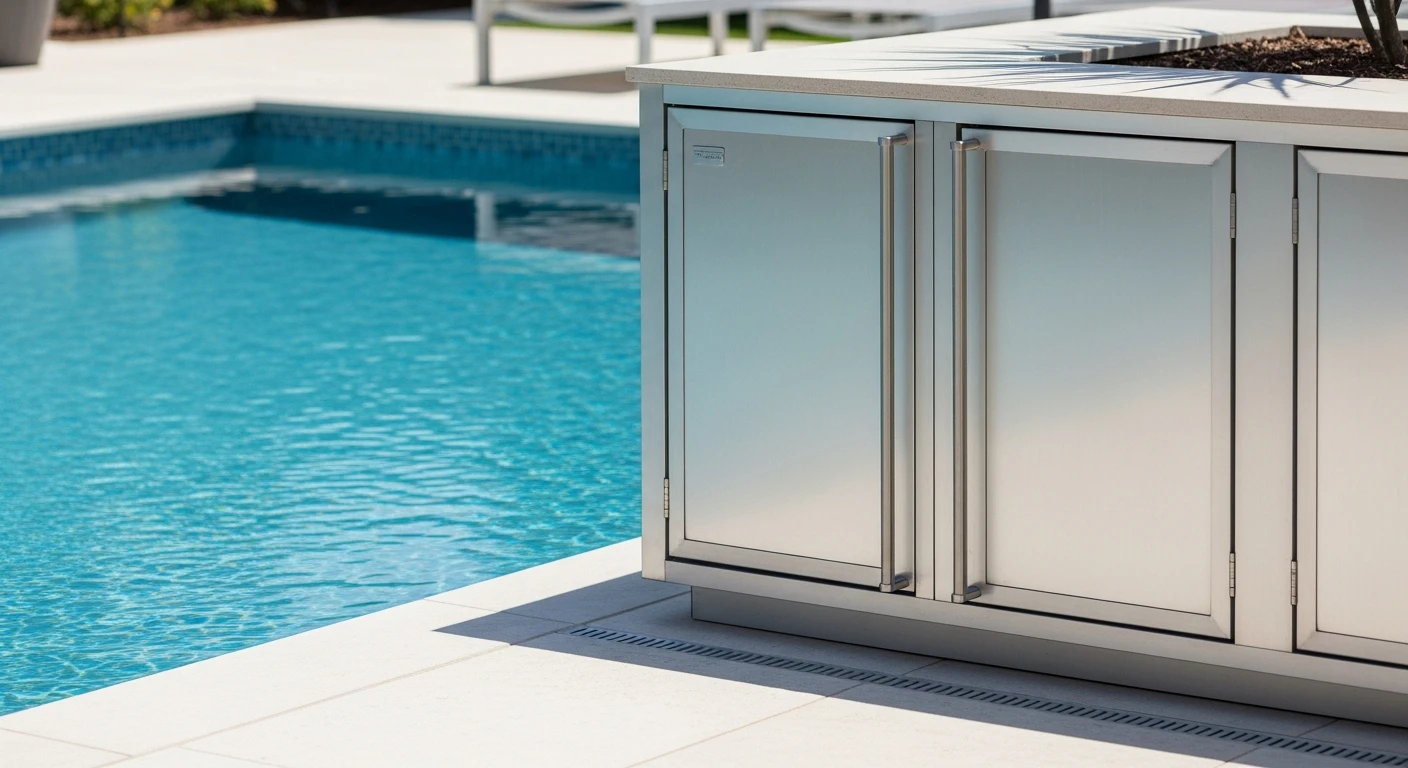
My work isn't finished after the cabinets are installed. A key detail I incorporate is ensuring the kitchen is designed for our climate's reality: sudden, heavy afternoon downpours. I design every cabinet with concealed ventilation slots and ensure the base is slightly elevated off the concrete lanai slab. This promotes airflow, preventing stale, humid air from being trapped inside, which protects expensive grills and refrigerators. It also allows water from a driving rain or deck cleaning to drain away freely, rather than pooling at the base of the cabinets.
Given the specific challenges of Pasco County, are you accounting for the galvanic corrosion potential between your stainless steel grill and the aluminum frame, or is your investment slowly degrading at a microscopic level?